
How Often to Water New Plants: A No-Nonsense Guide
You just dropped a small fortune at the nursery. Now what? Here’s exactly how often to water new plants so they actually live to see next season.
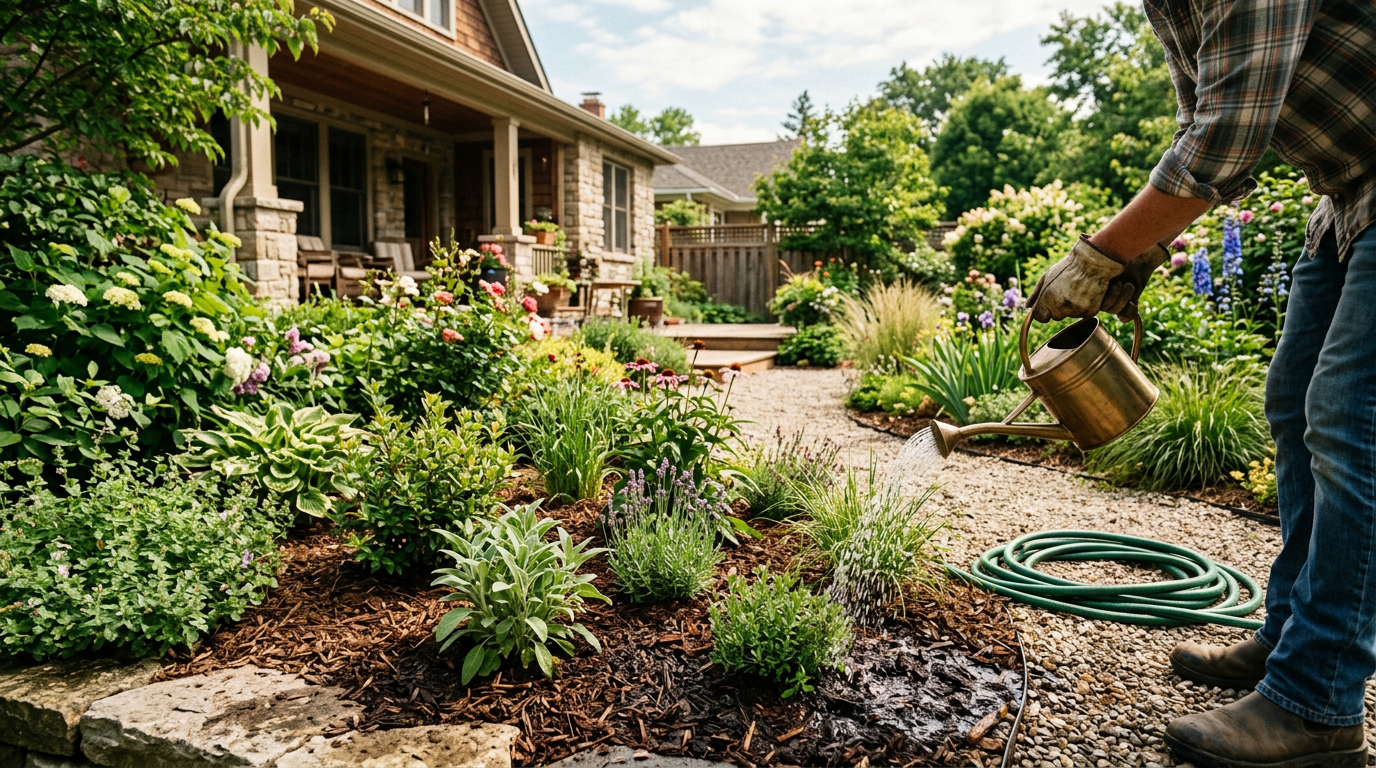
You did it. You went to the nursery, filled a cart with beautiful plants, and spent way more than you planned. Now they're in the ground, looking hopeful. The single biggest mistake you can make right now isn't about fertilizer or pruning—it's about water. Too much or too little in these first few weeks will send them straight to the compost pile.
Let's cut through the confusing advice. Watering new plants isn't some mystical art. It's a simple, predictable process. We're going to give you the exact schedule and techniques to get your new investments established so they can thrive for years. No more guesswork, no more dead plants.
The Golden Rule: Consistency for the First Few Weeks
A new plant is in shock. It just left its cozy container where water and nutrients were always available. Now, its small, contained root ball is surrounded by a vast, foreign landscape of your garden soil. It can't access that new soil for water yet. Your job is to baby it.
For the first 1-2 weeks, water your new plants every single day, unless you get a soaking rain.
Yes, every day. The goal is to keep that original root ball from ever drying out. A dry root ball is a death sentence. It can become hydrophobic, meaning it will actually repel water, and the plant will die of thirst even if the surrounding soil is damp.
After about two weeks, the plant's roots will begin to venture out into the native soil. Now you can start to taper off. Shift to watering deeply every 2-3 days. The goal is to transition from keeping the root ball wet to encouraging the roots to grow deeper into the surrounding soil in search of moisture.
How to Water: Deep Sips, Not Shallow Sips
How you water is just as important as how often. A quick sprinkle with the hose does more harm than good. It only wets the top inch of soil, encouraging shallow, weak roots that are vulnerable to heat and drought. Even worse, it never reaches the bottom of the root ball where it's needed most.
You must water deeply and slowly. You want the water to soak down at least 6-8 inches into the soil. The best way to do this is to place your hose at the base of the plant, turn it on to a slow trickle, and let it run for several minutes. For larger areas, a soaker hose is your best friend. A product like the Melnor Flat Soaker Hose (about $20 for 50 feet) is a game-changer. You can snake it around your new plantings, turn it on, and let it slowly seep water directly into the root zone with almost zero evaporation.
The Finger Test: Your Built-In Moisture Meter
Schedules are great, but the real world has heat waves and surprise downpours. How do you know for sure if it's time to water? Use the tool you were born with: your finger.
Forget expensive moisture meters. They're often inaccurate and fragile. Just stick your index finger into the soil about 2-3 inches down, right at the edge of the plant's root ball.
- If the soil feels dry at your fingertip, it's time to water.
- If it feels moist, check again tomorrow.
- If it feels wet or soggy, you're overwatering. Back off.
This simple, free test is the most reliable way to understand what's happening below the surface. It will save you from both underwatering and the much more common crime of killing plants with kindness (overwatering).
Watering Schedules by Plant Type
Not all plants are created equal. A giant oak tree has different needs than a tiny marigold. Here's a general breakdown:
- Trees & Shrubs: These big investments need the most attention to deep watering. After the initial daily watering period, you'll want to give them a very long, slow soak 1-2 times a week. For a newly planted tree, a good rule of thumb is 10 gallons of water for every inch of trunk diameter. This is where a hose on a trickle for 20-30 minutes is perfect. If you're planting a living fence, our guide to fast growing privacy trees can get you started on the right foot.
- Perennials & Annuals: These smaller plants have shallower root systems. After the first couple of weeks, they'll typically need a good, deep watering 2-3 times per week during their first growing season. This is especially true for sun-loving flowers that bake all day. If you're planting in a sunny spot, check out our list of the best perennials for full sun.
- Vegetables: Veggies are thirsty. Consistent moisture is key for good production. When you're just getting started, they follow the same rules as perennials. As they grow, especially fruiting plants like tomatoes and squash, they'll need consistent water. If you're a beginner, our guide on how to start a vegetable garden covers watering in more detail.
Adjusting for the Real World: Sun, Soil, and Rain
Your garden is a unique ecosystem. You have to adjust your watering plan based on these three factors:
- Sun & Wind: A plant in baking, all-day sun will need more water than one in part shade. A windy site will also dry out soil much faster. Common sense, but easily forgotten.
- Soil Type: This is a huge one. Sandy soil drains like a sieve and will need more frequent watering. Heavy clay soil holds onto water for a long time and is very easy to overwater. If you're cursed with heavy clay, get to know our favorite best plants for clay soil that can handle it.
- Rain: Don't assume a quick shower did your work for you. Get a cheap plastic rain gauge—something like the AcuRite 5" Capacity Magnifying Rain Gauge costs less than $10 and is priceless. A light 1/4" rainfall barely wets the mulch. You need at least 1/2", and preferably 1", of steady rain to count as a real watering session.
Signs of Trouble: Overwatering vs. Underwatering
Plants will tell you when they're unhappy. The tricky part is that the signs for too much and too little water can look frustratingly similar.
- Underwatering: The first sign is wilting, but the leaves will feel dry and crispy. They'll perk up quickly after you water. The edges of leaves might also turn brown.
- Overwatering: This is the silent killer. The plant may also wilt, but the leaves will feel soft and limp, not crispy. You'll often see yellowing leaves, especially older ones near the base of the plant. The soil will be consistently soggy, and you might even smell a swampy, rotten odor, which indicates root rot. According to the University of Minnesota Extension, overwatering is a leading cause of plant failure, as saturated soil deprives roots of oxygen, leading to root rot from which the plant cannot recover. (https://extension.umn.edu/planting-and-growing-guides/watering-newly-planted-trees-and-shrubs)
If you see signs of stress, always do the finger test before you add more water. When in doubt, it's better to be a little too dry than a little too wet. You can always add water, but you can't take it away. Eventually, you can graduate to more hands-off plants, like the ones on our list of drought tolerant plants for landscaping.
Tools That Make Watering Less of a Chore
You don't need a lot of fancy gear, but a few quality tools make the job easier.
- A Good Nozzle: We've burned through a dozen cheap plastic nozzles that crack after one season. Spend $10 on a classic Gilmour Full Size Zinc Pistol Grip Nozzle. It's heavy, durable, and provides a range of patterns from a soft shower to a jet stream.
- A Solid Watering Can: For containers or targeted watering, a can is essential. A galvanized steel one like the Behrens 2.5-Gallon Steel Watering Can (around $30) will outlive you. The removable rosette (sprinkler head) is great for providing a gentle shower to seedlings.
- A Mechanical Timer: If you're using a sprinkler or soaker hose, a simple Orbit Mechanical Water Timer (about $12) is foolproof. You just twist the dial to the desired time (up to 120 minutes) and it shuts the water off automatically. No more accidentally flooding your yard because you forgot the hose was on.
Ultimately, getting your new plants established comes down to paying attention for the first few months. Check on them, use the finger test, and water them deeply and consistently. Do that, and you'll be rewarded with a healthy, thriving landscape that adds value and beauty to your home for years to come.
Frequently asked
How long should I water a new plant each time?+
Focus on volume, not just time. For a 1-gallon perennial, slowly apply about 1 gallon of water at its base. For a new tree, aim for 10-15 gallons, applied over 10-20 minutes with a hose on a slow trickle to ensure it soaks in deeply.
Can you overwater a new plant?+
Absolutely. Overwatering is just as deadly as underwatering because it suffocates the roots. Always check the soil moisture with your finger before grabbing the hose. If it feels damp 2 inches down, wait another day to water. Moist, not soggy, is the goal.
Should I water new plants if it rains?+
It depends. A light 15-minute sprinkle won't reach the root ball. You need about an inch of steady rain to count as a 'deep watering.' A simple, inexpensive rain gauge is the best tool to know for sure if nature did your job for you.
When is the best time of day to water new plants?+
Early morning is ideal. This allows water to soak into the soil before the sun's heat causes excessive evaporation. It also lets the plant's foliage dry out during the day, which is the best way to help prevent common fungal diseases like powdery mildew.
Do new drought-tolerant plants need to be watered?+
Yes! The 'drought-tolerant' label only applies once the plant is fully established, which can take one or two full growing seasons. Follow the same initial watering schedule for new drought-tolerant plants as you would for any other plant to ensure a deep, resilient root system develops.