
Fast Growing Privacy Trees: Get a Living Fence Fast
Tired of looking at your neighbor's rusty shed? We've got the dirt on the fastest-growing trees that will create a lush, living privacy screen in just a few seasons.
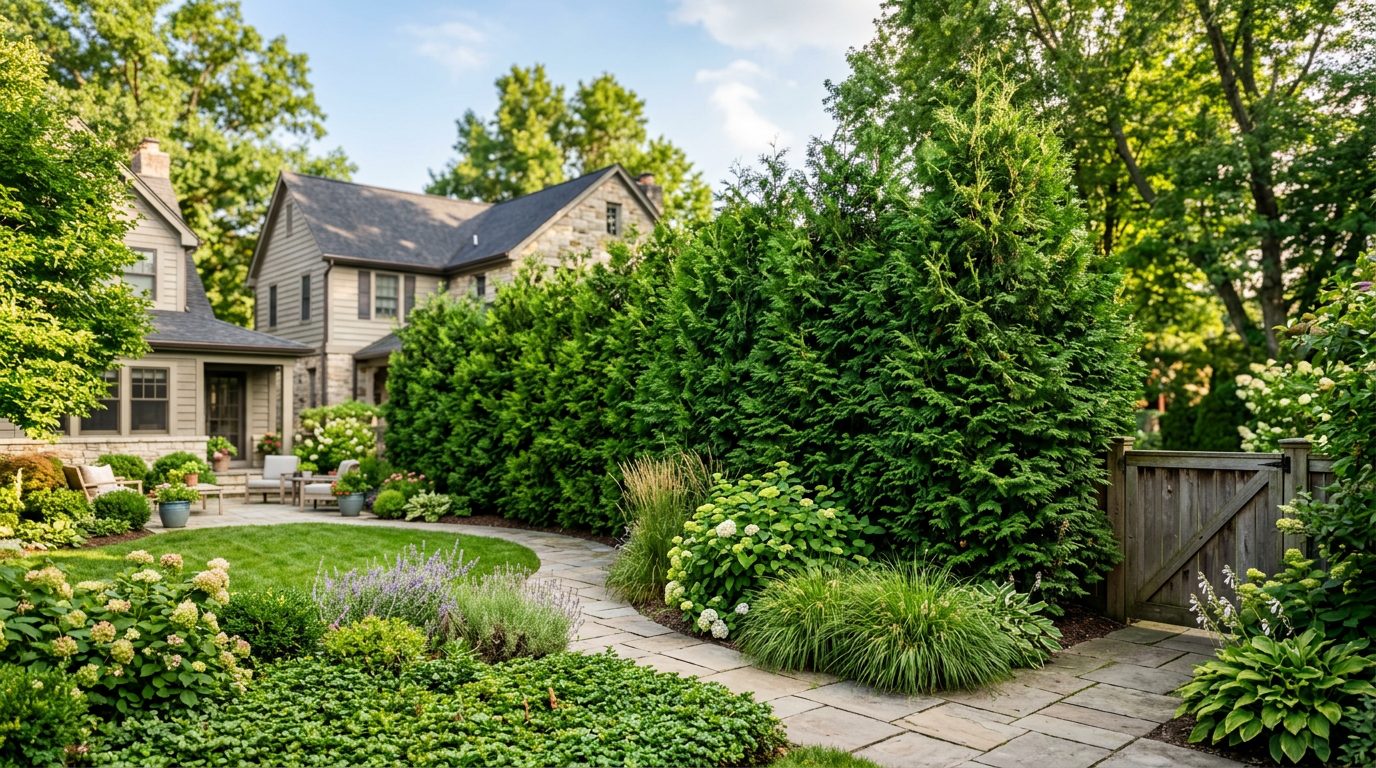
You love your home, but you don't love seeing every single thing your neighbors do. Or maybe you're just tired of looking at a chain-link fence, a busy road, or that weirdly-colored shed next door. Building a 6-foot wooden fence is one option, but it's expensive, boring, and doesn't do a thing for noise or air quality.
We say, grow a wall. A living one.
Fast-growing privacy trees are the landscaper's secret weapon for creating natural, beautiful screens that block views, muffle sound, and add serious value to your property. But not all "fast-growing" trees are created equal. Some are weak, some are messy, and some get way too big for a typical yard. Forget the guesswork. We've planted, watched, and sometimes killed a whole lot of trees to figure out which ones deliver on their promise. Here are the best fast growing privacy trees that will get you from exposed to enclosed in record time.
What Makes a Privacy Tree "Fast-Growing"?
Let's get on the same page. In the nursery world, "fast-growing" typically means a tree that puts on at least 24 inches (2 feet) of vertical growth per year once it's established. Some of the superstars on our list will easily double that.
But there's a trade-off. Extreme speed can sometimes mean weaker wood (hello, storm damage) or a shorter overall lifespan. Don't worry, we're not recommending anything that will snap in a stiff breeze. The key is to choose a tree that balances speed with strength and suitability for your space. We're focusing on the ones that give you that lush, green barrier without the long-term headache.
Our Top Picks: The Evergreen All-Stars
For year-round privacy, you can't beat evergreens. They hold their foliage through winter, providing a consistent screen when deciduous trees are just a bunch of sticks. These are our go-to choices for reliable, dense coverage.
-
Thuja 'Green Giant' (Arborvitae): This is the undisputed champion of privacy trees, and for good reason. It's a hybrid with incredible vigor, growing a legitimate 3 to 5 feet per year. It has a beautiful, uniform conical shape, dense foliage that goes right to the ground, and it's more deer-resistant than its cousin, the 'Emerald Green'. It's also remarkably low-maintenance once established. For a solid wall, plant them 5-6 feet apart. Mature size is 40-60 feet tall and 12-20 feet wide, so give it room.
-
Leyland Cypress: For a long time, this was the king. It's still a fantastic option, rocketing up at 3 to 4 feet per year. It tolerates a variety of soils, loves full sun, and creates a very dense screen. The main drawback? It's prone to canker and other diseases if it's stressed, particularly if planted too close together or in poorly drained soil. Give them 6-8 feet of space to ensure good air circulation.
-
Nellie R. Stevens Holly: If you want something other than a conifer, Nellie Stevens is your plant. This broadleaf evergreen provides a different texture and a classic, deep-green look. It grows a respectable 2 to 3 feet per year and is incredibly tough, handling heat, drought, and even some shade. Once established, it's one of the best drought tolerant plants for landscaping. It produces bright red berries in the winter for a festive touch (you don't necessarily need a male pollinator; there's usually one in the neighborhood). Its dense, spiny leaves also make it a great deterrent for unwanted foot traffic.
-
'Emerald Green' Arborvitae (Thuja occidentalis): Is a 60-foot Green Giant too much for your space? Meet its smaller, more refined cousin. 'Emerald Green' grows at a more moderate pace of 1 to 2 feet per year, but its tidy, narrow shape (10-15 feet tall, 3-4 feet wide) makes it perfect for smaller yards or flanking an entryway. You'll plant these closer, about 3 feet apart, for a formal hedge.
The Speed Demons: Deciduous Options
If you need a screen yesterday and can live with winter transparency, nothing beats the growth rate of these deciduous trees. A common strategy is to plant a row of these for a quick visual block while a slower-growing evergreen screen fills in behind it.
-
Hybrid Poplar: This tree is practically a rocket ship, capable of growing 5 to 8 feet in a single year. It's a cross between different poplar species, bred for sheer speed. It's a great temporary solution for blocking a view quickly. The downsides? It has a shorter lifespan (30-50 years), its root system can be aggressive, and, of course, it loses its leaves in the fall, leaving you exposed for the winter.
-
Weeping Willow: Famous for its graceful, sweeping branches, the Weeping Willow also grows incredibly fast, at 3 to 8 feet per year. However, this is a tree with serious requirements. It demands a lot of water and a lot of space. Its wood is brittle and prone to breaking in storms, and its roots are notorious for seeking out and destroying sewer lines. Plant it only if you have a large, moist area far away from your house. It's one of the few trees that will actually thrive in soggy spots, unlike many plants that require careful soil selection, such as those on our list of best plants for clay soil.
Planting for Maximum Speed: The Dirt Cheap Genius Method
You can buy the fastest-growing tree on the planet, but if you just stick it in the ground and walk away, you'll be disappointed. In our own test plots, we've seen firsthand how a little extra prep work can nearly double the first-year growth rate.
- Dig Wide, Not Deep: Dig your planting hole two to three times wider than the tree's root ball, but only as deep as the root ball itself. Planting too deep is a common and fatal mistake. You want the top of the root ball to be level with or slightly above the surrounding soil.
- Amend the Soil: Don't just backfill with the clay or sand you dug out. Give your tree a five-star meal. We mix the native soil with a generous amount of quality compost. A bag of Black Kow Composted Cow Manure (about $7 at Home Depot) is our go-to for enriching the soil.
- Use a Starter Fertilizer: To reduce transplant shock and get roots growing fast, use a fertilizer formulated for new plantings. We swear by Espoma Bio-tone Starter Plus (around $15 for a 4-lb bag). It's full of mycorrhizae, beneficial fungi that form a symbiotic relationship with the roots, helping them absorb more water and nutrients.
- Water Deeply and Consistently: For the first year, your tree is thirsty. Don't just sprinkle it with a hose for five minutes. Use a soaker hose or let a regular hose trickle at the base for 20-30 minutes to ensure the water penetrates deep into the root zone. Check the soil every few days; if it's dry 2 inches down, it's time to water.
- Mulch, Mulch, Mulch: Apply a 2-3 inch layer of organic mulch (like shredded hardwood or pine bark) around the base of the tree, extending out at least as wide as the branches. This retains soil moisture, suppresses weeds, and regulates soil temperature. Crucially, do not let the mulch touch the trunk. This "volcano mulching" invites pests and disease.
How Spacing Affects Your Privacy Screen
Getting the spacing right is non-negotiable. Planting too close is a rookie mistake that creates a perfect environment for disease and leads to the trees choking each other out, resulting in a scraggly, browned-out hedge. According to research from the University of Florida, proper spacing not only improves tree health but can significantly increase canopy volume over time compared to overcrowded plantings, leading to a denser, more effective screen. (Source: https://edis.ifas.ufl.edu/publication/FR436)
Here’s a simple guide:
- Thuja 'Green Giant': 5-6 feet apart (center to center)
- Leyland Cypress: 6-8 feet apart
- Nellie R. Stevens Holly: 7-9 feet apart
- 'Emerald Green' Arborvitae: 3 feet apart
Measure twice, plant once. Your future self will thank you.
Beyond Trees: Fast-Growing Shrubs for Privacy
Sometimes a 60-foot tree is like using a sledgehammer to crack a nut. If you only need 8-15 feet of screening, a fast-growing shrub might be a better, more manageable choice.
- Wax Myrtle: A fantastic native option that grows 3-5 feet a year. It's evergreen, has pleasant-smelling foliage, and is a host plant for pollinators, making it a great addition if you're building a garden focused on native plants for pollinators. It provides excellent, dense coverage.
- North Privet: This is the classic, old-school hedge plant for a reason: it grows like a weed. You can easily get 3 feet of growth per year. It requires regular shearing to keep it tidy, and it can be semi-evergreen in colder climates. Check local regulations, as it can be invasive in some regions.
Planting a row of shrubs is a great opportunity to create a layered garden bed. Consider adding some tough, sun-loving flowers at their feet from our list of the best perennials for full sun to add color and texture.
Frequently asked
What is the absolute fastest growing tree for privacy?+
The Hybrid Poplar, which can grow an astonishing 5 to 8 feet per year. However, it's deciduous, meaning it loses its leaves in winter. For year-round privacy, Thuja 'Green Giant' is the fastest evergreen, typically growing 3 to 5 feet per year under ideal conditions.
How far apart should I plant Thuja Green Giants for a privacy screen?+
For a dense, quick-filling privacy screen, plant Thuja 'Green Giant' arborvitae 5 to 6 feet apart, measured from the center of each tree. Planting any closer can lead to overcrowding, disease, and reduced airflow as they mature, ultimately harming the health of your living fence.
Can I keep fast-growing trees small with pruning?+
Yes, you can control the size of most fast-growing trees with regular pruning, but it's a significant commitment. It's often better to choose a plant whose mature size fits your space, like an 'Emerald Green' Arborvitae, rather than fighting to keep a 60-foot tree at 15 feet.
What's the cheapest way to create a privacy screen?+
The most budget-friendly method is to buy the smallest available saplings, often called 'whips' or 'liners,' from online nurseries. While they take longer to provide screening, the cost savings are massive. A 1-foot sapling might be under $10, while a 5-foot tree could be over $100.