
Drought Tolerant Plants for Landscaping: Our Top Picks
Stop wasting water and time. We're breaking down the best drought tolerant plants that will give you a stunning landscape without the constant watering.
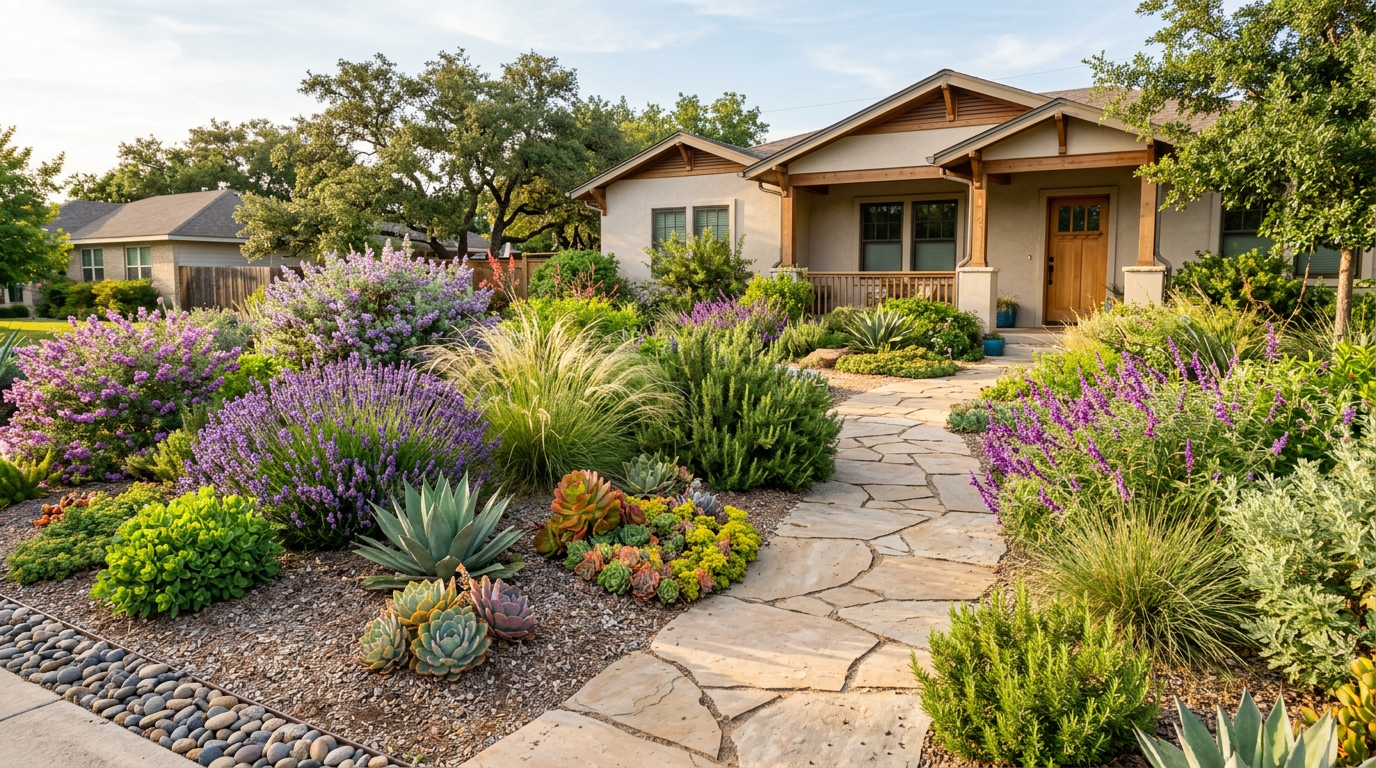
Let's be direct: your hose is not your friend. Chaining yourself to it all summer, watching your water bill climb higher than the July temperatures, just to keep a few petunias alive? There's a better way. Welcome to the world of drought-tolerant landscaping, where the plants do the heavy lifting so you don't have to.
This isn't about covering your yard in gravel and a single, sad-looking cactus. This is about building a lush, vibrant, and resilient garden that sips water instead of guzzling it. We're talking about beautiful flowers, interesting textures, and year-round structure that can handle a heatwave without fainting. It’s smart, it’s efficient, and frankly, it’s the genius way to garden.
Why Go Drought-Tolerant? (Hint: It's Not Just About Water)
Saving water is the obvious win. According to the EPA, landscaping can account for up to 60 percent of a home's water use in dry climates. Switching to water-wise plants can reduce that outdoor water use by 20 to 50 percent. For a typical American household, that can mean saving tens of thousands of gallons of water per year. (Source: https://www.epa.gov/watersense/outdoors). That’s a real number that shows up on your utility bill.
But the benefits go way beyond your wallet:
- Less Work: Once established, these plants are the definition of low-maintenance. Less watering, less fertilizing, less fussing. You get more time to actually enjoy your yard.
- Healthier Plants: Drought-tolerant plants are adapted to survive dry spells. This makes them more resilient to pests and diseases that often prey on stressed, over-watered plants.
- Better for the Environment: Reducing your municipal water use helps conserve a vital resource. Many of these plants are also native plants for pollinators, creating a backyard ecosystem that supports bees, butterflies, and other beneficial insects.
Unkillable Drought-Tolerant Perennials
Perennials are the backbone of a low-water garden, coming back year after year. The key is choosing ones that laugh in the face of full sun and dry soil. These are some of our go-to choices that deliver maximum beauty for minimal effort.
- Yarrow (Achillea millefolium): This one is a superstar. Ferny foliage, flat-topped flowers in colors from yellow to pink to red, and it thrives on neglect. Pollinators love it, deer and rabbits hate it. The 'Moonshine' variety with its bright yellow flowers is a classic for a reason.
- Coneflower (Echinacea purpurea): A staple in any sun-drenched garden, coneflowers offer that classic daisy shape in shades of purple, pink, white, and now even orange and yellow. They are tough, reliable, and their seed heads provide winter interest and food for birds. They are one of the best perennials for full sun hands down.
- Russian Sage (Perovskia atriplicifolia): If you want a haze of cool lavender-blue in your garden from mid-summer to fall, this is your plant. Its silvery stems and aromatic foliage are beautiful even when not in bloom. It's so tough, we've seen it thrive in the median strips of highways. That’s a plant with grit.
- Sedum 'Autumn Joy' (Hylotelephium 'Herbstfreude'): A true four-season plant. It emerges in spring like little green broccoli, forms a neat clump in summer, erupts in massive pink flowerheads in fall that attract every bee in the neighborhood, and the dried flower heads look incredible dusted with snow.
Bomb-Proof Shrubs for Structure and Style
Shrubs provide the structure and year-round interest that every garden needs. Picking the right ones means you get that visual anchor without needing to drag a sprinkler out every other day.
- Barberry (Berberis thunbergii): Yes, some varieties can be invasive in certain areas (check local restrictions), but newer sterile cultivars like 'Concorde' or 'Orange Rocket' are fantastic. They offer incredible color from deep purple to blazing orange, are completely unfazed by heat and drought, and their thorns make them deer-proof.
- Juniper (Juniperus): Don't roll your eyes. We're not talking about the overgrown, scraggly junipers of yesteryear. Modern cultivars offer incredible textures and colors in forms from low, spreading groundcovers ('Blue Rug') to upright, narrow sentinels ('Skyrocket'). They are evergreen, tough as nails, and many can handle even the most stubborn soil, including clay. Several juniper varieties are on our list of the best plants for clay soil.
- Smokebush (Cotinus coggygria): For a real showstopper, look no further. The 'Royal Purple' or 'Grace' varieties have rich, deep purple foliage all season long. In mid-summer, they produce huge, airy flower panicles that look like puffs of pinkish smoke. They want full sun and well-drained soil and will reward you by getting bigger and better every year with almost no care.
Groundcovers That Smother Weeds, Not Your Water Bill
Bare soil is an invitation for weeds and water evaporation. A dense, low-growing groundcover is the perfect solution. It acts as a living mulch, retaining moisture, choking out weeds, and adding another layer of texture and color.
- Creeping Thyme (Thymus serpyllum): This isn't just for cooking. Plant it between stepping stones or as a lawn substitute in a small, hot area. It forms a dense mat of tiny, fragrant leaves, covers itself in pink or purple flowers in early summer, and can handle light foot traffic. It releases a wonderful scent when you walk on it.
- Lamb's Ear (Stachys byzantina): The name says it all. The leaves are thick, fuzzy, and silver-gray, like a lamb's ear. Kids love touching them. It's incredibly effective at suppressing weeds and its silver foliage is a perfect cooling counterpoint to brighter greens and flowers. The 'Big Ears' variety has larger leaves and rarely flowers, which many gardeners prefer.
- Ice Plant (Delosperma cooperi): In a hot, dry, sun-baked spot where everything else dies, plant Ice Plant. This succulent groundcover has fleshy, green foliage and will cover itself in a blanket of shimmering, jewel-toned, daisy-like flowers for months on end. It needs sharp drainage, so it's perfect for rock walls, slopes, or gravel gardens.
The First-Year Rule: Your Only Real Job
Here’s the most important piece of advice we can give you: drought-tolerant does not mean zero-water. Not at first.
We call it the "First-Year Rule." For the first growing season after you plant them, you are in charge of your plant's root development. Your job is to water them deeply and consistently (but not constantly) to encourage their roots to grow deep into the soil, searching for moisture. A good soaking once a week is far better than a light sprinkle every day.
In our own test gardens, we've found the key is a good mulch and the right watering tool. We lay down a 2-3 inch layer of a quality cedar or pine bark mulch, like a 2 cu. ft. bag of Vigoro Premium Brown Mulch which runs about $3.78 at Home Depot. This keeps the soil moist and cool. Then, for watering, we don't use a harsh spray nozzle. We use a Dramm 1000 Water Breaker Nozzle (about $15 online). It creates a gentle, shower-like flow that soaks the soil without causing erosion or disturbing the mulch. After that first year? You can pretty much put the hose away, except during the most extreme, prolonged droughts. Your plants will be ready to fend for themselves.
Frequently asked
What is the most low-maintenance drought-tolerant plant?+
For sheer toughness, it's hard to beat Sedum 'Autumn Joy' or Russian Sage. Once established after their first year, they genuinely thrive on neglect. They require no fertilizer, very little water, and are rarely bothered by pests or diseases, making them incredibly low-maintenance choices.
Do drought-tolerant plants need any water at all?+
Yes. All plants need water to live. The key is that 'drought-tolerant' plants can survive long periods with very little water *once established*. They require regular, deep watering during their first year to build a strong root system. Afterwards, they only need supplemental water during extreme, prolonged heatwaves.
How do you prepare soil for drought-tolerant plants?+
Most drought-tolerant plants hate 'wet feet' and prefer well-draining soil over rich, heavily amended soil. If you have heavy clay, amend the planting area with compost and coarse sand or pea gravel to improve drainage. For most other soils, simply planting them is enough.
Can I have a colorful garden with only drought-tolerant plants?+
Absolutely. Colorful drought-tolerant options are abundant. Between the purple spikes of Salvia, the yellow plates of Yarrow, the magenta flowers of Ice Plant, and the fiery foliage of 'Orange Rocket' Barberry, you can create a vibrant, multi-hued landscape that barely needs watering.
When is the best time to plant drought-tolerant plants?+
Fall is the ideal time to plant most drought-tolerant perennials and shrubs. The soil is still warm, which encourages root growth, but the cooler air temperatures put less stress on the plant. Planting in fall gives them a huge head start for surviving their first summer.