How to Start a Vegetable Garden: A No-Nonsense Guide
Forget the gatekeeping and confusing advice. We're showing you exactly how to start a vegetable garden that actually produces food, even if you've never touched a trowel before.
Let's be honest: the internet makes starting a vegetable garden sound as complicated as building a nuclear reactor. There's talk of soil pH, esoteric Latin plant names, and a thousand different fertilizers that all promise miracles. It's enough to make you throw in the trowel before you even buy one.
We're here to cut through the noise. Growing your own food is one of the most rewarding things you can do, and it doesn't have to be a fussy, expensive, or gatekept hobby. This is your no-nonsense guide to getting actual vegetables from your own patch of dirt.
Step 1: Location, Location, Photosynthesis
Before you buy a single seed, you need to find the right spot. And the single most important factor is sun. Most vegetables—especially the ones you're dreaming of, like tomatoes, peppers, and squash—are sun hogs. They need at least 6-8 hours of direct, unfiltered sunlight per day.
How do you figure this out? Simple. Go outside on a sunny day and take a picture of your potential garden spot every hour, from 9 AM to 5 PM. Look at the photos. Is the area blasted with sun for most of the day, or is it in the shadow of your house or a big oak tree by 2 PM? Be brutally honest. A 'mostly sunny' spot that only gets 4 hours of direct light will only produce disappointment.
Also, consider your water source. Are you going to be hauling buckets from the kitchen sink, or is there a spigot nearby? The closer to water, the less of a chore it will be, and the more likely you are to keep your plants alive.
Step 2: To Dig or To Build? (Your Bed Options)
You have three main options for where your plants will live. Don't overthink it.
- In-Ground Garden: The cheapest option. You basically just dig up a patch of your existing yard. The downside is that you're stuck with whatever soil you have, which is often compacted, full of clay, and low in organic matter. You'll need to do significant work amending it.
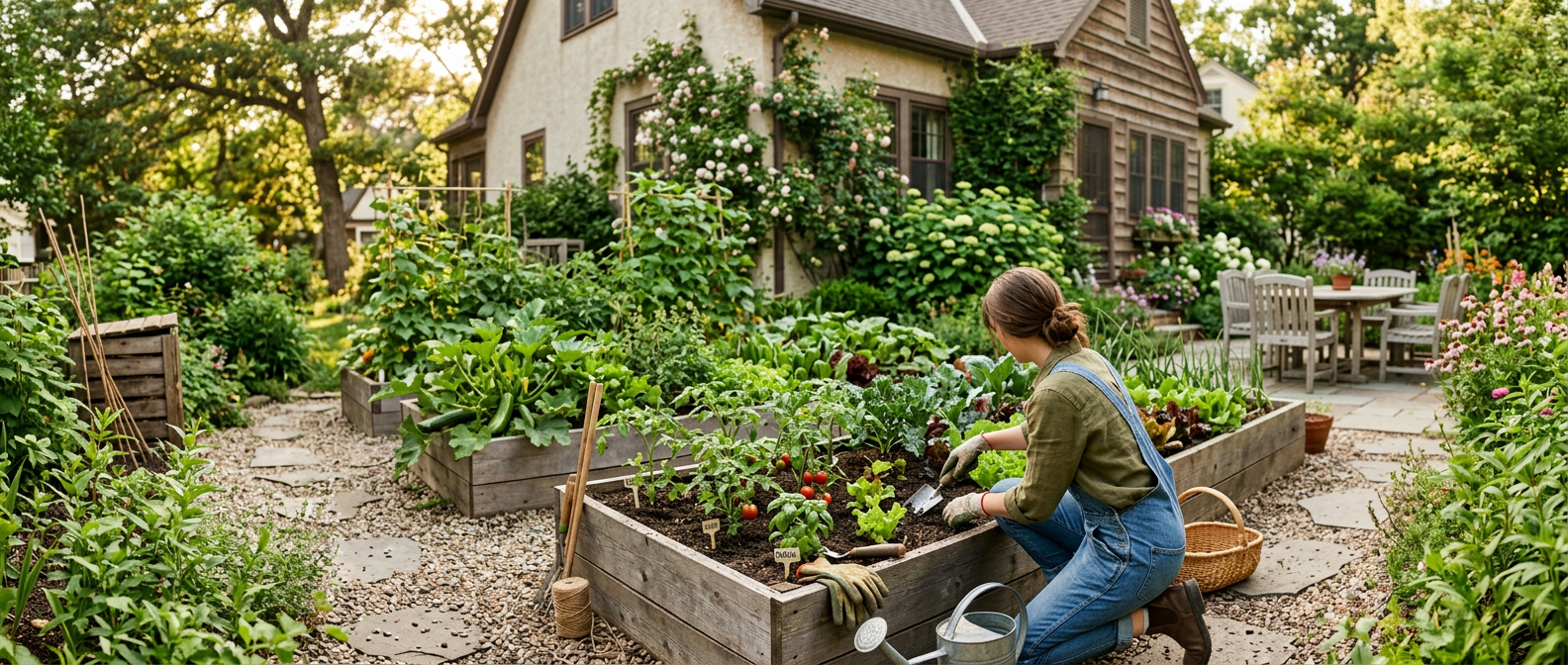
- Raised Beds: The best option for most beginners. A raised bed is just a frame—usually wood, metal, or composite—that you fill with perfect soil. It provides excellent drainage, warms up faster in the spring, and saves your back. A 4'x8' bed is the classic starting size. You can build one yourself with cedar deck boards for about $100-150, or buy a kit.
- Container Gardening: Perfect for patios, balconies, or renters. The key is to go big. Small pots dry out in a heartbeat. We recommend fabric grow bags, like the Vivosun 10-gallon bags (a 5-pack costs about $25). They're cheap, provide great aeration for roots, and are hard to overwater.
We've built dozens of gardens, and for a first-timer, a single 4'x8' cedar raised bed is the sweet spot. It's big enough to grow a meaningful amount of food but small enough to manage.
Step 3: The Dirt on Dirt (Building Great Soil)
This is the step you absolutely cannot skip. Great vegetables grow in great soil. Garden soil isn't just dirt; it's a living ecosystem of minerals, organic matter, air, and water.
If you're using a raised bed or containers, you get to create this from scratch. The gold standard for a DIY mix is often called 'Mel's Mix':
- 1/3 Coarse Vermiculite (for aeration and water retention)
- 1/3 Peat Moss or Coco Coir (for structure and moisture)
- 1/3 Blended Compost (for nutrients)
For the compost portion, don't just buy the cheapest stuff. Look for a quality bagged compost like Black Kow Composted Cow Manure (about $7/bag) or, if you can find it, Coast of Maine's products. You'll need about 1 cubic yard of mix to fill a 4'x8'x12" raised bed. Yes, filling it is an expense, but it's a one-time investment in a foundation that will pay you back for years. We've tried every shortcut, and believe us, skimping on soil is the fastest way to a sad, empty harvest basket.
Step 4: Pick Your Players (Choosing Easy Plants)
Your first year is about building confidence. You want wins. This is not the year to try growing artisanal Belgian melons. We recommend starting with plants that are prolific and hard to kill.
Easy Mode (Start Here!):
- Leaf Lettuce: Plant seeds directly in the ground. You'll be harvesting in 45 days. You can cut what you need and it will grow back.
- Bush Beans: Incredibly productive. Plant seeds after your last frost and you'll be swimming in beans. 'Provider' is a reliable variety.
- Zucchini/Summer Squash: One plant is often enough for a family. Just give it space. 'Black Beauty' is a classic.
- Radishes: The ultimate instant gratification. Many varieties are ready to eat in under 30 days. 'Cherry Belle' is a good start.
Slightly More Challenging (Year 2?):
- Tomatoes: The gateway drug for many gardeners. 'Celebrity' is a disease-resistant workhorse. They need staking or caging.
- Peppers: Similar needs to tomatoes but can be a bit more finicky about heat.
Should you start from seeds or buy seedlings (starts) from a nursery? For things like lettuce, beans, and radishes, planting seeds directly in the garden is easy and cheap. For tomatoes and peppers, buying healthy-looking starts from a local garden center is a great way to guarantee success.
Step 5: Planting, Watering, and Mulching
Read the seed packet. Seriously. It tells you exactly how deep to plant the seed and how far apart to space your plants. Don't crowd them! Plants need airflow to prevent disease.
Once planted, watering is your main job. For the first week or two, keep the soil consistently moist to help seeds germinate and seedlings establish. After that, the rule is to water deeply but infrequently. A light sprinkle every day encourages shallow, weak roots. You want to soak the soil so the water penetrates 6-8 inches down, which encourages roots to grow deep where the moisture is more consistent. Stick your finger two inches into the soil. If it's dry, it's time to water.
Once your plants are a few inches tall, add a 2-3 inch layer of mulch. Straw, shredded leaves, or pine bark fines work well. Mulch is a game-changer. According to research from the Colorado State University Extension, a good layer of mulch can reduce water evaporation from the soil surface by up to 70%. (Source: https://extension.colostate.edu/topic-areas/yard-garden/mulches-for-home-grounds-7-214/) It also suppresses weeds and keeps soil temperatures even.
Step 6: Gear Up (But Don't Go Broke)
You do not need a shed full of shiny, specialized tools. Here's what you actually need:
- A Hori-Hori Knife: This Japanese tool is a trowel, a weeder, a knife, and a measuring tool all in one. The Nisaku Hori Hori is a legend for a reason and costs about $25. It will last forever.
- Gloves: Gardening is rough on the hands. A simple pair of Gorilla Grip gloves (~$5) offers great dexterity and protection.
- A Hose with a decent nozzle: You want a 'shower' or 'gentle' setting so you don't blast your seedlings out of the ground. A Dramm wand is a great investment, but any adjustable nozzle will do.
That's it. You can do 95% of your garden tasks with those three things.
Step 7: Invite the Bees
Many of our favorite vegetables, like squash, cucumbers, and even tomatoes, rely on pollinators to produce fruit. You can have the best soil and sun in the world, but if there are no bees, you won't get any zucchini. The easiest way to solve this is to interplant flowers right in your vegetable bed. Marigolds, calendula, and borage are great options.
Even better, make your entire yard more pollinator-friendly. This creates a resilient ecosystem, not just a food plot. For a deep dive, check out our guide on native plants for pollinators to really level up your garden's support system.
Frequently asked
What is the easiest vegetable to grow for a beginner?+
Leaf lettuce and bush beans are arguably the easiest. Both grow quickly from seed planted directly in the garden, require minimal care, and provide a fast, rewarding harvest. Zucchini is also very easy, though one plant can produce an overwhelming amount of squash.
How big should my first vegetable garden be?+
Start small. A 4'x8' raised bed is an ideal size for a beginner. It's large enough to grow several types of plants and get a real harvest, but small enough to manage without feeling overwhelmed. For containers, start with 3-5 large pots (10-gallon minimum).
How much does it cost to start a vegetable garden?+
It varies widely. A simple container garden can be started for under $50 with grow bags, soil, and seeds. A good quality 4'x8' cedar raised bed can cost $250-400 for the lumber, high-quality soil mix, and plants. You can reduce costs by using cheaper materials or amending existing soil.
When should I start my vegetable garden?+
This depends entirely on your local climate and 'last frost date.' Cool-season crops like lettuce and radishes can be planted a few weeks before the last frost. Warm-season crops like tomatoes and zucchini must be planted after all danger of frost has passed. Check your USDA Plant Hardiness Zone for specifics.
What's the difference between garden soil and potting soil?+
Garden soil is intended for in-ground use and is often a heavy mix of topsoil, sand, and compost. Potting soil (or potting mix) is specifically for containers. It's much lighter, often soilless, containing peat moss, coco coir, and vermiculite for better drainage and aeration in a closed environment.