
Best Plants for Clay Soil: Our Top 50+ Tough Picks
Stop seeing your clay soil as a curse. With the right plant selection, that heavy, nutrient-rich dirt becomes your garden's greatest asset.
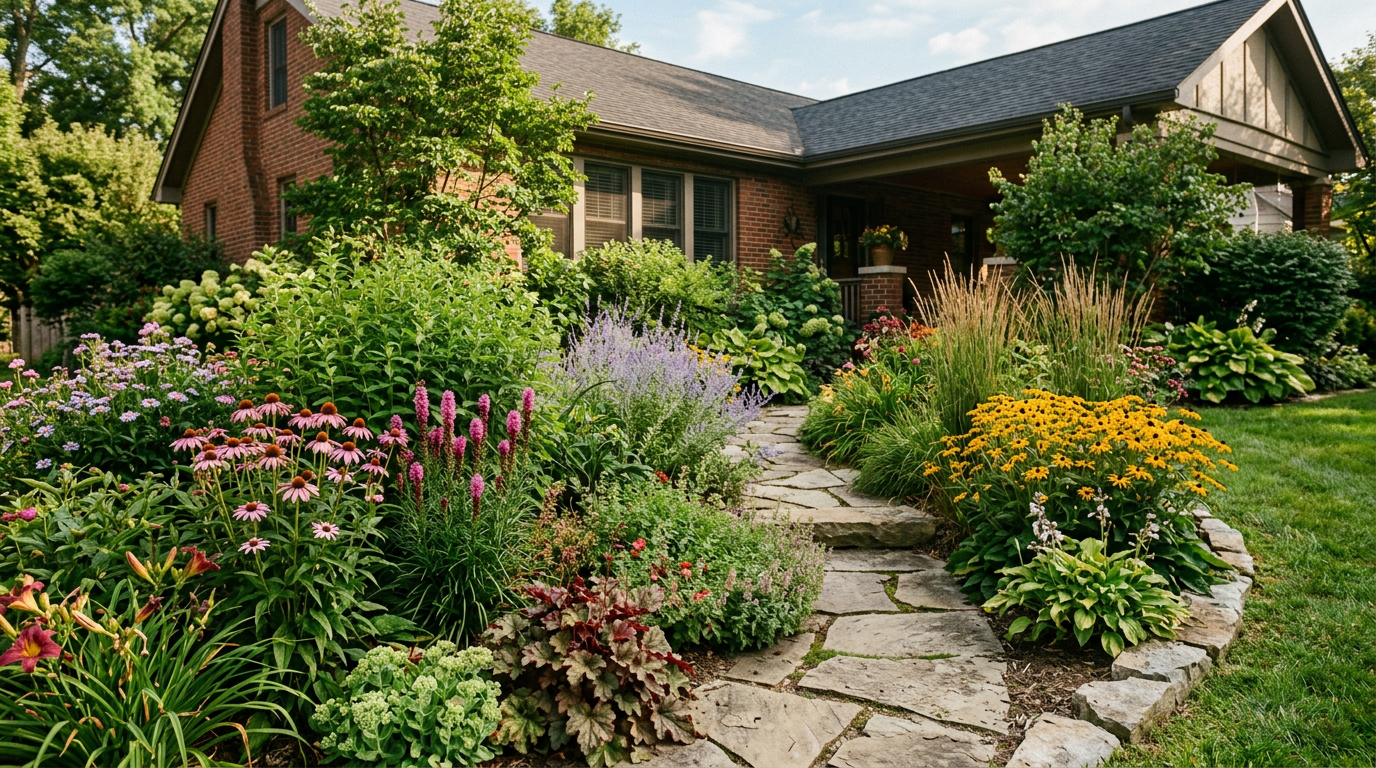
If you can throw a pot with your garden soil, congratulations, you've got clay. For years, the gatekeepers of gardening have treated clay soil like a terminal diagnosis. They'll tell you to dig it all out, spend a fortune on amendments, and basically fight a losing battle against geology.
We're here to tell you that's nonsense.
Clay soil isn't a problem to be solved; it's a condition to be understood. It’s heavy, it’s dense, and it can hold water like a bathtub. But it's also incredibly rich in nutrients. The trick isn't to fix it, it's to plant things that love it. Let's dive into the plants that don't just survive in clay—they absolutely thrive.
What Even Is Clay Soil? (And Why It’s Not a Death Sentence)
Soil is made of particles: sand (the biggest), silt (medium), and clay (the smallest). Clay soil is simply soil with a high percentage of those teeny-tiny clay particles.
To see if you have it, grab a handful of moist soil and try to form a ribbon between your thumb and forefinger. If you can make a ribbon longer than two inches before it breaks, you're in the clay club.
The Bad:
- Poor Drainage: The particles are packed so tightly that water has a hard time passing through. This can lead to root rot for plants that hate having "wet feet."
- Compaction: It gets rock-hard when dry and is easily compacted when wet, making it tough for roots to penetrate.
- Slow to Warm: It takes longer to warm up in the spring, which can delay planting a bit.
The Good:
- Nutrient Powerhouse: Those tiny particles have a massive surface area that holds onto water and, more importantly, nutrients. Your clay is a natural pantry for your plants.
So, instead of seeing a sticky, mucky mess, start seeing a nutrient-rich foundation just waiting for the right plants.
To Amend or Not to Amend: The Dirt Cheap Genius Approach
The standard advice is to dump tons of organic matter into your clay soil every year. And look, that works. Adding a 2-3 inch layer of good quality compost, like Black Kow Composted Cow Manure (about $7 for a 50-lb bag), and working it into the top 6-8 inches of soil will absolutely improve its structure over time. It helps create larger soil aggregates, which improves drainage and aeration.
But that's a lot of work and can get expensive. Our approach? Do it once, when you're planting something new, or don't do it at all. The real secret is choosing plants that are already adapted to clay's quirks. By working with your soil, you save time, money, and your back. We've had sections of our test gardens in unamended clay for years, and by picking the right species, they look just as good as the heavily amended beds.
Our Favorite Perennials That Laugh at Clay Soil
Perennials are the backbone of a low-maintenance garden. Plant them once, and they come back year after year. These champions have tough, fibrous root systems that can muscle their way through heavy soil. We've broken them down into sun and shade lovers.
For Full Sun
These plants want at least 6 hours of direct sun and can handle the way clay bakes in the summer heat.
- Black-Eyed Susan (Rudbeckia): A prairie native that is the definition of tough. It blooms its head off all summer and couldn't care less about your soil type. Bonus: it's a fantastic pollinator plant.
- Coneflower (Echinacea purpurea): Another prairie all-star. Its deep taproot helps it bust through compacted soil and find moisture deep down. There are dozens of new cultivars, but the classic purple is still one of the best for toughness. We love planting it in drifts to create a meadow-like feel and support a huge range of insects. Check out more ideas in our guide to Native Plants for Pollinators: Your Garden's Upgrade.
- Daylily (Hemerocallis): If you can kill a daylily, we're not sure we can help you. These are practically bulletproof. They form dense clumps that out-compete weeds and tolerate both drought and wet spells, a common cycle in clay.
- Aster (Symphyotrichum): A must-have for fall color. New England Aster and Aromatic Aster are particularly clay-tolerant and will be buzzing with bees in September and October.
- Switchgrass (Panicum virgatum): Don't forget ornamental grasses! Switchgrass provides year-round structure and has a deep, fibrous root system perfect for clay. Cultivars like 'Northwind' are famously upright and tough.
For more sun-loving ideas that can take the heat, see our list of the Best Perennials for Full Sun: Our Top 20+ Picks.
For Shade and Part Shade
Clay soil in the shade stays moist longer, which these plants absolutely love.
- Hosta: The undisputed king of the shade garden. Hostas thrive in the moisture-retentive nature of clay. Just watch out for slugs, who also love the conditions.
- Astilbe: Known for its feathery plumes of flowers, Astilbe needs consistent moisture to look its best, making it a perfect match for clay's water-holding capacity.
- Coral Bells (Heuchera): While they need decent drainage, many modern Heuchera cultivars are surprisingly tough. Plant them slightly high (so the crown isn't buried) in an amended planting hole, and they provide incredible foliage color.
- Japanese Painted Fern (Athyrium niponicum 'Pictum'): The silvery, delicate-looking fronds are deceptive. This fern is tough and spreads happily in moist, shady clay soil.
Find more clay-busting shade options in our guide to The Best Shade Perennials for Low-Maintenance Gardens.
Shrubs That Anchor a Clay Garden
Shrubs provide the structure and 'bones' of your garden. Luckily, many common and beautiful shrubs have no problem with heavy soil.
- Panicle Hydrangea (Hydrangea paniculata): Varieties like the famous 'Limelight' or 'Quick Fire' are incredibly adaptable and bloom reliably in full to part sun, clay or not.
- Oakleaf Hydrangea (Hydrangea quercifolia): A shade-loving native that offers four-season interest with its big flowers, gorgeous fall color, and peeling bark. It thrives in moist clay.
- Viburnum: This is a huge and versatile group of shrubs. Arrowwood Viburnum (Viburnum dentatum) is a native that is famously tolerant of heavy, wet clay soils.
- Red Twig Dogwood (Cornus sericea): This shrub is often found in wet areas in the wild, so it's perfectly at home in clay. Its main feature is the brilliant red stems that light up the winter landscape.
- Weigela: An easy-to-grow, flowering shrub that's very forgiving. Its fibrous root system handles clay well, and it flowers profusely in late spring.
The Numbers Don't Lie: Clay Soil's Hidden Superpower
Here’s a little soil science for you. The ability of a soil to hold onto essential nutrients is called its Cation Exchange Capacity, or CEC. A high CEC is a good thing—it means your soil is a natural slow-release fertilizer. According to the University of Minnesota Extension, clay soils have a Cation Exchange Capacity (CEC) of 20 to 30 meq/100g, compared to just 3 to 5 for sandy soils. This means your clay is grabbing onto nutrients like calcium, potassium, and magnesium and holding them for your plants, rather than letting them wash away with the first big rain. That's a superpower worth celebrating. (Source: https://extension.umn.edu/managing-soil-and-nutrients/cation-exchange-capacity-cec)
Yes, You Can Grow Vegetables in Clay
Don't let anyone tell you that you can't have a productive vegetable garden in clay. You just have to be smart about it.
Raised beds are the ultimate cheat code, as you can fill them with perfect loam. If you want to go that route, we've got you covered in our guide on How to Start a Vegetable Garden: A No-Nonsense Guide.
But if you want to grow in the ground, focus on plants that don't mind the soil's density.
- Winners: Leafy greens (Lettuce, Kale, Chard), Brassicas (Broccoli, Cabbage, Brussels Sprouts), and Beans grow beautifully. We've had our best brassica harvests in our unamended clay beds—the soil holds moisture so well they rarely get stressed.
- Challengers: Long, straight root crops like Carrots and Parsnips will struggle, often ending up stunted or forked unless you heavily amend their planting area.
Working a few inches of compost into your vegetable beds each year is a great idea here, as it will improve the soil structure for annual planting. But even without it, you can pull off a great harvest of clay-tolerant crops.
Frequently asked
What is the fastest way to break up clay soil?+
The fastest way is to incorporate several inches of organic matter like compost, aged manure, or leaf mold into the top 6-12 inches of soil. This creates better soil structure, improving drainage and aeration. For a no-dig approach, simply layer the organic matter on top (sheet mulching).
What flowers do well in clay soil?+
Many popular flowers thrive in clay. For full sun, try Black-Eyed Susans, Coneflowers, and Daylilies. In shadier spots, Hostas, Astilbes, and Coral Bells are excellent choices. These plants have robust root systems that can handle the dense, moisture-retentive nature of clay soil.
Should I add sand to clay soil?+
No, never add sand to clay soil. This is a common myth that actually makes the problem worse. Mixing sand and clay creates a substance similar to concrete. Instead of sand, you should only add organic matter like compost to improve clay soil structure.
Can lavender grow in clay soil?+
Generally, no. Lavender is a Mediterranean plant that requires sharp, fast-draining soil and hates 'wet feet.' The heavy, water-retentive nature of clay soil is the opposite of what lavender needs and will almost certainly lead to root rot. It's best grown in pots or raised beds.
What trees grow well in clay soil?+
Many trees are well-adapted to clay. River Birch, Bald Cypress, and Red Maple are excellent choices that tolerate wet conditions. Other tough options include Oaks, Elms, and Sycamores. Always check the specific needs of a tree species before planting, but many native trees are great picks.