
How Often to Water New Plants: A Simple Guide
Watering new plants is the #1 place gardeners go wrong. We'll show you a foolproof system so you can stop worrying and start enjoying your new landscape.
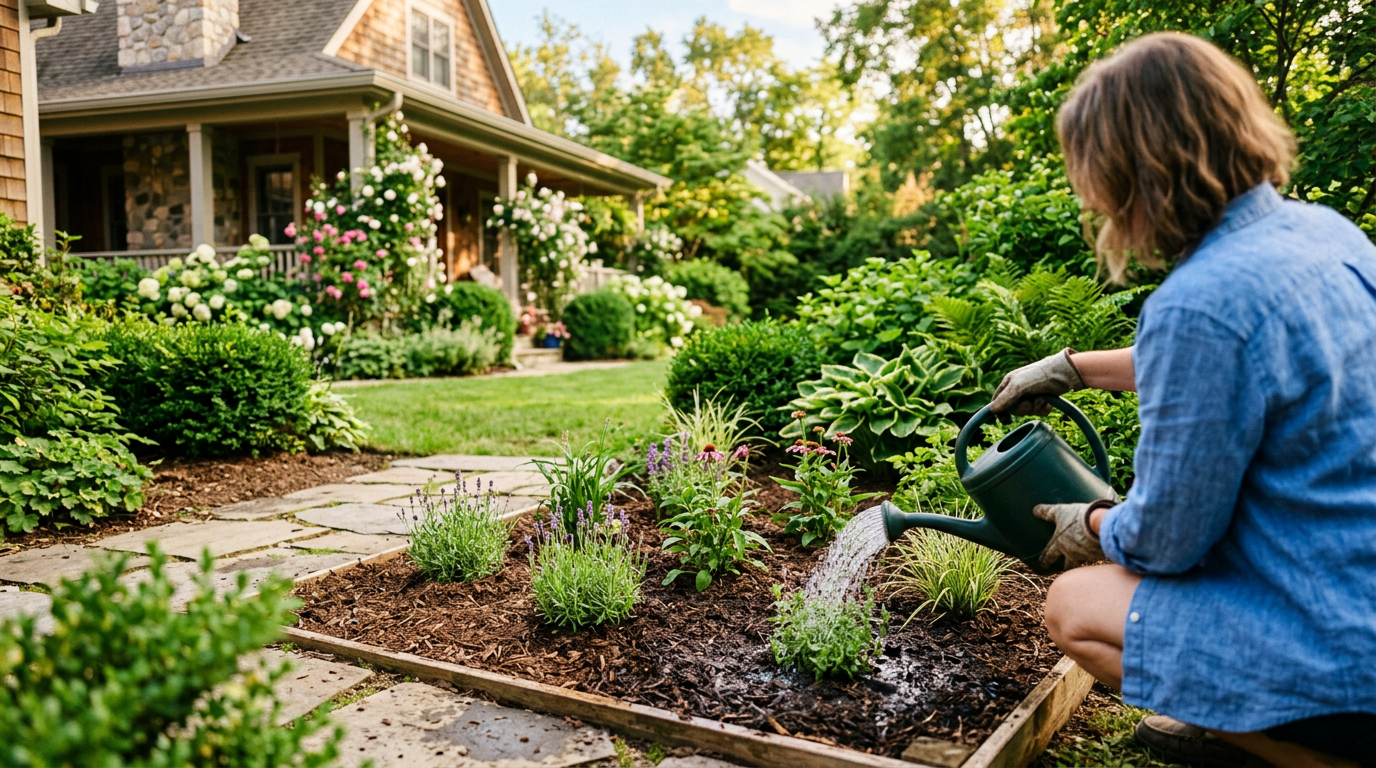
You just spent a small fortune at the nursery. Your car is full of dirt, your back aches, and your new plants are finally in the ground. Now comes the anxiety. How often do you water these things? Water too little, they wither and die. Water too much, they rot from the roots up. It feels like a high-stakes guessing game.
Let's cut through the noise. The internet is full of vague advice or overly complex schedules that don't account for reality. Here at Dirt Cheap Genius, we've planted thousands of shrubs, perennials, and trees. After years of trial and (lots of) error, we've developed a dead-simple system that works. Forget the stress. This is the only guide you'll need to get your new plants established and thriving.
The Golden Rule: Deep, Infrequent Watering
If you remember one thing from this article, make it this: water deeply, but infrequently.
This is the opposite of what many new gardeners do. They sprinkle a little water on their plants every day. This is a recipe for disaster. A light, daily sprinkle only moistens the top inch of soil. This encourages the plant to grow a weak, shallow mat of roots right at the surface. These plants become totally dependent on you, and the first hot, dry day that you forget to water, they're toast.
Deep watering, on the other hand, soaks the entire root zone, several inches or even a foot down. The surface soil dries out over the next few days, which forces the plant's roots to grow downward in search of that deep moisture. This creates a strong, resilient, and more drought-tolerant plant in the long run. You're not just giving the plant a drink; you're training it to survive.
So how do you know when it's time for a deep watering? Simple. Use the tool you were born with: your finger. Stick your index finger into the soil near the base of the plant, up to your second knuckle. Is it dry? Time to water. Is it damp? Leave it alone and check again tomorrow. This "finger test" is more reliable than any fancy gadget or rigid schedule.
A Starting Schedule for Different Plant Types
Okay, "check with your finger" is the principle, but you need a starting point. The type of plant makes a big difference in its initial water needs. Here’s a baseline schedule to get you through the crucial first season.
-
New Annuals & Vegetables: These have small root systems and are often planted during the hottest part of the year. For the first week, check them daily. They will likely need water every day or every other day, especially if they're in containers or you're just starting your vegetable garden. After the first week, you can taper back, using the finger test to guide you toward watering every 2-3 days.
-
New Perennials: These are your long-term players. For the first 2-3 weeks after planting, give them a deep soaking every 2-3 days to help them settle in. After that, for the rest of their first growing season, a deep watering once a week is usually sufficient, unless you're in a heatwave. This applies to both sun-lovers and shade-dwellers. A well-watered plant is better equipped to handle its environment, whether you're growing the best perennials for full sun or something for a darker corner.
-
New Shrubs & Trees: This is your biggest investment, so getting the watering right is critical. For the first month, they need a deep watering 2-3 times per week. After the first month and for the rest of the first year, they need a thorough soaking once a week. A great rule of thumb for trees is to provide 10 gallons of water for every inch of the trunk's diameter. Slow delivery is key for these guys, which we’ll cover next. This is especially true if you're trying to establish fast growing privacy trees and want them to put on size quickly.
It's Not Just How Often, It's How You Water
Your technique matters just as much as your schedule. Waving a hose over the top of your plants for 30 seconds isn't going to cut it.
- Water the Base, Not the Leaves: Always apply water directly to the soil at the base of the plant. Wetting the foliage, especially in the evening, creates a perfect environment for fungal diseases like powdery mildew. Keep the leaves dry.
- Go Low and Slow: You want the water to soak in, not run off. Drip irrigation or soaker hoses are the absolute best tools for this. We run a Dramm ColorStorm Soaker Hose (about $25 for 50 feet) through our perennial beds and let it run for 30-60 minutes once a week. It delivers water right to the roots with almost zero evaporation or runoff. For individual trees, you can get a similar effect by drilling a 1/8-inch hole in the bottom of a 5-gallon bucket, placing it near the trunk, and filling it with water.
- Water in the Morning: The best time to water is early in the morning. This gives the plant all day to absorb the moisture before the sun gets intense. It also minimizes water lost to evaporation. If you water in the heat of the day, you can lose up to 30% of your water before it even reaches the roots. Evening watering is a distant second best, but it can encourage fungal growth.
Adjusting for the Real World: Soil, Sun, and Weather
No garden exists in a vacuum. A rigid schedule is doomed to fail because it doesn't account for your specific conditions. You have to be an observer.
- Soil Type: The soil you have is a huge factor. Sandy soil drains like a sieve and will need more frequent watering. Heavy clay soil holds onto water like a sponge; you can water less frequently, but you need to water more slowly to allow it to absorb. If you're dealing with heavy clay, choosing the right plants is half the battle. We've got a whole list of tough plants for clay soil that can handle it.
- Sun and Wind: A plant in baking, all-day sun will need more water than one in a protected, shady spot. Wind also has a major drying effect. Pay closer attention to plants in exposed, windy areas. If you have a dark, protected corner, consider some of our favorite best shade perennials that won't need as much attention.
- Weather: This is the most obvious one. Did you get a full day of soaking rain? Don't water for a few days. Is there a 100°F heat dome parked over your town? You'll need to water more often. The finger test is your best friend here. It tells you the actual conditions in your soil, not what the calendar says.
The Numbers Don't Lie: How Much Water Are We Talking?
It helps to have a target. For most landscapes, the universal recommendation is 1 inch of water per week, delivered either by rain or by you. According to the University of Minnesota Extension, this is the benchmark for getting new trees and shrubs established during their first couple of years (Source: https://extension.umn.edu/planting-and-growing-guides/watering-newly-planted-trees-and-shrubs). But what does "1 inch of water" even mean?
It's simpler than you think. Place a few empty tuna cans (or any straight-sided container) around the area you're watering. Turn on your sprinkler or soaker hose. Time how long it takes for the cans to collect 1 inch of water. Now you know! If it takes 45 minutes, that's your target watering time for that zone each week. For new plants, you might split this into two 30-minute sessions for the first few weeks, but the total volume remains your goal.
Tools of the Trade That Actually Work
You don't need a lot of expensive gear, but a few good tools make the job easier and more effective.
- A Good Nozzle: A basic hose-end sprayer with multiple settings is essential. You need a "shower" or "soaker" setting for gently watering new plants at the base. We're fans of the Gilmour High-Pressure PRO Fireman's Spray Nozzle (around $15). It's built like a tank and has a fully adjustable spray that goes from a gentle soak to a jet stream.
- Soaker Hoses: As mentioned, these are our top pick for efficient watering of garden beds and hedges. They save water, save time, and reduce disease.
- Watering Can: For containers or just-planted annuals, a watering can gives you precision. Get one with a removable "rose" (the sprinkler head) so you can get a gentle shower. The Behrens 2-Gallon Steel Watering Can is a classic that will outlive you, and it costs about $40.
- Moisture Meter (Optional): Some people swear by soil moisture meters like the XLUX T10 (about $13). They can be helpful if you really don't trust your own judgment. But honestly, we've found that after a few weeks of using the finger test, you develop a feel for your soil that's faster and just as accurate.
Watering new plants isn't black magic. It's about observation and consistency. Give them a deep drink, let the soil dry a bit, and repeat. By encouraging those deep roots from day one, you're setting your garden up for a future where it needs less work from you. And that's the whole point.
Frequently asked
How do I know if I'm overwatering a new plant?+
Look for yellowing leaves (especially lower ones), mushy stems, fungus gnats, or a sour smell from the soil. The soil will feel consistently soggy or waterlogged, not just moist. Always let the top 1-2 inches of soil dry out between waterings.
Should I water new plants every day?+
Only for the first few days, maybe, for small annuals in hot weather. After that initial period, watering daily is usually too much and leads to weak, shallow roots and root rot. Deeper, less frequent watering is much better for long-term health.
How long does it take for a new plant to get established?+
It varies by plant type. Annuals and vegetables establish in a few weeks. Perennials typically take one full growing season. Shrubs and trees can take 1-2 years to develop a strong, independent root system that doesn't need regular supplemental watering.
Is it better to water in the morning or evening?+
Morning is almost always better. It minimizes water loss from evaporation and allows the plant's leaves to dry completely during the day. This helps prevent common fungal diseases that thrive in damp, cool nighttime conditions that evening watering can create.
What's the best way to water new trees?+
Use a soaker hose coiled around the base or a 5-gallon bucket with a small hole drilled in the bottom. This delivers water slowly and deeply to the root ball. Aim for 10 gallons of water per inch of trunk diameter, 1-2 times per week.