
Lawn Fungus Identification: Fast Visual Guide + Fixes
We cut through the guesswork to ID the most common lawn diseases by sight and season—then tell you what to do next, with products that actually work.
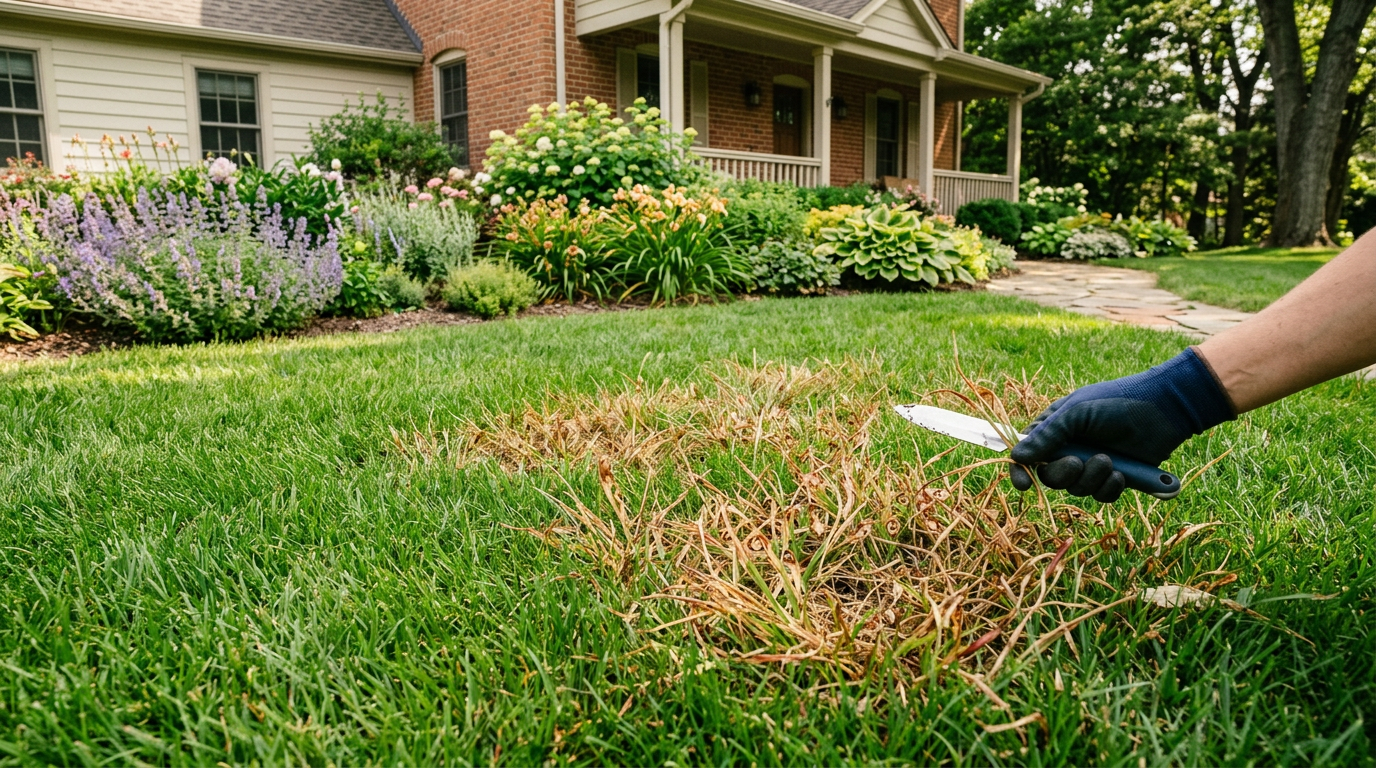
We’ve all walked out to a polka‑dotted lawn and immediately blamed the mower, the dog, or the neighbor. Nine times out of ten, it’s fungus—and you can ID it in under two minutes if you know what to look for. Here’s the fast, field-tested way we do it.
Quick visual ID by symptom
- Brown patch (Rhizoctonia): Smoky, irregular circles 6–24" across with a dark “smoke ring” at dawn. Blades look blighted, greasy. Loves humid nights.
- Dollar spot: Bleached, straw‑colored spots the size of a silver dollar; individual blades show hourglass lesions with brown borders.
- Red thread: Pink to coral “threads” or needles binding blade tips; turf looks ragged, nutrient‑starved.
- Rust: Fine orange/yellow dust wipes onto socks and mower deck; leaves thin and slow‑growing.
- Pythium blight: Greasy, water‑soaked streaks that collapse fast in hot, wet spells; cottony mycelium at dawn.
- Snow mold (pink/gray): Matted, circular patches after snowmelt; blades webbed with white/gray to pink fungal growth.
- Summer/necrotic ring: Dark/bronze circles with a green halo; often in compacted, overwatered areas.
If you’re seeing random caps, that’s likely saprophytic mushrooms feeding on buried wood, not disease. Different problem, easy fix—see Why Mushrooms Growing in Lawn Happen + How to Stop Them.
Make sure it’s fungus (not bugs, weeds, or winter burn)
- Tug test: If the turf peels up like carpet and you find C‑shaped grubs, the damage is insect, not fungus. Start with White Grubs in Soil Identification and, if needed, How to Get Rid of Grubs in Lawn Naturally (That Works).
- Weed look‑alikes: Patches of clover or crabgrass can fake “disease” from 20 feet. If you spot trifoliate leaves, see How to Get Rid of Clover in Lawn (Without Wrecking It).
- Post‑winter tan: Large matted tan areas right after thaw may be snow mold or just desiccation. Compare symptoms in Brown Patches in Lawn After Winter: Causes + Fixes.
The disease math: temps, leaf wetness, timing
Most foliar lawn diseases explode when nights stay warm and leaves stay wet. Brown patch flares when nighttime temps exceed ~68°F with high humidity; dollar spot thrives 59–86°F and needs roughly 8–12 hours of leaf wetness; pythium blight rips through saturated turf in 70–90°F heat (NCSU Brown Patch: https://www.turffiles.ncsu.edu/diseases-in-turf/brown-patch/; Purdue Dollar Spot BP‑106‑W: https://www.extension.purdue.edu/extmedia/BP/BP-106-W.pdf; UMass Pythium: https://ag.umass.edu/turf/fact-sheets/pythium-blight).
What to do right now (no gatekeeping)
- Water only at dawn, deeply and infrequently (0.5–1"/week total). Stop evening irrigation.
- Mow high (3–4") with a sharp blade; bag clippings during an active outbreak.
- Feed lightly if turf is hungry: 0.25–0.5 lb N/1,000 sq ft with a slow‑release fertilizer. Red thread and dollar spot often vanish after a modest N bump.
- Improve airflow: prune, reduce thatch >0.5", and skip heavy traffic on wet grass.
- If conditions are ripe and symptoms are spreading daily, deploy a fungicide (next section).
We’ve knocked out mid‑summer brown patch on tall fescue by switching to AM watering and one preventive pass of azoxystrobin before a humid heat wave. Cheap, fast, done.
Fungicides that actually work (and what they cost)
- Scotts DiseaseEx Lawn Fungicide (azoxystrobin): $22–$28 per 10 lb bag; treats ~5,000 sq ft. Great preventive/early curative for brown patch, red thread, rust.
- BioAdvanced Fungus Control for Lawns (propiconazole, hose‑end): $19–$25 per 32 oz; covers up to 5,000 sq ft. Solid on brown patch, dollar spot; avoid repeated solo use to reduce resistance.
- Headway G (azoxystrobin + propiconazole): $95–$120 per 30 lb; covers ~15,000 sq ft. Pro‑level broad spectrum; use for high pressure or rotation.
- Serenade (Bacillus subtilis): $18–$25 per 32 oz. Low‑risk biological; best as preventive under light pressure.
Tips that save money: rotate FRAC groups (strobilurin QoI like azoxystrobin vs DMI like propiconazole), follow label rates, and spot‑treat hot zones rather than blanketing the whole lawn when damage is localized.
Prevention cheat sheet (set it and forget it)
- Spring: Clean thatch, sharpen mower, soil test, fix drainage.
- Late spring–summer: Water at dawn, 1"/week max. Avoid heavy evening irrigation.
- Feeding: Keep steady nutrition; don’t starve cool‑season lawns in summer.
- Mowing: 3–4" height; never remove >1/3 of blade.
- Preventive spray only when a forecasted heat/humidity stretch aligns with your past disease history.
When to repair or reseed
If a patch is thinned >40% after disease subsides, rake out dead tissue, topdress with compost, and overseed with a resistant blend (e.g., tall fescue with brown‑patch tolerance). Keep new seed moist, not soaked. Skip fungicides on germinating seed unless the label explicitly allows it.
Frequently asked
How can I tell lawn fungus from drought stress fast?+
Fungus usually shows patterns (circles, smoky edges, threads, orange dust) and can worsen overnight with dew. Drought stress looks uniform on high spots and recovers after a deep morning watering. If blades have distinct lesions or wipe orange on your socks, think disease, not dryness.
Will lawn fungus go away on its own?+
Sometimes. Dollar spot and red thread often recede with a light nitrogen feeding and drier mornings. Aggressive diseases like brown patch or pythium spread quickly in warm, wet weather—waiting can cost you square footage. Change watering first; if spread continues 24–48 hours, treat.
What is the best fungicide for brown patch?+
Azoxystrobin or propiconazole work well; rotating them (or using a combo like Headway G) improves results and slows resistance. Apply at label rate just before or at first symptoms during warm, humid spells, and repeat per label if conditions persist. Always fix watering and mowing first.
Is lawn fungicide safe for pets and kids?+
Most lawn fungicides are safe once dry per label directions. Keep people and pets off during application and until the product has dried or the reentry interval (REI) passes. Granular products are generally lower odor and easier for timing around play. Always read the specific label.
Can I seed while treating a fungus problem?+
Yes, but timing and product matter. Some fungicides can suppress germination; check the label. Often the best sequence is: stop spread, let the area dry, rake, topdress, then overseed. Avoid heavy fungicide use on newly germinated seedlings unless the label explicitly permits.