
Why Mushrooms Growing in Lawn Happen + How to Stop Them
Mushrooms in your lawn aren’t a crisis—they’re a moisture/organic-matter signal. Here’s why they show up, how to remove them safely, and how to prevent the encore.
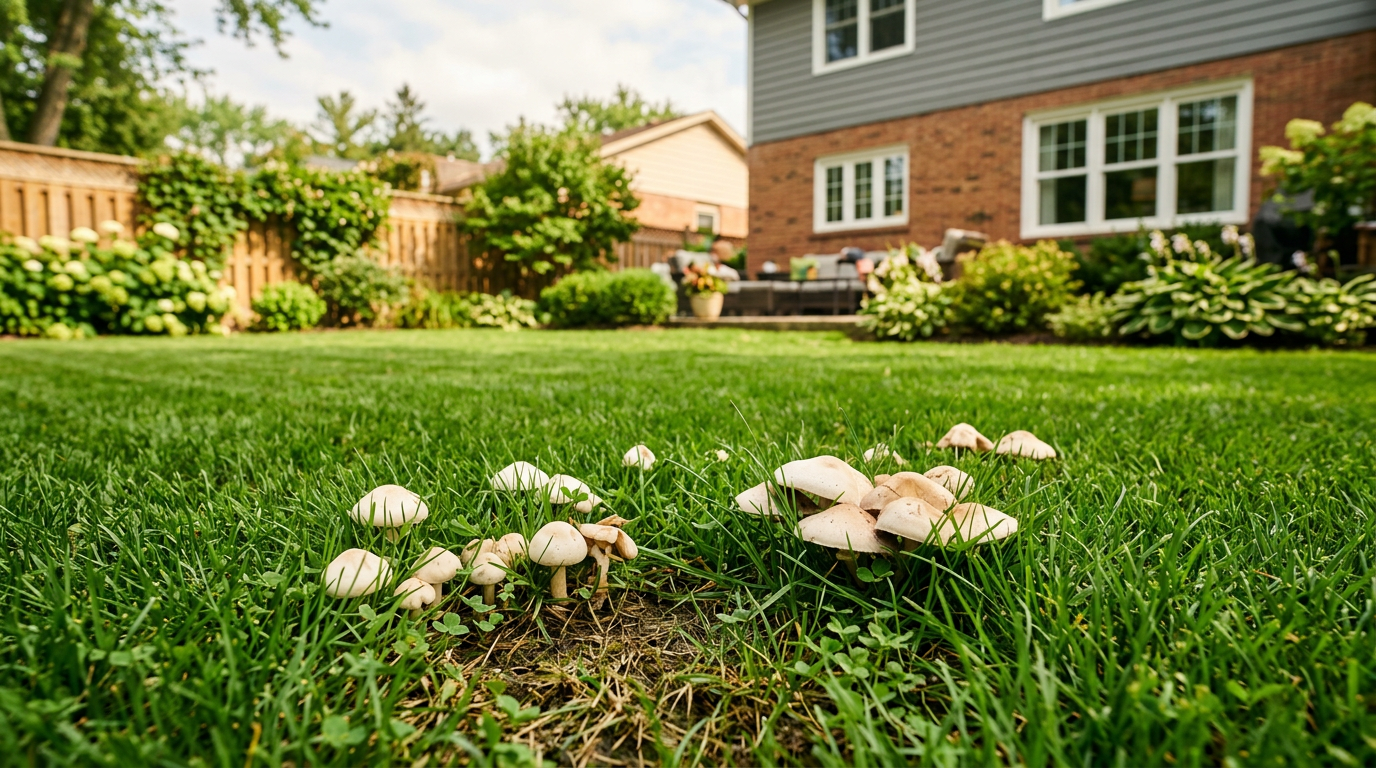
Why there are mushrooms growing in your lawn
Short version: mushrooms are the fruit of fungi living in your soil. The underground mycelium loves three things—moisture, buried organic matter (old roots, wood, heavy thatch, even dog poop), and mild temps. After rain or heavy irrigation, it tosses up mushrooms to spread spores. That’s a symptom, not a moral failing.
We’ve kicked plenty of caps after tree removals and during wet springs. Once we fixed watering and thatch, the show mostly stopped.
Are lawn mushrooms bad?
Not for the grass. The fungi help decompose organic junk and release nutrients. The risks are aesthetics, slippery caps when mowing, and potential toxicity to kids/pets. Unless you’re a trained mycologist, assume unknown mushrooms are poisonous. Pick and trash—don’t mulch them with the mower.
Fast fixes you can do today
- Hand-pick mushrooms as they appear. Gloved hands, twist at the base, bag, trash. A leaf rake helps with clusters.
- Skip the evening sprinklers. Water early morning only.
- Spot-scrape and remove buried wood, thatch clumps, or pet waste.
- Improve airflow: raise the canopy a bit (don’t scalp), trim dense edges.
Helpful tools we actually like:
- AMES Thatch Rake, ~$40 — quick spot dethatching.
- Sun Joe AJ801E Electric Dethatcher/Scarifier, ~$139 — for small yards.
How to stop the encore (the part that actually works)
-
Water smarter. Deep and infrequent: 1 inch/week total (including rain), split into 1–2 morning sessions. Let the surface dry between waterings.
-
Reduce thatch. If you’ve got >0.5 inch thatch, dethatch in growing season. Compost or bin the debris—don’t bury it.
-
Core aerate compacted zones. Plug aeration opens the soil, breaks up hydrophobic layers, and gets oxygen to roots.
-
Feed the microbes, not the fungi. A light, quick-release N app can speed decomposition of thatch/wood. Example: urea 46‑0‑0 at 0.25–0.5 lb N/1,000 sq ft in active growth. Water in.
-
Wetting agents for hydrophobic patches. A hose-end soil surfactant can help water penetrate fairy ring bands.
Products that do the job:
- Brinly PA-40BH Tow-Behind Plug Aerator, ~$229 — for riding mower owners.
- Revive Organic Soil Treatment (wetting agent), 1 gal ~$25.
By the numbers: rings, speed, and scale
Fairy rings can spread outward several inches to a few feet per year and may reach jaw-dropping sizes—up to 200 feet in diameter. Mushrooms commonly surge after prolonged wet periods. That hydrophobic ring can cause brown arcs while the edge looks unusually green (Missouri Botanical Garden: https://www.missouribotanicalgarden.org/PlantFinder/ProblemSolver/Details.aspx?problem=Fairy%20Ring).
Fungicide: when to use it (and when not to)
- Don’t: for random caps after rain. You’ll spend money chasing symptoms.
- Maybe: for confirmed fairy rings (circular patterns, green/dry arcs) that don’t respond to aeration + wetting agent + proper watering.
If you go there, look for azoxystrobin or propiconazole and follow labels to the letter. Two consumer options:
- Scotts DiseaseEx (azoxystrobin), 10 lb ~$24–$28.
- BioAdvanced Fungus Control for Lawns (propiconazole), 32‑oz hose‑end ~$19–$25.
Pro note: Fairy ring control often needs multiple apps, heavy pre‑wetting, and core aeration for penetration. Set expectations.
Common mistakes we see
- Evening watering = daily mushroom matinee.
- Mulching or mowing over caps spreads spores and makes a mess.
- Ignoring dog waste. It’s fungus fuel—scoop it daily.
- Over-fertilizing. Big N dumps spike top growth and thatch.
Related yard weirdness worth checking
- Arcs of brown after snow? See Brown Patches in Lawn After Winter.
- Random plant damage that’s not fungus? Start with What Is Eating My Hostas?.
- Tunnels messing with roots and irrigation? How to Get Rid of Moles in Your Yard.
- Fighting broadleaf freeloaders? How to Get Rid of Clover in Lawn.
Frequently asked
Are lawn mushrooms poisonous to dogs or kids?+
Some species can be. Treat all unknown lawn mushrooms as toxic. Pick and trash them immediately, supervise kids/pets, and mow only after removal. If ingestion occurs, call a vet/poison control and keep a sample for ID.
Will mushrooms kill my grass?+
No. Most simply decompose buried organic matter. The exception is fairy rings, which can make soil water-repellent and cause brown arcs. Fix with core aeration, wetting agents, and corrected watering; fungicide only if cultural steps fail.
How do I get rid of mushrooms permanently?+
You can’t eliminate soil fungi, but you can stop the shows: water less often in the morning, remove thatch/wood, core aerate, and scoop pet waste. Pick caps as they appear. Fungicides are rarely needed unless it’s a stubborn fairy ring.
Does vinegar, salt, or baking soda kill lawn mushrooms?+
They might scorch mushrooms and your grass. You’ll injure the turf and soil, and the fungi will remain underground. Stick to picking caps and fixing moisture, thatch, and compaction—the only durable, lawn-safe approach.
Should I bag my clippings if I have mushrooms?+
If you’re seeing lots of caps, bag for a week to reduce spore spread and remove excess thatch material. Once caps stop, go back to mulching; it’s generally healthier for turf when thatch is under control.