
White Grubs in Soil Identification: Pictures, Look‑Alikes
Think you found white C-shaped larvae in your lawn or beds? Here’s how to identify true lawn grubs vs impostors, when to worry, and what to do next.
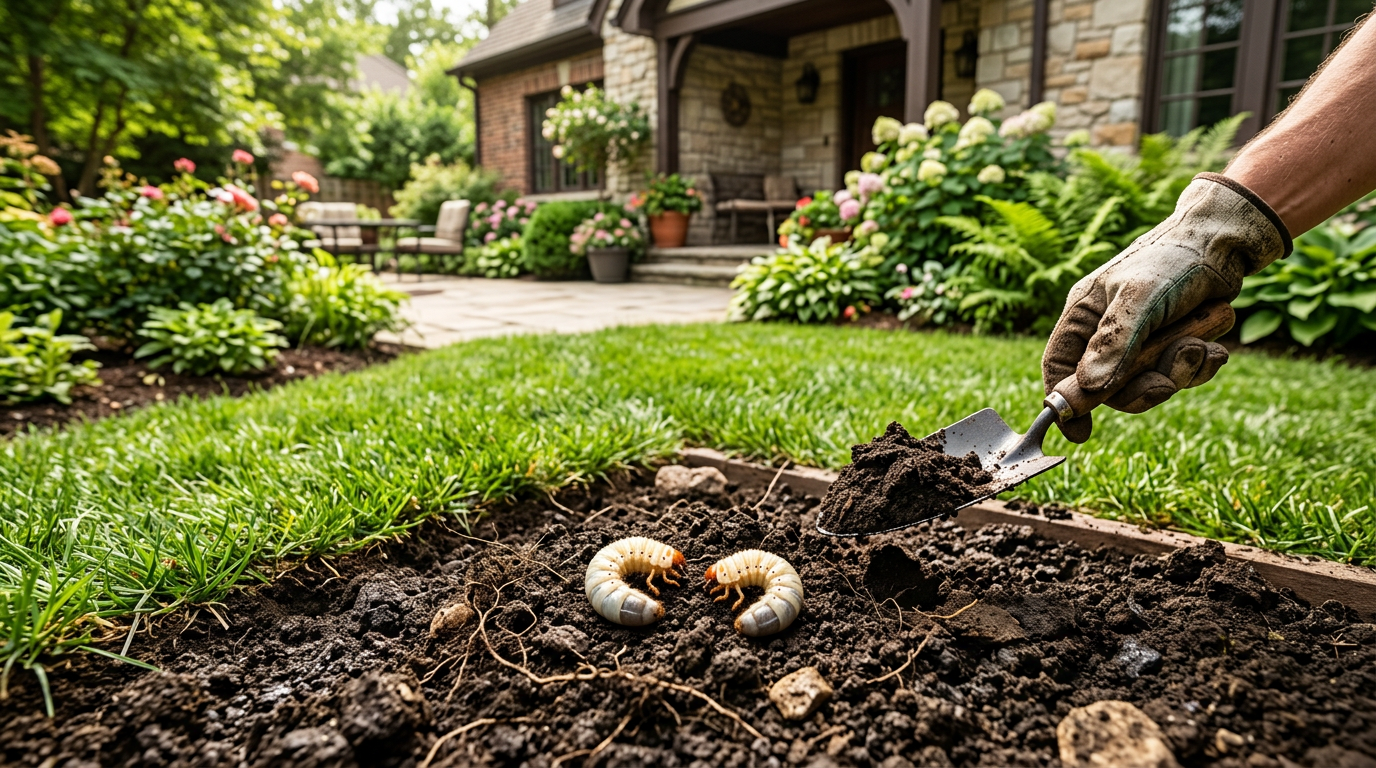
Intro: Found squishy Cs in your soil?
White, C-shaped larvae rolled up in your turf or beds are probably scarab beetle grubs (June beetle, Japanese beetle, European chafer). We’ll show you exactly how to confirm they’re true lawn grubs, how to separate them from look‑alikes, and when it’s worth treating. No gatekeeping—just field-tested ID.
We’ve dug more test squares than we can count; once you know the tells, you can ID them in 30 seconds.
Quick ID checklist (the fast, no-microscope version)
- Shape: C-shaped curl when disturbed.
- Color: White to creamy body, often with a grayish gut line; shiny brown head capsule.
- Legs: Six tiny legs near the head (middle and hind body are legless).
- Size: 1/4 inch (new hatch) up to ~1–1.5 inches (late summer/fall).
- Texture: Soft, slightly translucent; not hard like a wireworm.
- Habitat: In the top 2–3 inches of soil under turf or mulch, especially where turf peels back easily.
If it’s straight or sausage-like with no legs, or it’s skinny and hard, you’re probably not holding a white grub.
How to check your lawn properly (and not guess)
- Water lightly the day before if the soil is rock hard.
- With a flat shovel, cut three sides of a 1‑sq‑ft flap and peel it back like carpet.
- Inspect the top 2–3 inches of soil; sift and count grubs. Replace and press the flap back down.
- Sample 3–5 spots: edges of brown patches, sunny slopes, and “animal‑dug” zones.
Timing: Late summer to early fall gives the truest picture (new grubs are shallow and numerous). Spring counts can understate pressure because many overwintered grubs are deeper or have already pupated.
By the numbers: when to treat
University guidelines set action thresholds around 6–10 grubs per square foot for lawns; European chafer can cause damage at the low end, Japanese beetle toward the higher end. Below that, healthy turf often outgrows the feeding. (https://www.canr.msu.edu/news/how_many_grubs_is_too_many)
Not grubs: the usual impostors (fast tells)
- Wireworms (click beetle larvae): Hard, skinny, yellow‑brown “wires,” straight, with a tapered tail. Feel like dry pasta—nothing like a grub.
- Leatherjackets (crane fly larvae): Gray‑brown tubes, legless, tough skin, no defined head; common in cool, wet lawns. They don’t curl into a C.
- Cutworms/armyworms: Smooth, gray/brown caterpillars with full-length legs; curl into a spiral, not a tight C, and live near thatch.
- Maggots: Soft, legless, headless-looking; usually in compost/manure rather than turf soil.
- Termite/ant larvae: Tiny, pale, legless; found in galleries/woody areas, not open soil under sod.
If yours lacks the six front legs and a brown head, it isn’t a lawn grub.
Species notes (only if you’re nerding out)
Most homeowners don’t need species-level ID. Pros use the “raster pattern” (hair/spine pattern) on the last abdominal segment:
- Japanese beetle: Distinct V-shaped rows.
- European chafer: More random/“scattered” pattern.
- Masked/May/June beetles (Phyllophaga): Different line/spot arrangements. If you’re submitting a sample, snap a clear underside photo of the tail end and send it to your local extension.
Yard signs that back up your ID
- Turf lifts like a loose rug with few roots attached.
- Brown patches that expand in late summer–fall, especially in sunny lawns.
- Nighttime critter damage: skunks, raccoons, crows flipping sod; moles tunneling to hunt grubs. If you’re seeing tunneling, here’s how to handle the culprits: How to Get Rid of Moles in Your Yard and Tiny Holes in Lawn at Night.
- Post-winter browning can be mixed causes (snow mold, salt, desiccation). Compare with our guide: Brown Patches in Lawn After Winter.
When—and what—to treat (only if counts are high)
- Preventive window: Apply chlorantraniliprole when adult beetles are laying eggs (roughly spring to early summer depending on climate). It protects against new hatchlings.
- Scotts GrubEx1 (chlorantraniliprole 0.08%): About $24–$30 per 5,000 sq ft. Water in.
- grubGONE! (Bacillus thuringiensis galleriae): About $40–$50 per 5,000 sq ft; slower but bio‑friendly.
- Curative window: If you’ve already got damaging, late-instar grubs (late summer–early fall), use a fast “rescue” product.
- BioAdvanced 24 Hour Grub Killer Plus (trichlorfon): About $20–$25 per 5,000 sq ft. Water in thoroughly.
- Biological control: Beneficial nematodes (Heterorhabditis bacteriophora) hunt grubs in soil.
- NemaSeek Hb: Around $30–$40 for 2,000 sq ft. Apply at dusk to moist soil; keep soil damp for a week.
Pro tip: Don’t treat beds and veggie areas “just because.” Confirm with counts. Spot-treat hot zones rather than blanketing everything.
Bonus: If grubs aren’t the plant-eater, what is?
Chewed hosta leaves or mystery plant damage can be something else entirely. If foliage is vanishing instead of roots, start here: What Is Eating My Hostas?.
Bottom line
- Confirm the six legs + C-shape + brown head = true white grub.
- Count grubs per square foot before spending money.
- Treat only when thresholds say it’s worth it, and time products to the life stage. We’d rather you keep cash in your pocket than carpet‑bomb your yard for nothing.
Frequently asked
Do white grubs always mean I need to treat my lawn?+
No. Action thresholds are roughly 6–10 grubs per square foot. Healthy turf can tolerate a few without visible damage. Sample 3–5 locations 2–3 inches deep, average your counts, and only treat if you’re at or above threshold and timing matches the product’s effective window.
How do I tell grubs from wireworms or leatherjackets fast?+
True grubs are soft, white/cream, C-shaped, with a brown head and six legs near the head. Wireworms are hard, skinny, yellow‑brown, and straight. Leatherjackets (crane fly larvae) are gray‑brown tubes with no legs or defined head and don’t curl into a C.
What time of year should I look for and count grubs?+
Late summer to early fall is best. Freshly hatched grubs feed near the surface, making counts accurate. Spring counts can miss deeper or pupated grubs, so you may underestimate pressure. If treating preventively, apply in spring–early summer before eggs hatch.
Which products actually work on white grubs?+
For prevention, chlorantraniliprole (e.g., Scotts GrubEx1) is reliable. For biological routes, BTg (grubGONE!) and Heterorhabditis bacteriophora nematodes work when soils are moist. For rescue, trichlorfon (e.g., BioAdvanced 24 Hour Grub Killer Plus) acts fast. Always water in and time to life stage.
Why is wildlife tearing up my lawn if I have grubs?+
Skunks, raccoons, crows, and moles love grubs. Even moderate infestations can attract them. Address the food source (grubs) and, if tunneling is the main headache, manage the culprits directly with traps; see our mole guide linked above.