
Brown Patches in Lawn After Winter: Causes + Fixes
Woke up to a polka-dotted lawn? Here’s how to ID the cause fast, fix it without wasting money, and keep those brown patches from coming back next winter.
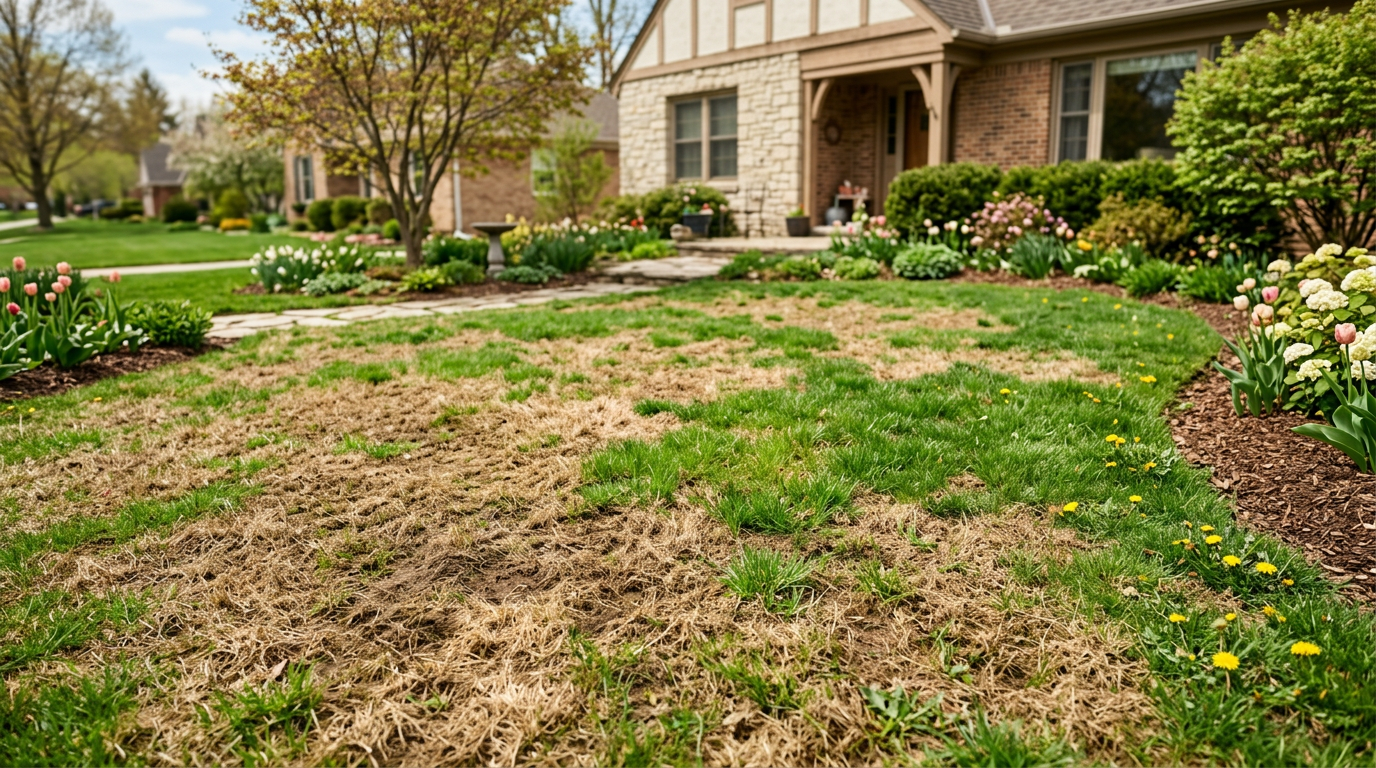
Why you get brown patches after winter
Winter is rough on turf. The big culprits:
- Snow mold (gray or pink) mats blades into crusty circles.
- Salt splash near driveways/sidewalks fries leaf tissue.
- Dog urine leaves straw-colored spots and dark green rings.
- Grubs ate roots last fall; turf lifts like a rug in spring.
- Voles and moles tunneled under snow, leaving trails and soft spots.
- Plain old dormancy if you have warm-season grass still waking up.
We’ve rehabbed dozens of post-winter lawns. The good news: most patches recover with air, sun, and a little seed. The rest need targeted fixes, not a cart full of random products.
Quick ID: What kind of brown patch is it?
Use your eyes and a 10-second tug test.
- Snow mold: Circular, 2–12 in patches, matted/straw-like. Gray moldy crust (gray snow mold) or pinkish edge (pink snow mold). Crowns usually alive.
- Salt burn: Along pavements where plows pile slush. Worst within a few feet of the edge. Soil feels crusty; footprints crunch.
- Dog urine: Small patches with a dark green ring. New spring urine is especially spicy.
- Grub damage: Turf peels back easily; roots are sparse. Wildlife digging is a clue.
- Voles: Surface runways that look like stringy trails in dead grass. Grass crowns often intact; they ate blades, not roots.
- Moles: Raised ridges and soft runs from insect hunting. Different problem, different fix. See How to Get Rid of Moles in Your Yard.
- Warm-season dormancy: Bermuda/Zoysia stay tan until soil hits ~65°F. Check for green at nodes; don’t panic.
Fix it now: 15-minute triage
-
Rake lightly. Fluff any matted areas to let air and sun in. Don’t scalp.
-
Tug test. If the grass holds, the crown is alive—wait 2–3 weeks. If it rips up easily, plan to reseed.
-
Flush salt. Hose down edges weekly for 2–3 weeks to leach salts. Gypsum is optional at best; water does the real work.
-
Spot-seed dead patches. Scratch the soil 1/4 in deep, spread seed, top with a thin layer of compost, keep moist.
-
Suspect grubs? Peel a 1×1 ft flap in a damaged area. Count grubs; treat only if over threshold (see stats below).
-
Pet spots: Water daily for a week to dilute salts, then reseed if the crown is toast.
Bare soil invites weeds—clover first. If it moves in before you seed, use our guide: How to Get Rid of Clover in Lawn.
Seed, feed, or treat? Timing that actually works
-
Cool-season lawns (Kentucky bluegrass, fescue, rye): Overseed in early spring once soil is workable, or better yet late summer/early fall for best take. Fertilize lightly (0.25–0.5 lb N/1,000 sq ft) after seedlings emerge.
-
Warm-season lawns (Bermuda, Zoysia, St. Augustine): Wait until soil 65°F+ to reseed/plug. Greening can lag until late spring.
-
Pre-emergent caution: If you plan to overseed, skip prodiamine/barricade. Use a seed-safe pre-emergent like siduron (Tupersan) or wait until new grass is mowed 2–3 times.
-
Fungicide? Snow mold is mostly cosmetic in spring; rake and wait. Preventative fall fungicide is for repeat, severe cases.
The numbers that matter
- More than 6–10 white grubs per square foot can cause real damage; treat only above that threshold (MSU Extension: https://www.canr.msu.edu/resources/white_grubs_in_lawns).
- Snow mold patches are typically 2–12 inches and often recover in a few weeks with raking and drying (UMass Extension: https://ag.umass.edu/turf/management-updates/snow-mold).
Products we actually use (and why)
- Scotts PatchMaster Lawn Repair Mix Sun + Shade, 4.75 lb, around $19. Includes seed, mulch, and tackifier—great for small spots.
- Jonathan Green Black Beauty Original Seed, 7 lb, around $35. Durable cool-season blend for overseeding.
- Pennington One Step Complete Sun & Shade, 6.25 lb, around $22. Easy one-bag spot repair.
- Scotts DiseaseEx Lawn Fungicide (azoxystrobin), 10 lb, around $25. Use preventatively in late fall if you historically get heavy snow mold, not as a spring cure.
- Scotts GrubEx (chlorantraniliprole), 14.35 lb, around $27. Apply late spring for season-long prevention—only if grub risk is proven.
- Yard Butler Manual Core Aerator, around $40. Pulls cores to reduce thatch/compaction before overseeding.
We don’t recommend shotgun herbicide/fungicide cocktails in spring. You’ll waste money and potentially block your seed from germinating.
Prevent it next winter
- Final fall mow a notch lower (about 2.5–3 in) to reduce matting.
- Rake leaves before snow. Matted leaves = mold hotel.
- Don’t pile salted snow onto the lawn. Create a snow dump zone away from turf.
- Light fall nitrogen (0.5–1 lb N/1,000 sq ft) to go into winter healthy.
- If you’ve had heavy snow mold two years running, consider a late-fall fungicide pass.
- For critter tracks, keep edges trimmed and mulch pulled back; voles hate exposure. Moles? We trap them—see our field-tested guide: How to Get Rid of Moles in Your Yard.
When it’s not damage at all: dormancy
Warm-season lawns go tan and stay tan until soil warms. If stolons and crowns are firm and you see hints of green at nodes, it’s dormancy, not death. Be patient, clean up debris, and feed once active growth starts. Overseed only after consistent warmth.
Bonus: If winter also turned your hosta buffet into a pest party, here’s how to ID the culprit fast: What Is Eating My Hostas?.
Frequently asked
Will brown grass come back after winter?+
Often, yes. Snow mold and vole tracks usually recover once you lightly rake, improve airflow, and let the crowns dry. Give it 2–6 weeks after snowmelt. If a tug test pulls turf up easily or crowns are mushy, those spots are dead and need reseeding or patch kits.
How do I tell snow mold from dog urine spots?+
Snow mold makes circular, matted patches that feel crusty and may look gray or pink at the edges. Dog urine creates small straw-colored spots with a darker green ring. Snow mold often recovers with raking; urine spots may need flushing and reseeding if crowns are killed.
Should I apply fungicide in spring for snow mold?+
Usually no. By spring, snow mold has run its course. Rake and let the lawn dry; most areas regrow. Reserve fungicides for late-fall preventative treatments if you get severe, recurring snow mold. Focus spring efforts on cleanup and reseeding any truly dead patches.
Can I overseed if I already put down pre-emergent?+
Not with standard prodiamine or dithiopyr—those will block grass seed. Either delay overseeding 8–12 weeks, use a seed-safe pre-emergent like siduron (Tupersan), or focus on patch repairs where you can avoid pre-emergent contact. Always read the label timing for your product.
Do I need to treat for grubs right away?+
Confirm first. Cut a 1×1 ft flap in a damaged area and count. If you find more than about 6–10 grubs per square foot, plan treatment. For prevention, use chlorantraniliprole in late spring. If you’re below threshold, skip chemicals and focus on reseeding and lawn health.