
How to Get Rid of Clover in Lawn (Without Wrecking It)
Clover thrives when your lawn is hungry and scalped. Feed the grass, raise the mower, then spot-spray or hand-pull. Here’s the playbook that actually works.
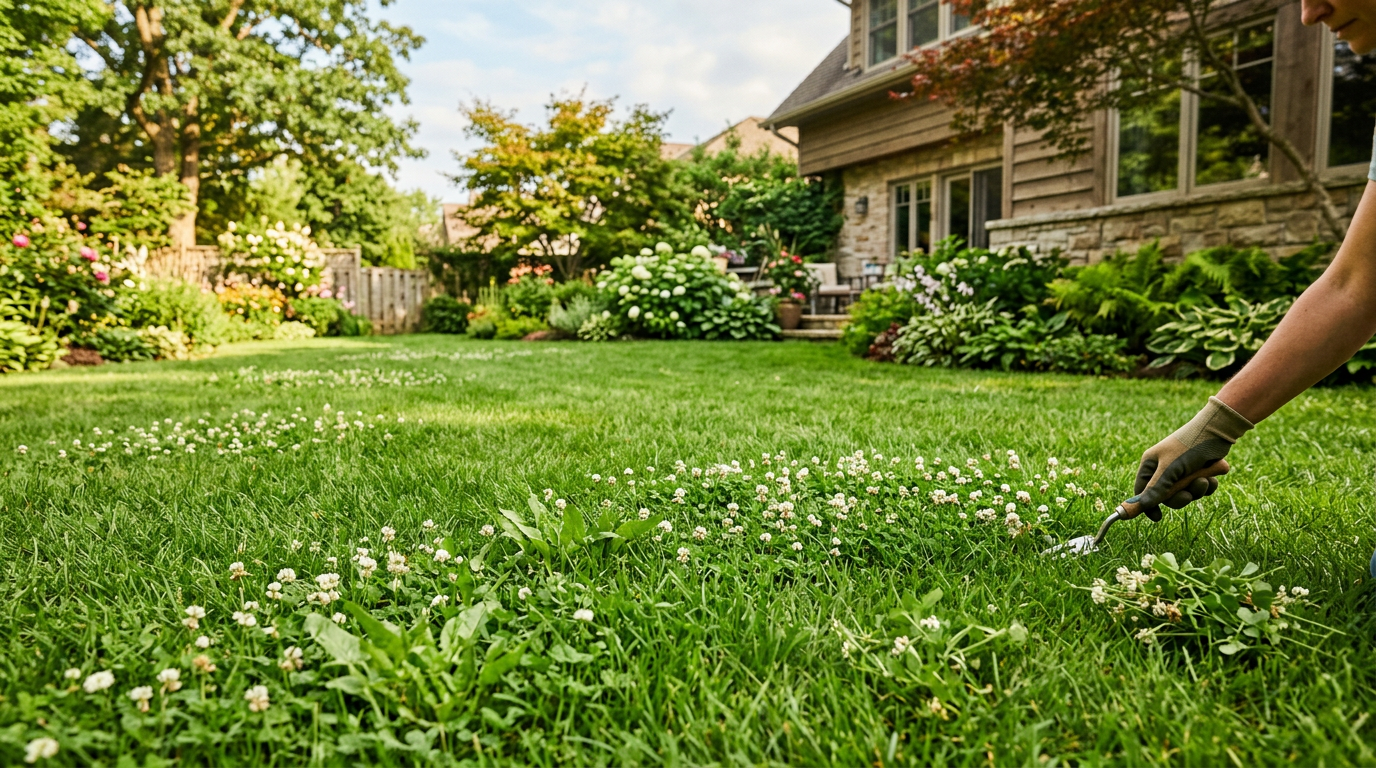
Clover shows up when your lawn is hungry and shaved too short. The fix is not one silver-bullet spray; it’s stacking a few easy habits so the grass wins and clover loses. We’ve killed patches the size of kiddie pools in two weeks with this exact playbook.
Why clover takes over (and what that tells you)
White clover loves low-nitrogen, thin, compacted turf. If you’re mowing under 3 inches, skipping fertilizer, and leaving bare spots, you basically sent clover a handwritten invitation. The way out: feed the lawn, add shade from taller blades, and close canopy gaps.
Quick cultural wins that starve clover
- Raise mowing to 3–4 inches to shade clover seedlings.
- Fertilize: 0.5–1.0 lb nitrogen per 1,000 sq ft in early fall and late spring.
- Water deeply (1 inch/week) but infrequently.
- Overseed thin areas so grass fills voids before clover does.
We’ve seen lawns go from polka-dotted to mostly clean just by mowing taller and feeding with a slow-release N source for 4–6 weeks.
Pull or smother small patches first
- Hand-pull after rain with a narrow weeder (Fiskars Ergo Hand Weeder, ~$12). Get stolons and crowns.
- Smother in beds or along edges with cardboard + 2–3 inches of mulch for 3–4 weeks.
- For lawn-only zones, a sharp edging spade can cut out mats of clover; patch with seed and topdress.
Manual control is fastest on patches under a dinner plate. Anything larger, you’ll save time with a targeted spray.
Sprays that actually work (and how to use them)
Best-in-class for clover is triclopyr or a modern 3‑way mix (2,4‑D + MCPP/MCPA + dicamba). Apply on a cool, calm day, 60–80°F, when clover is actively growing. Lightly wet the leaves; don’t drench. Re-treat in 14–21 days if needed.
Named products we use and like:
- Ortho Weed B Gon Chickweed, Clover & Oxalis Killer (Triclopyr RTU), ~$10–$12/24 oz; Concentrate ~$18–$22/16 oz.
- BioAdvanced Weed Killer for Lawns (2,4‑D + MCPP + Dicamba), ~$12–$16/32 oz hose‑end.
- SpeedZone Lawn Weed Killer (adds carfentrazone), ~$38–$45/quart concentrate for stubborn patches.
Warm-season note: On St. Augustine or centipede, check labels—triclopyr/3‑ways can injure these in heat. When in doubt, spot-test a hidden area first.
We spot-spray triclopyr on cool mornings, see wilting in 3–5 days, and brown-out by day 10. Two light apps beat one heavy soak.
Numbers that matter (and what the science says)
- Mow cool-season lawns at 3–4 inches; taller turf shades weeds and builds roots (https://extension.umn.edu/lawn-care/mowing-your-lawn).
- Fertilize lawns at 0.5–1.0 lb N per 1,000 sq ft per application; most cool-season yards need 2–3 lb N/year total (https://extension.umn.edu/lawn-care/fertilizing-lawns).
- White clover is a perennial with stolons; postemergent broadleaf herbicides like triclopyr or 3‑ways are recommended for control in turf (https://www.turffiles.ncsu.edu/weeds-in-turf/white-clover/).
- Corn gluten meal has inconsistent preemergent results and won’t kill established weeds (https://extension.umn.edu/planting-and-growing-guides/using-corn-gluten-meal-herbicide).
“Organic” options—what helps and what’s hype
- Feed the grass: Slow‑release N (e.g., Milorganite 6‑4‑0, ~$18–$20/36 lb) makes turf outcompete clover.
- Iron HEDTA spot sprays (Bonide Weed Beater FE/Fiesta) can burn clover leaves; results vary; ~$28–$35/quart.
- Vinegar (20% acetic acid) only burns tops, not crowns; regrowth is common—skip for lawns.
- Corn gluten? Save your cash. It won’t remove existing clover and is unreliable as a preemergent.
If you’d rather trap critters than fight plants, different playbook—see our pest fixes like How to Get Rid of Moles in Your Yard: Traps That Work or leaf‑chewer sleuthing in What Is Eating My Hostas? Identify Pests Fast + Fixes.
Keep it gone: prevention schedule
- Spring: Mow at 3–4 inches; feed 0.5–0.75 lb N/1,000 sq ft; spot-spray survivors.
- Early fall: Core aerate compacted areas, overseed, and feed 1.0 lb N/1,000 sq ft.
- Always: Sharpen mower; water deep, not daily sprinkles; patch bare spots fast.
When to keep some clover (no shame)
Clover fixes a bit of nitrogen, stays green in heat, and feeds pollinators. If you’re okay with a lawn‑meadow vibe, let 5–10% ride and just edge it back from paths and beds. Your mower won’t mind.
Frequently asked
What kills clover but not grass?+
Spot-sprayed triclopyr and 3‑way mixes (2,4‑D + MCPP/MCPA + dicamba) target broadleaf weeds like clover and spare grasses. Apply in 60–80°F weather, lightly wet foliage, and repeat after 14–21 days if needed. Always check your lawn type and the product label for safety and rates.
Will corn gluten meal get rid of existing clover?+
No. Corn gluten doesn’t kill established weeds and has inconsistent preemergent performance. It may reduce some seed germination under perfect conditions, but clover in lawns spreads via stolons and crowns. Save your money and use cultural fixes plus a targeted postemergent spray instead.
Is vinegar a good way to kill clover in a lawn?+
Not really. Household vinegar (5%) barely singes clover; 20% acetic acid burns tops but misses roots and stolons, so regrowth is common. It also risks turf injury and skin/eye hazards. For lawns, selective herbicides or hand-pulling are more effective and safer for surrounding grass.
When is the best time to spray clover?+
Cool, calm days in spring or early fall—roughly 60–80°F—when clover is actively growing. Avoid drought-stressed turf or high heat. Don’t mow right before or right after spraying; give leaves to the herbicide. Reapply in 14–21 days if needed per the label.
How long will it take to see results?+
With triclopyr or a strong 3‑way, expect wilting in 3–5 days and brown-out by 7–14 days. Thick, old patches can need a second pass. Combine with taller mowing and a bit of nitrogen so grass backfills the space while clover is on the ropes.