
Lawn Fungus Identification: Fast Visual Guide + Fixes
Not sure which lawn fungus you’re battling? Use our quick tells by look, season, and grass type—then fix it fast with cultural tweaks or the right fungicide.
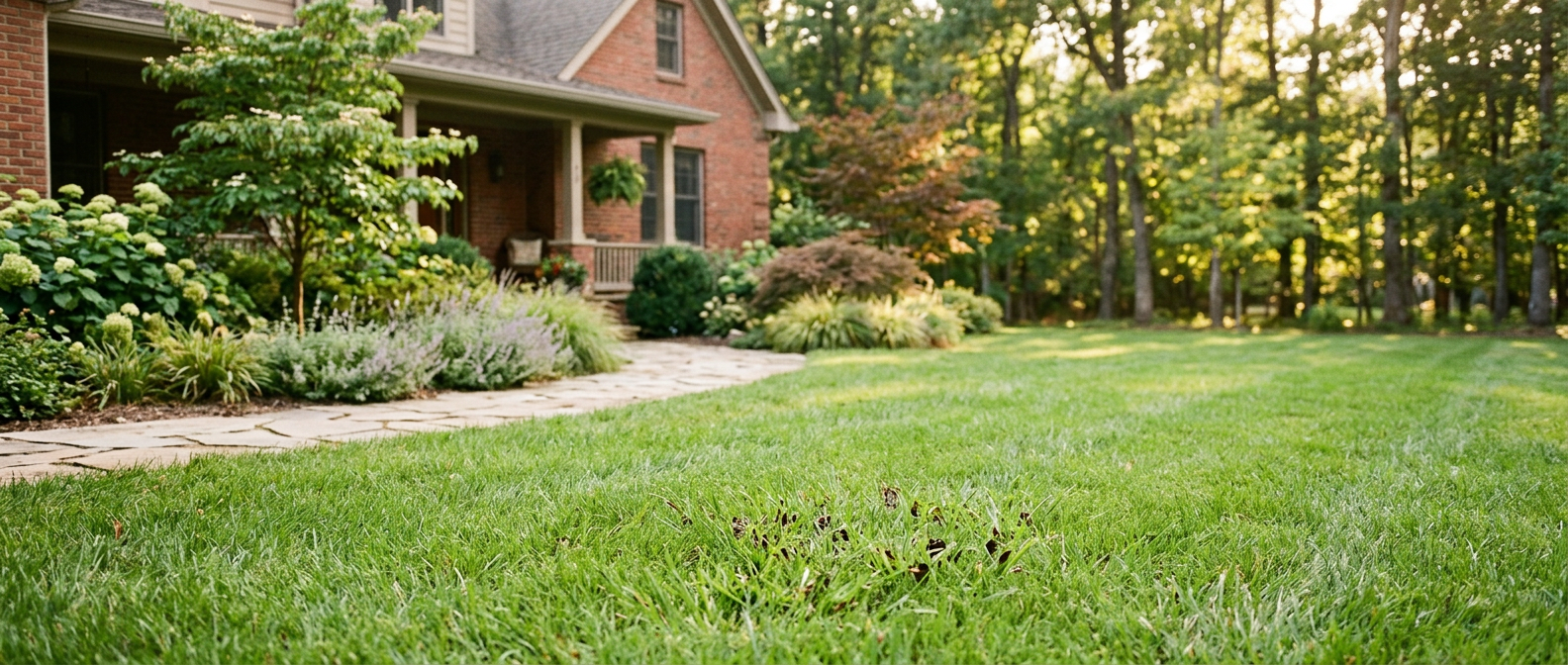
You don’t need a microscope to ID lawn fungus. You need patterns: patch size and edge, season and weather, and what the leaf blades actually look like. We’ll show you how we narrow it to the usual suspects in under five minutes—then fix it without wrecking your turf or wallet.
Quick checks: Is it fungus?
- Patch pattern: circles/arcs with a defined edge = likely fungus. Random tufts missing = often insects or critters.
- Timing: After humid nights, heavy dew, or overwatering? Fungus loves wet leaf blades.
- Leaf look: Lesions with tan centers/dark margins, orange dust, pink threads, or gray/white fuzz are fungal red flags.
- Morning mycelium: Cottony webbing at dawn screams brown patch or pythium.
- Tug test: Blades sliding off easily at the crown after soggy weather points to pythium.
Common lawn fungi by look and season
- Brown patch (Rhizoctonia): Summer nights >68°F, tall fescue/rye. Greasy brown patches 6–24+ inches with smoky edge at dawn, sometimes rings.
- Dollar spot (Clarireedia): Late spring–early fall, 60–85°F. Silver-dollar-sized tan spots that merge. Hourglass lesions with bleached centers and reddish-brown borders on blades.
- Red thread (Laetisaria): Cool, wet spring/fall on low-N lawns. Pink/red threads or antler-like tips binding blades; turf looks ragged, coral.
- Rust: Late summer on slow-growing turf. Orange/yellow powder on shoes/mower, thinning but rarely kills.
- Leaf spot/melting out (Drechslera/Bipolaris): Spring/fall. Purple-brown leaf spots that can lead to crown rot when hot/humid.
- Pythium blight: Steamy, waterlogged nights. Greasy, matted collapse; cottony white in early morning. Moves fast along drainage lines.
- Snow mold (Typhula/Microdochium): After snow melt. Circular matted patches 2–10 inches with gray/pink crust.
- Fairy ring: Arcs/rings of dark green or dead grass, often with mushrooms. Rings can be several feet wide.
Key numbers: temps and leaf wetness
Fungi follow weather math. Dollar spot thrives around 60–85°F with extended leaf wetness; brown patch pops when daytime temps >80°F and nights >68°F with high humidity; 10+ hours of leaf wetness dramatically boosts infection risk. Translation: soaked blades overnight = party time for spores. (https://extension.umn.edu/plant-diseases/turfgrass-diseases)
Fast fixes (before you spray)
- Water early morning only; 0.5–1 inch/week total. Stop nightly sprinkling.
- Mow higher: 3–4 inches cool-season; 2.5–3.5 for most warm-season. Sharp blades only.
- Feed smart: Light, balanced N if turf is hungry (avoid heavy N in peak heat). Red thread and rust often clear after a modest feeding.
- Reduce thatch/compaction: Core aerate if thatch >0.5 inch; improve drainage.
- Prune for airflow; bag clippings during active blight like pythium.
We’ve cleared countless red thread and dollar spot just by fixing watering, mowing, and nitrogen. If patches are expanding daily, bring out fungicide.
When to use fungicide (and what actually works)
Broad coverage, homeowner-friendly picks:
- Scotts DiseaseEx (azoxystrobin): $22–$28 per 10 lb bag, ~5,000 sq ft. Strong on brown patch, red thread, rust, fairy ring suppression.
- BioAdvanced Fungus Control for Lawns (propiconazole): $20–$25 hose‑end, ~5,000 sq ft. Good on dollar spot, leaf spot, rust, brown patch. Pro-grade if you’ve got acres or repeat outbreaks:
- Heritage G (azoxystrobin granules): $90–$120 per 10 lb, ~15,000 sq ft.
- Quali‑Pro Propiconazole 14.3: $55–$70 per quart; mix per label. Tips: Rotate FRAC groups (e.g., strobilurin like azoxystrobin vs triazole like propiconazole) to avoid resistance. Treat at first sign; reapply per label intervals. Don’t blanket-spray the whole zip code—spot treat and monitor.
Look‑alikes to rule out fast
- Grubs: Irregular dead patches that peel up like carpet; skunks/raccoons digging. Confirm before spraying fungus. See White Grubs in Soil Identification and How to Get Rid of Grubs in Lawn Naturally.
- Winter kill: Post‑thaw brown areas from ice or desiccation, not disease. Compare with Brown Patches in Lawn After Winter.
- Mushrooms alone: Often from buried wood; not a disease. See Why Mushrooms Growing in Lawn Happen + How to Stop Them.
- Weeds: Clover “patches” are green, not dead. If that’s the problem, use our plan: How to Get Rid of Clover in Lawn (Without Wrecking It).
Prevention that actually sticks
- Schedule: Spring—light N, watch leaf spot; Summer—water early, avoid heavy N in heat, scout brown patch/dollar spot; Fall—overseed thin areas; Winter—manage snow piles to limit snow mold.
- Soil test every 2–3 years; keep pH in range for your grass.
- Overseed with disease-tolerant cultivars when you renovate; diversity = resilience.
When to call a pro (and what it costs)
If patches are doubling in days despite better watering/mowing, or you’ve got pythium-level collapse, call a lawn pro. Expect $60–$120 per 5,000 sq ft per application, usually 2–3 visits. Ask about FRAC rotation and specific target diseases, not just “fungus spray.”
Frequently asked
How do I quickly tell brown patch from dollar spot?+
Brown patch makes larger, often circular patches with a smoky, dark ring at dawn in hot, humid weather. Dollar spot starts as silver‑dollar‑sized tan spots that merge, and blades show bleached hourglass lesions with dark margins. Both like leaf wetness—fix watering first, then treat if spreading.
Do I need fungicide, or will lawn fungus go away on its own?+
Many mild cases (red thread, rust) recede with correct mowing height, morning-only watering, and a light nitrogen feed. Use fungicide if patches expand daily, conditions stay ideal (warm, wet nights), or it’s a high-damage pathogen like pythium or aggressive brown patch. Always follow label timing and rates.
What’s the best fungicide for lawns if I don’t know the disease?+
Start with a broad-spectrum like azoxystrobin (e.g., Scotts DiseaseEx) or propiconazole (BioAdvanced). They cover common culprits—brown patch, dollar spot, red thread, rust. If one fails, rotate FRAC groups and reassess ID. Spot-treat first to confirm response before blanketing the whole yard.
How can I prevent lawn fungus long term?+
Keep blades dry overnight: water early morning only. Mow higher with sharp blades, relieve compaction via core aeration, and avoid heavy nitrogen during heat waves. Overseed with disease-tolerant cultivars and maintain reasonable thatch. These steps reduce leaf wetness duration and stress—the two big disease drivers.