
Lawn Fungus Identification: Fast Visual Guide + Fixes
Not every brown spot is a fungus. Here’s how to ID the common lawn diseases in minutes, confirm it’s not bugs or weeds, and fix it without wrecking your turf.
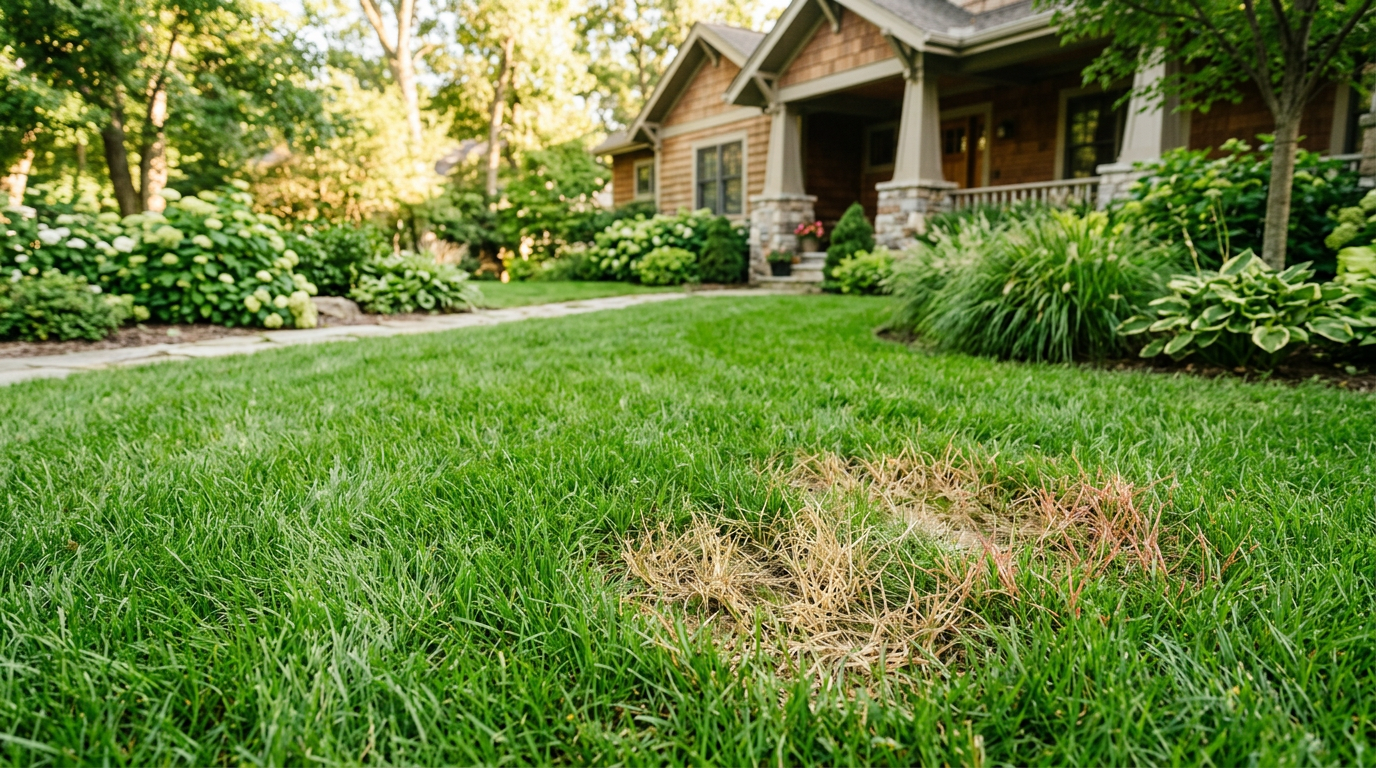
Quick intro
Lawn fungus identification isn’t guesswork. The common culprits leave loud fingerprints—rings, coins, threads, orange dust. We’ll help you match symptoms to a name, confirm it’s actually fungus (not insects or weeds), and fix it fast without napalming your grass.
If winter just ended and you’ve got matted, bleached patches, also see Brown patches in lawn after winter.
Fast visual ID: match the symptom
- Brown patch (Rhizoctonia): 8–24" tan patches, sometimes with a smoky “halo.” Blades look water‑soaked/greasy in humid heat. Loves tall fescue and rye when nights stay >68°F.
- Dollar spot: Straw‑colored, silver‑dollar sized spots that merge into larger blights; fine bleached lesions with reddish borders on blades; white cottony mycelium at dawn.
- Red thread: Pink/red antler‑like threads on leaf tips; turf looks dull and thin, mostly in low‑nitrogen lawns.
- Rust: Orange powder rubs off on shoes/mower; shows in slow‑growing, shaded or low‑N turf late summer.
- Snow mold (pink/gray): Circular matted patches after snowmelt; bleached leaves, sometimes pinkish margins. Often recovers with raking and patience.
- Pythium blight: Greasy, collapsed streaks that look water‑soaked, with cottony growth at night in steamy weather; can kill fast in low areas.
- Fairy ring: Dark green rings (flush) or arcs of mushrooms; soil can turn water‑repellent; sometimes dead rings.
Mushrooms by themselves? That’s usually decomposing organic matter, not a lawn disease. See Why mushrooms growing in lawn happen.
Make sure it’s fungus (not insects or weeds)
- Tug test and inspect roots. If turf peels up like carpet and you see C‑shaped larvae, that’s grubs, not fungus. Start with White grubs ID or jump to Get rid of grubs naturally.
- Spotty green patches of a different leaf shape? That’s a weed issue. Clover is common in low‑N lawns—fix it here: Get rid of clover without wrecking it.
Why fungus shows up (numbers you can use)
Most lawn diseases need extended leaf wetness plus the right temps. Brown patch, dollar spot, and others ramp up when leaves stay wet 10–12 hours and nighttime temps sit above ~65–68°F. Keeping canopies dry overnight is half the battle (NC State; UMass Extension: https://www.turffiles.ncsu.edu/ and https://ag.umass.edu/turf/fact-sheets/managing-turfgrass-diseases).
Red thread and rust love nitrogen‑starved turf; supplying 0.5–1.0 lb N per 1,000 sq ft often clears symptoms in a week or two (UW Extension: https://hort.extension.wisc.edu/articles/red-thread-disease-turf/).
Cultural fixes first (cheap and effective)
- Water timing: Deep, infrequent, early morning only (before 9 a.m.). Skip evening irrigation.
- Mow right: 3–4" for cool‑season lawns; never remove >1/3 of blade; keep blades sharp.
- Feed smart: For low‑N diseases (red thread, rust), apply 0.5 lb N/1,000 sq ft using a slow‑release fertilizer.
- Airflow and thatch: Prune for light/air, aerate if thatch >0.5". Rake matted snow‑mold patches to dry.
- Traffic: Stay off wet turf—footprints spread Pythium and dollar spot.
We’ve cleared countless “mystery” patches just by moving sprinklers to morning and giving one light N feeding—no fungicide needed.
When to use a fungicide (and what to buy)
If cultural fixes don’t stop active disease—or if you’re seeing fast kill (Pythium)—treat early and rotate FRAC codes to avoid resistance.
- Scotts DiseaseEx Lawn Fungicide (azoxystrobin, FRAC 11), 10 lb bag covers 5,000 sq ft, about $20–$25. Good preventative/early curative on brown patch, dollar spot, some Pythium suppression.
- BioAdvanced Fungus Control for Lawns (propiconazole, FRAC 3), 32‑oz hose‑end treats up to 5,000 sq ft, ~$19–$23. Strong on brown patch, dollar spot, rust.
- Heritage G (azoxystrobin, FRAC 11), pro‑grade 30 lb covers ~15,000 sq ft, ~$130–$160. We’ve used it on high‑pressure sites; excellent preventative but rotate with FRAC 3.
Tips we follow:
- Spot‑treat first; broadcast only if disease is widespread.
- Re‑apply per label (usually 14–28 days). Rotate 3 ↔ 11 if multiple apps.
- Pythium blight blow‑ups often need mefenoxam/metalaxyl (pro‑only in many areas). For severe cases, call a lawn pro.
Always read and follow the label; it’s the law.
Quick prevention calendar
- Spring: Sharpen blades; slow‑release N; morning irrigation check; pre‑treat high‑risk lawns before warm, humid stretches.
- Summer: Raise mowing height; water deep/morning; spoon‑feed N if color drops; scout weekly at dawn.
- Fall: Core aerate if compacted; overseed thin cool‑season lawns; balanced fertilization.
- Winter: Final mow shorter before snow; rake leaves; avoid heavy N late fall in snow‑mold regions.
Related problems you might be seeing
- Dog‑pee, salt, or winter damage? Start here: Brown patches in lawn after winter.
- Random mushrooms popping? Mushrooms in lawn explained.
- Thinning turf attracting wildlife or vice‑versa? Check for white grubs and fix with grub control that works.
Frequently asked
What kills lawn fungus the fastest?+
Early, labeled fungicides work fastest: azoxystrobin (FRAC 11) or propiconazole (FRAC 3) applied at first symptoms and repeated per label. Water mornings only, raise mowing height, and add light nitrogen for red thread/rust to speed recovery.
Will lawn fungus go away on its own?+
Often, yes—if you remove the cause (long leaf wetness, low nitrogen, evening watering). Red thread and rust commonly fade after a small N feeding. Aggressive diseases like Pythium or advanced brown patch usually need a fungicide.
How do I tell fungus from grub damage?+
Try the tug test. If sod lifts like carpet and you see C‑shaped larvae in the root zone, that’s grubs. Fungus leaves blades spotted, slimy, or threaded but roots remain attached. When in doubt, dig 3–4 inches in the edge of damage and look.
Can I overseed while treating lawn fungus?+
Yes, but check the fungicide label—some actives can temporarily slow seedling establishment. If seeding cool‑season turf in fall, prioritize cultural fixes first and use a seed‑safe fungicide only if disease is active and spreading.
Are mushrooms a sign of lawn disease?+
Usually no. Mushrooms are decomposers feeding on buried wood or thatch. They can appear after rain or irrigation and disappear on their own. Persistent rings with mushrooms can be fairy ring; manage with aeration, wetting agents, and, if severe, fungicides.