
Lawn Fungus Identification: Fast Visual Guide + Fixes
Stop guessing. Use patterns, timing, and a few quick checks to ID the exact lawn fungus—and fix it before it spreads.
Quick intro
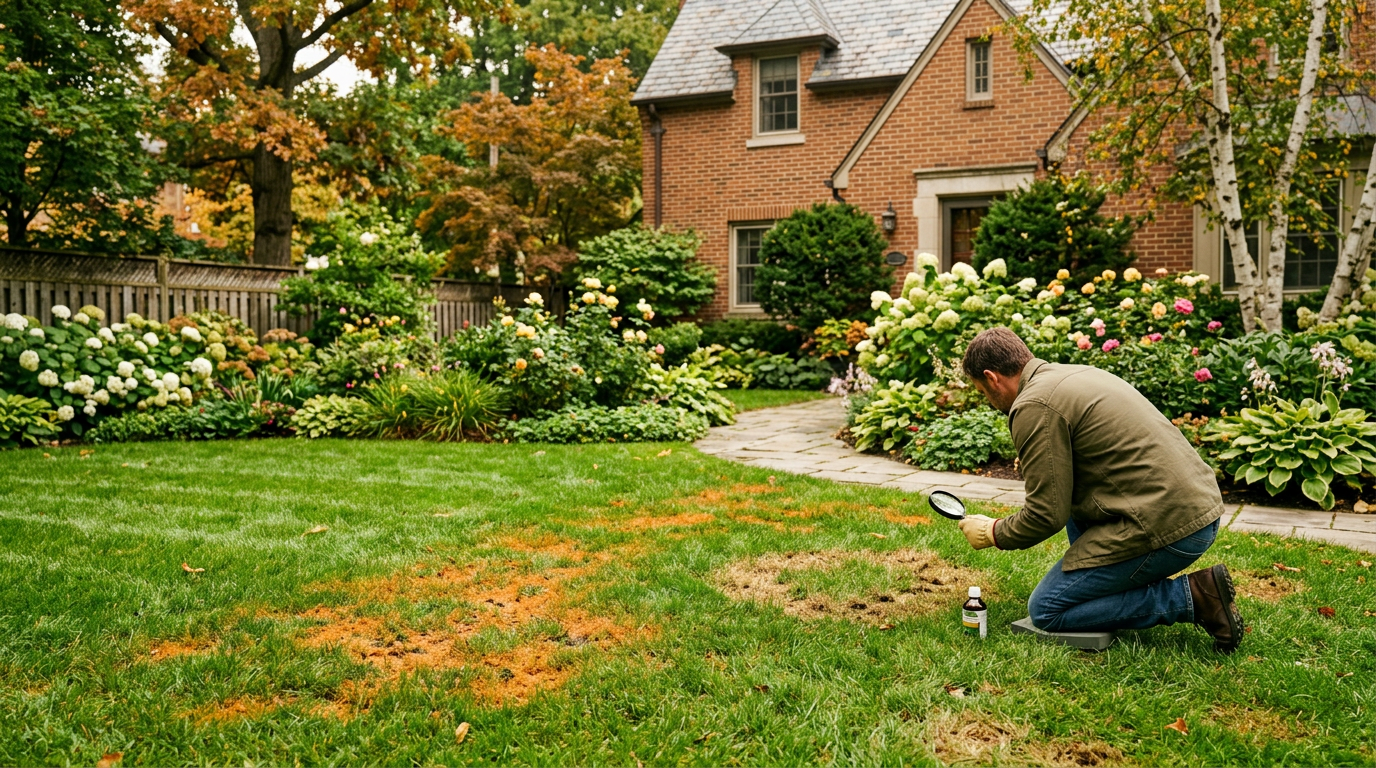
If your lawn suddenly looks polka‑dotted, smoky‑ringed, or oddly orange, you don’t need a lab. We ID most lawn fungi in minutes by reading the pattern, timing, and a couple fast checks—and then fix the conditions that fed it. Here’s the no‑nonsense guide we use on real yards.
Match the pattern to the fungus (fast visual IDs)
- Brown patch (Rhizoctonia): 6–24" tan circles with a darker “smoke ring” border, worst after hot, humid nights. Blades look water‑soaked at dawn.
- Dollar spot: Quarter‑ to silver‑dollar‑size bleached spots that coalesce. Look for hourglass/tan lesions with reddish‑brown margins on individual blades.
- Red thread: Patches look ragged and pinkish. You’ll see coral‑red, threadlike strands on leaf tips—hard to miss in damp, cool spells.
- Rust: Lawn dusts orange on shoes or mower. Tiny orange pustules on blades; usually in low‑nitrogen, slow‑growing turf.
- Snow mold: Circular, matted, pale patches after snow melts; may have white or pink webby growth. Often follows long snow cover.
- Pythium blight: Greasy, collapsed streaks that look water‑soaked, spreading along drainage lines in hot, humid weather; cottony mycelium at dawn.
- Leaf spot/melting out: Purplish‑brown spots on blades; whole turf thins in spring or hot stress.
- Not a disease: Mushrooms are fruiting bodies from buried wood—often harmless to turf. See Why Mushrooms Growing in Lawn Happen + How to Stop Them.
Do these 3 quick checks to confirm
-
Dawn check for mycelium: Early morning, look for white/gray cottony threads (brown patch, pythium, snow mold). It vanishes as sun dries leaves.
-
Wipe test for rust: Rub a white paper towel on suspect blades; orange spores = rust.
-
Rule out insects: Tug a handful at the edge of damage. If sod peels up like a carpet or roots are clipped, think grubs—not fungus. Start with White Grubs in Soil Identification: Pictures, Look‑Alikes and, if confirmed, How to Get Rid of Grubs in Lawn Naturally (That Works).
We’ve misdiagnosed “disease” that was actually dog spots or clover more than once. If you see solid green leaflets creeping in patches, that’s clover—see How to Get Rid of Clover in Lawn (Without Wrecking It).
When fungi strike (conditions + numbers)
Most turf diseases need the right temps and long leaf wetness. Brown patch pops when nights stay above ~65°F with high humidity; dollar spot thrives around 60–80°F with extended dew; rust shows in 60–75°F, low‑nitrogen lawns; snow mold follows prolonged snow cover on matted grass. Translation: warm, wet nights or long snow cover = go time for fungi. (Sources: Clemson HGIC Brown Patch https://hgic.clemson.edu/factsheet/brown-patch-disease-of-turfgrass/; UMass Turf Dollar Spot https://ag.umass.edu/turf/fact-sheets/dollar-spot; UMN Extension Rust https://extension.umn.edu/turfgrass-diseases/rusts-turf)
Fix it fast: what actually works
-
Water smarter: 1" per week, mornings only (4–8 a.m.). No evening sprinkles. We once “kindly” watered at dusk and cooked up a brown patch outbreak in 72 hours—lesson learned.
-
Mow by species: Tall fescue 3–4", Kentucky bluegrass 2.5–3.5", perennial rye 2–3". Keep blades sharp; don’t bag unless rust is covering everything.
-
Reduce thatch/compaction: Dethatch if layer > 0.5". Core aerate compacted areas. Improve airflow—prune hedges, skip daily light watering.
-
Feed smart: Avoid heavy nitrogen in peak disease windows (hot, humid). For red thread or rust, a light shot of fast N (0.25–0.5 lb N/1,000 sq ft) helps turf outgrow it.
-
Treat outbreaks (as needed):
- Broad‑spectrum azoxystrobin: Scotts DiseaseEx Lawn Fungicide (10 lb, ~${24}, covers 5,000 sq ft) for brown patch, red thread, leaf spot, pythium suppression.
- DMI option: BioAdvanced Fungus Control for Lawns RTS (propiconazole; 32 oz, ~${20}) for brown patch, rust, leaf spot.
- Pro‑level mix: Headway G (azoxystrobin + propiconazole; 30 lb, ~${170}) if you’re managing chronic, mixed diseases on large turf.
- Tip: Rotate actives (QoI/azoxystrobin with DMI/propiconazole) every 2–3 weeks in bad seasons to reduce resistance.
Optional helpers: Luster Leaf Rapitest 1601 soil pH kit (~${12})—keep cool‑season lawns near pH 6.0–7.0. Fix drainage; don’t overseed shade with sun lovers.
Prevention calendar (quick cheat)
- Spring: Clean debris, rake matted turf (snow mold), light N if thin. If you get chronic dollar spot, start preventives when highs hit ~60–70°F.
- Early summer: When nights >65°F and humid, pre‑empt brown patch with azoxystrobin; repeat in 21–28 days if weather persists.
- All season: Water deep/infrequent AM; avoid thatch >0.5"; sharpen blades monthly.
- Fall: Overseed with disease‑tolerant cultivars; balanced fertilization; don’t leave grass long/matted heading into snow. For winter patch leftovers, see Brown Patches in Lawn After Winter: Causes + Fixes.
Look‑alikes you shouldn’t spray for
- Mushrooms/ink caps after rain = decaying wood, not lawn disease. Why Mushrooms Growing in Lawn Happen + How to Stop Them
- Clover patches = broadleaf weed, not fungus. How to Get Rid of Clover in Lawn (Without Wrecking It)
- Sudden, spongy patches with torn roots = grubs. White Grubs in Soil Identification
When in doubt, treat the conditions first. Fungi are symptoms of moisture, mowing, and fertility mistakes more often than “mystery plagues.”
Frequently asked
What kills lawn fungus the fastest?+
Fix moisture first (AM-only watering, no evening irrigation), mow at the right height, and reduce thatch. For rapid control, apply azoxystrobin (e.g., Scotts DiseaseEx) or propiconazole (e.g., BioAdvanced Fungus Control). Reapply in 14–28 days per label, and rotate actives to avoid resistance.
Will lawn fungus go away on its own?+
Sometimes. Rust and red thread often fade with improved fertility and dry weather. Brown patch, dollar spot, and pythium can spread fast under the right conditions. If weather stays conducive (warm, humid, long dew), expect more damage unless you correct watering and, if needed, apply a fungicide.
How can I tell fungus from grub damage?+
Fungus usually leaves lesions on blades, rings, or cottony mycelium at dawn; the turf stays rooted. Grub damage lifts like a carpet, with chewed‑off roots and critters digging for larvae. If the sod peels easily, read our grub ID and control guides before spraying any fungicide.
Is it safe to mow or water when I have lawn fungus?+
Yes—mow high with a sharp blade and avoid mowing wet grass to limit spread. Water deeply in the early morning only. Skip evening irrigation, which extends leaf wetness and fuels outbreaks. If rust is heavy, collect clippings for a couple of cuts to reduce spore load.
Can I seed while treating lawn fungus?+
You can overseed, but check the label: some fungicides can temporarily slow germination. Time seeding for your grass type’s prime window (late summer for cool‑season). Improve soil contact, keep seed moist, and choose disease‑tolerant cultivars to reduce repeat outbreaks.