
How to Get Rid of Crabgrass Permanently: What Works
Crabgrass is beatable. Time your pre‑emergent to soil temps, spot‑spray escapes, and feed/thicken your lawn in fall. Here’s the field-tested plan and products.
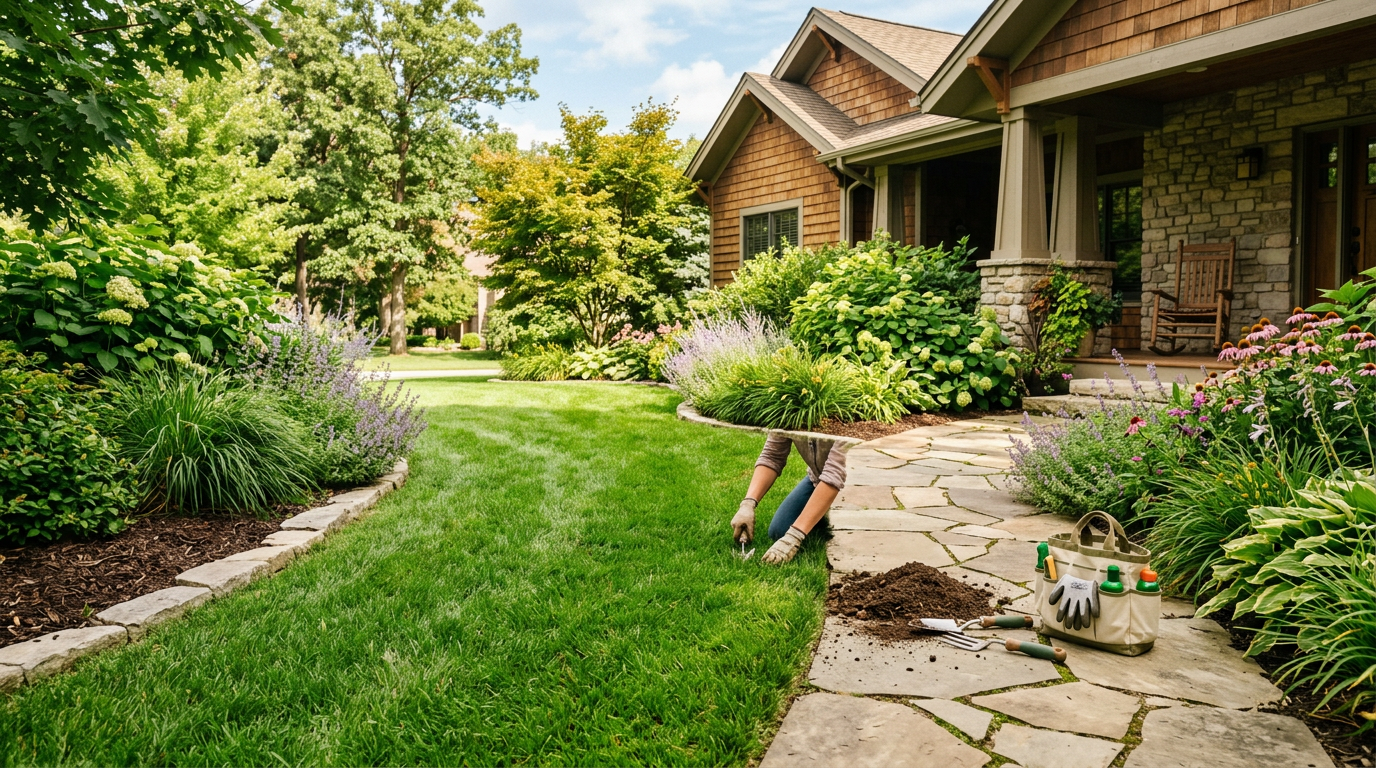
The short answer
Crabgrass is an annual. Stop seeds from germinating, kill what breaks through, and choke out future seedlings with thicker turf. Our permanent plan:
- Spring: Apply a pre‑emergent (prodiamine or dithiopyr) when soil at 2 inches stays 55–60°F for 3–5 days. Water it in.
- Summer: Spot‑spray escapes with quinclorac or mesotrione. Mow high (3–4").
- Fall: Feed and overseed to thicken. Repeat next season to drain the seed bank.
If you want the deep dive calendar version, see our Field‑Tested Plan.
Know your enemy: timing and biology
Crabgrass germinates when the top 1–2 inches of soil warms into the mid‑50s°F and gets sun. Each plant can tiller out fast, then dump a shocking number of seeds.
Stats worth knowing: Germination typically starts after several days averaging 55–60°F at 0.5–2 inches, and a single plant can produce up to ~150,000 seeds. That seed bank lingers multiple years, which is why one late mistake “resets” progress (MSU Extension: https://www.canr.msu.edu/news/when_is_the_best_time_to_apply_crabgrass_preemergence_herbicides; Clemson HGIC: https://hgic.clemson.edu/factsheet/crabgrass-control-in-lawns/).
The 3‑part plan that actually works
- Pre‑emergent at the right soil temp
- What to use: Prodiamine (long residual) or dithiopyr (shorter residual, some early post‑emergent control).
- When: When soil at 2" holds 55–60°F for 3–5 days. Confirm with a soil thermometer.
- How: Calibrate spreader, apply label rate, then water in 0.25–0.5" within 24 hours.
- Don’t seed right after most pre‑emergents—the barrier blocks grass seed too.
- Spot‑spray summer escapes
- Quinclorac smokes crabgrass at 1–3 tillers and larger. Add non‑ionic surfactant for stick.
- Mesotrione (Tenacity) whitens crabgrass and is kinder to young turf; also useful at seeding for certain grasses.
- Re‑treat per label (usually 14–21 days). Keep the mower at 3–4" to shade soil.
- Fall thickening (the permanent part)
- Core aerate if compacted. Overseed the right cultivar. Feed with a slow‑release N source.
- Water and mow correctly. A dense lawn is the only real long‑term pre‑emergent.
Step‑by‑step calendar (adjust to soil temps)
- Late winter: Buy product. Check spreader, sprayer, and a $10 soil thermometer.
- Spring trigger: When soil at 2" hits 55–60°F for 3–5 days, apply pre‑emergent and water in.
- 6–8 weeks later: If using shorter‑residual products, apply a split dose.
- Summer: Spot‑spray crabgrass with quinclorac or mesotrione. Mow 3–4". Water deeply, infrequently.
- Early fall: Core aerate (optional), overseed, and feed. Skip pre‑emergent if you plan to seed (unless using a seed‑safe option per label).
Also, rule out other issues that thin turf—like grubs. If you’re seeing ripped‑up turf or spongy roots, check White Grubs in Soil Identification and then see How to Get Rid of Grubs in Lawn Naturally.
Products we actually use (prices as of this season)
- The Andersons Barricade (Prodiamine) 18 lb, covers ~5,800 sq ft: ~$45.
- Scotts Halts Crabgrass & Grassy Weed Preventer 10 lb, ~5,000 sq ft: ~$28.
- Lesco Dimension 0‑0‑7 (Dithiopyr) 50 lb, ~12,500 sq ft: ~$75.
- Tenacity Herbicide (Mesotrione) 8 oz: ~$59. Seed‑safe for many cool‑season lawns—check label.
- Quinclorac 75 DF (1 lb): ~$35. Pair with Southern Ag Surfactant 16 oz: ~$12.
- Luster Leaf 1618 Soil Thermometer: ~$10. Scotts EdgeGuard Mini spreader: ~$55.
We’ve run this lineup on our own lawns and test plots. The key isn’t the brand; it’s timing, coverage, water‑in, and follow‑through.
Common mistakes (we’ve made them so you don’t have to)
- Calendar timing instead of soil temps: too early = wasted, too late = breakthrough.
- Skipping the water‑in step for pre‑emergents.
- Spraying without a surfactant (poor control) or at noon heat (leaf burn). Spray early/late day.
- Trying to seed right after a standard pre‑emergent. If you must seed, use mesotrione at seeding and skip the barrier.
- Mowing too short. Below ~3" invites heat, sun, and crabgrass.
Related problems you might be seeing
- Broadleaf patches instead? See How to Get Rid of Clover in Lawn.
- Thin, dead areas after snow mold? Check Brown Patches in Lawn After Winter.
- Want a full season playbook? Here’s our Field‑Tested Plan.
Safety and labels
Always read labels. Keep kids/pets off treated areas until products dry or are watered in as directed. Don’t exceed annual rates. When in doubt, do a small test spot first.
Frequently asked
When should I put down crabgrass pre‑emergent?+
Apply when soil at 2 inches holds 55–60°F for 3–5 consecutive days. Use a soil thermometer, not the calendar. In many areas this aligns with early spring blooms, but temperature is the only reliable trigger. Water the product in within 24 hours per label.
What kills crabgrass without killing my lawn?+
For existing plants, use quinclorac or mesotrione (Tenacity) labeled for your grass type. Add a non‑ionic surfactant, spray on a mild day, and follow re‑treat intervals. Avoid non‑selective killers like vinegar or glyphosate unless you’re spot‑dabbing and ready to reseed.
Can I overseed after using pre‑emergent?+
Usually no—standard pre‑emergents block grass seed. If you plan to overseed in fall, skip spring pre‑emergent or choose a seeding‑compatible option per label. Mesotrione is commonly used at seeding on many cool‑season grasses, but verify label and grass type.
How many years until crabgrass stops coming back?+
Expect 2–3 seasons of disciplined pre‑emergent timing plus summer spot‑spraying and fall thickening to drain the seed bank. The timeline depends on how many seeds matured last year and how dense your turf becomes. One sloppy season can re‑seed the lawn.
Is mowing height really that important for crabgrass?+
Yes. Mowing at 3–4 inches shades the soil and cuts crabgrass germination dramatically. Scalping opens the canopy, heats the soil, and invites new seedlings. Pair a higher cut with deep, infrequent watering to favor turf roots over weed seedlings.