
How to Get Rid of Clover in Lawn: Products That Work
Clover isn’t evil, but if you want it gone without torching your lawn, here’s the fast, safe plan we actually use—plus the exact products and timing.
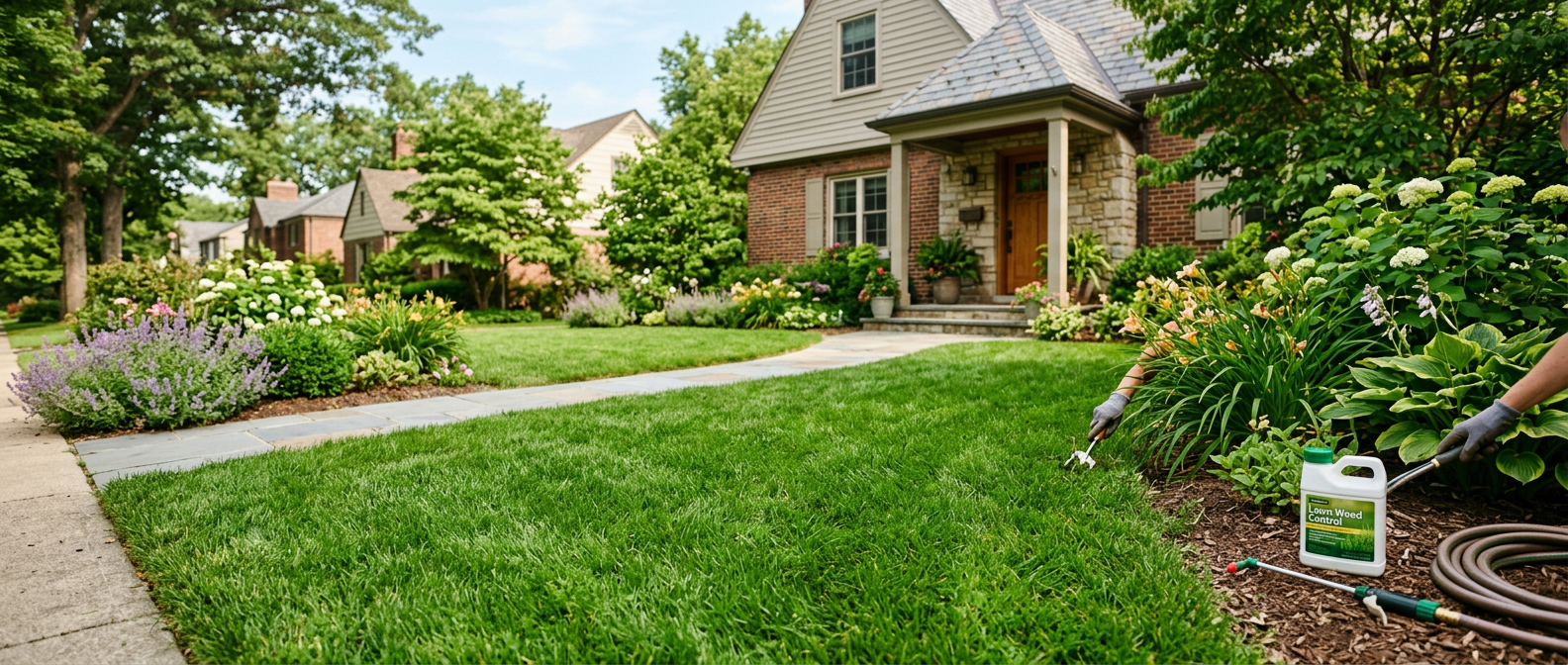
The short version
Clover shows up because grass is hungry. We feed, then we spray, then we thicken. That sequence gets rid of clover without wrecking the lawn.
We’ve spot‑sprayed more clover patches than we care to admit. This is exactly what works—no gatekeeping, no magic potions.
Step 1: Confirm it’s clover (not oxalis)
- White clover (Trifolium repens): three rounded leaflets, creeping stolons, white/pinkish pom‑pom flowers.
- Oxalis/wood sorrel: heart‑shaped leaflets, tiny yellow flowers, folds at night.
Why it matters: triclopyr excels on clover; oxalis may need repeat apps or mesotrione (Tenacity). If you mis‑ID, you’ll think “nothing works.”
Step 2: Fix the cause—feed and mow right
Clover thrives in low‑nitrogen lawns. Feed the grass so it wins the nutrient arms race.
- Apply 0.5–0.75 lb of actual nitrogen per 1,000 sq ft now. A straight urea (46‑0‑0) at 1–1.5 lb per 1,000 or a slow‑release like Scotts Turf Builder (32‑0‑4, ~ $24 per 12.5 lb) works.
- Keep mowing at 3–4 inches. Taller grass shades clover seedlings.
- Water deeply, not daily. 1 inch per week split into 1–2 soakings.
- Optional: quick soil test (Luster Leaf Rapitest, ~$15). If pH is way off, fix it and your grass wakes up.
Step 3: Spot‑spray with the right selective herbicide
Skip the internet “vinegar + soap” hacks. You’ll scorch leaves and leave roots. Use a selective, lawn‑safe product and a small hand sprayer.
Best performers we’ve field‑tested:
- Ortho Weed B Gon Chickweed, Clover & Oxalis Killer (triclopyr), ~$10–15 for RTU. Great on clover.
- Southern Ag Lawn Weed Killer with Trimec (2,4‑D + MCPP + dicamba), ~$14 per pint. The classic 3‑way.
- Gordon’s Trimec Lawn Weed Killer, ~$35–45 per quart. For larger areas.
- Tenacity (mesotrione) 8 oz, ~$59–70. Slower, safe over new seed, good for oxalis too.
- Add a non‑ionic surfactant (Southern Ag Surfactant, ~$12–15) if the label allows—clover leaves are waxy.
How we spray:
- Mow a day before to remove flowers (bee‑safe) and expose leaves.
- Apply on a dry day, 60–85°F. No rain for 6–8 hours.
- Lightly wet the foliage—don’t drench. Spot‑spray only the clover.
- Repeat in 10–14 days. Most patches fold after two hits.
Always follow your label. Don’t spray drought‑stressed or newly seeded lawns unless the product says it’s okay.
Numbers that matter (and why)
Most cool‑season lawns do best with 2–3 lb of nitrogen per 1,000 sq ft per year split across the season; low‑N turf favors white clover. Broadleaf mixes (2,4‑D + MCPP + dicamba) and triclopyr provide effective clover control with repeat applications 10–14 days apart, applied in 60–85°F weather (UMN: https://extension.umn.edu/lawn-care/fertilizing-lawns; NC State: https://content.ces.ncsu.edu/white-clover-control-in-turf).
Step 4: Reseed to block the comeback
After the clover fades (7–21 days), fill the holes so sunlight doesn’t hit soil and wake new seeds.
- Rake out dead clover.
- Overseed with a dense blend (e.g., turf‑type tall fescue or perennial rye). Use 3–5 lb seed per 1,000 sq ft.
- Water lightly 2x/day until germination, then taper.
Note: 3‑way herbicides usually require 2–4 weeks after application before seeding. Mesotrione (Tenacity) can be used at seeding—read the label for the exact timing.
If you’re seeing other weeds racing into the gaps, tighten up your pre‑emergent and maintenance game: How to Get Rid of Crabgrass Permanently.
Bee‑safe and “natural” moves (what actually helps)
- Mow off clover flowers before spraying so you’re not nuking a buffet for bees.
- Hand‑pull small patches after rain; get the crown.
- Feed nitrogen; clover fixes its own—grass can’t. Fertility is the quiet, natural fix.
- Skip homebrew acids and salt—they’ll burn your lawn and wreck soil.
If you like a little clover (microclover lawns are a thing), keep it. If you don’t, the plan above respects your choice and your lawn.
Troubleshooting: why clover keeps winning
- Thin, patchy turf: Repair bare spots fast. If winter beat you up, see Brown Patches in Lawn After Winter.
- Shade + compaction: Switch to shade‑tolerant grass and aerate.
- Grubs or critters thinning grass: Diagnose before you treat. Start with White Grubs in Soil Identification and, if you see tunneling, How to Get Rid of Moles in Your Yard.
- Overwatered areas mushrooming up? That’s a cultural issue, not clover—Why Mushrooms Growing in Lawn Happen.
When to expect results
- Day 1–3: Clover wilts or bronzes.
- Day 7–14: Major dieback. Re‑spray survivors.
- Week 3–6: Overseeded grass fills in; clover’s done.
Stick with the sequence—feed, spray, reseed—and you’ll break the clover cycle without carpet‑bombing your lawn.
Frequently asked
Will clover go away on its own if I just fertilize?+
Sometimes. Feeding 2–3 lb N per 1,000 sq ft/year makes grass more competitive, and clover fades. But established patches often need a selective herbicide plus overseeding to close gaps.
What’s the best time to spray clover?+
Spray when temps are 60–85°F on a dry day. Spring and early fall are ideal, with a second application 10–14 days later. Avoid drought stress and heat waves; always follow the product label.
Does vinegar or dish soap kill clover?+
Vinegar and soap can scorch leaves but won’t reliably kill clover crowns and stolons. You’ll get short‑term browning and quick regrowth. Use a selective, lawn‑safe herbicide instead.
Can I overseed after using a 3‑way herbicide?+
Yes, but wait 2–4 weeks (check your specific label). Mesotrione (Tenacity) is one exception that can be used at seeding. After control, rake out dead material and overseed to prevent new weeds.
Is clover bad for my lawn?+
Not inherently. Clover fixes nitrogen and feeds pollinators. If you prefer an all‑grass look, it signals low nitrogen and thin turf. Feed the lawn, spot‑spray selectively, and overseed to achieve a uniform grass canopy.