
How to Get Rid of Clover in Lawn Without Killing Grass
Clover isn’t evil—it’s a symptom. We’ll show you the fast, selective way to knock it out and the simple lawn tweaks that stop it from coming back.
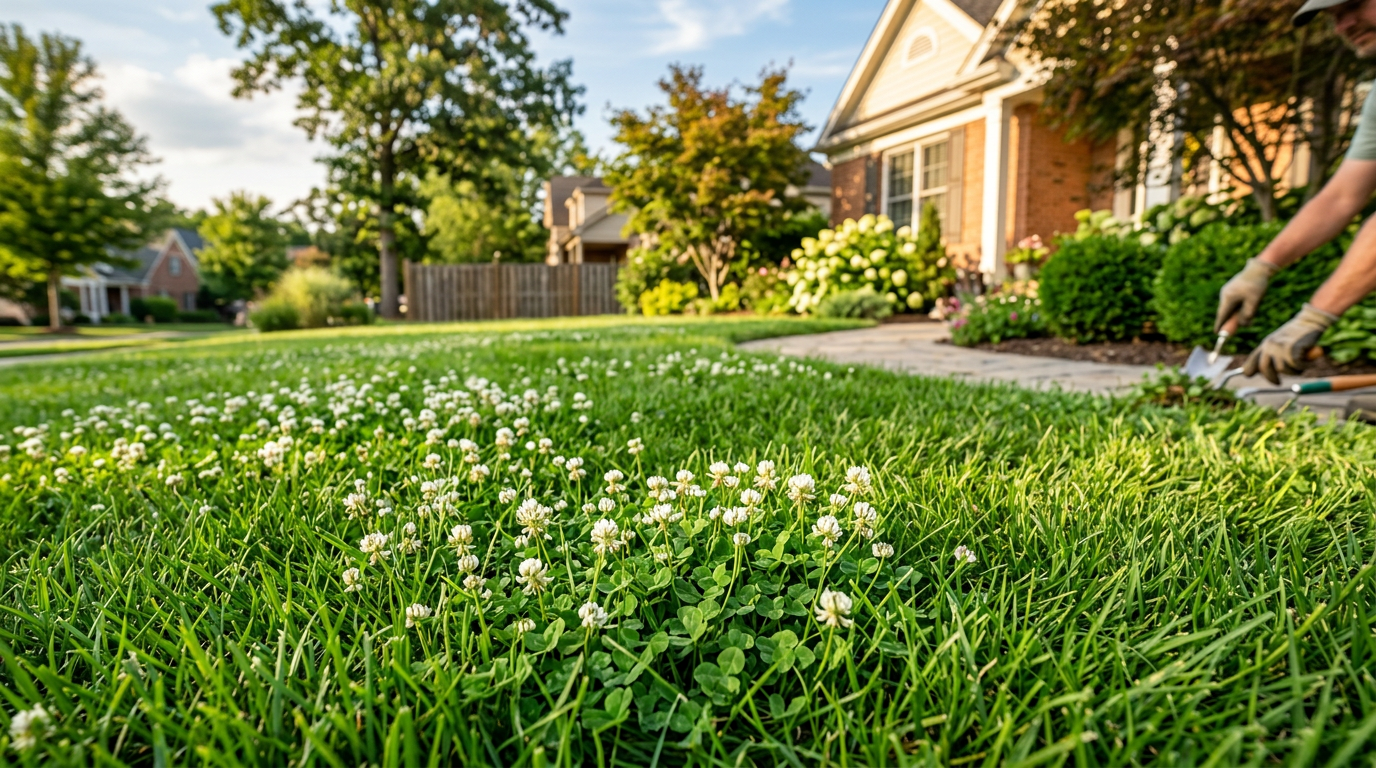
The no-nonsense plan to evict clover
Clover in a lawn usually means your grass is hungry. White clover loves low-nitrogen, thin turf. The fix is a two-parter: remove what’s there without torching your grass, and make the lawn so dense and fed that clover can’t move back in. We’ve done this on our own cool-season lawns and clients’ warm-season lawns—same playbook, minor tweaks.
Step 1: ID clover and decide your goal
You’re likely looking at white clover (Trifolium repens): three rounded leaflets, often with a pale chevron, and white pom‑pom flowers. Microclover is just a dwarf selection. If you like the bee-friendly look, consider keeping a microclover blend. If not, proceed.
Tip: If you’re dealing with grassy weeds like crabgrass instead, use our separate plan: How to Get Rid of Crabgrass Permanently.
Step 2: Small patches? Hand-pull right after rain
- Pull when soil is damp; clover has shallow stolons.
- Use a narrow weeder or a fishtail tool. The Fiskars Xact Weeder (~$35) makes quick work.
- Bag flowers if present to prevent reseeding.
We hand-pull anything under a dinner plate sized patch. Bigger than that and we switch to selective herbicide.
Step 3: Spot-spray clover with the right selective herbicide
Clover laughs at many “all-purpose” weed killers. Use one of these lawn-safe options:
- Ortho Weed B Gon Chickweed, Clover & Oxalis Killer (triclopyr RTU): ~$9–$12 for 24 oz. Great for spot work.
- BioAdvanced Weed Killer for Lawns (2,4‑D + MCPP + dicamba): ~$18–$22 for 32 oz concentrate; use a pump sprayer.
- Tenacity (mesotrione) concentrate: ~$60–$70 for 8 oz. Slower, but safe over new seedings.
How to apply (our field-tested routine):
- Spray on a calm day, 60–85°F. Hit only the clover, not the whole lawn.
- Wet the leaves to glisten, don’t drip. Add a non-ionic surfactant if the label recommends it.
- Recheck in 7–10 days. Re-spray living clover. Plan for 2–3 passes total.
- Don’t mow for 24–48 hours before and after spraying. Don’t water for 6–24 hours (follow the label).
Step 4: Feed the lawn—clover hates a well-fed turf
Clover thrives where grass is starving. After your first spray, feed 0.5–1.0 lb nitrogen per 1,000 sq ft.
- Easy button: Scotts Turf Builder 32‑0‑4 (~$25 for 12.5 lb) at label rate.
- Slow‑release and safe: Milorganite 6‑4‑0 (~$18 for 32 lb). Heavier bag, gentler burn risk.
We’ve repeatedly seen clover fade just by lifting nitrogen. If your lawn’s thin after summer or winter, also hit our guide on Brown Patches in Lawn After Winter to fix underlying stress.
Step 5: Reseed and mow smarter
- Overseed thinned areas right after your second spray. If you’re seeding, Tenacity is the safest herbicide to use near new seedlings.
- Mow high: 3–3.5 inches for cool‑season grass; 2.5–3 inches for many warm‑season species. Taller grass shades clover seedlings.
- Water deeply, not daily. Aim for 1 inch/week total, including rainfall.
If you see odd fungi popping after rain, that’s normal biology—not clover. Here’s why it happens: Why Mushrooms Growing in Lawn Happen.
The numbers behind the plan (and why it works)
White clover is a perennial legume that can fix roughly 50–150 lb nitrogen per acre per year and excels in low‑N turf. Selective broadleaf herbicides (2,4‑D/MCPP/dicamba or triclopyr) work best when daytime highs are 60–85°F, usually needing 2–3 applications 7–10 days apart for tough patches (University of Minnesota Extension: https://extension.umn.edu/turfgrass-management/broadleaf-weed-control-lawns).
Products we actually use (and why)
- Ortho Weed B Gon Chickweed, Clover & Oxalis Killer RTU (triclopyr): cheap, accurate spot-spraying.
- BioAdvanced All‑in‑One Lawn Weed Killer: covers larger areas via hose‑end or pump sprayer.
- Tenacity (mesotrione): pricey, but clutch when overseeding or for mixed weed pressure.
- Scotts Turf Builder 32‑0‑4: balanced feeding; fast green‑up.
- Milorganite 6‑4‑0: slow‑release, hard to mess up.
Prices vary by region, but those ballparks hold.
Common mistakes to skip
- Blanket-spraying the whole yard when only 5% has clover. Spot treat.
- Spraying in heat waves or cold snaps—herbicides underperform or risk injury.
- Skipping the re‑spray window. Clover’s stubborn; consistency wins.
- Forgetting to feed. Herbicide without nitrogen is a short‑term bandage.
If you suspect insect damage (thinning plus spongy turf), confirm before spraying anything. Start here: White Grubs in Soil Identification and, if needed, How to Get Rid of Grubs in Lawn Naturally.
Frequently asked
Will clover go away on its own?+
Usually not. White clover is a perennial that spreads by stolons and seed. If your lawn is low in nitrogen and thin, it will persist. Feed 0.5–1.0 lb N/1,000 sq ft and spot‑spray with triclopyr or a 3‑way herbicide to push it out.
What kills clover without killing grass?+
Selective broadleaf herbicides with triclopyr or a 3‑way mix (2,4‑D, MCPP, dicamba) target clover and spare turf when used per label. Apply at 60–85°F, avoid wind, and repeat in 7–10 days. Tenacity (mesotrione) is another option, especially when overseeding.
Is clover actually bad for my lawn?+
Not inherently. Clover fixes nitrogen and feeds pollinators. Many people intentionally add microclover to reduce fertilizer needs. If you prefer a pure grass look, you can remove it—just remember it signals low nitrogen or thin turf, which you should fix.
Do pre‑emergent herbicides stop clover?+
Pre‑emergents don’t touch existing clover and are unreliable for perennial clover coming from stolons. Focus on selective post‑emergent spot sprays and lawn health—feeding, mowing high, and overseeding—to block clover’s light and space.