
The 5 Best Grass Types for Idaho Lawns (2024 Guide)
Tired of a patchy lawn that can't handle Idaho's wild swings in weather? We'll cut through the noise and show you the exact grass types that thrive from Boise to Coeur d'Alene.
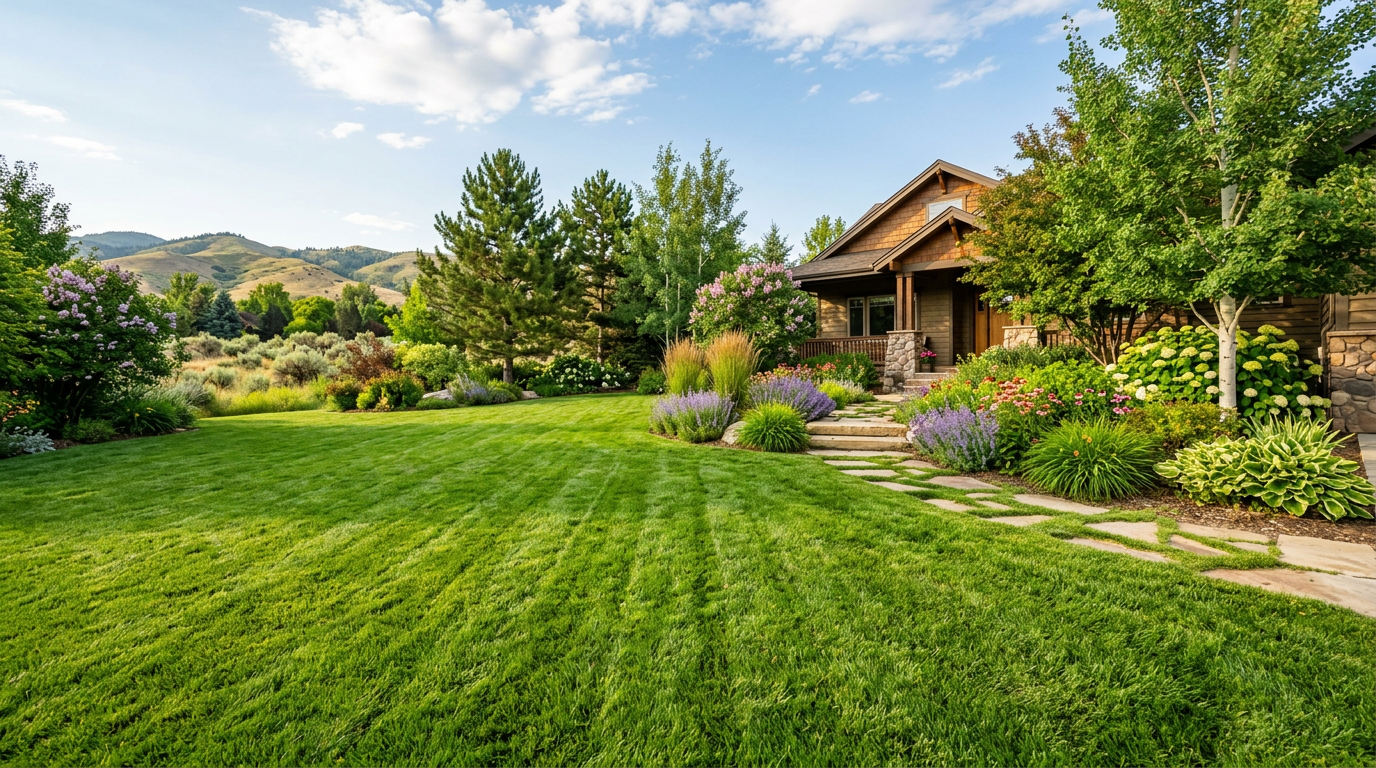
Let's be direct: growing a great lawn in Idaho is a challenge. Between the scorching, dry summers in the Treasure Valley, the deep freezes in the eastern highlands, and the variable conditions up in the Panhandle, your grass has to be tough. You can't just throw down any old seed from the big box store and expect a golf course. But you also don't need a PhD in agronomy to get it right. We're here to cut through the jargon and give you the straight scoop on the best grass for Idaho.
We're talking about grasses that can survive a -20°F winter in Driggs and a 100°F summer day in Boise without completely giving up the ghost. Forget the warm-season grasses you hear about down south; they won't survive a single Idaho winter. Here, it's all about the cool-season crew.
Understanding Idaho's Unique Lawn Climate
Idaho isn't a monolith. The climate in Coeur d'Alene is vastly different from Pocatello. The state spans USDA Hardiness Zones from a chilly 3b in mountain valleys to a more temperate 7a in places like Lewiston. However, the common threads are cold winters and low humidity. This climate profile is why cool-season grasses are the only real game in town.
Here's a number that puts it in perspective: while the average annual precipitation in Idaho is around 25 inches, that figure is wildly misleading. According to the University of Idaho Extension, some areas in the Snake River Plain get less than 10 inches of rain a year, while parts of the northern mountains can get over 60 inches. This means most Idaho lawns, especially in the population centers of Boise, Meridian, and Idaho Falls, require supplemental irrigation to survive the summer. Choosing a grass with good drought tolerance isn't just a smart move; it's a necessary one, especially with potential summer water restrictions.
1. Kentucky Bluegrass (KBG): The Idaho All-Star
When you picture a perfect, lush, dark green lawn, you're probably picturing Kentucky Bluegrass. It's the top choice for Idaho for a reason: it's beautiful, incredibly cold-hardy, and has the ability to spread and self-repair via underground stems called rhizomes. This means it can fill in minor bare spots on its own.
- Pros: Excellent cold tolerance, beautiful color and texture, spreads to fill in gaps, good disease resistance.
- Cons: Requires more water than other cool-season grasses, slower to germinate, can go dormant and turn brown during prolonged drought if not watered.
- Best For: Homeowners who want a premium-looking lawn and are willing to keep up with watering and fertilization.
We've had great success with products like Scotts Turf Builder Kentucky Bluegrass Mix, which you can find for about $40-$50 for a 7 lb. bag. It's not the cheapest, but for that classic lawn look, it's the gold standard.
2. Tall Fescue: The Drought-Tolerant Workhorse for Idaho
If Kentucky Bluegrass is the luxury sedan, Tall Fescue is the reliable pickup truck. Modern turf-type tall fescues are lightyears ahead of the old, coarse pasture grass you might be thinking of. They have a deep root system—we're talking up to 3 feet deep—that makes them exceptionally drought and heat tolerant compared to KBG. This is a huge advantage for water-conscious homeowners in places like Boise or Twin Falls.
- Pros: Excellent drought and heat tolerance, deep root system, stands up well to heavy foot traffic from kids and pets, relatively low maintenance.
- Cons: Bunch-forming grass (doesn't self-repair like KBG), can be slightly coarser in texture.
- Best For: Families with active kids and pets, anyone looking to reduce their summer water bill, and high-traffic areas.
A great option is the Pennington The Rebels Tall Fescue Grass Seed Blend. A big 20 lb. bag will run you about $60-$75 and covers a significant area. Its durability makes it a very practical choice for the typical Idaho lifestyle.
3. Fine Fescues: The Shade & Low-Maintenance Champions
Got a lot of mature trees? A north-facing yard? Fine Fescues are your secret weapon. This category includes varieties like Creeping Red, Chewings, and Hard Fescue. They are the most shade-tolerant of the cool-season grasses and have very low fertilizer and water needs. They are the definition of low-maintenance.
- Pros: Best shade tolerance, low water and fertilizer requirements, fine texture.
- Cons: Do not tolerate heavy foot traffic well, can get clumpy if not managed.
- Best For: Shady parts of your yard, low-traffic areas, or if your main goal is a green, low-effort lawn.
Often, you'll find Fine Fescues in a mix designed for shade. If you're struggling with shady spots, it's worth checking out our guide to the best grass seed for shade. These grasses are problem-solvers.
4. Perennial Ryegrass: The Fast Fix
Perennial Ryegrass is the sprinter of the grass world. It germinates and establishes faster than any other cool-season grass, often sprouting in just 5-7 days. This makes it an essential component in many seed mixes and the absolute king for quick repairs or fall overseeding.
While it's not always recommended as a standalone grass in Idaho due to being slightly less cold-hardy than KBG, its rapid growth provides quick cover that protects slower-germinating seeds and prevents soil erosion. It also has great wear tolerance.
- Pros: Very fast germination, good wear resistance, rich green color.
- Cons: Less cold tolerant than KBG or fescues, can be a shorter-lived perennial in harsh climates.
- Best For: Overseeding an existing lawn, quick bare-spot repair, and as a component in a seed mix.
If you're looking to thicken up your existing lawn this fall, learning how to overseed a lawn with a mix containing Perennial Ryegrass is one of the best things you can do for it.
Your Best Bet: An Idaho-Specific Grass Seed Blend
Here's the real pro-tip that separates the amateurs from the geniuses: for most Idaho lawns, a blend is better than a single grass type. We've told countless homeowners in the Treasure Valley and beyond to stop looking for a single magic bullet. A high-quality blend combines the strengths of these different grasses to create a more resilient, adaptable lawn.
A typical Idaho blend might look something like this:
- 60-70% Kentucky Bluegrass: For that beautiful look and self-repairing ability.
- 15-20% Perennial Ryegrass: For fast germination and wear tolerance.
- 10-15% Fine Fescue (like Creeping Red): For improved shade tolerance and lower water needs.
This approach gives you genetic diversity. If a hot, dry spell stresses the KBG, the Fescue in the mix can handle it. If a disease that targets Ryegrass appears, the KBG will be unaffected. Local suppliers are often your best resource here. For example, stores like Zamzows in the Boise area offer custom blends like their Ultimate Lawn Seed Mix, which is specifically formulated for our local conditions. You're not just buying seed; you're buying decades of local experience.
Planting & Care for Your Idaho Lawn
Choosing the right seed is half the battle. Here's how to win the war:
- Planting Time: The absolute best time to plant grass seed in Idaho is in the late summer or early fall (mid-August to late September). The soil is warm, the summer heat has broken, and the young grass will have months to establish before winter. Spring is a distant second-best option.
- Watering: New seed needs to be kept consistently moist. Once established, deep, infrequent watering is key. For detailed timing, see our guide on the best time to water grass. This encourages deep root growth, which is critical for surviving July and August.
- Mowing: Don't mow your new grass until it's at least 3-4 inches tall. Mowing high (around 3 inches) is one of the best things you can do for your lawn. It shades the soil, reduces water evaporation, and prevents weeds. If you're wondering about frequency, check out our advice on how often to mow your lawn.
- Yellowing: If you find your lawn struggling and your grass is turning yellow, it could be anything from improper watering to nutrient deficiency. An Idaho-specific issue can be high soil pH, which may require amendments.
Frequently asked
What is the best low-maintenance grass for Idaho?+
The best low-maintenance grass for Idaho is a blend dominated by Fine Fescues (like Creeping Red and Hard Fescue) and Tall Fescue. These varieties require less water, fertilizer, and mowing than Kentucky Bluegrass and have excellent drought and shade tolerance, making them a great hands-off option.
When is the best time to plant grass seed in Idaho?+
The ideal time to plant grass seed in Idaho is late summer to early fall, roughly from mid-August through September. The soil is warm from the summer, but the cooling air temperatures reduce stress on new seedlings, allowing them to establish strong roots before winter dormancy.
Can I grow warm-season grass like Bermuda or Zoysia in Idaho?+
No, you cannot successfully grow warm-season grasses like Bermuda or Zoysia in most of Idaho. The winters are far too cold, and these grasses will not survive. You must plant cool-season grasses like Kentucky Bluegrass, Fescues, and Ryegrass, which are adapted to Idaho's four-season climate.
What is a good grass seed mix for Boise, Idaho?+
A great grass seed mix for Boise would contain a high percentage of Kentucky Bluegrass for aesthetics, blended with Turf-Type Tall Fescue for drought and heat tolerance. A small amount of Perennial Ryegrass can be added for quick establishment. This combination balances beauty with water-wise durability.
How do I prevent snow mold on my Idaho lawn?+
To prevent snow mold, a common fungal disease in Idaho, avoid excessive fall fertilization with high nitrogen. Continue mowing until the grass stops growing, and rake up all leaves before the first permanent snowfall. This reduces the moist, matted-down environment where the fungus thrives.