
How Often to Mow Your Lawn: A No-Nonsense Guide
Stop guessing and start mowing like a pro. We're cutting through the noise to give you the real-deal schedule for a healthier, better-looking lawn.
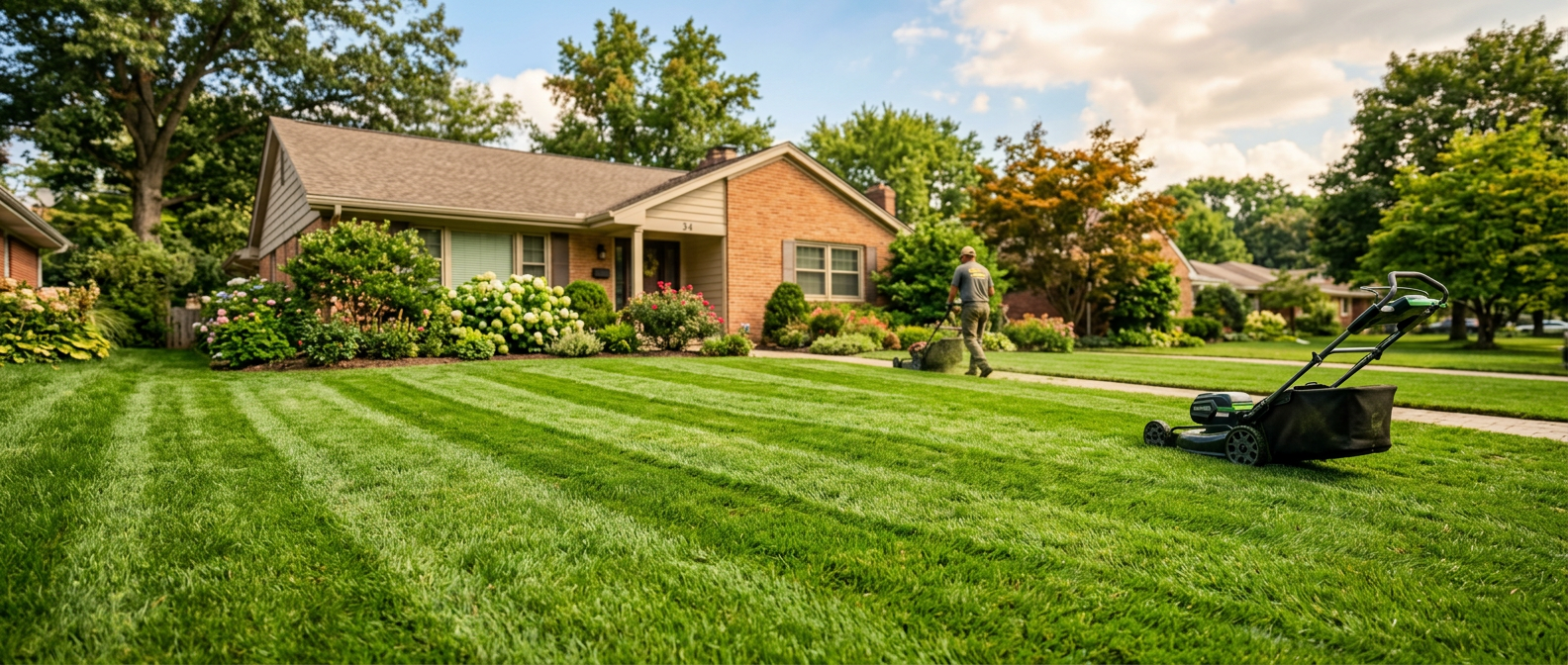
Let's get one thing straight: if you're mowing your lawn every Saturday just because it's Saturday, you're probably doing it wrong. We see it all the time—neighbors dutifully firing up the mower on a clockwork schedule, regardless of whether the lawn actually needs it. The landscaping world is full of this kind of gatekeeping dogma. We're here to tell you there's a simpler, better way.
The secret isn't a calendar. It's not a secret fertilizer or a fancy mower. The key to knowing how often to mow your lawn is to let the grass tell you when it's ready. And the language it speaks is called the "One-Third Rule."
The Only Mowing Rule That Matters: The One-Third Rule
Forget everything else you've heard. The One-Third Rule is your new gospel. It's simple:
Never, ever cut more than one-third of the total height of the grass blade in a single mowing session.
Why are we fanatics about this? Because cutting more than that sends the plant into shock. The grass blade is a solar panel and a food factory. When you chop off half of it, you're drastically reducing its ability to photosynthesize, which in turn starves the root system. Stressed grass with shallow roots is a welcome mat for weeds, disease, and drought damage.
Here’s how it works in practice:
- Determine your ideal finished height. For most cool-season grasses like fescue and ryegrass, this is around 3 to 3.5 inches. For warm-season grasses like Bermuda, it might be lower, around 1.5 to 2.5 inches.
- Do some simple math. If your target height is 3 inches, you should mow when the grass reaches 4.5 inches (3 inches is 2/3 of 4.5 inches).
- Mow when the grass hits that trigger height, not when the calendar tells you to.
This is why a fixed schedule fails. In the explosive growth of mid-spring, you might need to mow every 4 days. In the sweltering heat of late summer, that interval might stretch to 10 or 14 days.
Mowing Frequency by Grass Type and Season
Your lawn's growth rate is a direct product of its type and the time of year. Grasses are generally split into two categories: cool-season and warm-season.
Cool-Season Grasses (Fescue, Kentucky Bluegrass, Ryegrass)
These are the kings of the northern two-thirds of the U.S. They have two peak growth periods: spring and fall.
- Spring (Peak Growth): Expect to mow every 4 to 7 days. The combination of mild temperatures and plentiful rain sends these grasses into overdrive.
- Summer (Stress Period): Growth slows dramatically. Stretch your mowing intervals to 7 to 14 days. Raise your mower height to help shade the soil.
- Fall (Second Peak): As temps cool, growth ramps back up. You'll return to a 5 to 7 day schedule.
- Winter (Dormancy): Once the first hard frost hits and growth stops, you can put the mower away.
Warm-Season Grasses (Bermuda, Zoysia, St. Augustine, Centipede)
These thrive in the heat of the South and Sun Belt. Their calendar is basically the reverse of their cool-season cousins. If you live in the transition zone or deep south, you're probably dealing with one of these. Our guide to the best grass types for Alabama has a good breakdown of these heat-lovers.
- Spring (Wake-Up Call): As the soil warms, they slowly green up. You might start with a 10 to 14 day schedule.
- Summer (Peak Growth): The hotter it gets, the faster they grow. This is their prime time. Plan to mow every 5 to 7 days.
- Fall (Slowing Down): As temperatures drop, so does their growth rate. You'll ease back to a 7 to 12 day schedule.
- Winter (Dormancy): These grasses turn brown and go dormant after the first frost. No mowing needed until spring green-up.
Setting Your Mower Height: A Seasonal Strategy
Your mower's height adjustment isn't a 'set it and forget it' feature. Using it strategically throughout the year is one of the cheapest and most effective things you can do for your lawn.
- Spring: As the lawn wakes up, start at your ideal height—typically 3-3.5 inches for fescue, 2-2.5 inches for bluegrass, or 1.5-2.5 for Bermuda/Zoysia.
- Summer: Raise the deck. Let that grass grow taller, to 3.5-4 inches for cool-season grasses. The taller blades shade the soil, keeping it cooler and reducing water evaporation. This is a crucial tactic for surviving summer heat and works hand-in-hand with knowing the best time to water grass.
- The Final Mow: For your last mow of the season before winter, drop the height back down by about half an inch from your usual cut. For a 3.5-inch lawn, mow it down to 3 inches. This helps prevent snow mold and stops the grass from becoming matted and diseased under snow or cold winter rains.
Your Mower Isn't Just a Machine, It's Your #1 Tool
Let's talk hardware. You can follow the one-third rule perfectly, but if your equipment is shoddy, your results will be too.
Blade Sharpness is Non-Negotiable
This is the big one. Mowing with a dull blade is like trying to cut a tomato with a butter knife. It doesn't slice; it rips and tears the grass blades. Those ragged, torn ends are an open wound, inviting fungus and other diseases to move in. A sharp blade makes a clean, surgical cut that heals quickly.
How to Check: Look at your lawn a day or two after you mow. Do the tips of the blades have a frayed, whitish, or brown look? That's a tell-tale sign of a dull blade.
The Fix: Sharpen your blades at least twice a season—once at the beginning and once mid-summer. You can take them to a local shop for about $10-$15, or do it yourself with a tool like the Arnold Universal Lawn Mower Blade Sharpening Kit, which costs about $12 online. We learned the hard way that a dull blade is basically an invitation for brown patch disease on our tall fescue test plots. It's the cheapest insurance you can buy for your lawn.
To Mulch or Bag? That is the Question.
- Mulch (Good!): When you follow the one-third rule, the clippings are short and fine. Letting them fall back into the lawn (mulching) is fantastic. They decompose quickly, returning nitrogen and other valuable nutrients to the soil. It's free fertilizer!
- Bag (Sometimes Necessary): You should switch to bagging your clippings if 1) you've let the grass get too long and the clippings are clumping, or 2) you're dealing with a major weed infestation. The last thing you want to do is spread millions of dandelion seeds all over your nice clean lawn. If you're fighting a weed battle, bag the clippings until it's under control. Bagging is a key part of the strategy when you're figuring out how to get rid of dandelions in your lawn.
The Numbers Don't Lie: A Data-Driven Approach to Mowing
We're not just making this stuff up. The science backs it up in a big way. Taller grass means deeper roots, which is your ticket to a drought-resistant, resilient lawn. According to the Purdue University Extension, there's a direct correlation between mowing height and root depth. For example, Kentucky bluegrass mowed at 2 inches has roots just under 2 feet deep, but when mowed at a healthier 3 inches, its roots can extend over 3.5 feet deep. Deeper roots mean better drought tolerance, more efficient nutrient uptake, and a thicker turf that naturally chokes out weeds. (Source: https://www.extension.purdue.edu/extmedia/ay/ay-8-w.pdf)
By simply raising your mower deck, you are architecting a more robust and self-sufficient ecosystem right in your backyard. Don't let anyone tell you to scalp your lawn for a "clean" look. That's a recipe for disaster.
So, park the calendar-based guilt. Walk outside, look at your lawn, and let the grass tell you what it needs. Trust the one-third rule, keep your blades sharp, and you'll be on your way to having the best lawn on the block—no genius required.
Frequently asked
Should I mow my lawn before or after it rains?+
Always wait for the lawn to dry completely after it rains. Mowing wet grass results in an uneven cut, clumps that can smother healthy grass, and can clog your mower deck. For the best results and the health of your lawn and equipment, mowing dry grass is non-negotiable.
What is the best time of day to mow the lawn?+
The best times are mid-morning, after the dew has evaporated, or early evening, which gives the grass blades several hours to heal before the intense heat of the next day. Avoid mowing in the middle of a hot, sunny day, as this adds unnecessary stress to the lawn.
Is it bad to mow your lawn every day?+
Yes, for almost all residential lawns, mowing every day is excessive and harmful. It puts constant stress on the grass, can inhibit deep root growth, and is simply not necessary if you are following the one-third rule. Let the grass grow to the proper height before cutting.
Should I leave grass clippings on the lawn?+
Yes, in most cases. This practice, called grasscycling or mulching, returns valuable nutrients to the soil for free. Only bag your clippings if they are long and clumpy from overdue mowing, or if your lawn has a significant weed or disease problem that you don't want to spread.
When should I stop mowing for the winter?+
You can stop mowing after the grass has stopped growing, which is usually after the first hard frost of the season. For your final mow, cut the lawn slightly shorter than usual (e.g., from 3.5 inches down to 3) to help prevent matting and snow mold during the winter.