
How to Overseed a Lawn for a Thick, Green Yard
Tired of thin, patchy turf? Overseeding is the secret weapon for a lush, dense lawn without starting from scratch. Here's how to do it right.
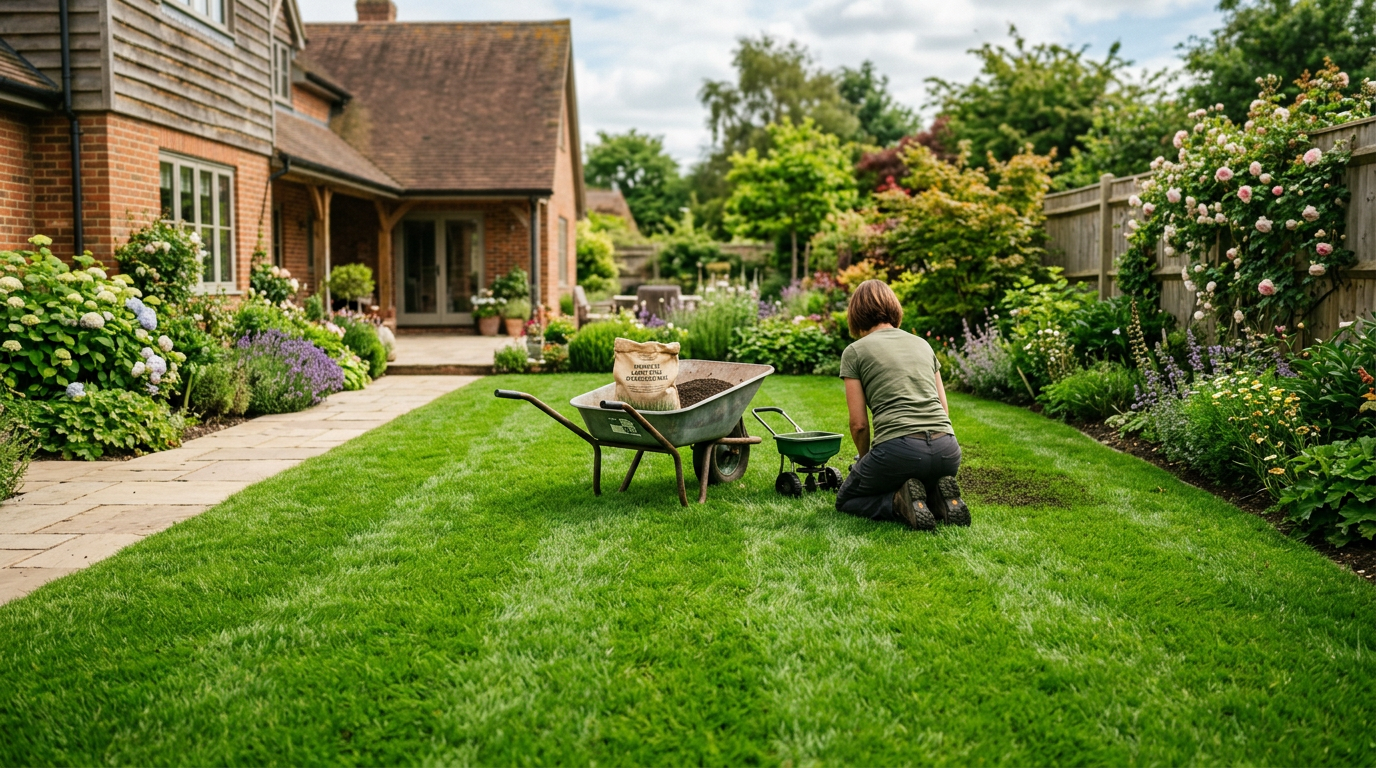
Let's be direct: a thin, patchy lawn is an open invitation for every weed in a five-mile radius. You can fight those weeds one by one, or you can play offense. Overseeding is your offensive strategy. It's the single best thing you can do to transform a sad-looking yard into a thick, resilient carpet of green without tearing everything up and starting over.
We’re not talking about just tossing a handful of seed on a bald spot and hoping for the best. That’s a waste of time and money. We're talking about a systematic process that works every single time if you follow the steps. This is how the pros get those golf-course results, and there’s no reason you can’t do it yourself.
What is Overseeding, Anyway?
Overseeding is the simple act of spreading grass seed over your existing lawn. That's it. The goal isn't to replace your lawn, but to augment it. Think of it as adding new players to a team that's getting a little tired and worn out.
Why bother?
- Thickens Turf: The primary goal. More grass blades per square inch means a denser, spongier, more beautiful lawn.
- Fills Bare Spots: It’s the perfect fix for those annoying patches caused by foot traffic, dog spots, or summer stress.
- Improves Color & Vigor: Introducing new, improved grass cultivars can give your entire lawn a vibrant color boost and better overall health.
- Crowds Out Weeds: This is the big one. A dense lawn is the best weed defense there is. By filling in the gaps, you leave no room for things like crabgrass and dandelions to take hold. It's much easier to prevent weeds than to fight an infestation after the fact. Just ask anyone dealing with unwanted dandelions; how to get rid of dandelions in your lawn is a battle you can win with density.
The Golden Rule: When to Overseed
Timing is probably 90% of the battle. Spreading seed at the wrong time of year is like throwing hundred-dollar bills into the wind. The ideal time depends entirely on what kind of grass you have.
For Cool-Season Grasses (Tall Fescue, Kentucky Bluegrass, Ryegrass): The absolute best time is late summer to early fall (roughly late August through mid-October for most of the U.S.). The soil is still warm from the summer sun, which speeds up germination, but the cooling air temperatures reduce stress on the new seedlings. Plus, annual weeds like crabgrass are dying off, meaning less competition.
For Warm-Season Grasses (Bermuda, Zoysia, St. Augustine): The window is late spring to early summer, after all danger of frost has passed. These grasses thrive in the heat, and you want to seed when they are in their most active growth phase. Seeding too early risks a late frost killing your new sprouts, and seeding too late means they won't have time to establish before fall dormancy.
Prep Work: The Steps You Absolutely Cannot Skip
We’ve learned the hard way that skipping the prep work is a recipe for wasted money and disappointment. Good seed needs to touch good soil. Everything you do now is to make that happen.
- Mow Low and Bag It: Set your mower to one of its lowest settings, around 1.5 to 2 inches, and mow the entire area. Critically, you must bag the clippings. This does two things: it shocks the existing grass, slowing its growth so it doesn't out-compete the seedlings, and it allows sunlight and water to reach the soil where your new seed will be. Wondering how often to mow your lawn normally? Forget that for now; this is a special occasion.
- Dethatch Like You Mean It: Thatch is a layer of dead runners and stems between the soil and the green grass blades. A thick layer of thatch is like a waterproof mattress preventing your seed from ever touching soil. For small areas, a stiff metal rake will work. For a whole lawn, rent a power rake or buy a corded electric model like the Greenworks 14-Inch Corded Dethatcher, which you can find for about $130. Rake up and remove all the dead material you pull up. You will be shocked by how much there is.
- Aerate for Success: This is the pro move. Core aeration pulls small plugs of soil out of the ground, relieving compaction and creating thousands of perfect little pockets for seed to fall into. It dramatically improves seed-to-soil contact. You can rent a gas-powered core aerator from a big-box store for about $70-$100 for a half-day. It's a workout, but the results are undeniable.
Choosing Your Seed and Spreading It Right
Not all grass seed is created equal. Avoid the bargain-bin bags that are full of filler and low-quality seed. Read the label. You're looking for a high germination rate (85%+) and a low percentage of "other crop" and "weed seed" (as close to 0% as possible).
For most lawns, a high-quality turf-type tall fescue blend like the Pennington Smart Seed Tall Fescue Blend (~$80 for a 20lb bag) is a fantastic, drought-tolerant choice. If you live in a specific climate, like the deep south, you'll need to match your grass type. We go into detail on how to choose for a given region in posts like the 5 best grass types for your Alabama lawn.
To spread the seed, use a broadcast (rotary) spreader, not a drop spreader. A broadcast model like the Scotts Elite Spreader (~$85) slings the seed in a wide arc, making it easier to get even coverage without obvious lines.
- Read the seed bag to find the recommended setting for your spreader.
- Fill the spreader on a driveway or tarp to avoid spills that create unnaturally thick patches.
- Divide your seed in half. Apply the first half by walking north-to-south, and the second half by walking east-to-west. This checkerboard pattern ensures you don't miss any spots.
- Optional but Recommended: Immediately after seeding, apply a starter fertilizer. These are high in phosphorus, which is critical for root development. A product like Scotts Turf Builder Starter Food for New Grass (~$25) is perfect for the job.
The Aftercare: Nurturing Your Investment
Getting the seed down is only half the job. For the next 3-4 weeks, you are the guardian of thousands of tiny baby grass plants. Your main job is water management.
According to turfgrass specialists, a dense turf of at least 1,000 shoots per square foot is one of the most effective, environmentally friendly ways to prevent weed establishment. (Source: Purdue University Extension, purdue.edu/hla/sites/yardandgarden/turf-tip-thick-lawn-is-the-best-weed-control/). Your goal with watering is to get every one of those expensive seeds to germinate and contribute to that density.
- Watering: The seed needs to stay consistently moist. This doesn't mean soaked or puddled. It means light, frequent watering. For the first two weeks, you might need to water for 10-15 minutes, two or even three times a day, depending on the heat and sun. The goal is to never let that top inch of soil dry out. This is a situation where knowing the best time to water grass (early morning) is good, but you may need to add a midday cycle to keep things damp.
- Mowing: Don't mow until the new grass blades are at least 3-4 inches tall. When you do, use your mower's highest setting. Don't take off more than one-third of the blade length. A sharp blade is crucial to avoid tearing the tender new plants.
- Traffic: Keep everyone—pets, kids, yourself—off the newly seeded areas as much as humanly possible for at least a month. The new seedlings are extremely fragile and easily crushed.
Follow these steps, and in about 4-6 weeks, you'll see a dramatic difference in the thickness and color of your lawn. It’s a bit of work upfront, but the payoff lasts for years.
Frequently asked
Can I just throw grass seed on my lawn?+
You can, but it's a waste of money. Without proper prep like mowing low, dethatching, and aerating, the seed will not make contact with the soil. It will sit on top of existing grass or thatch, fail to germinate, and likely be eaten by birds or washed away.
What's the difference between overseeding and reseeding?+
Overseeding is spreading seed over an existing, intact lawn to make it thicker and fill in minor bare spots. Reseeding (or renovating) is for a lawn that is more than 50% dead or weeds, where you kill off everything and start over from scratch on bare soil.
How long does it take to see results after overseeding?+
You should see the first signs of germination in 7-14 days for cool-season grasses like fescue and ryegrass. It can take up to 21-30 days for others like Kentucky Bluegrass. The lawn will start to look noticeably thicker in about 4-6 weeks with proper watering.
Should I put down topsoil after overseeding?+
It's generally not necessary if you have core aerated, as the plugs will break down and provide a topdressing. If you have significant bare patches, a very light dusting (1/8 inch) of quality compost or peat moss can help hold moisture, but don't bury the seed.
When can I fertilize again after overseeding?+
After using a starter fertilizer at the time of seeding, wait about 4-6 weeks, or until after you have mowed the new grass two or three times. Then you can return to a regular fertilization schedule with a balanced, slow-release nitrogen fertilizer.