
Why Is My Grass Turning Yellow? 6 Common Causes & Fixes
A yellow lawn is a cry for help. We'll show you how to read the signs and solve the most common problems without wasting time or money on guesswork.
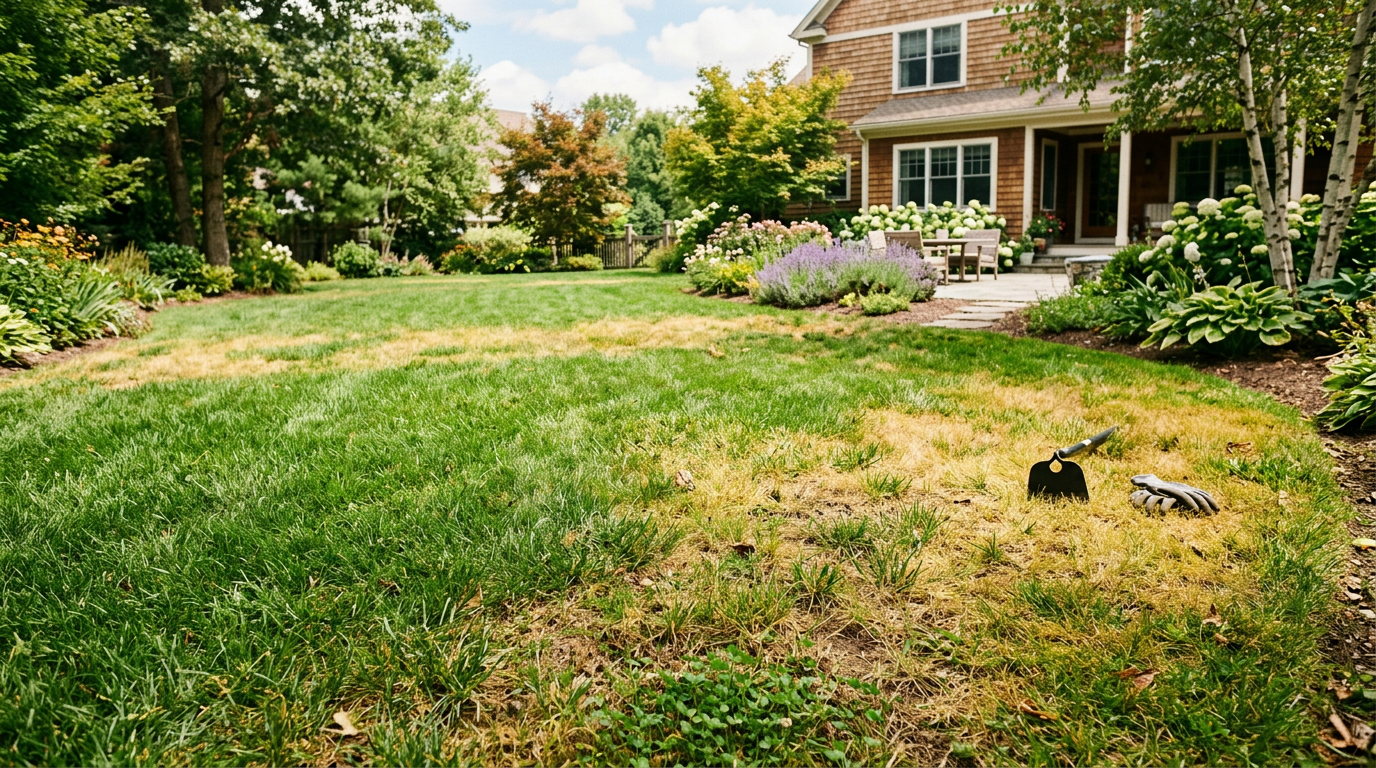
There's nothing more frustrating than looking out your window and seeing a lawn that's more lemon than lime. That vibrant green carpet you worked for is fading to a sad, sickly yellow. We've all been there. It feels like a personal failure, but take a breath. A yellow lawn isn't a death sentence; it's a signal. Your grass is trying to tell you something, and our job is to translate.
Here at Dirt Cheap Genius, we don't believe in gatekeeping lawn care secrets. Fixing a yellow lawn is usually straightforward once you identify the root cause. Forget expensive, speculative treatments. We're going to walk you through the most common culprits, from thirst and hunger to bad haircuts, and give you the exact, no-nonsense steps to get your lawn back to its glorious green self.
1. It's Hungry: Nutrient Deficiencies
Grass is a heavy feeder. If it's turning a uniform, pale yellow across large areas, it's likely starving. The number one culprit is usually a lack of nitrogen, the nutrient responsible for lush, green growth.
- Nitrogen (N): This is the most common deficiency. Nitrogen is mobile in the soil and gets used up quickly. A lawn lacking nitrogen will look uniformly faded and anemic, with older blades turning yellow first. You might also notice slower growth.
- Iron (Fe): An iron deficiency, or chlorosis, causes newer grass blades to turn yellow while the veins remain green. This is common in alkaline soils (high pH) where iron is present but chemically locked up, unavailable to the plant. We once had a section of fescue that kept yellowing despite regular fertilizing; a simple soil test revealed a high pH and an iron deficiency. A dose of liquid iron fixed it in a week.
The Fix: Stop guessing and get a soil test. A simple mail-in kit like the one from MySoil ($29.99) will give you a detailed breakdown of your nutrient levels and pH. For a quick boost, a nitrogen-rich fertilizer is your best bet. Look for something like Scotts Green Max Lawn Food (27-0-2), which is designed for rapid green-up. For long-term health, a balanced slow-release fertilizer like Milorganite (6-4-0) provides nitrogen and iron over several weeks. If your soil test confirms an iron issue, apply a product like Southern Ag Chelated Liquid Iron.
2. It's Thirsty (or Drowning): Water Issues
Water is the lifeblood of your lawn, but the wrong amount can be just as bad as not enough. Both overwatering and underwatering will stress your grass and cause it to turn yellow.
- Underwatering: A thirsty lawn will look dull, bluish-green before turning yellow or brown. You can test this by walking on it; if your footprints remain for more than a few minutes, the grass blades don't have enough water to spring back. The grass will also feel dry and crunchy.
- Overwatering: This is a sneaky one. When you water too often, you create a shallow, weak root system and waterlogged soil. This suffocates the roots, preventing them from absorbing oxygen and nutrients, which leads to yellowing. Overwatering also creates the perfect environment for fungal diseases.
The Fix: Water deeply but infrequently. This encourages roots to grow deep in search of moisture, making the lawn more drought-tolerant. Aim for about 1 to 1.5 inches of water per week, delivered in one or two sessions, not a little bit every day. The soil should be moist 4-6 inches down after watering. To figure out how long to run your sprinklers, place a few empty tuna cans around the lawn and time how long it takes to collect one inch of water. For a full breakdown, check out our guide on the best time to water grass, which is always early in the morning.
3. It's Suffocating: Soil Compaction & Thatch
If your grass has seen a lot of action—kids playing, parties, repeated mowing patterns—the soil underneath can become hard and compacted. On top of that, a layer of dead grass stems and roots can build up, called thatch. When this layer gets over half an inch thick, it acts like a waterproof barrier.
Both compaction and thatch prevent water, air, and nutrients from reaching the roots. The grass is essentially being strangled from below. Your fertilizer and water just sit on top, useless. The lawn will appear thin, weak, and—you guessed it—yellow.
The Fix: It's time to help your lawn breathe. You need to aerate and dethatch.
- Dethatching: This process involves using a stiff rake or a specialized machine to pull up the thick layer of thatch. For a deep dive, see our guide on how to dethatch a lawn. Doing this in the spring or fall will dramatically improve your lawn's health.
- Aeration: This is the process of pulling plugs of soil out of the ground to relieve compaction. Core aerators are most effective. If you don't want to rent a big machine, you can learn how to aerate lawn without a machine using manual tools for smaller areas.
4. It's Sick or Under Attack: Disease and Pests
Sometimes, the yellowing isn't uniform but appears in distinct patches, spots, or irregular shapes. This is often a sign of a fungal disease or an insect infestation.
- Lawn Diseases: Fungi are opportunistic. They thrive in overly wet conditions, often from overwatering or poor air circulation. Common culprits include Dollar Spot (small, silver-dollar-sized yellow circles), Rust (an orange-yellow powder that rubs off on your shoes), and Necrotic Ring Spot (doughnut-shaped rings of yellow or dead grass).
- Pest Infestations: Grubs are a major problem. These beetle larvae live underground and chew on grass roots, cutting off the plant's access to water and nutrients. If you can pull up a section of your yellow lawn like a piece of carpet, you probably have grubs. Chinch bugs are another pest; they suck the juices out of grass blades, leaving behind large, irregular yellow patches.
The Fix: For diseases, apply a broad-spectrum fungicide like Scotts DiseaseEx or Bonide Infuse Lawn & Landscape. For pests, you need a targeted insecticide. BioAdvanced 24-Hour Grub Killer Plus is effective against grubs, while a bifenthrin-based product will handle chinch bugs. Always read the label and apply as directed. Your lawn care is part of a larger ecosystem, and according to the National Gardening Association, Americans spend billions on their lawns and gardens annually, making responsible product use critical. (Source: https://garden.org/learn/articles/view/3697/)
5. It's Stressed: Bad Mowing Habits
Your mower can be your lawn's best friend or worst enemy. Two common mowing mistakes lead to yellowing:
- Mowing Too Short (Scalping): Cutting the grass too low removes too much of the blade, which is where photosynthesis happens. This stresses the plant, reduces its ability to make food, and exposes the more sensitive lower stems to the sun, causing them to turn yellow or brown.
- Dull Mower Blades: Instead of a clean cut, dull blades tear and shred the grass. This ragged, open wound invites disease and causes the tips of the grass to die and turn yellow/brown, giving the entire lawn a faded look.
The Fix: This is an easy one. First, follow the one-third rule: never remove more than one-third of the grass blade's height in a single mowing. For most cool-season grasses, a height of 3-4 inches is ideal. Consult our guide on how often to mow your lawn for more details. Second, sharpen your mower blades! You should be doing this at least twice a season. A sharp blade makes a clean, healthy cut.
6. It's... Getting Peed On: Pet Urine
If you have a dog, those concentrated, round yellow spots with a dark green ring around the edge are almost certainly from urine. Dog urine is extremely high in nitrogen. In small doses, it's a fertilizer (hence the green ring), but in a concentrated stream, it's so potent that it burns the grass, turning it yellow and eventually killing it.
The Fix: The best solution is to train your dog to use a specific, non-grass area of the yard. If that's not happening, the next best thing is to dilute the urine. Keep a watering can handy and immediately douse the spot where your dog just went. This will spread out the nitrogen and prevent burning. For existing spots, you'll need to rake out the dead grass, add some fresh topsoil, and reseed. Learning how to overseed a lawn is a critical skill for any pet owner looking to maintain a pristine yard.
Frequently asked
Can yellow grass turn green again?+
Yes, in most cases. If the yellowing is due to a temporary issue like a nutrient deficiency or lack of water, the grass will recover and turn green once the problem is corrected. If the grass is completely dead and brown, you will need to reseed the area.
What is the quickest way to green up a yellow lawn?+
The fastest way is to apply a liquid iron supplement or a quick-release, nitrogen-rich fertilizer. Products like Scotts Green Max Lawn Food are designed for this. This provides an immediate nutrient boost, often showing results in just a few days, but it's a temporary fix without addressing the root cause.
Does cutting grass too short make it yellow?+
Yes. Cutting grass too short, or 'scalping,' is a major cause of yellowing. It removes too much of the leaf blade where photosynthesis occurs, stressing the plant and exposing the vulnerable crown and lower stems to sun scorch. Always follow the one-third rule for a healthy lawn.
How can I tell if my yellow grass is from dog urine?+
Dog urine spots are typically very distinct. They are round patches of bright yellow or brown dead grass, often surrounded by a lush, dark green ring of grass that has been lightly fertilized by the diluted nitrogen on the patch's edge. The spots appear in areas your dog frequents.
Will fertilizer fix yellow grass?+
If the yellowing is caused by a nutrient deficiency, then yes, the correct fertilizer will fix it. However, if the cause is overwatering, disease, or compacted soil, adding fertilizer can make the problem worse. It's crucial to diagnose the real issue before applying any product.