
Fast Growing Privacy Trees: Get a Living Fence Fast
Tired of looking at your neighbor's questionable yard art? These fast-growing trees will give you a lush, living privacy screen in just a few seasons.
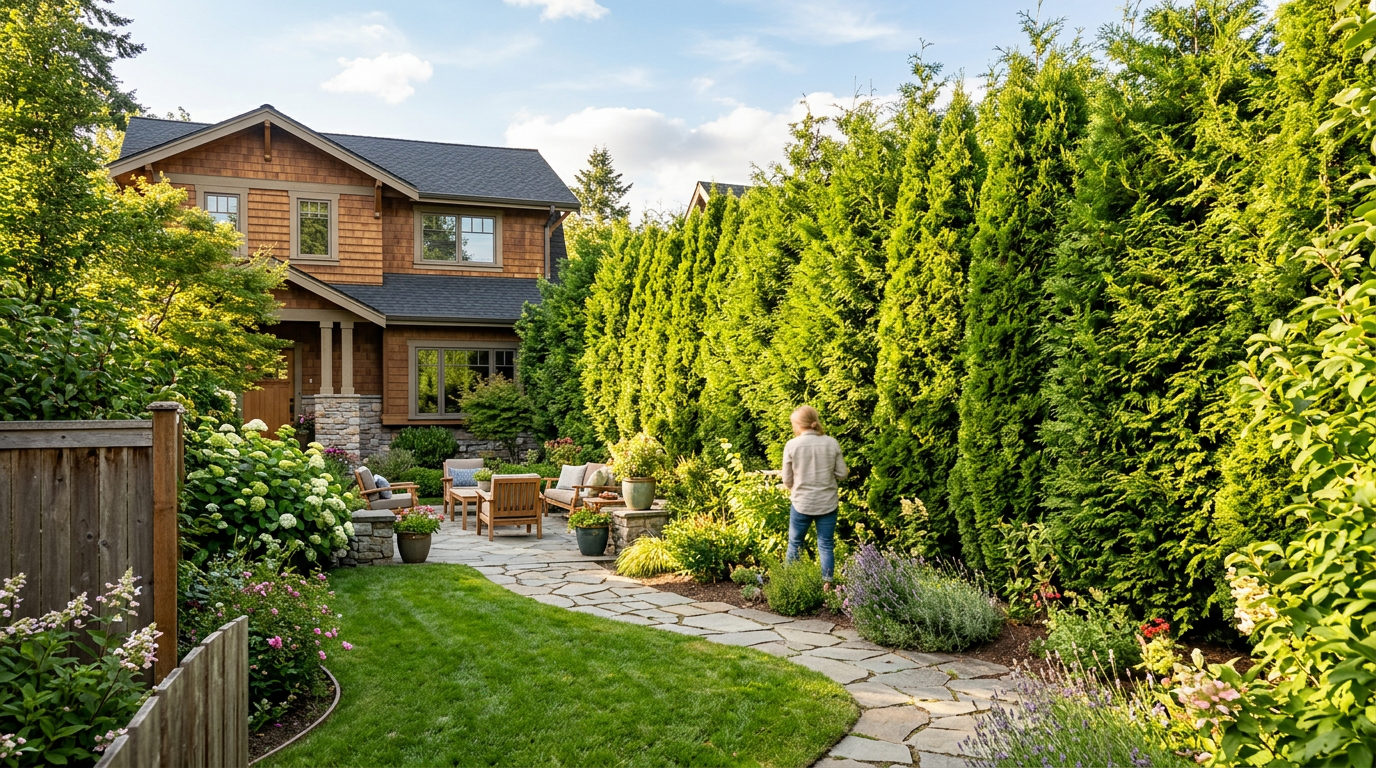
Let's be real. You're not searching for 'fast growing privacy trees' because you enjoy long-term landscape planning. You're searching because your new neighbor installed a hot tub ten feet from your deck, or you're just sick of looking at a barren fence line. You want a green wall, and you want it yesterday.
We get it. We've planted our fair share of privacy screens to block out everything from unsightly sheds to overly friendly joggers. The good news is, you don't have to wait a decade. With the right trees and the right strategy, you can get significant coverage in as little as 3-5 years. Here's the no-nonsense guide to getting it done.
What 'Fast Growing' Actually Means
In the nursery world, 'fast' isn't just marketing hype (well, not always). It's a category for trees that reliably put on at least 24 inches (2 feet) of vertical growth per year in ideal conditions. The real champions of speed can hit 3, 4, or even 5+ feet per year once they're established.
The trade-off? Speed often comes at a cost. Many of the fastest-growing trees have weaker wood, making them more susceptible to damage from ice and wind. They also tend to have shorter lifespans than their slow-and-steady cousins like Oak or Hornbeam. But if you need privacy in a hurry, it's a trade-off worth considering.
Our Top Picks: The Evergreen All-Stars
For year-round privacy, nothing beats an evergreen. These are the workhorses that will keep their foliage and keep your yard private even in the dead of winter. We've planted, pruned, and watched them all. These are our go-tos.
1. Thuja 'Green Giant' (Arborvitae)
- Growth Rate: 3-5 feet per year
- USDA Zones: 5-9
- Mature Size: 40-60 ft. tall, 12-18 ft. wide
- The Dirt: This is the undisputed champion for a reason. It's a hybrid (a cross between Thuja plicata and Thuja standishii) that combines incredible speed with excellent disease resistance and deer resistance (mostly). It has a uniform, conical shape that requires very little pruning to look good. Plant them 5-8 feet apart for a dense wall.
2. Leyland Cypress (Cupressus × leylandii)
- Growth Rate: 3-4 feet per year
- USDA Zones: 6-10
- Mature Size: 50-70 ft. tall, 15-25 ft. wide
- The Dirt: For a long time, this was the king. It's still insanely fast and creates a very dense screen. However, it's prone to several canker and root rot diseases, especially in poorly drained soil or humid climates. According to the University of Florida IFAS Extension, they can easily reach 60 to 70 feet, so be prepared for a very tall screen. (Source:
https://edis.ifas.ufl.edu/publication/ST223) If you have the right conditions (good drainage, not too humid), it's a fantastic option, but it's higher-risk than a Green Giant.
3. Murray Cypress (Cupressus × 'Murray')
- Growth Rate: 3-4 feet per year
- USDA Zones: 6-10
- Mature Size: 30-40 ft. tall, 8-12 ft. wide
- The Dirt: Think of this as the tougher, more disease-resistant cousin to the Leyland. It holds up better in the heat and humidity of the South and is more resistant to canker. It has a slightly more compact and rigid form than the Leyland, which many people prefer. It's an excellent choice for a fast, reliable screen without the disease worry.
4. 'Emerald Green' Arborvitae (Thuja occidentalis 'Smaragd')
- Growth Rate: 1-2 feet per year
- USDA Zones: 3-7
- Mature Size: 10-15 ft. tall, 3-4 ft. wide
- The Dirt: Okay, it's not a 'fast' grower by the 2+ ft/yr definition, but hear us out. If you have a smaller yard, the giants above are total overkill. The Emerald Green stays narrow and tops out at a much more manageable height. You won't get a 20-foot wall in 5 years, but you'll get a beautiful, dense, 8-foot screen that never needs pruning and won't eat your entire yard. It's the 'right-sized' choice for many suburban lots.
How to Plant for a Fast Privacy Screen
Buying the right tree is only half the battle. Planting it correctly is how you unlock that 'fast-growing' potential.
- Spacing is Everything: Do not plant them too close together! It's tempting, we know. You want instant privacy. But trees need air circulation and room for their roots to expand. Planting a screen of Green Giants 3 feet apart is a recipe for disease and die-back in a few years. A good rule of thumb is to space them about half the distance of their mature width. For Green Giants (12-18 ft. wide), that means 6-9 feet apart on center.
- Dig the Right Hole: Dig a hole that is twice as wide as the root ball but only as deep as the root ball. The tree should sit at or slightly above the level of the surrounding soil. Planting too deep is one of the fastest ways to kill a new tree.
- Amend Your Soil: Very few of us have perfect loam. If you're dealing with heavy clay, you'll need to amend it. Dig that wide hole and mix in a generous amount of compost or pine bark fines to improve drainage. If you have particularly tough soil, check out our guide to the best plants for clay soil.
- Water, Water, Water: The first year is critical for root establishment. A slow, deep watering 1-2 times a week (more in extreme heat) is far better than a light sprinkle every day. Use a soaker hose or just let a regular hose trickle at the base of each tree for 20-30 minutes. Once established, many of these are fairly drought tolerant plants for landscaping.
The 'Buy Bigger' Shortcut: Is It Worth It?
You'll see nurseries and online stores selling trees in a huge range of sizes. Is it worth shelling out for the bigger tree?
Here's a real-world example we priced out. A 2-3 foot Thuja 'Green Giant' might cost you about $49.95. A larger 5-6 foot specimen of the same tree could be $149.95. You're paying triple the price for 3 feet of growth.
Our take: For most people, it's not worth it. A smaller, younger tree (like a 3-gallon pot size) has a much smaller, less-disturbed root system. It experiences less transplant shock and often establishes faster than a big, field-dug tree. Within two years, that cheaper, smaller tree will often have caught up to or even surpassed the larger, more expensive one you could have bought. Save your money and spend it on good compost.
Don't Forget the Finishing Touches
A straight line of identical trees can look a bit... rigid. To soften the look and create a more natural-feeling landscape, consider adding a layered garden bed in front of your new privacy screen.
This is a perfect spot for some tough, beautiful flowers. You can fill the space with a mix of our favorite best perennials for full sun to get color from spring through fall. Adding a variety of plants is also a great way to support local ecosystems; you could even incorporate some selections from our list of native plants for pollinators to create a beautiful and functional habitat. This layering makes your yard look professionally designed and pulls the whole project together.
Frequently asked
What is the absolute fastest growing tree for privacy?+
Thuja 'Green Giant' is generally considered the fastest evergreen, growing 3-5 feet per year. For deciduous trees, a Hybrid Poplar can grow an astonishing 5-8 feet per year, but it loses its leaves in winter and can have invasive roots, so plant with caution.
How long until I get a full privacy screen?+
With fast-growing evergreens like Thuja 'Green Giant' or Leyland Cypress, you can expect a reasonably dense screen that offers significant privacy within 3-5 years of planting, assuming you start with 3-4 foot tall trees and provide good care.
Are there fast growing privacy trees that don't get too tall?+
Yes. While not as fast as giants, Thuja occidentalis 'Emerald Green' grows about 1 foot per year and maxes out around 12-15 feet tall. It's an excellent choice for smaller yards or planting under power lines where a 60-foot tree is not an option.
How far apart should I plant privacy trees?+
A good rule of thumb is to plant them half of their mature width apart. For Thuja 'Green Giants' (12-18 ft mature width), this means spacing them 6 to 9 feet from trunk to trunk. Planting too close can cause disease and poor growth as they mature.
What is the cheapest way to create a privacy screen?+
The cheapest method is to buy the smallest available plants (often called 'liners' or 'plugs') and grow them yourself. A 6-inch Thuja liner might cost only a few dollars. The trade-off is time; it will take several more years to achieve the privacy you want.