
Best Perennials for Full Sun: 20+ Unkillable Picks
Stop guessing which plants can handle the heat. We've rounded up the toughest, most beautiful perennials that absolutely thrive in full-sun gardens.
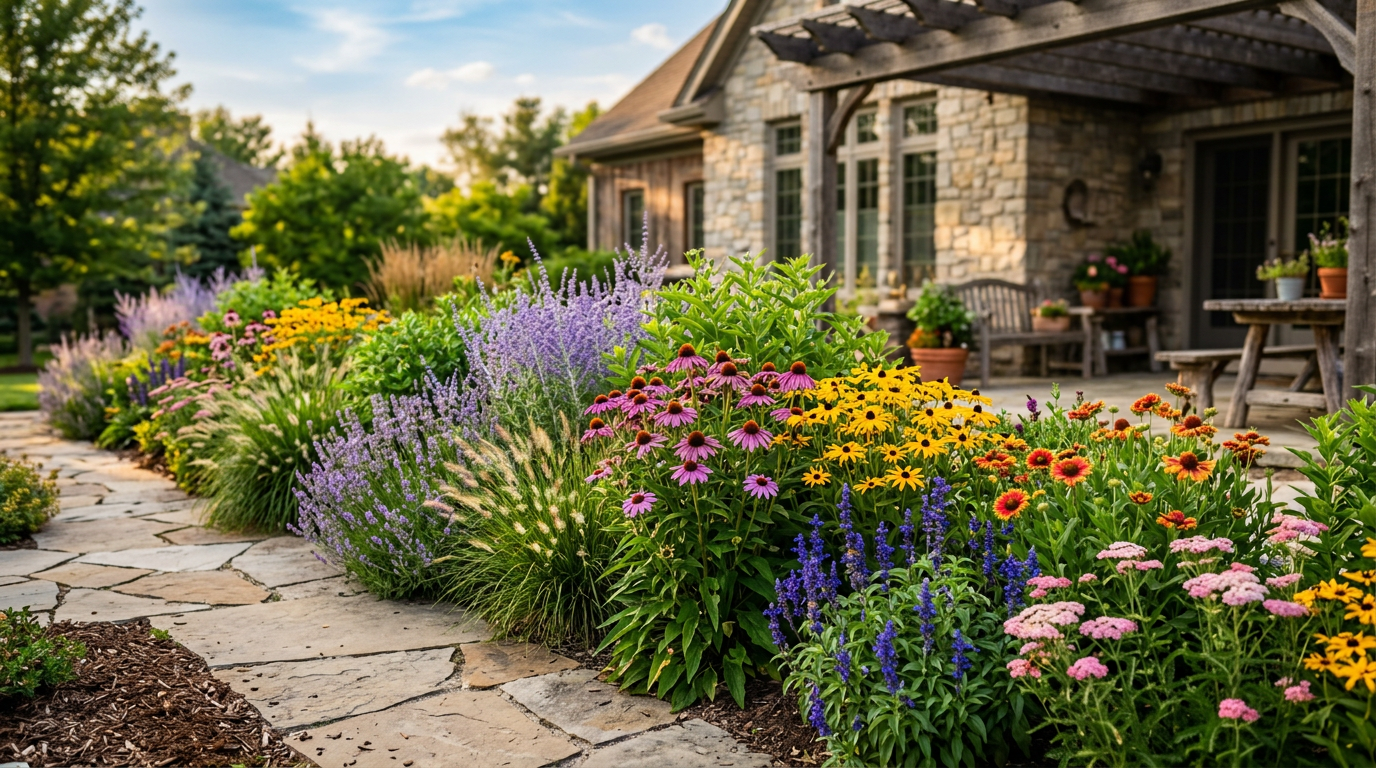
That blazing hot spot in your yard—you know the one. The 'hellstrip' between the sidewalk and street, the south-facing wall that reflects heat like a pizza oven, the part of the garden that just gets baked from 10 a.m. to 4 p.m. Most plants you put there shrivel up and die a sad, crunchy death by August.
Stop throwing your money away on plants that can't take the heat. You don't need a drip irrigation system from NASA or a degree in horticulture. You just need the right plants. We're talking about tough-as-nails, beautiful, reliable perennials that look at six-plus hours of direct sun and ask for more.
We've planted, neglected, and stress-tested dozens of them. These are the ones that not only survive but put on a spectacular show, year after year.
What 'Full Sun' Actually Means
First, let's clear this up. Landscaping gatekeepers love to throw around terms like they're some secret code. 'Full sun' isn't complicated: it means a location that receives at least 6 hours of direct, unfiltered sunlight per day.
But not all sun is created equal. Six hours of gentle morning sun is very different from six hours of scorching afternoon sun (from noon to 5 p.m.). Most of the plants on this list are tough enough for the latter. When a plant tag says 'full sun,' it's banking on at least 6 hours. If you have 8, 10, or 12 hours of sun, you're in the right place. Anything less, and you might want to check out our guide to the best shade perennials.
Our Top 20+ Unkillable Sun-Lovers
This is our definitive list of perennials that will make you look like a gardening genius. We've chosen them for their beauty, toughness, and low-maintenance cred. For pricing, expect to pay anywhere from $8 for a small starter pot at a big box store to $25+ for a larger, more established 1-gallon container at a local nursery.
-
Coneflower (Echinacea purpurea): The undisputed champion of the sunny garden. Classic purple is great, but new cultivars like 'Cheyenne Spirit' offer a mix of red, orange, and yellow. Blooms mid-summer to fall. They are also a top choice for a pollinator garden.
-
Black-Eyed Susan (Rudbeckia hirta): A golden-yellow icon of summer. The 'Goldsturm' variety is a workhorse, providing a massive wave of color from July through September. They self-seed politely, giving you more plants over time.
-
Sedum 'Autumn Joy' (Hylotelephium 'Herbstfreude'): This plant looks good for three seasons. It emerges as neat green mounds in spring, forms broccoli-like heads in summer, blooms pink in late summer, and deepens to a gorgeous bronze-red in fall. It's one of the best drought tolerant plants for landscaping.
-
Russian Sage (Perovskia atriplicifolia): If you want a cloud of airy, lavender-blue color for months, this is your plant. It's incredibly drought-tolerant and deer-resistant. 'Denim 'n Lace' is a great, compact variety that doesn't flop over.
-
Salvia 'May Night' (Salvia nemorosa): An absolute stunner. Deep indigo-blue flower spikes appear in late spring. If you shear it back after the first flush, you'll get a repeat bloom later in the summer. Pollinators go absolutely wild for it.
-
Yarrow (Achillea millefolium): The feathery foliage is as attractive as the flat-topped flower clusters. Modern hybrids like 'Moonshine' (yellow) or 'Paprika' (red) are sterile and won't spread aggressively like the common wild type. Laughs at drought.
-
Lavender (Lavandula): Needs two things: full sun and excellent drainage. 'Munstead' and 'Hidcote' are two of the most reliable English lavenders. The fragrance alone is worth it.
-
Daylily (Hemerocallis): The ultimate 'plant it and forget it' perennial. A single fan can become a huge clump in a few years. Cultivars like 'Stella de Oro' are famous for reblooming all summer long.
-
Peony (Paeonia): The queen of the late spring garden. Yes, they need full sun for best bloom production. The flowers are enormous and fragrant. They are an investment, as they can live for over 50 years.
-
Catmint (Nepeta x faasseniana): Softer and more sprawling than Russian Sage, with a similar purple-blue haze. 'Walker's Low' is the classic award-winner. It blooms for an incredibly long time and is another deer and rabbit repellent.
-
Shasta Daisy (Leucanthemum x superbum): For that classic, happy, white-and-yellow-center flower, nothing beats a Shasta Daisy. 'Becky' is a tall, sturdy, and long-blooming variety.
-
Coreopsis (Coreopsis verticillata): Also known as Tickseed. The 'Zagreb' variety has fine, thread-leaf foliage and is covered in small, bright yellow flowers all summer.
-
Blanket Flower (Gaillardia): These fiery red-and-yellow daisy-like flowers look like a sunset. They thrive on neglect and poor soil, blooming from early summer until frost.
-
Beardtongue (Penstemon digitalis): 'Husker Red' is a fantastic native cultivar with reddish foliage and white flower spikes. It provides great vertical interest and is a magnet for hummingbirds.
-
New England Aster (Symphyotrichum novae-angliae): For a spectacular fall finale, asters are a must. Varieties like 'Purple Dome' stay compact and are covered in vibrant purple flowers when most other things are fading.
-
Bee Balm (Monarda): If you want to attract hummingbirds and bees, this is your plant. Red, pink, or purple flowers look like little fireworks. Look for modern varieties like 'Jacob Cline' (red) that have good mildew resistance.
-
Blazing Star (Liatris spicata): Unique purple or white flower spikes that bloom from the top down. They provide a strong vertical element and look fantastic planted in drifts. They're also great for native plants for pollinators.
-
False Indigo (Baptisia australis): A shrub-like perennial with attractive blue-green foliage. In late spring, it sends up impressive spikes of indigo flowers that resemble lupines. Incredibly long-lived and deep-rooted.
-
Anise Hyssop (Agastache): The entire plant smells like licorice. Long-lasting flower spikes in shades of purple, pink, and even orange are magnets for every pollinator in the neighborhood.
-
Ornamental Grasses: Don't forget grasses! Little Bluestem (Schizachyrium scoparium) has blue-green summer foliage that turns a striking reddish-bronze in the fall. Switchgrass (Panicum virgatum) offers height and graceful movement.
Planting & Care: Don't Screw It Up
Even unkillable plants can be killed if you really try. Here’s how to set them up for success.
-
Soil is Everything: Most of these plants aren't picky, but they hate 'wet feet.' Good drainage is non-negotiable. If you have heavy, dense soil, you'll need to amend it. We have a whole guide on the best plants for clay soil, but the short version is: add compost. Lots of it. Work 2-4 inches of compost into the top 8-12 inches of your soil before planting.
-
Watering Wisely: For the first year, water them regularly (about an inch a week) to get their roots established. After that, most of these are remarkably drought-tolerant. The key is to water deeply and infrequently. This encourages deep roots that can find their own water. A shallow sprinkle every day is the worst thing you can do.
-
Mulch is Your Best Friend: In my own zone 6b garden, I learned the hard way that 'full sun' also means 'soil that dries out in 5 minutes'. A 2-3 inch layer of mulch is a game-changer. It holds in moisture, keeps the soil cool, and suppresses weeds. A simple bag of cedar or pine bark mulch, like a 2 cu. ft. bag of Scotts Nature Scapes Classic Black for about $3.97, is one of the best investments you can make.
-
Go Easy on Fertilizer: These are not heavy feeders. In fact, too much fertilizer (especially nitrogen) can lead to weak, floppy growth and fewer flowers. Amending with compost once a year is usually more than enough. Stop trying to love your plants to death with Miracle-Gro.
According to the 2023 National Gardening Survey, flower gardening remains one of the most popular home activities in the country, with tens of millions of households participating. The perennial market reflects this, valued in the hundreds of millions annually. This isn't just a niche hobby; it's a core part of American landscaping, and choosing tough, sun-loving plants is the smartest way to get a great return on that investment. (Source: Axiom Marketing/National Gardening Survey)
Designing for All-Season Interest
A great sunny border isn't just a random collection of plants. Think about a few simple design principles:
- Vary Your Heights: Put taller plants like Russian Sage, Joe Pye Weed, or ornamental grasses in the back. Mid-height plants like Coneflowers and Phlox go in the middle. Low-growing creepers like Sedum or Catmint go in the front.
- Mix Up Textures: The fine, airy texture of Russian Sage or Yarrow looks incredible next to the bold, broad leaves and flowers of a Coneflower or Sedum.
- Think in Threes and Fives: Don't plant just one of anything. Planting in odd-numbered groups of 3, 5, or 7 looks more natural and has a much bigger visual impact than a lone soldier.
- Plan for Continuous Bloom: Pick a few plants for each season. Peonies for spring; Salvia, Daylilies, and Coneflowers for summer; Asters and Sedum for fall. This ensures there's always something interesting happening.
With these workhorse plants, that sun-blasted problem area can become the most dynamic and beautiful part of your entire yard. Now go get your hands dirty.
Frequently asked
What is the longest blooming perennial for full sun?+
For sheer bloom duration, Coreopsis 'Zagreb' and Catmint 'Walker's Low' are top contenders, often flowering from late spring until fall. Reblooming Daylilies like 'Stella de Oro' and Salvias that are cut back after their first bloom also provide an exceptionally long season of color in full sun.
What is a good low-maintenance perennial for a hot, sunny spot?+
Sedum 'Autumn Joy' is arguably the most low-maintenance perennial for a hot, sunny spot. It thrives on neglect, requires very little water once established, has no serious pest or disease issues, and doesn't need to be divided for many years. Russian Sage and Yarrow are also excellent choices.
Do full-sun perennials need to be watered every day?+
No, and you shouldn't. While new plantings need regular water to establish roots, mature full-sun perennials thrive on a 'deep and infrequent' watering schedule. Watering deeply once a week is far better than a shallow sprinkle every day, as it encourages strong, drought-resistant root systems.
What flowers can take full sun and extreme heat?+
Flowers that excel in full sun and extreme heat include Blanket Flower (Gaillardia), Yarrow (Achillea), Russian Sage (Perovskia), and most varieties of Coneflower (Echinacea) and Sedum. These plants have adaptations like silvery or waxy leaves that help them conserve water and reflect sunlight, making them perfect for tough spots.
Can I plant these perennials in pots in full sun?+
Yes, but with a caution. Pots in full sun dry out extremely fast. Use a large container (at least 18-24 inches in diameter) and a quality potting mix. Plants like Salvia, Coreopsis, and Lavender do well, but you will need to water them much more frequently than if they were in the ground.