
Mushrooms Growing in Lawn: Causes, Safety, and Fixes
Seeing mushrooms in your grass isn’t a turf apocalypse. It’s a moisture/wood-debris signal. We’ll show you why they show up, what’s safe, and the simple fixes.
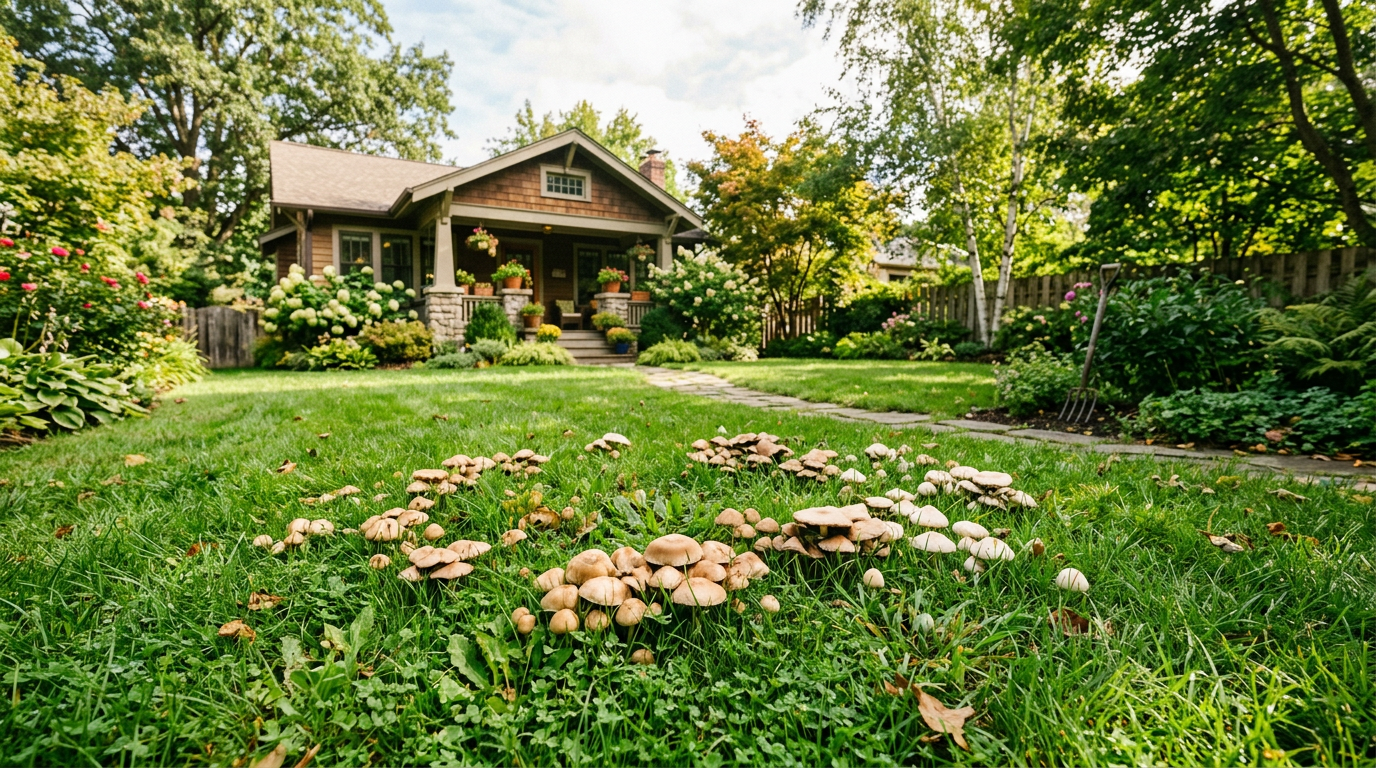
The short answer
Mushrooms growing in your lawn are the fruit of fungi munching on buried wood (old roots, stumps, thatch) in moist soil. They don’t mean your grass is doomed. Remove the caps, dial back water, improve airflow/drainage, and they fade. Don’t eat them. Kids and pets? Keep away and wash hands.
Why mushrooms pop up after rain
Fungi live in your soil year‑round. When the soil stays damp and there’s organic food—old roots, thatch, bark, even construction lumber—they push up mushrooms to spread spores. Shade, heavy soils, overwatering, and a thick thatch layer all boost the odds. Fresh sod on new builds is notorious because there’s often buried wood and uneven grades.
- Real-world cue: We’ve scraped clusters off new sod that was watered daily. Cutting to 1–2 deep waterings/week and pulling hidden roots reduced mushrooms by ~90%.
Are mushrooms bad for your lawn (or you)?
- For turf: Usually no. The fungus is breaking down debris. Grass can even benefit from the nutrients. The exception is “fairy ring,” which can create dark green arcs or dead bands by repelling water.
- For people/pets: Don’t eat wild mushrooms. Many lawn species are harmless, some aren’t. Pick and trash them promptly. If ingestion happens, call Poison Control (US: 1‑800‑222‑1222).
For mushroom look‑alikes that indicate real turf disease (patches, blights), see our fast guide: Lawn Fungus Identification: Pictures, Symptoms, Fixes.
Fast clean-up: what to do today
- Twist or cut off caps at the base and bag them. Don’t mow over big clusters (messy and spreads pieces everywhere). A cheap hand tool like the Corona ComfortGEL Trowel (~$12) makes it quick.
- Rake up thatch and old clippings. The Ames 15‑in Thatch Rake (~$39) is a solid manual option.
- Spot-dig and remove buried wood. The Radius Garden Root Slayer shovel (~$49) slices through old roots.
- Keep pets and kids off until you’ve picked them.
Fix the cause: water, thatch, and air
- Water less often, deeper. Aim for 1" per week total including rain; irrigate 1–2x weekly, not daily. Overwatering is mushroom rocket fuel.
- Improve drainage. Core aeration opens the soil. Rent a Classen CA‑18 or similar core aerator (~$70/day) once or twice a year.
- Dethatch if the layer is >1/2". Bag clippings for a few mows after dethatching.
- Thin shade. Prune low branches to boost sun and airflow.
- Nudge decomposition with a light N feeding: 0.25–0.5 lb actual N per 1,000 sq ft. A slow‑release like Milorganite 6‑4‑0 (32 lb, ~$18–22) is forgiving.
- If water beads off a fairy ring, a wetting agent can help infiltration. Hydretain ES Plus (~$35/quart) is one homeowner‑friendly option; water it in per label.
The numbers (why this is normal)
Most plants already rely on fungi. Roughly 80–90% of land plants form mycorrhizal partnerships with soil fungi that trade nutrients for sugars. In other words, fungi are part of healthy soil, and mushrooms are just the visible tip when conditions line up (USDA NRCS: https://www.nrcs.usda.gov/conservation-basics/natural-resource-concerns/soils/soil-biology/mycorrhizae).
Should you use fungicide?
Usually, no. Lawn fungicides target disease in grass blades/roots, not the underlying saprophytic fungi fruiting from wood. You’ll spend money and still get mushrooms when it’s wet. Save fungicides (e.g., azoxystrobin products like Scotts DiseaseEx, ~$22) for confirmed turf diseases or severe, hydrophobic fairy rings—ideally after a proper ID.
If you suspect disease instead of harmless mushrooms, start here: Lawn Fungus Identification: Pictures, Symptoms, Fixes.
When to worry (and what to do)
- Dark green arcs or dead rings: Likely fairy ring. Aerate, apply a wetting agent, water deeply to penetrate the ring, and lightly feed adjacent turf. Extreme cases may need professional treatment.
- Soft, tunneled areas or critter damage: That’s an animal/insect problem, not mushrooms. Check these resources: White Grubs in Soil Identification and Tiny Holes in Lawn at Night.
- Winter recovery issues? See Brown Patches in Lawn After Winter.
Prevention checklist
- Water deeply and infrequently; skip irrigation after rain.
- Keep mower blades sharp and mow at the right height (3–4" cool‑season; 1.5–2.5" warm‑season, species‑dependent).
- Aerate compacted areas annually.
- Remove rotting wood, stumps, and thick mulch against the lawn edge.
- Manage thatch and thin shade where practical.
Want a deeper dive on this topic? We also built a full explainer: Why Mushrooms Growing in Lawn Happen + How to Stop Them.
Frequently asked
Will mushrooms kill my grass?+
Most lawn mushrooms are decomposers and won’t hurt turf. They’re feeding on buried wood or thatch. If you see dark green arcs or dead bands (fairy ring), the fungus can repel water and stress grass. Aeration, wetting agents, and adjusted watering usually solve it.
Are lawn mushrooms poisonous to dogs or kids?+
Some species can be toxic. Play it safe: remove and trash mushrooms as they appear, supervise pets and kids, and wash hands after handling. If someone eats a mushroom, call Poison Control (US: 1‑800‑222‑1222) and your vet or physician with details.
How do I stop mushrooms from coming back?+
Reduce moisture and food: water less often, fix drainage, core‑aerate, dethatch, and remove buried wood. Increase sun/airflow with light pruning. Mushrooms may still appear after heavy rains, but you’ll see fewer and they’ll disappear faster.
Do fungicides get rid of mushrooms in lawn?+
Not reliably. Most products don’t affect the underlying saprophytic fungi in soil or wood. You’ll get better results by removing caps and improving water, thatch, and drainage. Reserve fungicides for confirmed diseases or severe fairy rings after proper identification.
Is it OK to mow over mushrooms?+
You can, but it’s messy. Mowing shreds caps and sprays pieces everywhere. Twist off and bag clusters first, then mow. Spores are already everywhere; spreading bits won’t fix the root cause—moisture plus buried organic matter.