
How to Keep Deer Out of Garden: Fence, Plants, Repellents
Deer-proofing isn’t magic—it's layers: a real fence, repellent rotation, smart plant choices, and a little scare tech. We’ll show the exact setup that works.
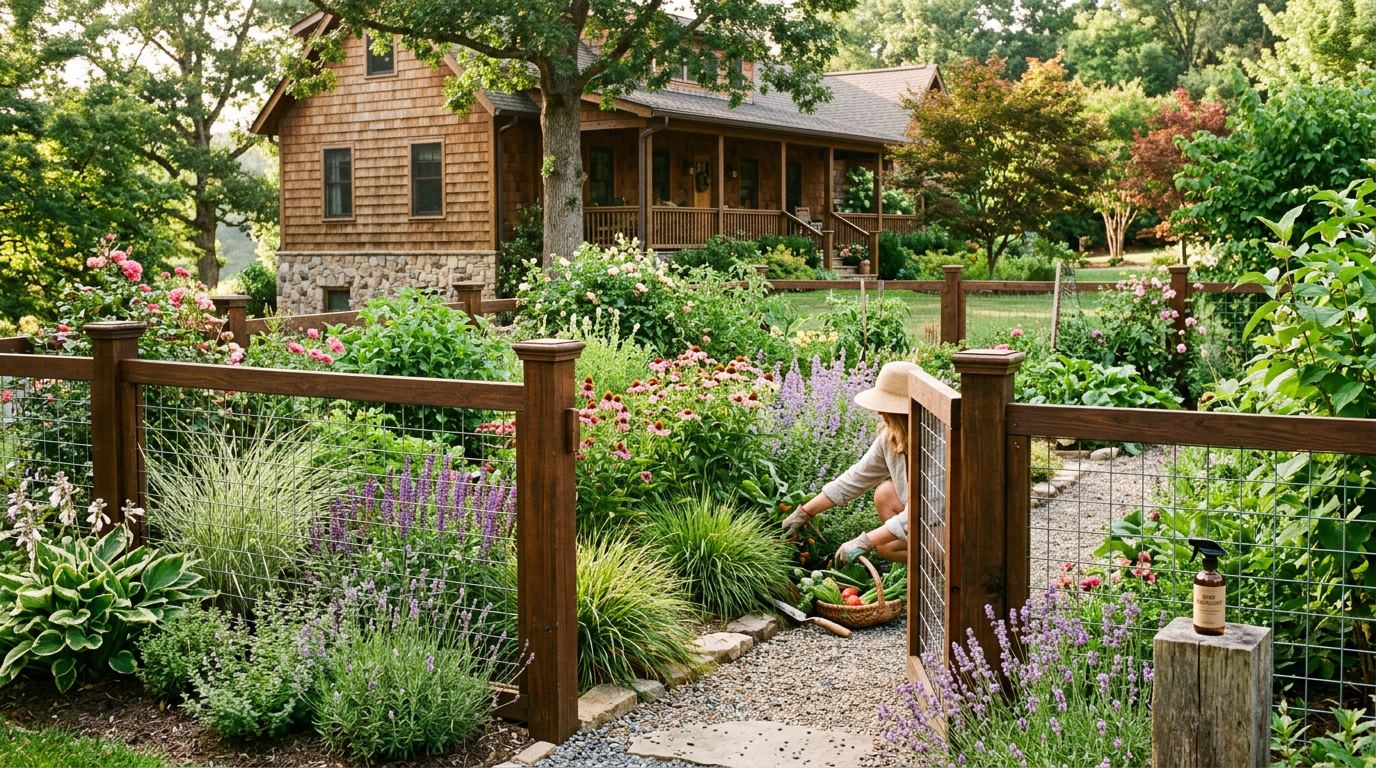
The quick version
We’ve tried every “grandma trick.” Only one thing works 24/7: a real fence. Then stack repellents, motion sprinklers, and deer-resistant plant choices. Do that, and your tomatoes stop being a midnight salad bar.
Build a fence that actually works
- Height: Deer clear 6 feet. We’ve watched them. Go 7.5–8 ft for a sure stop.
- Material: Black polypropylene deer mesh is the best bang for buck; wire or board looks nicer but costs more.
- Gates: Full height, tight to the ground, self-closing.
What we’ve used and recommend:
- Tenax Deer Fence, 7.5' x 100' roll — about $119. Sturdy, light, nearly invisible.
- 10' galvanized T-posts — ~$6–$8 each; drive 2 feet deep every 8 feet.
- Zip ties + UV-rated cord — $10.
- Optional top line: 12.5 ga wire at the top to keep mesh taut — $20.
Electric option (good for orchards, not veggie beds):
- 3-wire poly tape at 18", 36", 54" with a solar charger.
- Gallagher S17 Solar Fence Energizer — about $189.
- Poly tape roll — ~$25; step-in posts — ~$4 each.
Layer repellents (and reapply like you mean it)
Repellents work, but not forever. Rotate. Hit the boundary, then the plants.
- Liquid Fence Deer & Rabbit Repellent (egg-based) — ~$22/32 oz. Spray perimeter every 3–4 weeks; immediately after rain.
- Plantskydd (blood-based) — ~$29; sticks longer in rain. Great for shrubs.
- Bonide Repels-All (mixed actives) — ~$17; use when deer get used to egg smell.
Pro tip: We tag a calendar. Week 1: Liquid Fence. Week 3: Plantskydd. Heavy rain resets the schedule.
Use plants and layout to make your beds less tasty
- Plant “spicy border guards”: lavender, rosemary, Russian sage, yarrow, hellebores, daffodils. Deer usually skip them.
- Protect candy: hostas, daylilies, tulips, hydrangea, roses. Cage or net these or keep them inside the fence.
- Place bait plants away from prime beds. A sacrificial patch of clover or kale can focus browsing—if you’re monitoring.
- If your lawn is a clover buffet (deer love it), manage it. See our plan in How to Get Rid of Clover in Lawn (Without Wrecking It).
Motion, lights, and noise: useful, not magic
- Orbit Yard Enforcer motion sprinkler — ~$69. Startle factor is high; move weekly.
- Solar “predator eyes” like Nite Guard — ~$25/pair. Mild help. Rotate.
- Dogs: great deterrent, but don’t rely on barking alone.
- Radios/ultrasonic gizmos: skip. Deer habituate fast.
We run one sprinkler at each garden corner. We move them every 5–7 days so deer don’t map the pattern.
Numbers that matter (and why 8 ft wins)
White-tailed deer can clear 6–7 ft under stress; routine browsing jumps are lower, but 7.5–8 ft fencing cut damage to near zero in farm trials. Rutgers and extension tests rank tall fencing as the most reliable control; repellents require frequent reapplication and vary by pressure (source: Rutgers NJAES deer control fact sheet: https://njaes.rutgers.edu/fs1141/).
Myths to skip (we tested them)
- Irish Spring soap, human hair, dryer sheets: smelled nice. Deer still ate the daylilies.
- Fishing line perimeter: slows a curious deer once. Then they step through.
- Single strand wire at 3 ft: they go under or over.
Save the time. Put that effort into a real fence and a repellent rotation.
A simple, repeatable plan
- Install 7.5–8 ft mesh fence with tight gates.
- Spray perimeter with Liquid Fence; inside beds with Plantskydd.
- Add Orbit Yard Enforcer at corners; move weekly.
- Plant a spicy border; cage high-value plants.
- Weekly patrol: tracks, droppings, rubs. Reapply after rain.
If something’s chewing your hostas and you’re not sure it’s deer, check bite marks and timing with our guide: What Is Eating My Hostas? Identify Pests Fast + Fixes. For leaf curl and sticky mess on roses, that’s a different critter—see Aphids on Roses: How to Get Rid of Them Fast & For Good. Tiny nighttime holes near beds? Could be skunks or armadillos chasing grubs; start here: Tiny Holes in Lawn at Night: What’s Making Them + Fixes.
Our field notes
We’ve run this stack in suburban and rural sites. An 8 ft mesh fence cut damage to zero in veggies. Without a fence, a repellent + sprinkler combo reduced hits ~60–70%—good for ornamentals, not enough for tomatoes. The schedule and rotation are what keep it working.
Frequently asked
What is the best way to keep deer out of a garden?+
An 8-foot physical fence is the only consistently reliable solution. Back it up with a rotation of repellents, motion-activated sprinklers, and deer-resistant plantings. Reapply repellents every 3–4 weeks and after rain, and move sprinklers weekly to avoid deer habituation.
Do deer repellents really work?+
Yes, but they’re a maintenance item. Egg-based and blood-based sprays reduce browsing when applied on a schedule and rotated. Expect to reapply every 3–4 weeks and after significant rain. They work best as part of a layered strategy, not as a standalone fix in high-pressure areas.
How high should a deer fence be?+
Go 7.5–8 feet for dependable exclusion. Deer can clear 6 feet, and 7 feet is borderline under pressure. Use sturdy posts, secure the base to the ground, and install full-height gates. If you use electric, run at least three hot wires at ~18", 36", and 54".
What plants do deer avoid?+
Generally avoided: lavender, rosemary, Russian sage, yarrow, hellebores, daffodils, foxglove, and many herbs. Preferences vary by region and pressure, so ‘deer-resistant’ isn’t deer-proof. Protect high-value plants with cages or netting, especially during spring flush and late-summer scarcity.
Will motion-activated sprinklers stop deer completely?+
They help—especially at entry points—but deer can learn patterns. Use quality units, aim them across approach paths, and move them weekly. Pair with repellents and fencing for dependable results. In our tests, sprinklers alone reduced damage but didn’t eliminate it during peak feeding.