
What Is Eating My Hostas? Identify Pests Fast + Fixes
Holes, notches, or bare stems? Here’s how to ID what’s chewing your hostas and the exact fixes that stop it—without guesswork or gatekeeping.
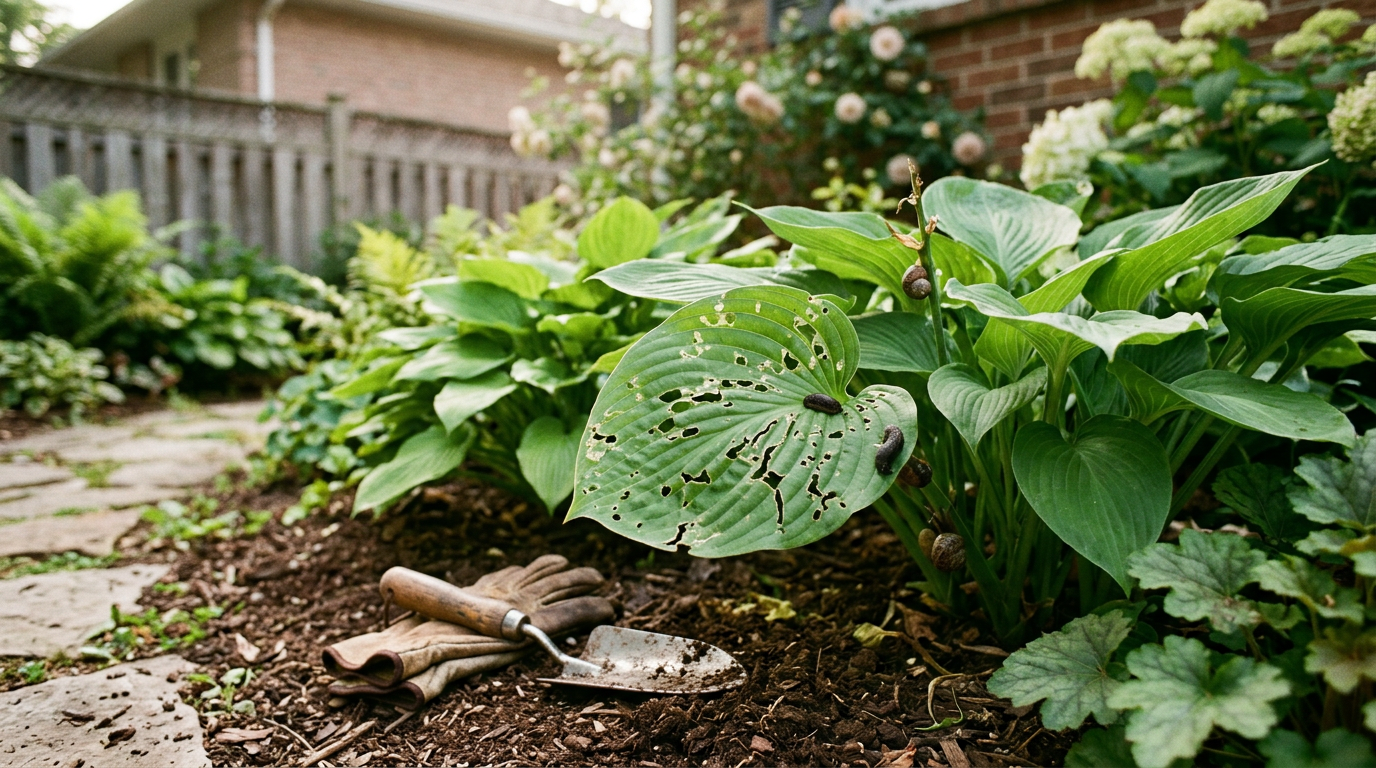
What’s eating my hostas? The quick ID
Hostas are salad bars for a short list of usual suspects. We’ll help you match the bite mark to the biter in minutes, then pick a fix that actually works. We’ve had hostas shredded overnight—here’s the no-fluff playbook we use in our own beds.
Diagnose by damage pattern (fast)
- Ragged holes between veins, mostly at night, slime trails: slugs/snails.
- Cleanly clipped stems/leaves missing overnight: deer or rabbits (look for hoof prints vs. pea-sized pellets).
- Half-moon notches on leaf edges: black vine weevil adults; also Japanese beetles leave skeletonized patches by day.
- Emerging shoots severed at the crown: rabbits, voles, or cutworms.
- Leaves folded or webbed, frass inside: caterpillars/leaf-rollers.
Pro move: Go out with a flashlight at 10 pm. If you see glossy slugs or snails on leaves, case closed. Daytime chompers (Japanese beetles, grasshoppers) are obvious in the sun.
Most likely culprits (and how to confirm)
- Slugs/snails: Silver slime, ragged holes, damage worst in cool, wet weather. Check under mulch and pot rims.
- Deer: Clean, angled bites; big chunks gone; hoof prints and pellet piles. Damage peaks when hostas first leaf out.
- Rabbits: Very neat cuts on young shoots 2–8 inches high; small round droppings; tracks near beds.
- Black vine weevil: Night feeders leave scalloped notches along edges. Tap leaves at night to spot them. Larvae chew roots in containers/shade beds.
- Japanese beetles: Daytime clusters, metallic green/copper; lace/skeleton leaves.
- Voles: Plants topple, crowns tunneled; runs under mulch/grass. You’ll see surface runways.
If you’re not sure, lay out a strip of wet cardboard overnight; check morning for hiding slugs/snails underneath. A cheap wildlife camera also pays for itself.
Fix it: controls that work (our tested picks)
-
Slugs/snails (best first-line):
- Iron phosphate bait: Monterey Sluggo 2.5 lb ($18–22). Scatter lightly, reapply after rain. Pet-safe when used as directed.
- Copper barrier: 20 ft copper tape ($13–16) wrapped around pots/bed edging to shock-soft bodies.
- Beer traps are fun but inconsistent; we treat them as backups, not primary control.
-
Deer:
- Repellent rotation: Liquid Fence Deer & Rabbit, 32 oz ($24). Alternate with Plantskydd 1 lb ($30–35) to avoid habituation.
- Motion sprinkler: Orbit Yard Enforcer ($69–85) for high-pressure areas.
- Real fix: physical exclusion—7–8 ft fencing or heavy-duty netting like Bird-X 7'×100' ($20–30) over hosta patches.
-
Rabbits:
- Hardware cloth fence: 1/2-inch mesh, 24–30 inches tall with 6 inches buried (about $1–2/ft installed DIY).
- Spot repellents: same deer products help, but we rely on fence + plant cages early spring.
-
Black vine weevil and leaf-chewing caterpillars:
- Night hand-pick into soapy water.
- Spinosad: Bonide Captain Jack’s Deadbug Brew, 16 oz concentrate ($23–28). Spray leaf tops/undersides at dusk; repeat per label.
- For weevil larvae in soil: beneficial nematodes (Steinernema kraussei), 10 million pack ($25–35), water into soil when temps are 42–86°F.
-
Japanese beetles:
- Hand-pick into soapy bucket daily (morning) to break pheromone spiral.
- Contact options: pyrethrin knockdown like Bonide Pyrethrin Garden Insect Spray, 8 oz ($15–18). Use sparingly; protect pollinators.
- Skip traps near hostas—they attract more beetles than they catch unless placed far away.
-
Voles:
- Snap traps in active runs under a box/tunnel; bait with apple or peanut butter. Check daily.
- Repellents with castor oil can push them out, but trapping is faster.
We’ve run this exact stack: Sluggo + copper ring on our worst pot, Liquid Fence on a 2-week rotation, and a Yard Enforcer covering the shade bed. Hostas went from hole-punch to photo-ready in one season.
Numbers: how big is the problem?
Japanese beetles alone cost the U.S. about $460M annually, including $156M in control (USDA APHIS). Slugs are prolific: a single slug can lay multiple clutches of 20–100 eggs per year (University of Minnesota Extension). Translation: if you wait, you feed a population boom. (https://www.aphis.usda.gov/aphis/resources/pests-diseases/hungry-pests/the-threat/japanese-beetle, https://extension.umn.edu/yard-and-garden-insects/slugs)
Prevention that sticks
- Water mornings only; dry leaves by dusk starve slugs.
- Thin dense mulch near crowns; use a 1–1.5 inch layer of shredded bark, not slug hotels like deep straw.
- Lift pots on feet; remove hosta “skirts” touching the soil.
- Mix varieties: thicker, blue, and heavily corrugated hostas resist slug feeding better than thin, lime-green types.
- Plant decoys: sacrificial lettuce or marigolds can distract rabbits while fences go up.
Want deeper dives on repellents, fencing, and organic controls? See our guides: Slug control that isn’t cruel, Build a deer fence that actually holds, Budget rabbit-proofing, and Japanese beetle battle plan.
When to escalate
- If you see nightly deer raids despite repellents, fence or net the bed—period.
- If weevil notching continues after spinosad, add nematodes for larvae.
- If holes persist after slug bait, increase coverage and reapply post-rain; pair with copper.
- Container hostas getting wrecked? Move them 10–15 feet away from walls and hedges to reduce hiding spots.
Frequently asked
How do I tell slugs from beetles on hostas?+
Slugs feed at night, leave ragged holes between veins plus silvery slime trails. Beetles (like Japanese beetles) feed by day in clusters and often skeletonize leaves, leaving only the veins. Check at 10 pm with a flashlight for slugs; check midday sun for beetles.
What stops deer from eating hostas for good?+
A tall barrier. Deer can clear 6 feet, so use 7–8 ft fencing or sturdy netting over beds. Repellents like Liquid Fence help but need rotation and reapplication. Motion-activated sprinklers add surprise, but physical exclusion is the only reliable, long-term fix.
Are coffee grounds, eggshells, or beer traps good slug control?+
They’re inconsistent. Beer traps catch some slugs but can attract more and need frequent resets. Coffee grounds and eggshells rarely move the needle. For repeatable results, use iron phosphate bait (e.g., Sluggo) and reduce moist hiding spots; add copper barriers for containers.
Why are my hosta shoots cut off at ground level?+
Neatly clipped emerging shoots usually mean rabbits. If you also notice tunnels or toppled crowns, add voles to the suspect list. Install a 24–30 inch fence of 1/2-inch hardware cloth with 6 inches buried. Repellents help, but fencing and habitat cleanup solve it fastest.
What insect leaves half-moon notches on hosta leaf edges?+
Black vine weevil adults feed at night, leaving scalloped notches along leaf margins. Hand-pick after dark, then spray spinosad on leaves as needed. For long-term control, apply beneficial nematodes to target larvae in the soil, especially around potted or shaded hostas.