
How to Get Rid of Clover in Lawn: What Really Works
Clover isn’t evil, but it’s not your lawn. Here’s the fast, lawn-safe way to wipe it out and keep it gone—with named products, exact timing, and prevention.
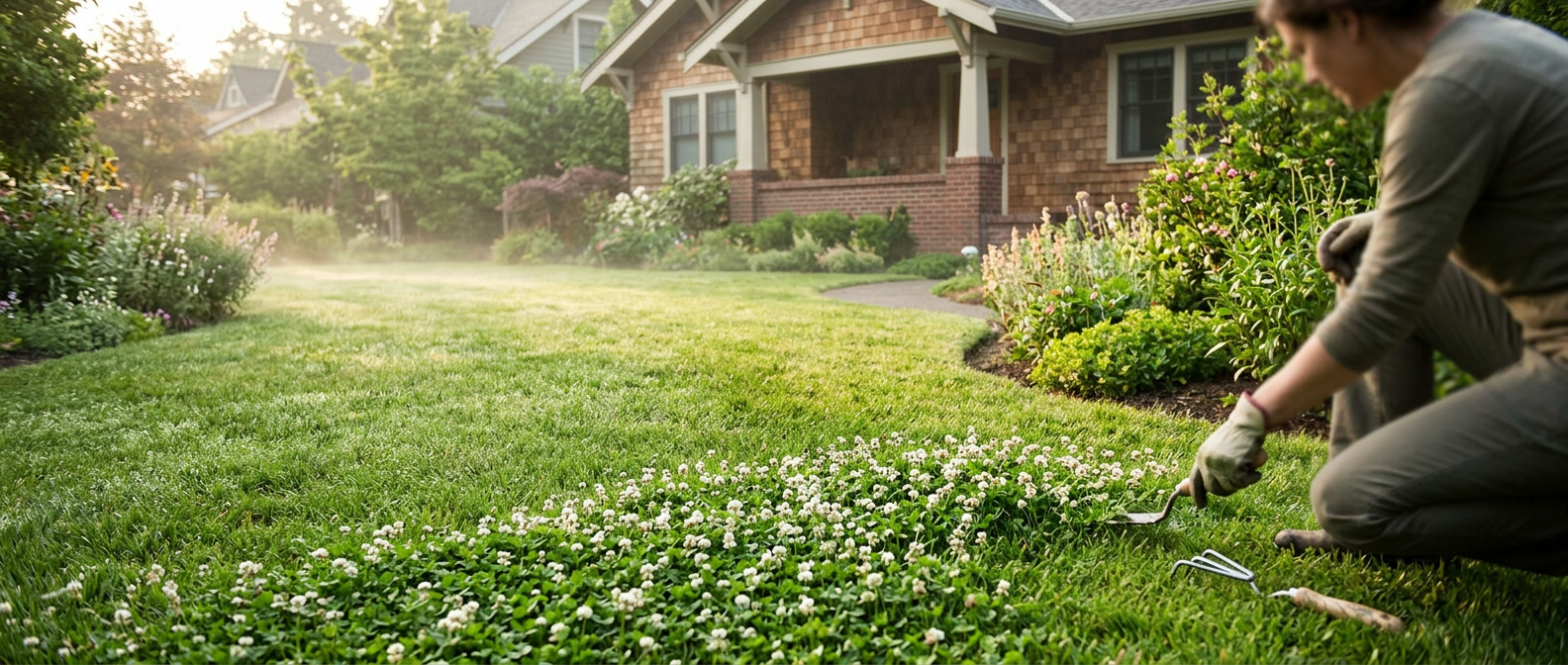
The no‑nonsense truth about clover
Clover isn’t a villain—it fixes nitrogen, stays green, and bees love it. If you’re into microclover lawns, carry on. If you want uniform turf, here’s exactly how we evict clover fast without trashing grass.
We’ve done this on our own lawns and for clients: spot‑spray the right herbicide, feed the turf, mow tall, and overseed thin spots. Two to four weeks later, clover taps out and grass wins.
ID clover and pick your moment
White clover (Trifolium repens) has three round leaflets, creeping stolons, and white pom‑pom flowers. It thrives in thin, low‑nitrogen turf. Best time to treat: when it’s actively growing and not heat‑stressed—daytime 60–85°F, soil moist but not soggy. Don’t spray right before heavy rain or during drought stress.
What actually kills clover (but not your grass)
Use selective broadleaf herbicides—these target clover, not turfgrass:
- 3‑way mixes (2,4‑D + MCPP/Mecoprop + dicamba). Budget workhorse. Examples:
- Spectracide Weed Stop For Lawns Concentrate (32 oz, about $10–12)
- Ortho WeedClear Lawn Weed Killer Concentrate (32 oz, about $12–15)
- BioAdvanced All‑in‑One Lawn Weed & Crabgrass Killer (32 oz, about $16–20)
- Triclopyr (strong on clover/oxalis). Good upgrade for stubborn patches, especially in cool‑season grass:
- Monterey Turflon Ester Ultra (16 oz, about $25–30). Note: can injure St. Augustine/centipede—read the label.
- Mesotrione (Tenacity) for new seedings or sensitive situations:
- Tenacity Herbicide (8 oz, about $60–70) + a non‑ionic surfactant like Southern Ag Surfactant (16 oz, about $12). Slower burn, but lawn‑safe on many species.
- Low‑tox iron chelate (FeHEDTA) for repeated spot work:
- Bonide Weed Beater Fe RTU (32 oz, about $12). Multiple hits needed; best on small patches.
Pro tip: add a non‑ionic surfactant if the label allows. Clover’s waxy leaves shed spray—surfactant helps it stick.
Numbers that matter (and why timing wins)
University extensions are nearly unanimous: fall is the most effective window for broadleaf weed control in lawns because weeds are moving energy (and herbicide) to roots. Spring can work; fall is better. Expect to reapply per label (often 10–14+ days) for tough clover, and spot‑treat to protect turf (https://extension.umn.edu/yard-and-garden-news/fall-best-time-control-broadleaf-weeds-lawn).
Step‑by‑step: 14–30 day clover kill plan
-
Mow first, then wait 24–48 hours. Mow at your normal height to expose leaves; don’t scalp.
-
Mix and spot‑spray. Hit only the clover, wet the leaves, don’t drench the soil. We’ve had 70–90% knockdown in two weeks with triclopyr on cool‑season lawns and 3‑way mixes on warm‑season.
-
Reapply in 10–14 days. Clover laughs at one light mist. Follow the label interval.
-
Feed the grass. Clover loves low nitrogen. Apply 0.5–1.0 lb N per 1,000 sq ft (slow‑release if temps are warm). In fall, a full 1.0 lb N per 1,000 sq ft is money for cool‑season lawns.
-
Overseed thin spots. More grass, fewer weeds. Water lightly and consistently until germination. Tenacity can be used at seeding on many cool‑season grasses—check the label.
-
Mow tall, 3–4 inches. Taller grass shades clover seedlings and keeps soil cooler.
“Natural” or lower‑tox options (what works, what’s hype)
- Hand‑pulling: Works best after rain when stolons lift. Get the runners.
- Iron (FeHEDTA) sprays: Leaf burn that can take clover out with repeated spot hits. Won’t harm grasses when used as directed.
- Corn gluten meal: Overpriced fertilizer. It won’t kill established clover and has inconsistent pre‑emergent effects. Skip for control; use real fertilizer instead.
- Vinegar/soap internet hacks: Nonselective leaf burn. You’ll toast grass, and roots survive. Hard pass.
Prevent clover’s comeback
- Keep nitrogen steady: 2–4 feedings/year depending on grass type and region. Aim for 3–4" mow height.
- Water deep, not daily. 1" per week in growing season.
- Aerate and overseed if the lawn is thin or compacted.
- Spot‑spray new patches early instead of blanket‑spraying.
If clover was a symptom of bigger problems (grubs, fungus, compaction), fix those too. For example, if turf is thinning or tunneling undermines roots, check our grub and mole fixes.
- See thinning/chewed roots? Read How to Get Rid of Grubs in Lawn Naturally.
- Weird dead areas after thaw? Try Brown Patches in Lawn After Winter.
- Random mushrooms after rain? Here’s Why Mushrooms Growing in Lawn Happen.
- Fighting other invaders too? Our How to Get Rid of Crabgrass Permanently plan pairs nicely with this.
Common mistakes (don’t do these)
- Blanket‑spraying the whole yard “just because.” Spot‑treat.
- Spraying in heat >85–90°F or on drought‑stressed turf.
- Skipping the reapplication window.
- Using glyphosate on the lawn. It’s nonselective—kiss grass goodbye.
- Ignoring nitrogen. Starved grass invites clover back.
Our quick pick combos
- Fast budget fix: Spectracide Weed Stop + light surfactant; reapply in 2 weeks.
- Stubborn patches (cool‑season): Monterey Turflon Ester Ultra; careful label use.
- Seeding/low‑risk: Tenacity + Southern Ag Surfactant; slower but safe.
- Small spots, kid/pet areas: Bonide Weed Beater Fe; repeat as needed.
Frequently asked
What kills clover but not grass?+
Selective broadleaf herbicides do: 3‑way mixes (2,4‑D + MCPP + dicamba) and triclopyr. Iron chelate (FeHEDTA) spot sprays also work with repeats. Always read the label—triclopyr can injure St. Augustine/centipede. Spray when temps are 60–85°F and reapply in 10–14 days.
When is the best time to spray clover?+
Fall is most effective because weeds move herbicide to roots then. Spring works too if plants are actively growing. Aim for 60–85°F, moist (not drought‑stressed) turf, no rain for 6–24 hours post‑spray, and avoid heat waves. Reapply per label in 10–14+ days.
Will vinegar or dish soap kill clover?+
Vinegar/soap burns leaves but is nonselective and rarely kills roots. You’ll also damage the grass you want to keep. For lawn‑safe control, use selective herbicides (3‑way, triclopyr, or iron FeHEDTA) and spot‑spray. It’s faster, cleaner, and doesn’t crater the lawn.
Is clover actually bad for my lawn?+
Not inherently. Clover fixes nitrogen, stays green, and supports pollinators. But it can look patchy and outcompete thin turf. If you want uniform grass, remove clover and fix the causes (low nitrogen, thinning) with proper mowing, fertilizing, and overseeding.
Can I prevent clover without chemicals?+
Yes—keep grass dense and fed. Mow 3–4", fertilize 2–4x/year (0.5–1.0 lb N/1,000 sq ft per feeding), water deeply, overseed thin spots, and aerate compacted areas. Hand‑pull small patches after rain. Iron (FeHEDTA) spot‑sprays are a lower‑tox option.