
How to Get Rid of Clover in Lawn: Fast, Safe, Proven
Clover means thin, hungry turf. We’ll show you the fastest way to wipe it out and keep it from coming back—without nuking your lawn.
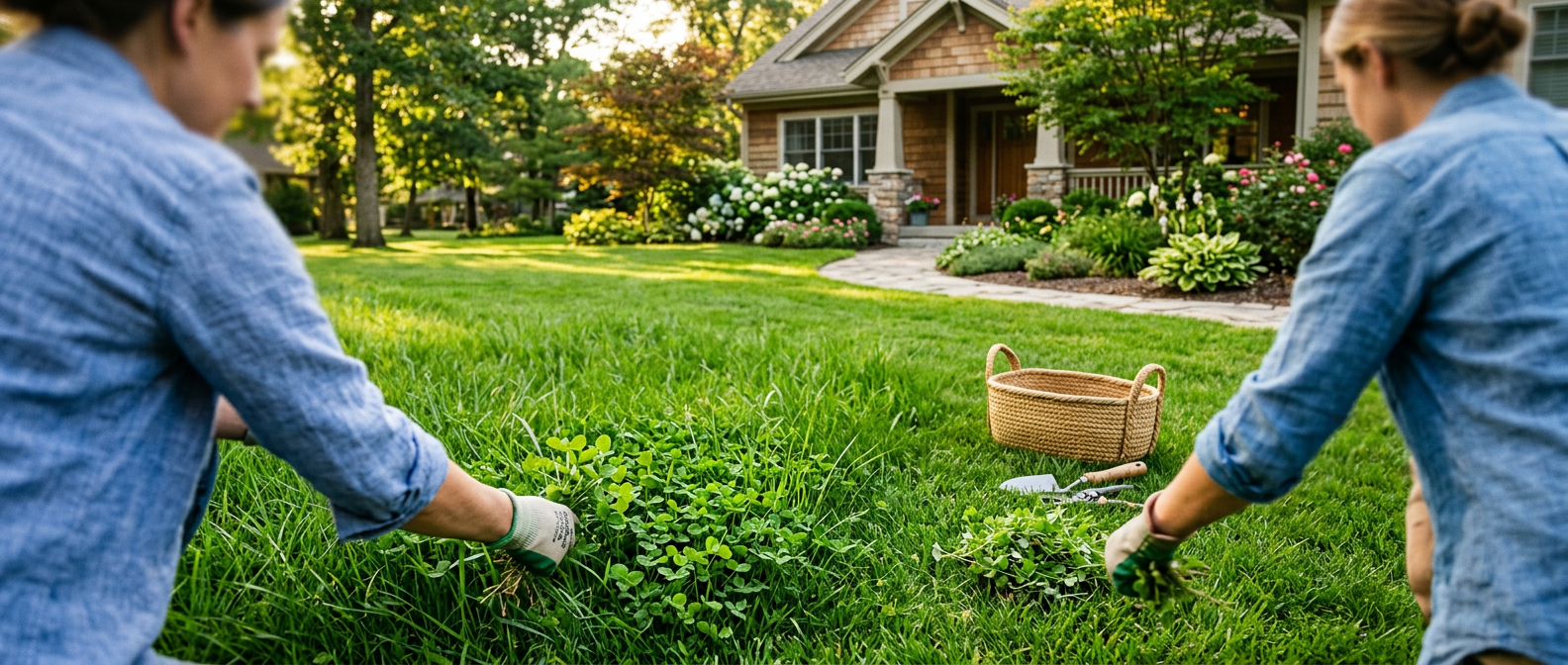
The quick truth about clover
We like pollinators, but if you wanted a green carpet, white clover (Trifolium repens) crashed your party because the lawn is thin and underfed. Good news: you can erase clover fast without wrecking grass—then tune up the lawn so it doesn’t come back.
Identify clover and why it showed up
White clover has trifoliate leaves (three leaflets) with pale crescents, spreads by creeping stolons, and pops white pom‑pom flowers. It thrives when:
- Nitrogen is low (clover makes its own N)
- You’re mowing too short
- The lawn is thin/compacted and sunlight hits soil
If turf is thinning from pests or disease, fix that, too. Grubs and critters will thin turf and open space for weeds—see How to Get Rid of Grubs in Lawn Naturally and the tiny hole culprits in Tiny Holes in Lawn at Night.
Fast plan (what we’d do on our own lawn)
- Spot-spray clover patches with a clover-effective, lawn-safe herbicide (details below). Add a non-ionic surfactant so it sticks.
- Two weeks later, spray again. Clover often needs 2 rounds.
- Feed 0.5–1.0 lb nitrogen per 1,000 sq ft to remove clover’s advantage.
- Overseed thin spots and raise mowing height to 3–4 inches.
- Water 1 inch/week (1.5 in in heat) and relieve compaction.
In our tests, triclopyr spot-sprays browned clover in 3–7 days. Full knockdown took 2 applications 14–21 days apart, then a light feed to close the gaps.
Best products (by grass type)
Always check the label for your grass and temperature limits.
Cool-season lawns (Kentucky bluegrass, rye, fescue):
- Bonide Weed Beater Ultra (triclopyr mix): strong on clover, about $20–$25/qt. Great for spot-sprays.
- Ortho WeedClear Lawn Weed Killer (2,4‑D + MCPA + dicamba): $12–$18 RTU; good suppression; may need a second pass.
- Tenacity (mesotrione): ~$60–$70 for 8 oz concentrate. Works on clover and safe on KBG/fescue/rye when used correctly; requires a non‑ionic surfactant (~$12–$18).
Warm-season lawns (Bermuda, zoysia):
- T-Zone SE or SpeedZone (with triclopyr): $45–$65/qt concentrate; effective when temps are moderate.
- Celsius WG (pro-grade, very effective): ~$110–$125; pricey but excellent on many broadleafs including clover.
St. Augustine and centipede (more sensitive):
- Image Herbicide for St. Augustine/Centipede (imazaquin): ~$15–$20; good on clover; follow label closely.
- Atrazine products (e.g., Hi‑Yield Atrazine, ~$20): effective but regionally restricted; use only where legal and label‑approved.
Pro tips:
- Spray leaves dry, no rain 24 hours.
- Add a non‑ionic surfactant for better stick.
- Repeat in 14–21 days if you see survivors.
Numbers that matter (and why clover fades)
Healthy turf crowds clover. Most lawns do best at 2.5–3.5 in mowing height, 1–1.5 inches of water per week, and roughly 2–4 lb nitrogen per 1,000 sq ft per year for cool‑season grasses (less for warm‑season). Broadleaf sprays work best in fall, often needing 2 applications 2–3 weeks apart (https://ipm.ucanr.edu/PMG/PESTNOTES/pn7467.html).
Natural or low-tox routes (what actually works)
- Hand weeding: Use a dandelion fork or weed popper ($10–$25). Get the crown and runners. Best after rain.
- Smother small patches: Cardboard + mulch for 2–3 weeks, then rake and overseed.
- Vinegar/soap: Burns leaves, seldom kills crowns. Expect regrowth.
- Corn gluten meal: Overhyped for established clover; it’s not a silver bullet.
If you’re removing lots of clover, feed and overseed immediately so bare ground doesn’t fill with something worse. If you’re fighting multiple weeds, see our plan for How to Get Rid of Crabgrass Permanently.
Feed, mow, water, overseed (the keep-it-gone plan)
- Fertilize: 0.5–1.0 lb N/1,000 sq ft after your second spray; use 30–50% slow‑release. Soil test every 2–3 years.
- Mow higher: 3–4 inches. Taller turf shades clover seedlings.
- Water: 1 inch/week (use a tuna can to measure). Deep, infrequent.
- Overseed: Thicken thin areas right after control.
- Relieve compaction: Core aerate in fall for cool‑season, late spring for warm‑season.
Related turf issues can mimic “clover takeover” by thinning grass. If you’ve had spring die-off or soggy patches, see Brown Patches in Lawn After Winter and why you might see Mushrooms Growing in Lawn.
When not to kill clover
If you’re okay with a tougher, lower‑input lawn, microclover blends can look great and cut fertilizer needs. But if you want uniform grass, the plan above is your shortest path there.
Frequently asked
What kills clover but not grass?+
Triclopyr-based lawn herbicides and 3‑way mixes (2,4‑D + MCPA/MCPP + dicamba) selectively kill clover without harming most turfgrasses. Check the label for your grass type. Sensitive grasses like St. Augustine/centipede need labeled options like imazaquin or atrazine (where legal). Always spot-spray and repeat in 2–3 weeks.
Will fertilizer alone get rid of clover?+
Feeding boosts grass competitiveness and weakens clover long-term, but it won’t quickly remove established patches. Best approach: spot-spray clover, then feed 0.5–1.0 lb N/1,000 sq ft and overseed thin spots so grass closes the space and prevents clover from rebounding.
Is vinegar or dish soap effective on clover?+
Vinegar/soap mixes burn leaves but usually don’t kill clover crowns, so it returns. They’re fine for cosmetic, short-term knockback on tiny patches. For durable control without wrecking grass, use a selective herbicide like triclopyr, then fix lawn density and nutrition.
When is the best time to spray clover?+
Fall is ideal for broadleaf control because plants move herbicides into roots; spring works too if you repeat 14–21 days later. Spray when temps are mild (roughly 60–85°F), leaves are dry, and no rain is expected for 24 hours. Avoid drought-stressed or newly seeded turf.
How do I prevent clover from coming back?+
Keep grass dense and fed: mow 3–4 inches, water 1 inch/week, and fertilize 2–4 lb N/1,000 sq ft per year (cool-season) or 1–3 lb (warm-season). Overseed thin areas and relieve compaction. Preemergents don’t stop established clover well; cultural practices are the real prevention.