
How to Get Rid of Clover in Lawn Without Wrecking It
Clover shows up when turf is hungry and thin. Feed the grass, mow smarter, and spot‑spray the clover. Here’s the fast, field‑tested plan.
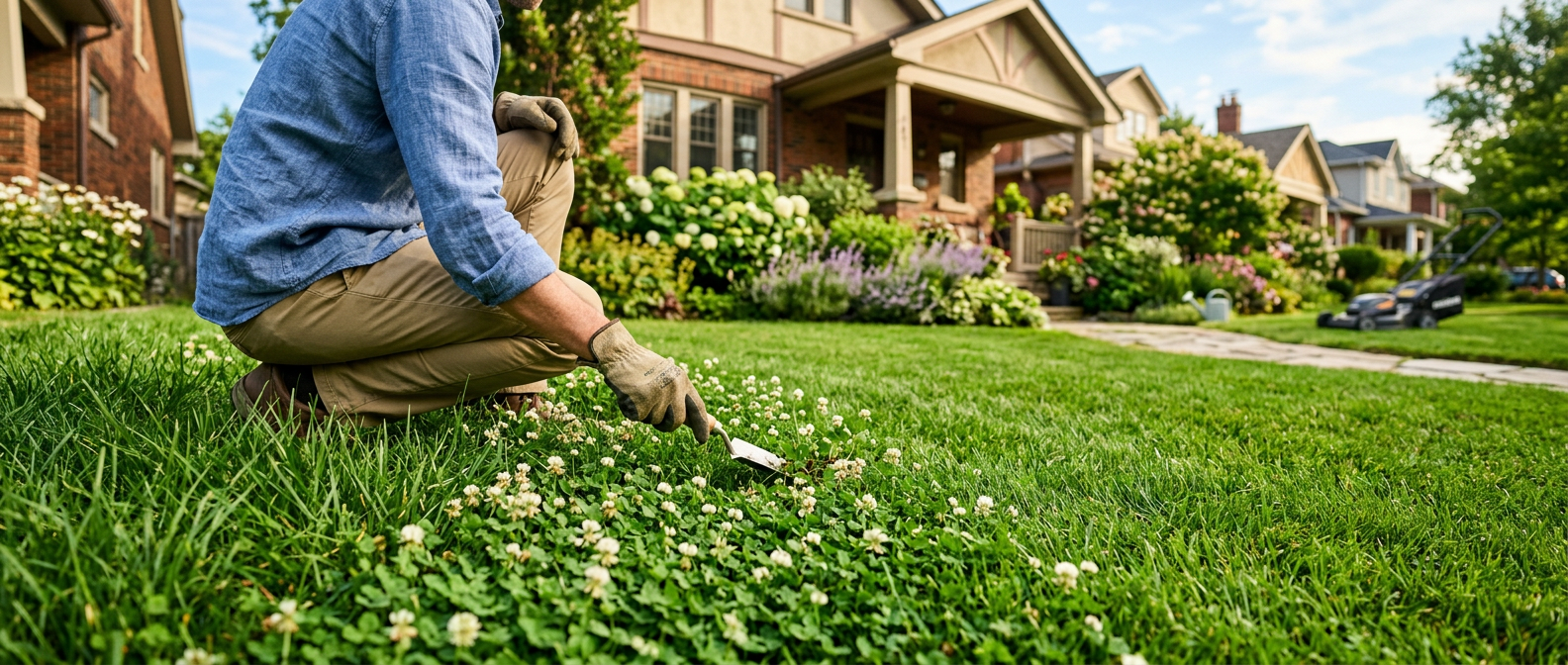
The short version
Clover isn’t a moral failure—it’s your lawn telling you it’s hungry and thin. We fix it in three moves: feed the grass, raise the mower, and spot‑spray the clover with a selective herbicide. Then we overseed to close ranks so it can’t come back.
Identify the clover (and not oxalis)
- White clover (Trifolium repens): three rounded leaflets with a pale crescent “watermark,” low creeper with tiny white pompoms. Spreads by stolons.
- Oxalis/wood sorrel: heart‑shaped leaflets, yellow flowers. Different weed, different sensitivity.
If you’ve also got other broadleaf bullies, see our weed battle plan in How to Get Rid of Crabgrass Permanently: Field‑Tested Plan.
Why clover moved in (so you can move it out)
Clover thrives where grass is underfed and cut too short. It literally makes its own nitrogen; your turf can’t. So we:
- Raise mowing to 3–3.5 inches to shade clover seedlings.
- Feed the lawn: 0.5–1.0 lb nitrogen per 1,000 sq ft (slow release preferred).
- Water deeply but infrequently (about 1 inch/week total).
Good budget fertilizers:
- Scotts Turf Builder Lawn Food 32‑0‑4 (12.5 lb, covers 5,000 sq ft): ~$24
- Milorganite 6‑4‑0 (32 lb): ~$18–22
If your lawn came out of winter patchy, patch the cause too: Brown Patches in Lawn After Winter: Causes + Fixes.
Spot‑kill clover without killing grass
Selective broadleaf herbicides spare turf and toast clover. Triclopyr is our go‑to for white clover.
- Ortho Weed B Gon Chickweed, Clover & Oxalis Killer (triclopyr): ~$10–13 (ready‑to‑spray)
- Bonide Chickweed, Clover & Oxalis Killer Concentrate (8% triclopyr): ~$19–22 (16 oz)
- Tenacity Herbicide (mesotrione 40%) for cool‑season lawns and tough mixes: ~$62–70 (8 oz)
- Southern Ag Surfactant (helps spray stick): ~$13–15 (16 oz)
How we apply (what actually works on our test plots):
- Wait for active growth and mild weather (60–85°F). Morning or late afternoon beats noon sun.
- Spot‑spray only the clover patches. Add 0.25% non‑ionic surfactant if using concentrates.
- Don’t mow 2 days before or after. Skip irrigation/rain for 6–24 hours per the label.
- Repeat in 14–21 days. Clover often needs two hits.
Numbers you can use: apply 0.5–1.0 lb N/1,000 sq ft to favor grass; control white clover with 2+ selective broadleaf herbicide applications spaced 14–21 days when temps are 60–85°F; fall is typically most effective. (https://hgic.clemson.edu/factsheet/white-clover/)
Pro tips we’ve learned the hard way:
- Newly seeded? Avoid most herbicides until the lawn’s been mowed 2–3 times.
- Warm‑season turf: triclopyr is safe on many types, but always check your grass type on the label.
- Big mats? Don’t carpet‑bomb. Spray, wait for die‑back, then rake and overseed.
Hand pulling and mechanical options
For small patches, yank the crown plus runners after a soaking rain.
- Fiskars Ergo Hand Weeder: ~$12
- Stand‑up weed puller (Anyshop‑style): ~$30–40
Pull, topdress a bit of compost, and overseed. If animals are poking new holes while you fix things, start here: Tiny Holes in Lawn at Night: What’s Making Them + Fixes.
Myths to skip (save your grass and your weekend)
- Vinegar and dish soap: non‑selective. You’ll burn your lawn right along with the clover, and it rebounds.
- Boiling water: same story—kills grass, compacts soil.
- Corn gluten meal: inconsistent in university trials as a pre‑emergent in lawns and it doesn’t touch established clover. Spend that money on seed and fertilizer.
If you also notice critter damage or thinning from grubs, fix that root cause too: How to Get Rid of Grubs in Lawn Naturally (That Works).
Lock‑in prevention: feed, seed, mow
After the clover fades, close ranks so it can’t come back.
- Overseed thin spots with your grass type. Water lightly twice a day until germination.
- Feed again in early fall (cool‑season) or late spring (warm‑season) to hit that 0.5–1.0 lb N/1,000 sq ft target.
- Keep mowing at 3–3.5 inches. Taller grass shades clover seedlings.
Got mushrooms after you improved watering? You’re not cursed—read Why Mushrooms Growing in Lawn Happen + How to Stop Them.
Quick note on “keeping a little”
We’re here to help you remove clover—but microclover mixed at ~3–5% of a seed blend is a legit low‑input lawn strategy. It self‑feeds some nitrogen and stays low. If you’re chasing a pure grass look though, stick to the plan above and overseed aggressively.
Frequently asked
Will clover go away if I just fertilize?+
Often, yes—feeding the grass and mowing higher can shrink clover over a few weeks. But established patches usually need a selective spot‑spray (triclopyr) to finish the job. Fertilize first so the grass rebounds, then spray and overseed.
What kills clover but not grass?+
Selective broadleaf herbicides like triclopyr, or mixes with 2,4‑D/MCPP/dicamba, target clover and spare turf. We’ve had the most reliable results with triclopyr spot‑sprays, two rounds 14–21 days apart, applied at 60–85°F with a surfactant.
When is the best time to spray clover?+
Fall is ideal, with a backup window in spring. Always spray when clover is actively growing and temps sit between 60–85°F. Avoid drought stress, recent mowing, and rain within the post‑spray no‑water period on the label.
Is microclover a good idea instead of fighting it?+
If you want a lower‑input lawn, yes. Microclover mixed into grass seed (~3–5%) stays shorter, flowers less, and supplies some nitrogen. If you prefer a pure‑grass look, skip it and focus on feeding, mowing tall, and overseeding.
Why did clover pop up after winter?+
Winter thins turf and exposes soil. Clover seeds and stolons love that. In spring, feed lightly, raise mowing height, and overseed thin spots. If you’re seeing patchy die‑off, diagnose the cause first to prevent a repeat.