
How Much Does a Lawn Mower Cost to Run? A Real-World Guide
It's not just the sticker price. We're getting into the nitty-gritty of fuel, electricity, blades, oil, and more to give you the real cost of keeping your mower running all season.
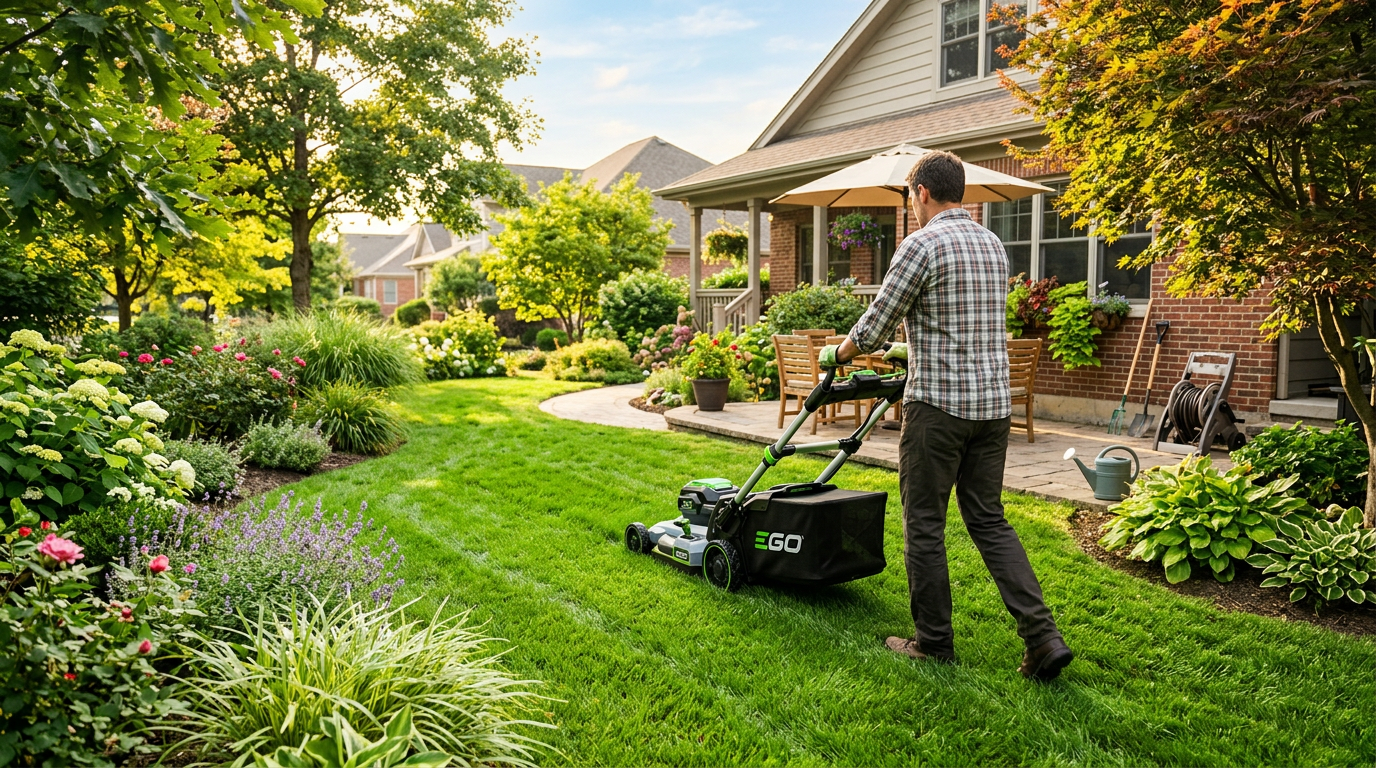
So you bought a new lawn mower. You haggled, you price-matched, you feel like a fiscally responsible champion of turf. But the purchase price is just the cover charge. The real cost—the bar tab, if you will—comes from running the thing all season long. It's the gasoline, the electricity, the oil, the blades, the little bits and pieces that add up.
We're here to break down exactly what you can expect to spend to keep your mower chomping away. We're not going to give you vague estimates. We're going to use real numbers, real product prices, and do the math for gas, battery-electric, and corded electric push mowers. Let's get into it.
Gas Mowers: The Thirsty Workhorse
Gas mowers are powerful, reliable, and what most people picture when they think 'mower.' They're also the most expensive to run on an hourly basis. The costs come from two main categories: consumables (fuel and oil) and maintenance parts.
Let's assume you have a half-acre lot and it takes you roughly one hour to mow. Here’s the cost breakdown for a typical 21-inch gas push mower.
Fuel Costs
A standard push mower engine is a pretty simple affair. It's not a fuel-sipping hybrid. Most have a fuel tank around one quart (0.25 gallons) and will burn through most of that in an hour of heavy cutting.
- Fuel consumption: ~0.25 gallons per hour
- Average US gas price (as of writing): ~$3.50 per gallon
- Cost per mow (1 hour): 0.25 gal * $3.50/gal = $0.88
Seasonally, if you mow 25 times a year, that's over $20 in gas alone. For a larger riding mower, you can easily use a gallon or more per hour, pushing that cost to $3.50+ every time you cut the grass.
Oil & Maintenance
Unlike their electric cousins, gas engines need regular tune-ups. Skipping this doesn't save money; it just makes the mower run less efficiently (using more gas) and die sooner.
- Oil Change: You should change the oil at least once a season (or every 50 hours). A quart of Briggs & Stratton SAE 30 Small Engine Oil costs about $8, and you'll use most of it for one change. Let's call it $8 per season.
- Air Filter: A clean filter is crucial for fuel efficiency. A replacement like the Briggs & Stratton 593260 Air Filter is about $7. Replace it annually. $7 per season.
- Spark Plug: A fresh spark plug ensures a clean start and efficient combustion. A Champion RJ19LM plug is about $4. Replace it every season or two. $4 per season.
- Blade Sharpening: A dull blade tears grass instead of cutting it, which stresses the engine and gives you a ragged, yellowing lawn. Professional sharpening costs $15-$20. Let's say $15 per season.
Total Gas Mower Running Cost
Let's add it all up for a 25-mow season:
- Fuel: $0.88/mow * 25 mows = $22.00
- Maintenance: $8 (oil) + $7 (filter) + $4 (plug) + $15 (blade) = $34.00
- Total Annual Cost: $22.00 + $34.00 = $56.00
- Cost Per Hour/Mow: $56.00 / 25 mows = $2.24
So, for every hour you run that gas mower, you're spending over $2 in consumables and prorated maintenance. If your grass is extra thick after a good rain, you'll use more gas, pushing this closer to $3-$4 per hour.
Battery-Electric Mowers: The Silent Revolution
Battery mowers are fantastic. They're quiet, they start with the push of a button, and you don't have to deal with gas cans or oil changes. Their operational cost is ridiculously low. But there's a catch, and it's a big, expensive one.
Electricity Costs
Let's use a popular model, the EGO Power+ LM2102SP 21-inch Mower, which often comes with a 56V 7.5Ah battery. To find the energy used, we multiply volts by amp-hours: 56 * 7.5 = 420 watt-hours, or 0.42 kilowatt-hours (kWh). That's the amount of energy to fully charge the battery.
- Energy per charge: ~0.42 kWh
- Average US electricity rate: ~$0.17 per kWh
- Cost per mow (1 charge): 0.42 kWh * $0.17/kWh = $0.07
Yes, you read that right. Seven cents. Over a 25-mow season, you're looking at a whopping $1.75 in electricity charges.
The Big Catch: Battery Replacement
Here's where the math gets painful. That EGO 56V 7.5Ah battery has a replacement cost of around $450. A high-quality lithium-ion battery is rated for a certain number of charge cycles (typically 500-1000) and has a lifespan of 5-10 years. Let's be optimistic and say it lasts 8 years.
- Prorated Battery Cost: $450 / 8 years = $56.25 per year
Suddenly, the battery mower isn't looking so cheap. That single line item costs more than a full year of running a gas mower.
Total Battery Mower Running Cost
Let's add up the operational cost and the prorated battery cost. Don't forget blade sharpening!
- Electricity: $0.07/mow * 25 mows = $1.75
- Blade Sharpening: $15.00
- Prorated Battery: $56.25
- Total Annual Cost: $1.75 + $15.00 + $56.25 = $73.00
- Cost Per Hour/Mow: $73.00 / 25 mows = $2.92
This is the number nobody wants to talk about. While the feeling of mowing for just seven cents is great, you have to mentally set aside nearly $3 every time you mow to save for the inevitable day the battery dies. Your hourly operational cost is low (just electricity and blade wear, maybe $0.70/hr), but the true long-term cost is comparable to gas.
Corded Mowers: The Cheapest of All
If you have a small, simple yard and don't mind wrestling with 100 feet of cable, a corded mower is the undisputed champion of low running costs. There's no battery to replace, no gas, no oil. It's just electricity and blade maintenance.
Let's look at a model like the Greenworks 25022 20-inch 12 Amp Mower.
- Power Draw: 12 Amps * 120 Volts = 1,440 Watts = 1.44 kW
- Cost per hour: 1.44 kW * $0.17/kWh = $0.24
For a full hour of mowing, you'll spend less than a quarter on electricity.
Total Corded Mower Running Cost
- Electricity: $0.24/mow * 25 mows = $6.00
- Blade Sharpening: $15.00
- Total Annual Cost: $21.00
- Cost Per Hour/Mow: $21.00 / 25 mows = $0.84
This is as cheap as it gets. The trade-off is the cord, which is a deal-breaker for many people with trees, garden beds, or yards larger than a postage stamp.
The Real-World Big Picture
We run all three types of mowers on our test properties, and the math checks out. The gas mower is the go-to for overgrown, tough areas. The battery mower gets used most often for the main lawn due to its pure convenience. The corded mower... well, it sits in the shed for small touch-up jobs. Your choice depends on your budget, lawn size, and tolerance for noise and maintenance.
Recent industry data shows a clear trend. According to a 2023 report by the market research firm The Freedonia Group, sales of electric lawn equipment are growing rapidly and are projected to continue stealing market share from gas-powered tools. This shift is driven by both consumer demand for quieter, lower-maintenance options and increasing local and state regulations on small gas engines. (Source: https://www.freedoniagroup.com/industry-study/lawn-garden-equipment-4089.htm)
To keep costs low no matter what you use, stay on top of your mowing schedule. How often you should mow your lawn plays a big role in efficiency; cutting excessively tall or wet grass makes your mower work harder and use more energy. A healthy lawn is also easier to cut. If you're seeing signs of trouble, figure out why your grass is turning yellow to address the root cause. Sometimes a thick layer of thatch can also make mowing a real chore; learning how to dethatch a lawn can make every pass smoother and more efficient.
Other Costs You're Forgetting
Your mower isn't the only tool you use. Remember to factor in the cost of running complementary equipment.
- String Trimmer & Edger: Whether gas or electric, this adds to your fuel/electricity consumption.
- Leaf Blower: The same applies here. A full yard cleanup is a multi-tool job.
- Your Time: What's an hour of your weekend worth? A more powerful, wider mower might cost more to buy and run but could save you dozens of hours over a season.
- Pest & Weed Control: You're out there anyway, so you might be thinking about pest control or how to get rid of dandelions in your lawn. Factor in the cost of spray or granular treatments.
- Watering: A healthy lawn needs water. Knowing the best time to water grass helps you do it efficiently, but it's still a cost on your utility bill.
When you add everything up, the $40-$80 a local crew might charge to mow, edge, and blow your yard clean might suddenly seem like a pretty good deal. For us, we'll stick to doing it ourselves—it's cheaper, and frankly, a bit of Saturday morning mower therapy is good for the soul.
Frequently asked
Is it cheaper to run a gas or electric mower?+
It is significantly cheaper to run an electric mower on a per-hour basis, as electricity is much cheaper than gas. However, the high upfront cost of a battery-electric mower and the eventual need for a pricey battery replacement can narrow the long-term cost gap considerably.
How much gas does a push lawn mower use per hour?+
A standard gas push mower typically uses between 0.2 and 0.5 gallons of gasoline per hour of operation. A larger riding mower or zero-turn can use significantly more, often between 1 and 2 gallons per hour, depending on the engine size and mowing conditions.
How much electricity does a battery mower use?+
A battery-powered mower is very efficient, using about 0.3 to 0.6 kWh to fully charge a battery sufficient for mowing an average suburban lawn. This translates to a cost of just a few cents per mow, depending on your local electricity rates.
Do riding mowers cost more to run?+
Yes, running a riding mower is much more expensive. They consume more fuel (1-2 gallons/hour), require more oil for changes, and have more complex parts like belts and larger batteries that add to maintenance costs, often totaling $15-$30 per hour of operation.