
The 5 Best Grass Types for Hawaii Lawns (2024 Guide)
Choosing the right grass for your Hawaiian paradise isn't just about looks—it's about fighting salt, heat, and humidity. We break down the top contenders for a perfect island lawn.
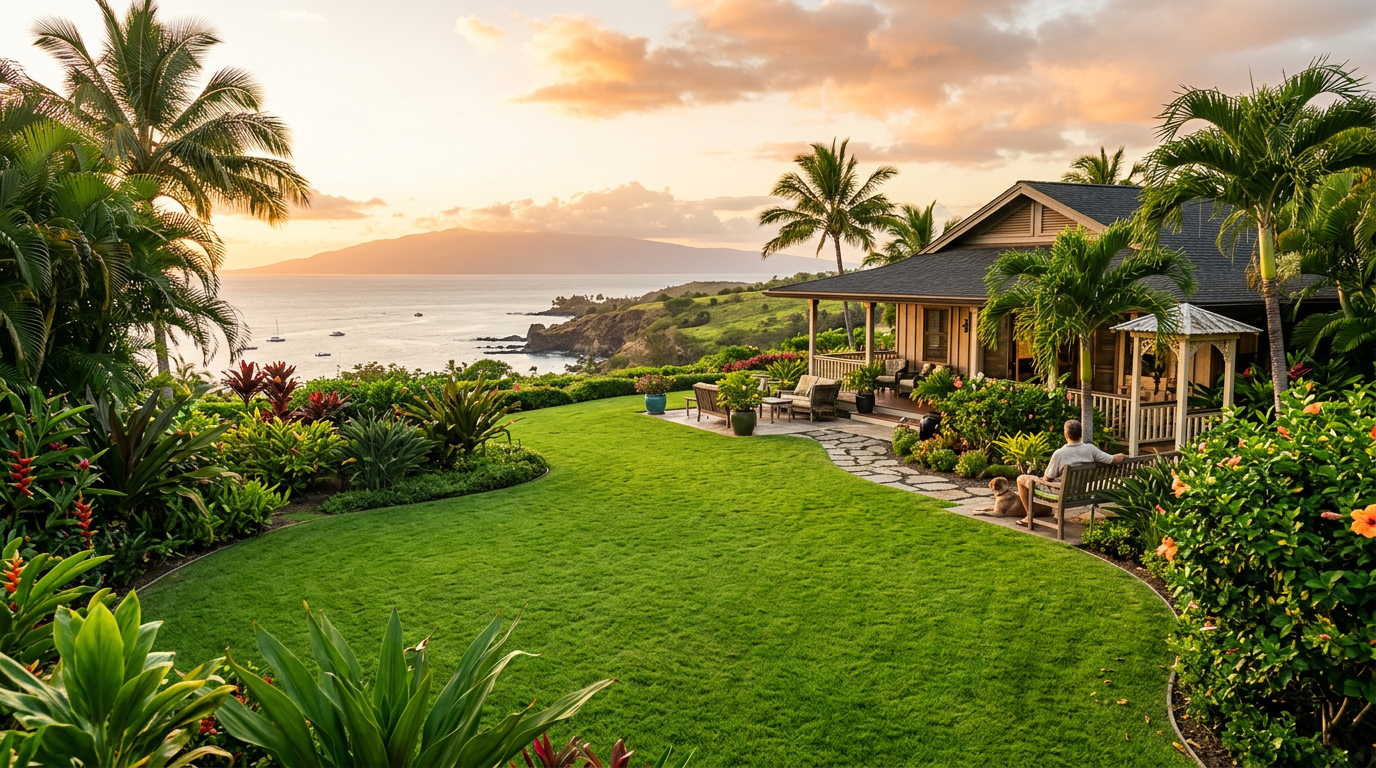
Your Guide to the Best Grass for a Hawaiian Lawn
Living in Hawaii is paradise, no doubt. But that postcard-perfect view comes with a 'paradise tax,' and sometimes that tax is paid in sweat while doing yard work. Choosing the best grass for Hawaii isn't as simple as grabbing a bag of seed from the hardware store. You're fighting a unique combination of intense sun, high humidity, salt-laced air, and diverse volcanic soils. Get it wrong, and you're left with a patchy, yellow mess.
We're here to cut through the noise and help you choose the right turf for your slice of heaven, whether you're on a breezy coast in Maui, a wet Hilo hillside, or in a sunny Honolulu suburb. The key is picking a warm-season grass that considers your specific microclimate and lifestyle.
Understanding Hawaii's Unique Lawn Challenges
Before you can pick a winner, you have to understand the competition. A lawn in Hawaii faces a different set of rules than one on the mainland.
- Microclimates are Everything: The difference between the leeward (dry, sunny) and windward (wet, cloudy) sides of an island is drastic. A grass that thrives in dry Kihei might struggle in rainy Hana. Elevation also plays a huge role.
- Volcanic Soil: Much of the soil in Hawaii is derived from volcanic rock. It can be heavy clay or fast-draining lava rock, and it's often acidic. A soil test is your best friend—it can save you hundreds in fertilizer and frustration. You can get test kits from the University of Hawaii's College of Tropical Agriculture and Human Resources (CTAHR).
- Salt Spray: If you're anywhere near the coast, salt tolerance is non-negotiable. Salt spray can literally burn and kill the wrong type of grass.
- High Humidity & Constant Warmth: This is a breeding ground for fungal diseases like brown patch and dollar spot. It also means pests never really go dormant.
- Water, Water Everywhere? While some areas are lush, others, particularly on Oahu and leeward sides, have significant water conservation measures. Choosing a drought-tolerant grass is both eco-friendly and budget-smart.
Our Top 5 Grasses for a Hawaii Lawn
Alright, let's get to the contenders. We've seen these grasses perform firsthand across the islands. All are warm-season grasses, as cool-season types like fescue or bluegrass will simply melt in the Hawaiian heat.
1. Zoysia Grass (The All-Around Winner)
If we had to pick one grass to recommend sight-unseen, it would be Zoysia. It's the perfect balance of beauty, durability, and relatively low maintenance for Hawaii.
- Why We Love It: Zoysia forms a dense, carpet-like turf that feels amazing underfoot and chokes out weeds. It has excellent heat tolerance and good drought tolerance once established. Many varieties also have good to excellent salt tolerance. We've seen 'El Toro' Zoysia, a popular local variety, look incredible from Kailua to Kapolei.
- Cultivars to Know:
- 'El Toro' / 'Z-3': A blade-y, medium-textured Zoysia japonica that's very common in Hawaii. It’s tough and recovers well from wear.
- 'Zeon': A fine-bladed Zoysia that is often called 'barefoot grass'. It has great shade tolerance for a Zoysia and is stunningly beautiful.
- Downsides: It's a slow grower, so it can take time to recover from serious damage. It also tends to build up thatch over time and will need dethatching every couple of years.
2. Seashore Paspalum (The Coastal King)
For anyone with an oceanfront or near-ocean property, this is your grass. Period. Its name says it all.
- Why We Love It: Unmatched salt tolerance. You could practically irrigate it with brackish water (though we don't recommend it). It's the grass you see on premier coastal golf courses around Hawaii for a reason. It provides a beautiful, dark green, manicured look.
- Cultivars to Know: 'SeaStar' and 'Platinum TE' are popular choices you can get from local suppliers.
- Downsides: It requires more maintenance than Zoysia in terms of frequent mowing and fertilization to look its best. It doesn't tolerate shade well at all and can be expensive to install.
3. Bermuda Grass (The Tough & Durable Option)
If you have kids, dogs, or just a lot of foot traffic, Bermuda grass is the workhorse of the turf world. It can take a beating and come back for more.
- Why We Love It: It's incredibly durable and repairs itself quickly thanks to its aggressive runners (rhizomes and stolons). It's also very drought-tolerant and loves full, direct sun—perfect for the leeward sides.
- Cultivars to Know: 'Tifway 419' is a classic hybrid Bermuda used on athletic fields and golf course fairways. It's a proven performer.
- Downsides: It's a sun worshipper and will die out in shady spots. Its aggressive growth means it will invade flower beds if not edged properly. It requires regular mowing, often more than once a week in peak season.
4. St. Augustine Grass (The Shade & Moisture Choice)
Got a yard with large mango or monkeypod trees? Or live on the wetter, windward side? St. Augustine could be your best bet.
- Why We Love It: It has the best shade tolerance of any warm-season grass suitable for Hawaii. Its broad, coarse blades create a very lush, tropical-looking lawn. It establishes quickly and holds its color well in humid conditions.
- Downsides: It's a thirsty grass and not very drought-tolerant. Its biggest weakness in Hawaii is its susceptibility to pests, especially chinch bugs, which can wipe out a lawn in weeks. Regular pest management is a must. If you see patches and ask, 'Why is my grass turning yellow?', chinch bugs are a prime suspect for St. Augustine.
5. Centipede Grass (The Low-Maintenance Choice)
Often called the 'lazy man's grass,' Centipede is for homeowners who want a decent-looking lawn without spending every weekend working on it.
- Why We Love It: It's a slow-grower (less mowing!), requires far less fertilizer than other grasses, and thrives in the acidic soils common in Hawaii. It provides a uniform, medium-textured lawn.
- Downsides: It has poor salt tolerance, making it unsuitable for coastal areas. It's also not very wear-tolerant and has a yellowish-green color that some people don't prefer. It's best for low-traffic, inland yards.
Installing Your New Hawaii Lawn: Sod vs. Plugs
Forget spreading seed. In Hawaii's climate, a new lawn is almost always established with sod, sprigs, or plugs. Sod gives you an instant lawn and is the most common method.
We called a few local suppliers, and as of late 2024, you can expect to pay between $0.85 and $1.60 per square foot for quality sod from a place like Hawaiian Turfgrass or Sod Solutions Hawaii. This price is just for the turf itself—delivery and installation will add to the cost.
Plugs are small, rooted pieces of sod that you plant every 6-12 inches. They are much cheaper but will take 6-12 months to grow into a fully covered lawn. It's a trade-off between time and money.
Essential Lawn Care for Hawaii's Climate
Choosing the right grass is half the battle. Keeping it alive and beautiful is the other half. The constant growing season in Hawaii means you can't neglect your lawn for long.
According to the University of Hawaii at Manoa's College of Tropical Agriculture and Human Resources (CTAHR), a well-managed lawn is a key part of the local landscape, but it requires specific care. Their studies show that improper watering and mowing are the leading causes of turf failure. (Source: CTAHR publication HG-33, "Turf and Landscape Pest Control")
- Mowing: Each grass has a happy height. Mowing too short stresses the grass, inviting weeds and disease. Bermuda and Seashore Paspalum can be mowed low (~1 inch), while Zoysia likes it a bit taller (1.5-2 inches), and St. Augustine should be kept longest (2.5-3 inches). Check our guide on how often to mow your lawn for more details.
- Watering: The key is deep and infrequent watering to encourage deep root growth. This is far better than a shallow sprinkle every day. The best time to water grass is early in the morning (4 AM to 8 AM) to minimize evaporation and prevent fungal growth.
- Fertilizing: With Hawaii's high rainfall in many areas, nutrients leach from the soil quickly. A slow-release fertilizer designed for southern lawns, like Scotts Turf Builder Southern Gold, applied 2-4 times a year is a good starting point. Get a soil test to be sure.
- Dethatching: Aggressive growers like Bermuda and Zoysia produce a layer of dead material called thatch. A thick layer can choke your lawn by blocking water and nutrients. You may need to dethatch your lawn every 1-2 years to keep it healthy.
Frequently asked
What is the most low-maintenance grass for Hawaii?+
Centipede grass is considered the most low-maintenance due to its slow growth and low fertilizer needs, but it's not salt-tolerant. For a balance of low maintenance and durability, 'El Toro' Zoysia is an excellent choice for many Hawaiian homes.
Can you grow Kentucky Bluegrass or Fescue in Hawaii?+
No. These are cool-season grasses that cannot tolerate Hawaii's sustained heat and humidity. They will quickly die out. You must use a warm-season grass like Zoysia, Bermuda, or St. Augustine.
What is the absolute best grass for oceanfront property in Hawaii?+
Seashore Paspalum is the undisputed champion for oceanfront properties. Its extremely high salt tolerance allows it to thrive even with direct salt spray, which would kill most other types of turfgrass. It's the top choice for coastal homes and resorts.
How much does a new sod lawn cost in Hawaii?+
The cost of the sod itself typically ranges from $0.85 to $1.60 per square foot, depending on the grass type and supplier. Delivery and professional installation can add another $1.00 to $2.00 per square foot to the total cost.
What grass do they use on golf courses in Hawaii?+
Hawaiian golf courses commonly use hybrid Bermuda grasses like 'Tifway 419' on fairways for their durability. On greens and in coastal courses, Seashore Paspalum is increasingly popular for its beautiful putting surface and superior salt tolerance.