
Mushrooms Growing in Lawn: Causes, Fixes, and Prevention
Mushrooms in your grass aren’t evil—they’re a symptom. We’ll show you what causes them and how to stop the pop‑ups without nuking your lawn.
Quick take
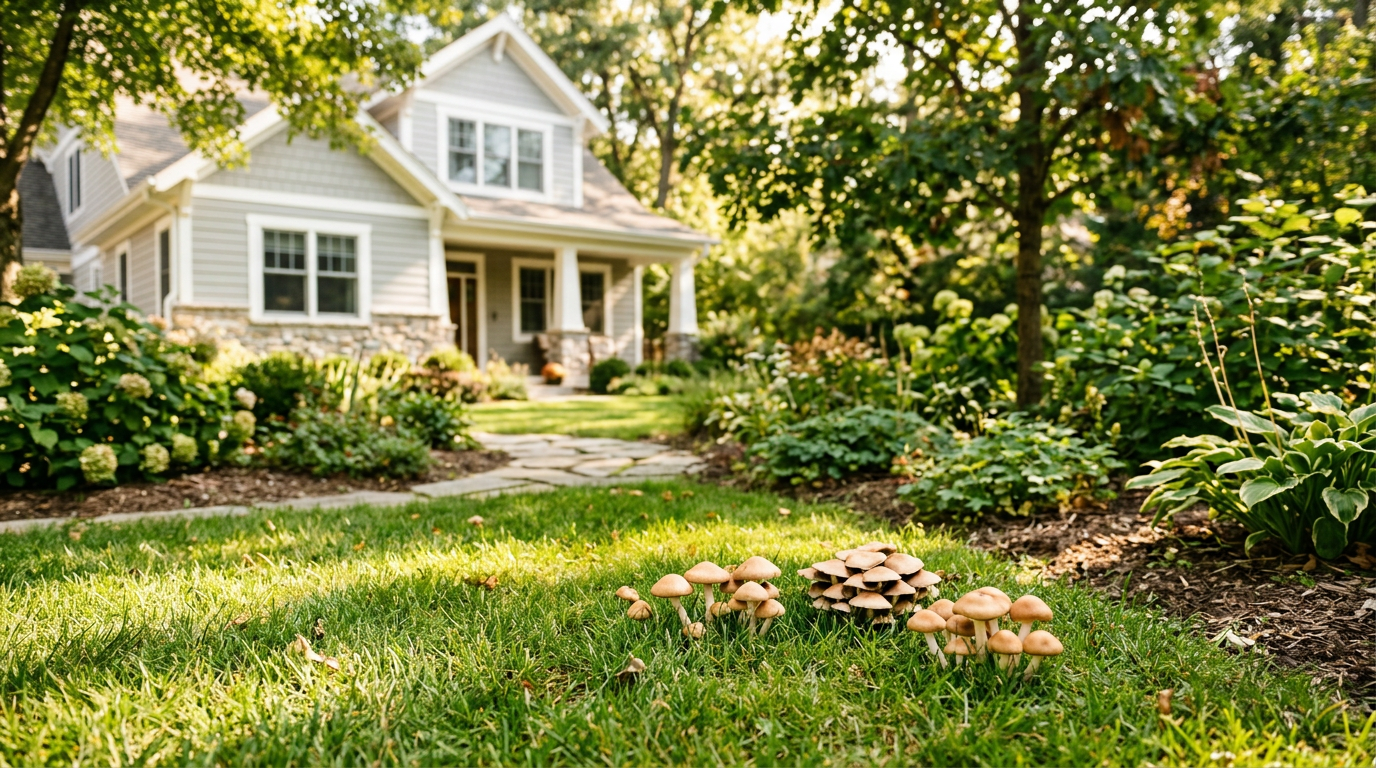
Mushrooms growing in lawn aren’t attacking your grass. They’re the fruiting bodies of fungi that are digesting organic matter—buried wood, old roots, dense thatch, or even pet waste. If you change the conditions they like (moisture, shade, food), the mushrooms stop. No mystery powder needed.
We’ve cleaned up dozens of “mushroom lawns.” The playbook below works without wrecking turf—or your weekend.
Are lawn mushrooms bad?
Short answer: visually annoying, mostly harmless to grass. The larger risk is to kids and pets if they snack. Don’t eat lawn mushrooms—many look-alikes exist. If in doubt, glove up and remove caps into a trash bag. Your turf isn’t poisoned; the fungus is recycling old organic stuff.
Why mushrooms show up (the real causes)
- Extra moisture: frequent, shallow watering or recent rains
- Shade + compacted soil: slow drying and low airflow
- Food supply: buried wood, old stumps/roots, or thick thatch
- Pet waste: concentrated organic matter
- Fairy rings: fungal arcs that make soil water-repellent
Numbers you can use: thatch thicker than 0.5 inch is considered excessive and tied to fungal issues; fairy rings commonly appear as arcs from about 1 to 10 feet wide. (Univ. of Minnesota Extension: https://extension.umn.edu/lawn-care/thatch-control-lawns; Clemson HGIC: https://hgic.clemson.edu/factsheet/mushrooms-fairy-rings/)
If you’re not sure it’s mushrooms versus a disease, see our visual guide: Lawn Fungus Identification.
Fast fixes this week (no chemicals)
-
Pop the caps: Kick or rake them, then bag with your next mow. Removing fruiting bodies reduces spore load and keeps pets/kids safe.
-
Change watering: Switch to deep, infrequent watering (1 inch per week total, including rain). Morning only. Skip days if soil is still damp.
-
Clean up organics: Rake up mulch spill, remove rotting wood, and pick up pet waste daily. If you had a tree removed, dig out the big leftover roots where mushrooms cluster.
-
Air the soil: Core aerate to add oxygen and speed decay of thatch/litter. Rentals run about $75/day for a pro plug aerator (e.g., Classen at Home Depot). Follow with a thin topdress of compost.
Products we’ve used:
- Sun Joe AJ801E 12-amp Dethatcher/Scarifier — about $159. Great for small lawns.
- Bulk screened compost — roughly $45/yard locally. Topdress 0.25 inch after aeration.
- Fiskars Xact Weeder — about $39, handy for popping clusters out of soggy spots.
Fairy ring troubleshooting (the ring of mushrooms)
If you see a ring or arc of mushrooms, greener grass on the ring, and sometimes a brown band inside it, that’s a fairy ring. The fungus can make soil hydrophobic—water beads off, grass starves.
Do this:
- Core aerate the ring area heavily.
- Soak the zone: After aeration, apply a wetting agent to break water repellency, then deep-water. Hydretain Liquid 1-Qt runs about $35 and works with a hose-end sprayer; Revive Soil Treatment is about $20.
- Topdress with compost and overseed thin spots.
We’ve fixed stubborn rings by aerating twice 4–6 weeks apart, then repeating wetting agent + deep soak. Fungicides rarely help because the fungus sits deep in the soil, not just on the blades.
When to escalate (or relax)
- If mushrooms persist only after heavy rains, relax—they’ll fade as it dries.
- If you have chronic clusters in one spot, dig down: you’ll usually hit buried wood. Remove it and backfill.
- If bare/brown patches linger, it might be compaction, drought stress, or grubs. Start here: Brown Patches in Lawn After Winter and White Grubs in Soil Identification.
- If animals are tearing up your turf at night, they’re hunting grubs. Fix the food source: How to Get Rid of Grubs in Lawn Naturally. Then stop the digging: Tiny Holes in Lawn at Night.
Long-term prevention (set-and-forget habits)
- Aerate annually if you have clay or heavy traffic; every other year otherwise.
- Dethatch if your thatch layer exceeds 0.5 inch.
- Water deep, not daily: aim for 1 inch/week, delivered in 1–2 sessions.
- Increase sun: limb up low branches to improve airflow and drying.
- Compost topdress 0.25 inch in spring or fall to boost microbe diversity.
- Fertilize lightly with slow-release nitrogen (e.g., Milorganite 32-lb bag ~$18) to aid recovery without making a thatch factory.
Should you ever use a fungicide?
For lawn mushrooms, almost never. You’d need drenches that reach deep mycelium, which is impractical and often ineffective for homeowners. Spend the money on aeration, compost, and a wetting agent if you’ve got fairy rings. Your lawn (and wallet) will be better for it.
Frequently asked
Are mushrooms in my lawn dangerous to pets or kids?+
They’re mostly a visual nuisance, but don’t let anyone eat them. Some lawn mushrooms are toxic, and identification is tricky. Glove up, remove caps, and trash them. Switching to deep, infrequent watering and cleaning up organic debris will reduce future pop-ups.
Do I need to apply a fungicide to stop lawn mushrooms?+
Usually no. Mushrooms are fruiting bodies of fungi living on buried wood, thatch, or old roots. Fungicides rarely reach the source and are a poor return on investment. Aeration, dethatching, removing buried wood, and correcting watering habits are far more effective.
Will mushrooms kill my grass?+
The mushrooms themselves won’t. If you see brown arcs or hydrophobic soil (water runs off), that’s a fairy ring issue causing drought stress. Fix it by core aerating, applying a wetting agent, deep-watering, and topdressing compost. Overseed thin areas after the soil re-wets.
How do I permanently get rid of mushrooms in my lawn?+
Eliminate the conditions they like: remove buried wood, manage thatch to under 0.5 inch, aerate compacted soil, water deeply but less often, and increase sunlight. For persistent ring patterns, add a wetting agent after aeration. You’ll see far fewer mushrooms over time.
Why do mushrooms appear after I remove a tree?+
Old roots and leftover stump grindings become a huge food source for fungi. As they break down, mushrooms pop up above. Rake out grindings, remove larger roots where feasible, and topdress with compost after aeration. Expect mushrooms to taper off as the wood decays.