
How to Keep Deer Out of Garden: Real Fixes That Work
Deer-proof your beds without fairy tales. We’ll show you the fence that works, the repellents to rotate, and what to plant (and cage) so your garden survives.
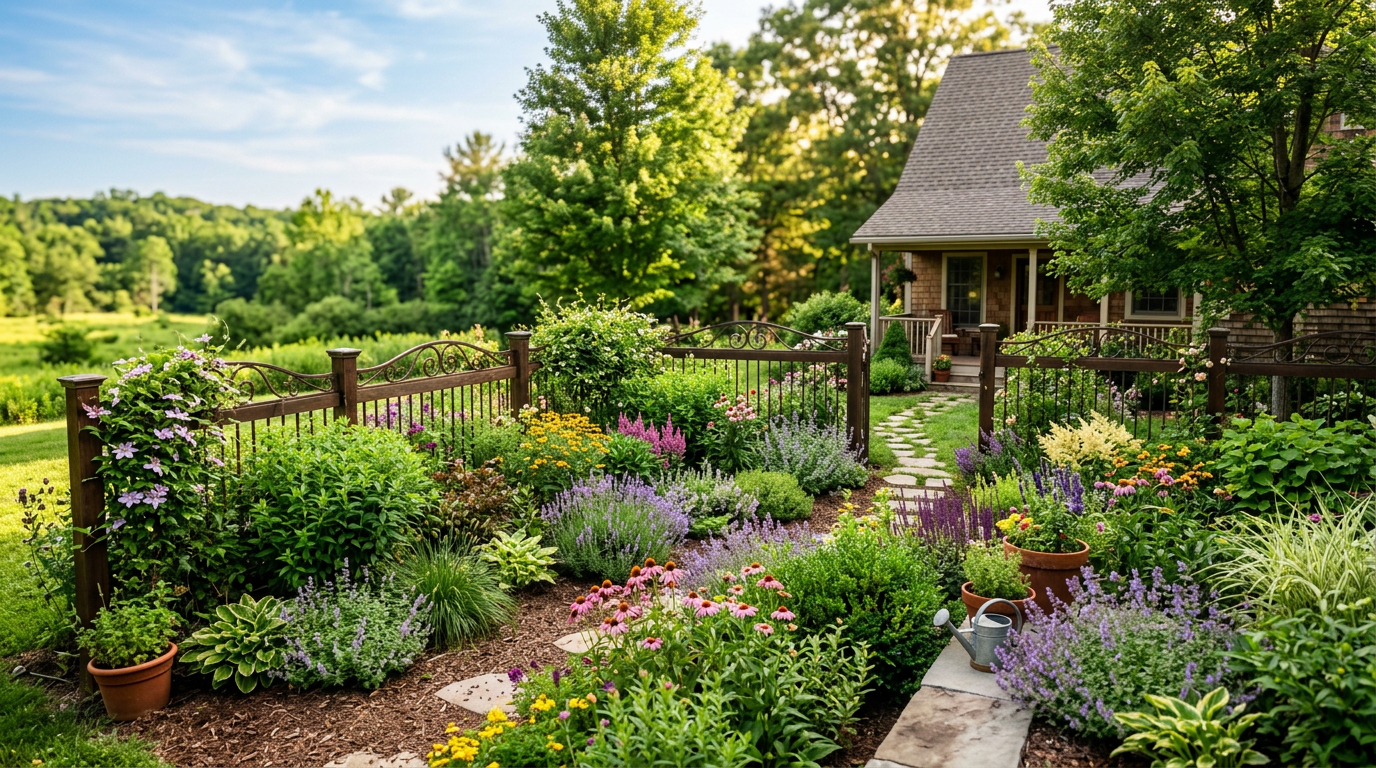
Start here: deer-proofing without the folklore
We like venison on the trail cam, not in the tomatoes. There’s no magic soap or hair clippings that stop hungry deer in June. Here’s the field-tested stack: build a real barrier, then layer repellents, plant smart, and add scare/exclude tactics when pressure spikes. We’ve run this plan under heavy browse and kept our beds intact.
Build a real barrier (7.5–8 ft)
If you can swing only one tactic, make it a fence. Deer jump. A lot.
- Permanent: 7.5–8 ft poly or woven-wire around the garden. Example kits: Tenax C-Flex HD 7.5' x 100' (~$179–$219) + 9 ft corner posts and 8 ft line posts; add a tensioned top line.
- Electric: 2–3 wire “peanut butter” fence (wires at ~18 in and ~36 in; smear peanut butter on foil flags to train deer to avoid). Small gardens can use a single-offset, baited polywire with a solar energizer like Gallagher S20 (~$199).
- Double-row hack: Two 4–5 ft fences 3–4 ft apart. Deer dislike depth perception traps.
Numbers that matter: White-tailed deer can clear 7 ft, so 7.5–8 ft exclusion is the most reliable. Repellents cut browsing but are short term and need reapplication every 2–4 weeks and after rain. Fencing remains the gold standard for home gardens. (Source: University of Minnesota Extension, https://extension.umn.edu/yard-and-garden-wildlife/deer)
Pro tip we learned the hard way: the first 6 inches are everything. No gaps under the fence. Stake the base every 3–4 ft. Gate closed means actually latched.
Layer repellents—and rotate them
Repellents don’t replace a fence, but they’re excellent “pressure relief.” Use two different actives and rotate every 2–4 weeks and after 0.5 in of rain.
- Egg/garlic-based: Liquid Fence Deer & Rabbit RTU 32 oz (~$25) or Deer Out 32 oz (~$27).
- Blood-based (winter-tough): Plantskydd 1 lb soluble powder (~$30). Smells like a crime scene; deer hate it.
- Granular borders: Liquid Fence Granular (~$18) for path edges where spray drift is annoying.
Spray early evening on dry foliage so it sets. Hit plant tips and new growth—deer browse there first.
Plant smart: resist on the outside, protect the candy
Use deer-resistant edges as a speed bump and cage the dessert tray.
- More resistant: lavender, catmint (Nepeta), yarrow, Russian sage, alliums, hellebores, boxwood (smelly), ferns. Not deer-proof—just lower on the menu.
- Deer candy: hostas, tulips, roses, daylilies, beans, peas, strawberries. Cage these individually with 2–3 ft cylinders of 2x4 wire or plastic netting. BirdBlock 14' x 45' (~$18) works for quick hoops.
If the “mystery nibbler” is wrecking your hostas, here’s how to confirm and fix it: What Is Eating My Hostas?
Scare and exclude add-ons (great during peak pressure)
Deer habituate to anything static. Mix it up.
- Motion-activated sprinkler: Orbit Yard Enforcer (~$70). Put it on patrol mode, reposition weekly.
- Fishing-line perimeter: Run 20 lb mono at ~30 in and ~40 in around beds. Deer bump it and back off. Refresh lines each season.
- Flash/flash: Holographic tape (~$12) and solar blinkers help briefly. Good for new beds while the fence arrives.
Timing and habits that tip the odds
- Remove attractants: fallen apples, corn, bird feeders in summer.
- Plant timing: tuck the irresistible stuff (tulips, beans) inside cages from day one.
- Winter browse: apply blood-based repellents before first real cold snap; protect evergreens with wraps.
- Scent rotation: change repellent “smell” monthly so deer don’t get brave.
Troubleshooting (what we fix on client calls)
- Tops nipped inside a fence? Check for a sagging top line or a jump point from a nearby slope or woodpile.
- Random holes in leaves with a clean horizontal bite? That’s deer. Ragged tears and slime trails? Slugs—different playbook.
- Fence fine, plants still gone? The gate. Every. Single. Time.
While you’re beating deer, you can also fix other yard drama: trenches from tunneling? How to Get Rid of Moles in Your Yard: Traps That Work. Clover takeover after the buffet? How to Get Rid of Clover in Lawn (Without Wrecking It)
Budget cheat sheet (what we actually buy)
- Core: 7.5' x 100' poly deer fence + 8–9 ft posts + ground stakes: ~$260–$420 all-in.
- Electric starter: 200–300 ft of polywire, 10–12 posts, Gallagher S20: ~$260–$320.
- Repellents season kit: Liquid Fence + Plantskydd: ~$55–$60.
- Targeted cages/netting for “candy” plants: ~$20–$60, reuse yearly.
We’ve run this stack for seasons under serious browse. No folklore, just layered control that holds up when the herd gets bold.
Frequently asked
What height fence keeps deer out for good?+
Use 7.5–8 feet. Deer can clear 6–7 feet when motivated, so 8 ft is the reliable exclusion height. If 8 ft isn’t possible, use a double fence (two 4–5 ft fences set 3–4 ft apart) or a baited electric design for small gardens.
Which deer repellent works best and how often do I apply?+
Egg/garlic sprays (Liquid Fence, Deer Out) and blood-based repellents (Plantskydd) work when applied to new growth every 2–4 weeks and after rain. Rotate formulas monthly so deer don’t adapt, and start applications before peak pressure to train browsing elsewhere.
Do Irish Spring soap, human hair, or pee actually keep deer away?+
Briefly, maybe—until deer get used to it or find tastier greens. These are unreliable compared to a proper fence plus rotating repellents. If you try them, treat as short-term boosters while you install real exclusion or cages for high-value plants.
Are motion-activated sprinklers worth it?+
Yes, as a secondary layer. A unit like the Orbit Yard Enforcer blasts intruders and teaches avoidance. Move it weekly, angle it to cover entry paths, and combine with repellents or a fence. Deer may habituate if you leave it in one spot all season.
What are some truly deer-resistant plants?+
Nothing is bulletproof, but lavender, catmint, Russian sage, yarrow, hellebores, ornamental alliums, and boxwood are usually skipped. Protect known favorites—hostas, tulips, roses—with cages or netting, especially during spring flush when browsing pressure is highest.