
Brown Patches in Lawn After Winter: Causes, Fixes, Prevention
Brown blotches after snow melt aren’t random. We’ll help you ID snow mold vs. winterkill vs. critter/salt damage and fix each fast—without wrecking spring.
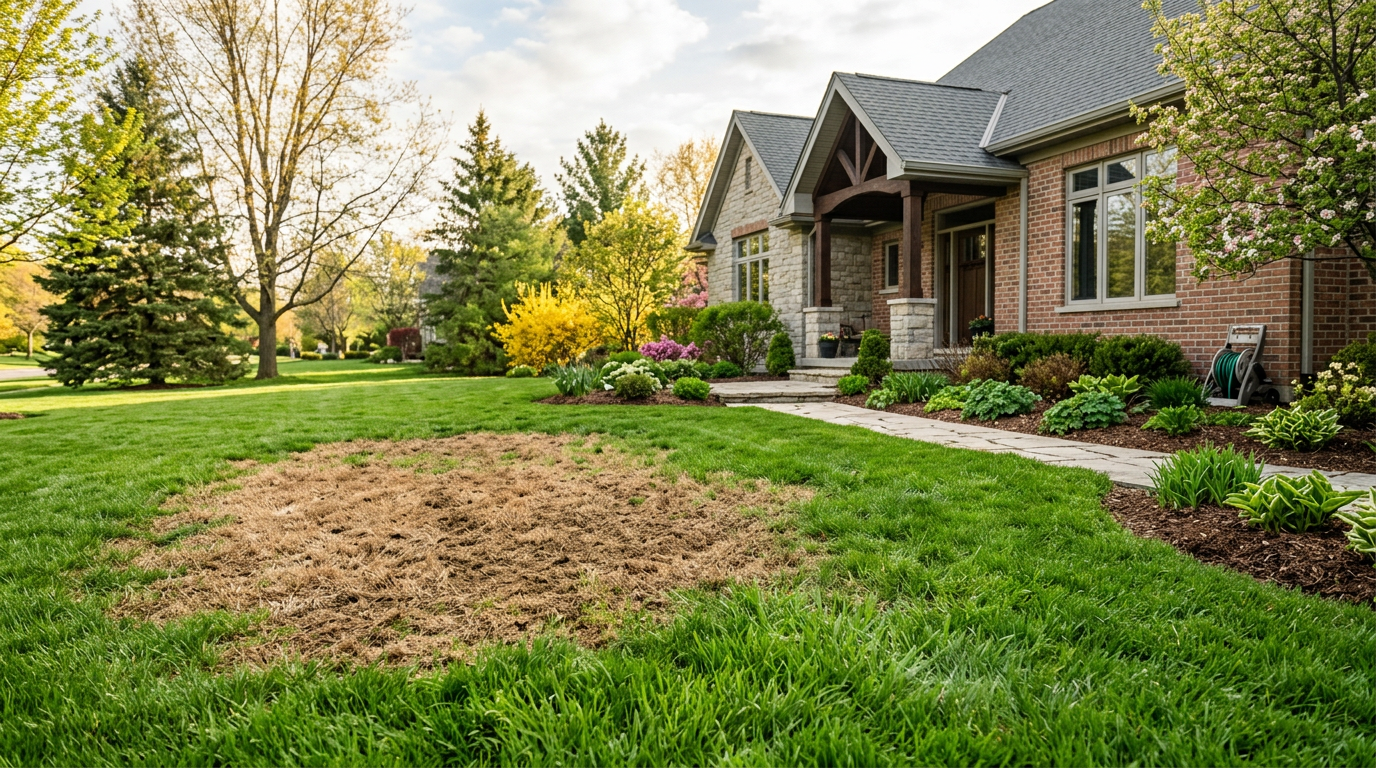
The snow melts, your lawn looks like a giraffe. Good news: most brown patches aren’t permanent. We’ve rehabbed plenty each spring—here’s the fast way to ID and fix what you’ve got without wasting time or seed.
Quick ID: what you’re seeing (and what’s actually dead)
- Snow mold: Circular tan patches with matted blades; gray webbing (gray snow mold) or pinkish edges (pink snow mold). Usually recovers once it dries; worst mats may thin.
- Winterkill/desiccation: Uniformly tan areas, usually wind‑exposed or on south/west slopes. Crowns brittle and white when split—those are toast.
- Salt burn: Crescent or strips along sidewalks/driveways/roads. Soil crusty; grass crunches. New growth struggles here first.
- Vole runways: Pencil‑wide winding trails, surface nibbled. Grass crowns usually alive beneath.
- Grub damage: Spongy turf that peels up like a rug; birds/skunks dig. You’ll find C‑shaped grubs in soil.
- Pet urine: Straw‑colored circles with a greener ring around the edge.
Tip: Tug test. If blades pull out and crowns (base) are tan and mushy/hollow, reseed. If crowns are white‑firm or green, give it a week of warmth.
Fast fixes by cause
- Snow mold: Rake to lift mats and improve airflow. In stubborn spots, lightly dethatch and overseed. Skip fungicide now; it’s preventive, not curative.
- Winterkill: Rake, topdress with 0.25 in compost, overseed. Keep evenly moist until germination.
- Salt burn: Deeply water (1–2 inches over a week) to leach salts. Optional gypsum if soil test shows high sodium. Reseed if crowns died.
- Voles: Rake runways; most fills in. Overseed bare streaks. No poison required; habitat dries and they move.
- Grubs: Confirm with shovel. If present, plan prevention (chlorantraniliprole in spring). Patch and seed damaged areas.
- Pet urine: Flush with a bucket of water ASAP. Rake, add a pinch of compost, overseed resistant mix (perennial rye/fescue).
Seed, soil temps, and products that work
- Timing: Seed cool‑season lawns when soil is 50–65°F (daytime highs ~60–75°F). Early spring works, but fall is best. If you seed now, skip crabgrass pre‑emergent in those areas.
- Seed picks we like:
- Jonathan Green Black Beauty Sun & Shade, 7 lb ~ $34 (dense, drought‑tolerant).
- Pennington One Step Complete, 10.1 lb ~ $19 (quick patch mix with mulch).
- Tools/inputs:
- True Temper 15‑in Thatching Rake ~ $37 (for lifting mats).
- Topdress compost: 0.25 in layer improves seed/soil contact.
- Watering: Mist 2–3x/day to keep seed moist, then back off to deep/infrequent after first mow.
- Fertility: Go light—0.5 lb N/1,000 sq ft once seedlings are mowed twice. Too much spring N = more disease.
Prevent it next winter (so you don’t read this again)
- Fall cleanup: Mulch or remove leaves before snow; matted debris feeds snow mold.
- Final mow: Last cut at 2.5–3 in to reduce matting (don’t scalp).
- Nitrogen timing: Avoid heavy N late fall in snow‑prone areas; use a balanced, modest late‑fall feed only if recommended for your grass type.
- Traffic: Don’t pile snow on the lawn; avoid walking the same paths all winter.
- Salt: Use calcium chloride or sand near turf; in spring, leach edges thoroughly.
- Fungicide (only if your lawn gets snow mold yearly): Scotts DiseaseEx (azoxystrobin), 10 lb covers 5,000 sq ft, ~$24–$30 applied late fall before first big snow.
- Grubs: Prevent with Scotts GrubEx1 (chlorantraniliprole), 14.35 lb covers 5,000 sq ft, ~$24–$30 applied April–June. Identify first: see White Grubs in Soil Identification and How to Get Rid of Grubs in Lawn Naturally.
- Pre‑emergent caution: If you’ll seed, don’t use prodiamine on those areas. If not seeding, The Andersons Barricade DG Pro (prodiamine), 18 lb ~ $49, controls crabgrass.
Numbers that matter
University of Minnesota Extension notes gray snow mold (Typhula) typically develops after 60+ days of continuous snow cover, while pink snow mold (Microdochium) can occur with or without snow; most home lawns recover with raking and drying, and fungicides are rarely needed for home lawns (https://extension.umn.edu/diseases/snow-molds-lawns).
Related problems to rule out
- Seeing tan spots in rings with mushrooms after rain? Read Why Mushrooms Growing in Lawn Happen + How to Stop Them.
- Sudden spring tunnels, mounds, and lifted turf? That’s not snow mold—see How to Get Rid of Moles in Your Yard: Traps That Work.
- Nighttime pockmarks or plugs? Check Tiny Holes in Lawn at Night: What’s Making Them + Fixes.
- Unsure if it’s fungus at all? Start with our Lawn Fungus Identification: Pictures, Symptoms, Fixes.
We’ve raked and seeded hundreds of post‑winter problem spots. Diagnose, do the minimum effective fix, and save the heavy lifting (and herbicides) for things that actually need it.
Frequently asked
Will brown patches from snow mold come back to green on their own?+
Often, yes. Once the lawn dries and warms, lightly rake to lift mats and improve airflow. Many areas re‑green within 2–4 weeks. Reseed only where the tug test shows dead crowns or where grass remains thin after a couple warm weeks.
How do I tell winterkill from grub damage in spring?+
Winterkill areas are uniformly tan and firmly rooted or brittle; grub areas feel spongy and peel back like a rug. Dig a few spots 2–3 inches deep. Finding multiple C‑shaped grubs per square foot points to grub damage and calls for prevention this spring.
Can I use crabgrass pre-emergent if I need to seed bare patches?+
Not in the same spots. Pre‑emergents like prodiamine stop weed seeds—and your grass seed. Either seed first and skip pre‑emergent in those areas, or delay seeding and use pre‑emergent elsewhere. Mark the overseeded zones so you don’t accidentally treat them.
Do I need a fungicide for snow mold every fall?+
Most home lawns don’t. Prevention fungicides are for high‑value turf or lawns with consistent, severe history. Focus on leaf cleanup, proper fall mowing, and avoiding heavy late‑fall nitrogen first. If you still get yearly damage, consider a labeled fall application.
What’s the best grass seed to repair winter damage?+
Match your lawn type. For cool‑season mixes, we like perennial rye/fine fescue for quick cover and Kentucky bluegrass for long‑term fill. Use a quality blend like Jonathan Green Black Beauty Sun & Shade, prep with light raking and compost, and keep seed consistently moist.