
Brown Patches in Lawn After Winter: Fast Causes + Fixes
Brown patches after winter aren’t random. We show you how to ID the cause in 5 minutes, fix it this week, and prevent a repeat next year—without wrecking your lawn.
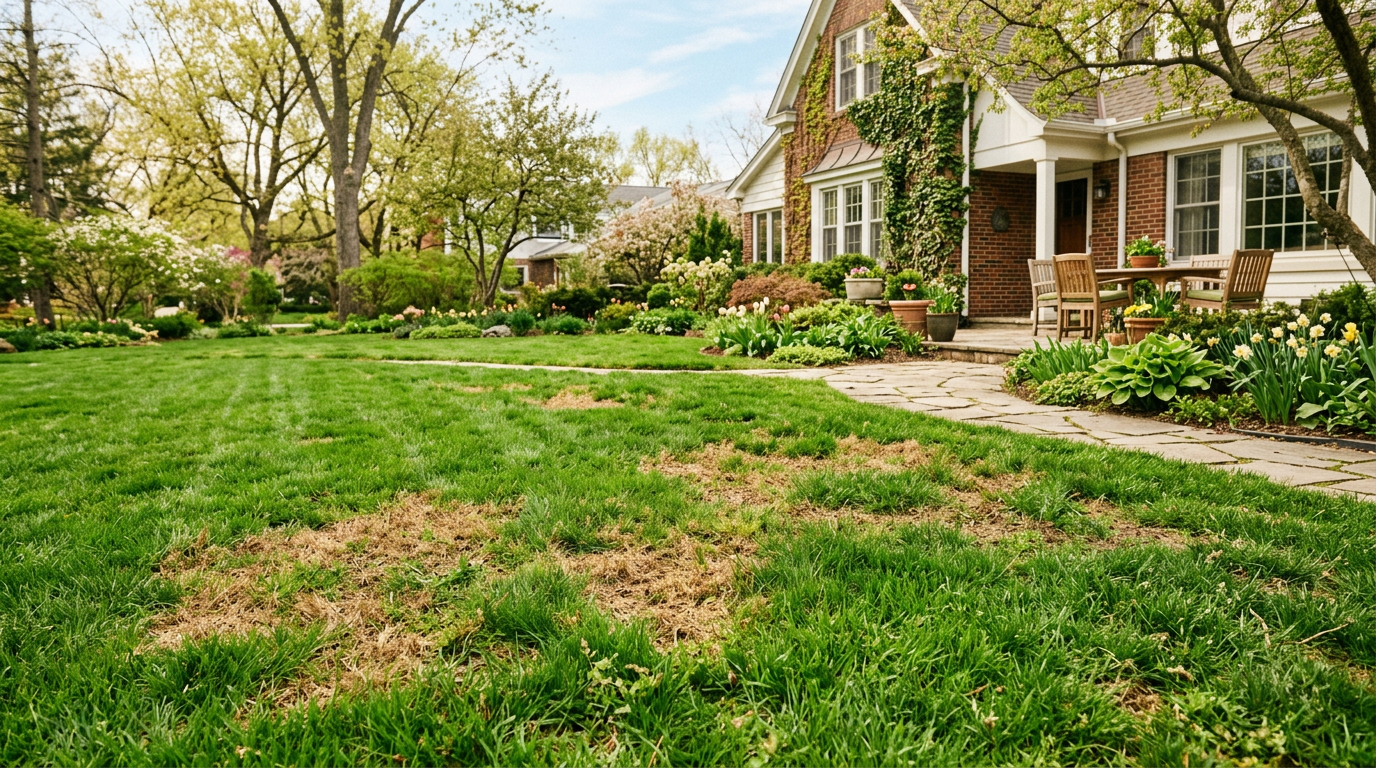
Why you’re seeing brown patches after winter
Winter is rough on turf. Those brown or straw patches in spring usually come from one (or a combo) of: snow mold, winterkill/ice damage, salt or pet urine burn, or grubs chewing roots over winter. The good news: most lawns bounce back if we triage fast and reseed smart.
We’ve peeled back plenty of crusty, matted circles in April—some needed a rake and patience; others needed seed or a grub fix. Here’s how we sort it out.
Quick ID: what it is (in 5 minutes)
- Snow mold: Circular tan/gray patches, matted blades, sometimes a gray-white crust. Likely if you had long snow cover. For photos and look‑alikes, see our Lawn Fungus Identification.
- Winterkill/ice damage: Irregular dead areas in low, poorly drained spots; turf feels dead, not matted.
- Salt/urine burn: Linear bands along sidewalks/driveways or dotted patches along dog paths.
- Grubs: Brown turf lifts like carpet; roots are chewed. White C‑shaped grubs present. Start with White Grubs in Soil Identification.
- Voles/critters: Surface runways or tiny holes. If you’re seeing overnight divots, check Tiny Holes in Lawn at Night.
Do this first (this week)
- Lightly rake matted areas to stand blades up and get air in.
- Water salt/urine bands deeply (15–20 minutes) to leach salts.
- Tug test: If turf peels up easily, inspect for grubs.
- Mark truly dead spots (>6" wide) for patch seeding.
- Hold fertilizer until the lawn is actively growing; otherwise you’re feeding microbes, not grass.
Causes and fixes: fast playbook
- Snow mold: Rake to break the mat. If you still see active gray fuzz in cool, wet weather, spot-treat with a lawn-safe fungicide like BioAdvanced Fungus Control for Lawns (propiconazole, ~$20/32 oz concentrate). Most cosmetic damage fills in; reseed bare spots.
- Winterkill/ice: No chemical fix. Improve drainage, topdress low spots, and reseed. Avoid walking on thawing, soggy turf.
- Salt or dog urine burn: Flush with water. For salt along pavements, topdress with compost and apply pelletized gypsum (Soil Doctor Gypsum, ~$12/40 lb) to help displace sodium. Reseed.
- Grubs: If you count ~10+ per sq ft, treat. For organic control, beneficial nematodes (Steinernema/ Heterorhabditis, Arbico Organics, ~$39) when soil is >50°F. For one-and-done season-long control, Scotts GrubEx1 (chlorantraniliprole, ~$27/14.35 lb). Then reseed if needed. More natural options here: How to Get Rid of Grubs in Lawn Naturally.
- Still not sure? Compare symptoms and photos in our Lawn Fungus Identification or, if you’re seeing toadstools with the thaw, read Why Mushrooms Growing in Lawn Happen.
When numbers help: thresholds and timing
- Grub threshold: Home lawns usually show damage at around 10 or more white grubs per square foot; spot treatments often suffice below that. Source: Purdue Extension (https://extension.entm.purdue.edu/publications/E-271.pdf).
- Ice cover: Annual bluegrass can start to die after roughly 45–60 days of continuous ice cover, while creeping bentgrass tolerates longer periods. Prolonged ice in low spots = patchier spring green-up. Source: Michigan State University Turf Team (https://www.canr.msu.edu/news/winterkill_and_ice_coverage).
Patch and reseed: our field-tested recipe
- Loosen the top 1/2" of soil in dead spots and rake out thatch.
- Seed with a mix that fits your light: Jonathan Green Black Beauty Sun & Shade (cool-season, ~$29/3 lb) or Pennington Smart Seed Sun & Shade (~$23/3 lb).
- For one-bag repair on small areas, Scotts PatchMaster Sun & Shade (~$16/4.75 lb) includes mulch and tackifier.
- Lightly cover with 1/8" compost, press for seed-to-soil contact, and keep evenly moist 2–3 times per day until germination. Expect 7–21 days depending on species and soil temp.
- After first mow, feed lightly with a slow-release fertilizer.
Prevent a repeat next winter
- Mow the last cut a notch higher (not scalped). Tall blades shade soil and reduce winter desiccation.
- Mulch leaves into the lawn; don’t leave mats. Excess thatch + trapped moisture = snow mold.
- Improve drainage in low spots; topdress and core aerate in fall.
- Use less ice melt; switch to calcium magnesium acetate near turf. Build a 1–2 ft buffer for plowed snow.
- If snow mold is annual for you, apply a preventive fungicide in late fall before permanent snow. Spot-treat high-risk, shady areas; no need to nuke the whole yard.
- For recurring grub issues, apply a preventive in late spring (chlorantraniliprole) or use nematodes when soil warms. Learn to ID grubs first: White Grubs in Soil Identification.
Pro tip we learned the hard way
Warm-season lawns (bermuda, zoysia) green up later. If your lawn is warm-season, those “brown patches” might just be dormant in early spring—wait for soil temps ~65°F before calling it dead. For cool-season lawns, give raked spots 1–2 weeks before reseeding.
Frequently asked
Will brown grass after winter come back on its own?+
Often, yes—especially snow mold. Lightly rake matted areas and give it 1–2 weeks of mild weather. If you still see bare soil or the turf is dead to the crown, overseed. If turf peels up easily, check for grubs and treat before reseeding.
How do I tell snow mold from dog urine spots?+
Snow mold makes matted, circular tan patches that may show gray-white crust. Dog urine spots are smaller, irregular, and often ringed with dark green edges. Urine damage tracks where the dog roams; snow mold clusters where snow lingered longest.
Should I fertilize brown patches in early spring?+
Go light. Fertilize only once the lawn is actively growing and you’ve raked out dead tissue. Heavy early nitrogen can fuel disease, not recovery. Patch seed first; use a light, slow-release feeding after the new grass is mowed once.
Can I fix salt damage along sidewalks?+
Yes. Flush the area deeply to leach salts, topdress with compost, and apply pelletized gypsum to help displace sodium. Reseed with a salt-tolerant mix. Next winter, switch to calcium magnesium acetate and pile shoveled snow away from turf.
Are fungicides necessary for snow mold?+
Usually not for home lawns. Most snow mold is cosmetic and recovers with raking and reseeding. If you get severe snow mold every year, a preventive fungicide in late fall on problem areas can help. Always follow the label and avoid blanket overuse.