
Brown Patches in Lawn After Winter: Causes + Fixes
Brown patches after winter aren’t a mystery. We walk you through quick diagnosis, what to fix now, what to ignore, and how to prevent it next year—no gatekeeping.
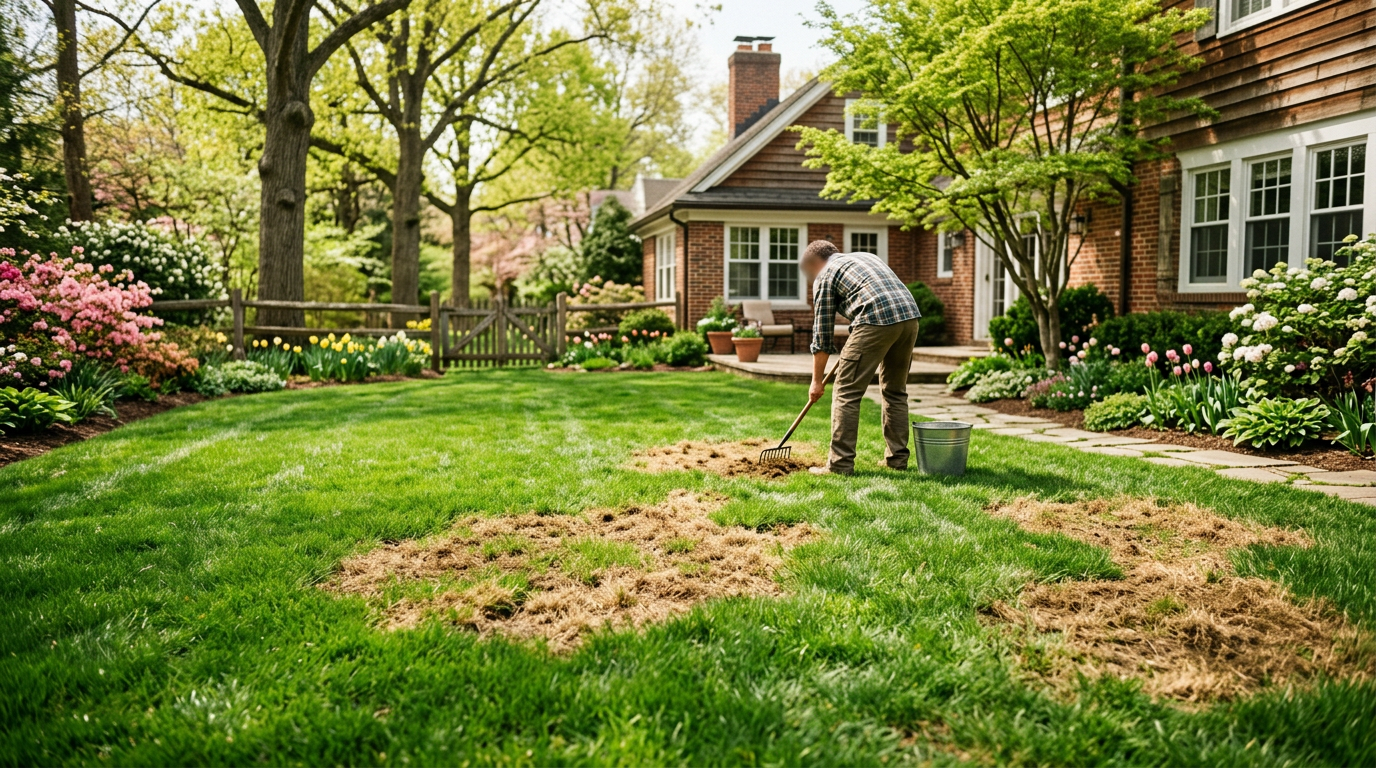
Why lawns turn brown after winter (and what’s normal)
Winter beats up turf. Cool-season grasses (fescue, bluegrass, rye) can mat and mold under snow, then green up slowly. Warm-season grasses (bermuda, zoysia) stay straw-brown longer and can show “spring dead spot.” Not every brown patch is a crisis—some are just dormancy hangovers.
We’ve nursed our own post-winter messes back fast by focusing on diagnosis first. No mystery potions. Just a rake, seed, the right product when needed, and patience.
Diagnose in 3 minutes: what brown patch is this?
- Matted, gray/tan circles 3–12 inches, sometimes with white/pink fuzz: likely snow mold. Rakes out; crowns usually survive.
- Dead straw patches that repel water near sidewalks/driveways: salt burn. Also shows on wind-exposed south/west edges.
- Irregular dead spots that lift like loose sod, with C-shaped white grubs under the thatch: grub damage.
- Dime- to dinner-plate spots, strongest along dog paths: dog urine burns—often with a green halo.
- Trails/tunnels under thatch: vole feeding. Look for tiny holes and surface runways.
- Still-brown warm-season grass in early spring but firm crowns: dormancy or spring dead spot (fungus in bermuda/zoysia; controlled in fall, not spring).
If you’re not sure which fungus, see our visual guide: Lawn Fungus Identification: Pictures, Symptoms, Fixes.
Quick fixes now (low effort, high payoff)
-
Rake matted areas hard to lift the canopy. We like the Ames Thatch Rake (~$49). Air + light break snow mold’s grip.
-
Spot overseed thin spots. For cool-season lawns, scratch the soil, broadcast seed (3–4 lb/1,000 sq ft for overseeding), topdress lightly with compost, keep moist. Scotts Turf Builder Sun & Shade Mix, 7 lb, runs ~$34.
-
Light spring feed only after active growth starts. 0.25–0.5 lb N/1,000 sq ft is plenty. We use Scotts Turf Builder Lawn Food 29‑0‑3 (12.5 lb, ~$28) at a light rate. We’ve burned more grass with impatience than anything else—easy does it.
-
Water deeply, not daily. One inch per week (rain + irrigation) helps recovery without fueling disease.
-
Don’t roll. If soil is lumpy, wait for it to dry and spot topdress instead.
Fungus after winter: treat or wait?
Snow mold (gray or pink) usually stops once it’s dry and temps rise. Raking is the fix. Preventive fungicides are fall/winter tools for chronically affected lawns, not spring band-aids.
If you insist on treatment for heavy pressure (golf-green-level expectations), Scotts DiseaseEx Lawn Fungicide (10 lb, ~$33) or BioAdvanced Fungus Control for Lawns (10 lb, ~$20) can be used per label. But for most home lawns, skip the spray and focus on cultural fixes.
If patches look more like leaf spot/melting out or another disease, confirm first: Lawn Fungus Identification: Pictures, Symptoms, Fixes.
Grubs, voles, or something else chewing?
Pop up a 1‑sq‑ft piece of turf at the edge of damage. Count grubs. If you find more than 6–10 per sq ft, treat; fewer than that and something else is going on.
- Identification help: White Grubs in Soil Identification: Pictures, Look‑Alikes
- Natural fixes and timing: How to Get Rid of Grubs in Lawn Naturally (That Works)
If you need chemical control, spring-early summer for preventive (chlorantraniliprole, e.g., Scotts GrubEx1 14.35 lb, ~$29 for 5,000 sq ft); mid-summer curative for active feeders (trichlorfon, e.g., BioAdvanced 24‑Hour Grub Killer Plus 10 lb, ~$27). Water in per label.
Voles leave surface runways and tiny holes. They usually move on as grass thickens; rake, roll the mat back down, and overseed. Seeing mystery holes? Tiny Holes in Lawn at Night: What’s Making Them + Fixes
Salt and dog spots: realistic fixes
- Salt burn: Flood the area with water to leach salts. In stubborn zones, cut out the dead thatch and reseed. Gypsum is not a miracle; flushing + seed works better.
- Dog burns: Train a spot, dilute with water right after the “event,” and overseed. Products claiming to “neutralize” dog urine in the soil are wishful thinking.
Mushy, wet patches sprouting caps after a thaw? That’s just decomposition and moisture. Here’s how to tone that down: Why Mushrooms Growing in Lawn Happen + How to Stop Them
Reality check with numbers
Typical snow mold patches are small circles (often 3–12 in). Raking usually restores color in days. For grubs, action thresholds are commonly >6–10 grubs per sq ft; below that, turf tolerates feeding. Sources: University of Minnesota Extension on snow molds (https://extension.umn.edu/turfgrass-diseases/snow-molds) and UMass Extension on white grubs (https://ag.umass.edu/turf/fact-sheets/white-grubs-in-turf).
Prevent brown patches next winter
- Last mow: keep it at 2.5–3 in before snow to reduce matting.
- Fall cleanup: get leaves and debris off by first snow.
- Nitrogen timing: feed in early fall, not late-late, to avoid lush growth before snow.
- Manage snow piles: avoid heaping salty snow on turf; use sand on walks when possible.
- Overseed in early fall to thicken the stand; more plants = fewer bare spots next spring.
Do these, and next spring’s “uh‑oh” will be a quick rake, not a full-blown rehab.
Frequently asked
Will brown patches after winter fix themselves?+
Often, yes. Snow mold and matted areas rebound with raking and warming weather. Keep them lightly moist, feed modestly once growth resumes, and overseed thin spots. If patches spread, feel spongy, or peel up like sod (grubs), investigate further before assuming they’ll self‑repair.
How do I tell snow mold from dog urine spots?+
Snow mold makes matted, circular patches with gray/white (sometimes pink) fuzz that lift when raked. Dog spots are irregular, straw‑colored patches often along paths, with a greener ring around the edge. Snow mold is widespread after snowmelt; dog spots cluster where dogs frequent.
Should I use a fungicide for snow mold in spring?+
Usually no. Snow mold stops as it dries and warms; raking is the main fix. Preventive fungicides are applied late fall before snow on high‑value turf with a history of severe snow mold. Spring applications add cost without much benefit for home lawns.
Can I overseed in spring to repair winter damage?+
Yes, but it’s a compromise. Spring overseeding fills thin spots, but weed pressure is higher and summer heat can stress seedlings. Scratch the soil, seed at 3–4 lb/1,000 sq ft, topdress lightly, and keep consistently moist. Plan a proper fall overseed for best long‑term results.
What if my bermuda or zoysia is still brown in spring?+
Warm-season grasses green up later and may show spring dead spot. Check crowns—if they’re firm and white/green inside, it’s dormancy. If crowns are mushy and dead, you’ll need to plug or overseed and address fall fungicide timing next year. Avoid heavy spring nitrogen on warm-season turf.