
Landscaper Cost Arizona: 2026 Prices, Labor, and Tips
What Arizona homeowners actually pay for landscapers in 2026. We break down design, install, and maintenance costs—plus local regs, rebates, and smart hiring moves.
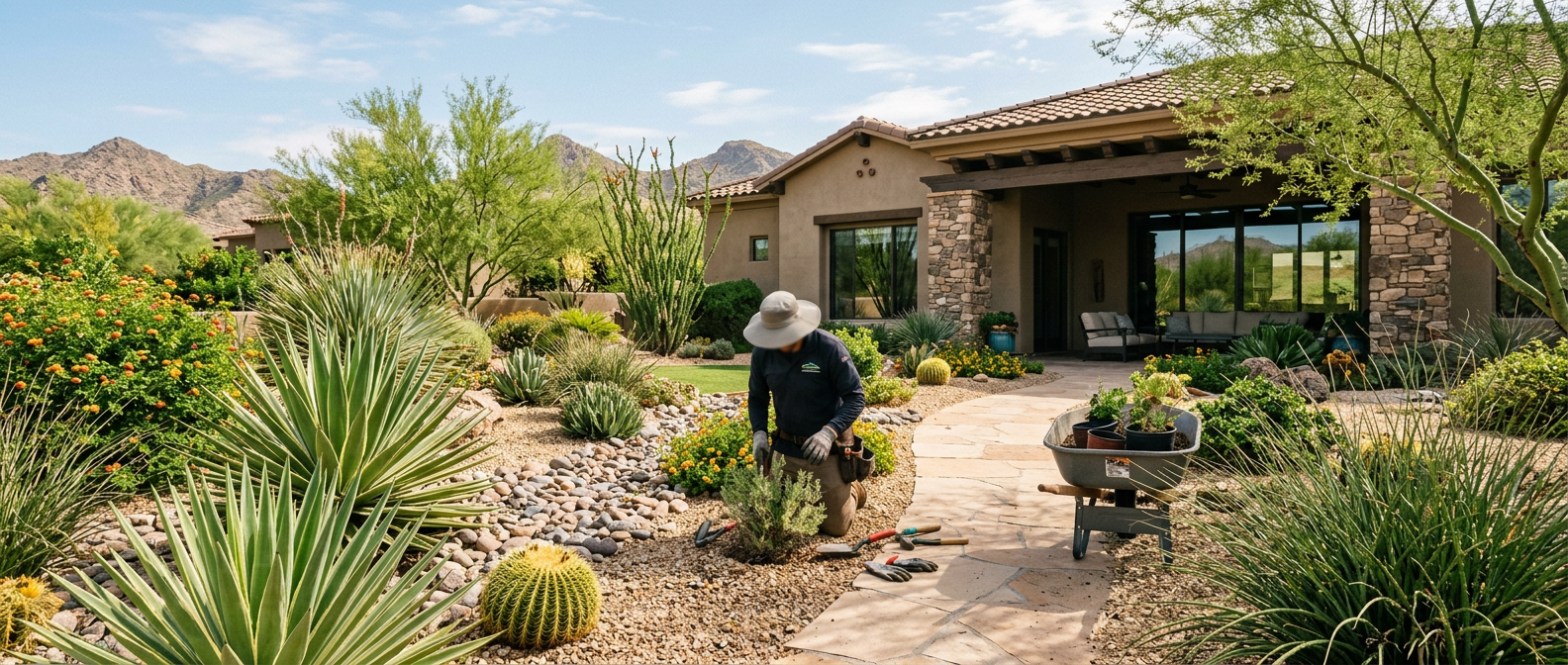
Arizona landscaper cost: the 2026 snapshot
If you live in Arizona, landscaper cost comes down to heat, water, and rock moving. Here’s what we’re seeing across Phoenix, Tucson, and Flagstaff in 2026.
- Design consult: $150–$400. Full plan (typ. ¼ acre): $1,200–$3,500.
- Installation (xeriscape): $6–$20/sq ft (rock/DG, drip, natives).
- Installation (turf): sod $4–$10/sq ft; synthetic turf $8–$16/sq ft installed.
- Irrigation (new drip): $1,200–$3,500; smart controller $150–$350.
- Pavers: $12–$22/sq ft; block wall: $45–$80/lf.
- Monthly maintenance: $150–$350/mo (biweekly), or $90–$200/visit.
- Tree work: $200–$600 per desert tree; $100–$250 per palm.
For hourly context, see our breakdown in How Much Do Landscapers Charge per Hour: Price Guide.
Why Arizona prices are “their own thing”
Arizona labor runs hot and so do materials handling. Rock and decomposed granite dominate, and irrigation is non‑negotiable. In Phoenix‑area cities, 50–70% of residential water use goes to landscapes; Phoenix gets ~8" rain/year; Tucson ~12"—so water‑wise design matters (https://www.amwua.org/landscaping-and-water, https://www.weather.gov/psr/climate).
We also see micro‑markets:
- Phoenix/Scottsdale: higher labor and permit scrutiny; more pavers/pools.
- Tucson: strong xeriscape culture, rainwater harvesting incentives.
- Flagstaff/Sedona: freeze protection, native boulders, slower schedules.
Common Arizona project costs (line items you’ll actually see)
- Rock/DG: $35–$70/ton plus $100–$200 delivery. Pioneer Landscape Centers and AZ Rock Depot are common suppliers.
- Plants (native/desert-adapted): 5‑gal $25–$60; 15‑gal $70–$180. Moon Valley Nurseries offers install packages if you want one‑vendor.
- Drip upgrade: add pressure regulator, filter, new emitters/line: $650–$1,500.
- Smart controllers: Rachio 3 (8‑zone) $199–$229; Rain Bird ESP‑TM2 (8‑station) $139–$189; Hunter Hydrawise (6‑12 zones) $199–$289. Many AZ cities rebate smart timers.
- Lighting: transformer + 6–10 LED fixtures: $1,000–$2,200; permit if hardwiring.
- Gate/wall work: often triggers permit if walls exceed ~2 ft or alter drainage.
Pro tip: keep specs tight when bidding (rock color/size, plant sizes, drip components) so quotes are apples to apples. More on vetting in What to Look For in Landscaping Near Me: The Real Deal.
Permits, water rules, and rebates in Arizona
- Permits: Expect permits for retaining walls over ~2 feet, gas lines to fire pits, new electrical for lighting, and backflow assemblies. Always call 811 before digging.
- Water rules: HOAs and cities may restrict new turf or limit watering days. Verify with your city (Phoenix, Scottsdale, Mesa, Tucson each publish current guidance).
- Rebates: Tucson Water offers up to $2,000 for rainwater harvesting and rebates for high‑efficiency irrigation—great for offsetting costs (https://www.tucsonaz.gov/water/rebates). ADWR’s low‑water‑use plant list helps with compliant designs (https://new.azwater.gov/conservation/landscape/low-water-use-plants).
We’ve seen clients win a $200–$400 smart controller rebate plus a $1,000+ cistern rebate, effectively covering the entire irrigation upgrade.
Who to hire in Arizona (and what they’ll quote)
- Look for ALCA membership (Arizona Landscape Contractors Association) and proof of ROC licensing for contractors doing hardscape/irrigation.
- Typical AZ crew rates: $55–$95/hr for 2–3‑person crews; specialists (masons/arborists) higher. Push for fixed‑fee line items to cap surprises.
- Get 2–3 bids with the same plant list, controller model, rock spec, and warranty terms. Then run our checklist: 14 Key Questions to Ask a Landscaper Before Hiring.
Local names you’ll run into: Moon Valley Nurseries (plants/installs), Pioneer Landscape Centers (rock/pavers), Arizona Living Landscape & Design (East Valley). We don’t endorse—just examples to calibrate pricing.
DIY vs pro in Arizona: where we’d spend or save
We’ve DIY’d simple rock refreshes and drip repairs on Phoenix rentals; it’s doable. Where we’d hire out in Arizona:
- Large rock/DG installs (tons of material, compaction)
- Pavers/walls (drainage, permits)
- Irrigation overhauls (backflow, zoning, warranties)
For recurring care, a $150–$300/month plan beats weekend marathons. See Monthly Lawn Care Cost: Real Prices, Services, and ROI. If your project is design‑heavy, read Should I Hire a Landscape Designer? A No-BS Guide.
Arizona timing and scheduling tips
- Best windows: Oct–Apr for installs in the low desert; avoid peak heat for new plants.
- Tree work: winter for mesquite/palo verde shaping; palms after flowering.
- Book 4–8 weeks out in spring/fall; add time for HOA approvals.
Bottom line: In Arizona, spend on irrigation brains, water‑wise plants, and durable hardscape. That’s what survives July.
Frequently asked
What does monthly landscaper maintenance cost in Arizona?+
Most Arizona homes pay $150–$350 per month for biweekly visits, or $90–$200 per visit. Larger lots, palm trimming, and seasonal cactus care add cost. Ask for a clear scope (beds, drip checks, pruning) and a spring/fall cleanup line item so you’re not paying piecemeal.
Do I need a permit for landscaping in Phoenix or Scottsdale?+
Often yes for retaining walls over ~2 feet, new gas lines, new electrical for lighting, and backflow assemblies on irrigation. Cosmetic work (plants, rock) usually doesn’t. Always confirm with your city’s building department and call 811 before any digging to mark utilities.
Is xeriscaping actually cheaper than turf in Arizona?+
Upfront, quality xeriscape with drip typically runs $6–$20/sq ft versus synthetic turf at $8–$16/sq ft. Over time, xeriscape wins on water, repairs, and heat reflection. Pair with a smart controller and low‑water plants for lower bills and potential city rebates.
When is the best time to start a landscaping project in Arizona?+
In the low desert, fall through early spring (October–April) is ideal—cooler temps mean less plant stress and better crew availability. Summer installs can work with careful irrigation, but expect more plant babysitting and fewer species options at local nurseries.
Can Arizona landscapers safely remove or relocate cactus?+
Yes—hire pros experienced with saguaros, cholla, and prickly pear. They’ll use pads, rigging, and follow state/local rules for protected species. Expect specialized fees for handling and haul‑off, and ask about survival guarantees if you’re transplanting.