
Should I Hire a Landscape Designer? A No-BS Guide
Deciding whether to pay for a pro is the first major hurdle for any big yard project. Let's dig into when to hire a landscape designer and when to save your cash.
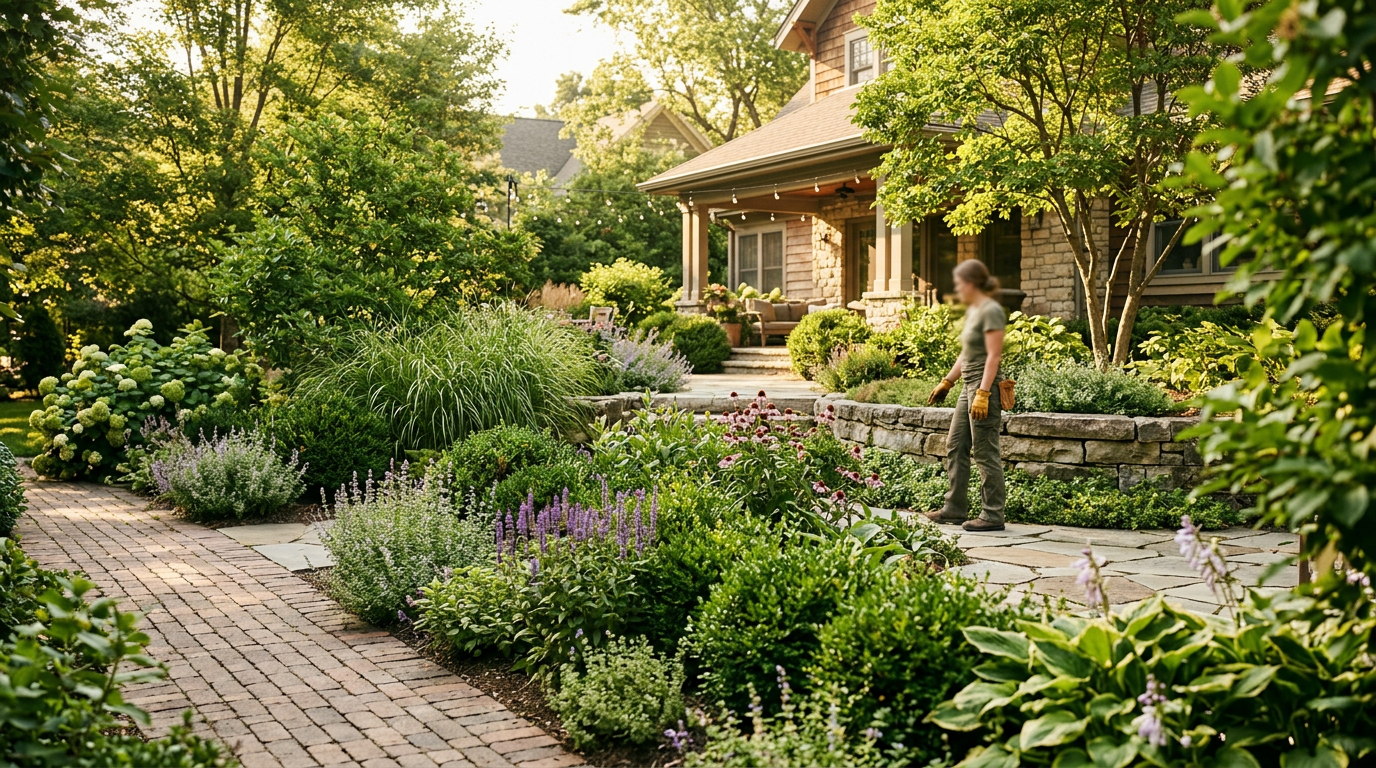
Let's be honest. You've spent hours scrolling Pinterest, you have a board titled "Dream Yard," and you're finally ready to turn that mess of weeds and patchy grass into an oasis. Then you get the first quote, and it's not the plants or the pavers that make your eyes water. It's the line item for "Design."
Paying someone thousands of dollars just to think about your yard can feel absurd. We get it. For years, we subscribed to the "figure it out as you go" school of landscaping, which resulted in a few wins and a lot of sad, expensive plants in the wrong spots.
So, should you hire a landscape designer? The answer isn't a simple yes or no. It's about matching the tool to the job. Sometimes you need a laser-guided saw, and sometimes you just need a hammer. Let's break down when to call in the pros and when to roll up your own sleeves.
What Does a Landscape Designer Actually Do?
First, let's clear this up: a good designer does a lot more than draw pretty pictures. They are part artist, part horticulturalist, part project manager, and part therapist for your outdoor anxieties.
Their process usually looks something like this:
- Site Analysis & Client Interview: They'll walk your property with you, but they're seeing things you don't. They're measuring sun exposure throughout the day, identifying microclimates, assessing soil conditions, noting drainage patterns, and evaluating existing structures. They'll also ask you surprisingly detailed questions—not just "Do you want a patio?" but "How many people do you typically entertain? Do you prefer morning sun or evening shade? What's your tolerance for maintenance?"
- Concept Plan: Based on the analysis and your needs, they'll develop a few initial concepts. This is the big-picture stage—laying out the main areas (patios, paths, garden beds, play areas) and establishing the overall flow and feel of the space.
- Master Plan: Once you've settled on a concept, they flesh it out into a detailed master plan. This is the blueprint. It includes a specific planting plan with a list of plants (cultivars and all), their exact locations, and quantities. It details all the hardscaping materials, dimensions, and construction notes. It can also include lighting plans, irrigation layouts, and phasing suggestions if you plan to build over time.
- Project Oversight (Optional): Some designers will help you find contractors, review bids, and check in on the installation to ensure the plan is executed correctly. This is often an additional service.
They solve problems before they happen. That awkward side yard? They see a secret garden. That swampy low spot? It's the perfect place for a rain garden. A good designer brings solutions you never would have thought of.
The Big Question: How Much Does a Landscape Designer Cost?
Alright, let's talk money. There's no single price tag, as costs vary wildly by region and the designer's experience. However, you can expect to pay for the design as a percentage of the total project cost, a flat fee, or an hourly rate.
As a rule of thumb, expect the design fee to be 5-15% of your total installation budget. If you're planning a $50,000 project with a new patio, plantings, and a pergola, the design fee could be anywhere from $2,500 to $7,500. For a massive $150,000 pool and outdoor kitchen project, the design could easily top $15,000. According to HomeAdvisor, the national average landscape design cost is around $4,780, with most homeowners spending between $2,200 and $7,400. (Source: https://www.homeadvisor.com/cost/landscape/hire-a-landscape-designer/)
Here’s a more granular breakdown:
- Initial Consultation: $150 - $500. A 1-2 hour session to walk your property, brainstorm ideas, and get professional advice. Sometimes this fee is waived if you hire them for a full plan.
- Concept Plan Only: $800 - $3,000. This gets you the big-picture layout and general ideas without the nitty-gritty planting details. It's a great option if you need a solid framework but want to handle the plant selection and installation yourself. We recommend you get a solid understanding of how to budget for your project before you commit.
- Full Master Plan: $2,000 - $15,000+. This is the whole shebang: site analysis, concept, detailed planting and hardscape plans ready for a contractor to bid on.
5 Signs You Absolutely Should Hire a Landscape Designer
Sometimes, going it alone is a recipe for expensive mistakes. If any of these sound like your situation, hiring a pro is a smart investment.
- Your Project is Complex: You're not just planting a few shrubs. You're envisioning a multi-level patio, an outdoor kitchen, a fire pit area, landscape lighting, and a new privacy fence. A designer can weave all these elements into a single, cohesive design that flows beautifully and functions perfectly.
- You Have a Problem to Solve: Is your backyard a swamp after every rain? Is your property on a steep, unusable slope? Do your neighbors have a direct view into your living room? These are logistical challenges that require expert solutions like French drains, terraced retaining walls, or strategically placed trees and structures. A designer specializes in turning these liabilities into assets.
- You Need a Master Plan for Phased Installation: You have big dreams but a phased budget. A designer can create a comprehensive master plan that you can implement over two, five, or even ten years. This ensures that the small project you do this year (like planting a key shade tree) fits perfectly with the patio you're adding in three years.
- The Project Involves Significant Hardscaping: Anything involving concrete, stone, large walls, or pools needs precise planning. A designer ensures your new backyard patio is properly graded for drainage, that retaining walls have the correct footings, and that everything is built to be safe and durable.
- You Want to Maximize Your Property Value: A professionally designed landscape provides one of the best returns on investment of any home improvement project. A cohesive, mature landscape can increase your home's perceived value by 10-15%. A designer knows how to create curb appeal and functional outdoor living space that buyers will pay a premium for.
When You Can Totally Skip the Designer (and What to Do Instead)
Don't let anyone gatekeep you out of a beautiful yard. For many projects, a professional designer is overkill. You can absolutely go the DIY route if:
- Your Scope is Simple: You want to create a new perennial bed, refresh the foundation plantings, or plant a simple hedge for privacy. These are single-focus projects that are easy to research and execute yourself.
- You Have a Clear, Singular Vision: You know exactly what you want—a 12x12 paver patio in a specific spot, for example. Your main task is execution, not ideation. It's time to learn how to hire a landscaping contractor to build it.
- You Love the Process: If learning about plants, sketching layouts, and getting your hands dirty is your idea of fun, then embrace the DIY spirit! The journey is the reward.
Instead of a full design service, consider these powerful alternatives:
- Online Design Services: Companies like Yardzen (starts around $1,500) and Tilly Design (starts around $500) offer professional, remote landscape design for a fraction of the cost of a traditional firm. You send them photos and videos, and they send you a complete plan.
- Garden Coach/Consultant: Hire a designer for a one-time consultation. For a few hundred dollars, they can give you ideas, solve a specific problem, or validate your own plans.
- Design Software: Tools like the free Old Farmer's Almanac Garden Planner or paid software like SketchUp let you play designer yourself and create a workable plan.
Landscape Designer vs. Landscape Architect vs. Design-Build Firm
These terms get thrown around interchangeably, but they mean different things.
- Landscape Designer: Focuses on the aesthetic and horticultural aspects of residential design. Most don't have a specific degree or license (requirements vary by state). Perfect for 90% of home projects.
- Landscape Architect (LA): A state-licensed professional who holds a bachelor's or master's degree in landscape architecture. You must hire an LA for projects that require a building permit or involve structural elements like retaining walls over a certain height (usually 4 feet), complex drainage systems, or work in environmentally sensitive areas. They are the engineers of the outdoor world.
- Design-Build Firm: A company that has both designers and installation crews on staff. It's a one-stop-shop, which is convenient. The downside is you can't easily get competitive bids for the installation, as the design and build are bundled. It can sometimes lead to higher overall costs.
Our Take: The One Time We Splurged (and Why It Was Worth It)
For our last house, we had a classic sloped backyard—a muddy hill that was basically useless. We dreamed of a multi-level stone patio with a built-in fire pit and seat walls. We spent a month trying to sketch it out ourselves. We quickly realized we were completely out of our depth. How deep do the footings need to be? How do we keep water from flooding the lower patio? How do we even make the steps feel right?
We bit the bullet and hired a local designer for a full master plan. The cost was $3,500, which felt astronomical at the time. But the plan he delivered was a work of art—incredibly detailed, with drainage expertly handled and every material specified. When we sent it out to three contractors for bids, their quotes were all within 5% of each other because there was no guesswork. We're confident the clarity of the plan saved us more than the $3,500 design fee in contractor change orders and confusion. More importantly, it prevented a drainage disaster that would have cost $10,000 to fix later. It was money well spent. If you are doing a big project, getting a solid plan first is our number one piece of advice—it's foundational to our guide to DIY landscaping.
Frequently asked
Can I just hire a landscape designer for ideas?+
Yes. Many designers offer a consultation-only service, typically for a few hundred dollars. They will walk your property with you, offer specific ideas, solve problems, and help you form a cohesive plan that you can then install yourself over time.
What's the difference between a landscape designer and an architect?+
A landscape designer primarily focuses on aesthetics and horticulture for residential projects. A landscape architect is a state-licensed professional who can handle complex engineering and structural work, like large retaining walls or drainage systems, and is legally required for projects that need permits.
Do landscape designers get discounts on plants and materials?+
Often, yes. Professionals have access to trade-only nurseries and can purchase materials at a wholesale discount. Some designers pass this savings on to you, while others may mark it up as part of their fee. It's an important question to ask when you're hiring someone.
Is hiring a landscape designer worth it for a small yard?+
It can be. Small spaces often require the most clever design solutions to maximize function and aesthetics. A designer can make a tiny yard feel larger and more useful with smart plant choices, vertical gardening, and multi-functional hardscaping. It's about complexity, not just size.
How long does the landscape design process take?+
The design phase itself can take anywhere from 3 to 8 weeks, depending on the project's complexity and the designer's workload. This includes site analysis, developing concepts, and finalizing the master plan with your feedback. The installation phase will take much longer.