
14 Key Questions to Ask a Landscaper Before Hiring
Before you hand anyone a shovel or a check, grill them with these 14 must-ask questions. We cover licenses, bids, materials, schedules, and warranties—no fluff.
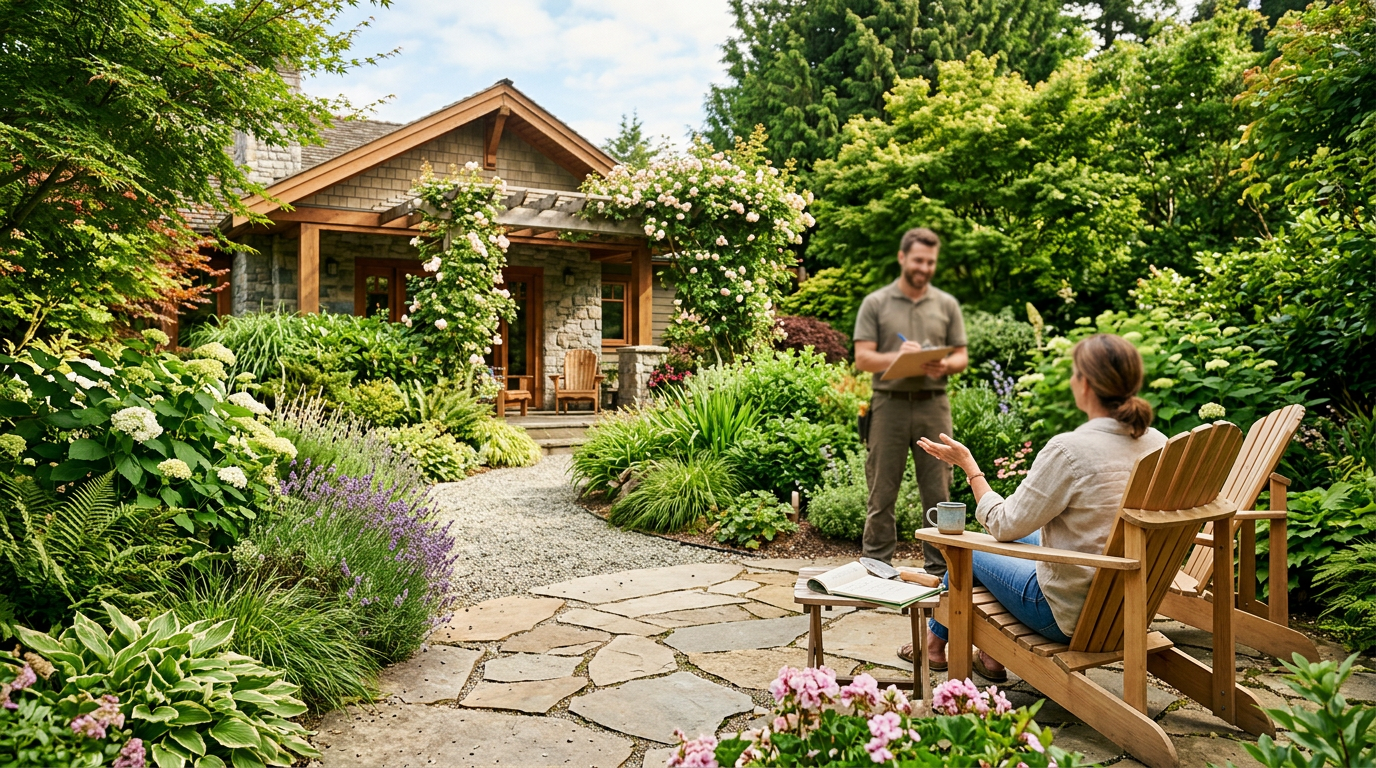
Stop guessing—ask these before you sign
We’ve hired, fired, and worked alongside more crews than we can count. The best projects start with sharp questions. Use these 14 to separate pros from pretenders and to compare bids apples-to-apples.
Credentials and proof
-
Are you licensed for this scope, and can you send certificates of insurance (GL and workers’ comp) listing me as certificate holder?
-
Can you share 2–3 recent, similar projects with addresses, photos, and a homeowner reference? We actually call them.
-
Who pulls permits and calls 811? Retaining walls over ~4 ft, irrigation backflow, and gas/electrical for lighting usually require permits. If they say “you handle it,” hard pass.
Design and scope clarity
-
Who designs the plan? In-house designer or partner? What do I get (scaled plan, planting list, lighting/irrigation layout), how much does it cost, and who owns the files? If you’re debating a designer, read Should I Hire a Landscape Designer?.
-
What materials and brands are you specifying—and why? Examples we like to hear: Unilock Beacon Hill pavers ($5–$8/sq ft materials), Belgard Dublin Cobble ($3–$5/sq ft), Hunter Pro-C controller (~$180), Rain Bird ESP-TM2 (~$120), FX Luminaire Path Lights ($120–$180 each). Brand clarity lets you compare quality, not just price.
-
How will you handle soil prep and drainage? Expect: soil test, 4–6 in. compacted base + 1 in. bedding sand under pavers, geotextile over clay, swales/french drain to daylight, downspout tie-ins. Vague answers = future heaving and puddles.
Pricing, bids, and change orders
-
What’s the all-in, line-item price and what’s excluded? Ask for quantities: square feet of pavers, linear feet of edging, cubic yards of base, plant sizes (gallon or caliper), and irrigation zones. Allowances should list unit costs.
-
What are your hourly rates for extras and how do change orders work? Get a written process with email approval before work continues. If you want ballpark labor rates, see How Much Do Landscapers Charge per Hour.
-
What’s the payment schedule and do you provide lien waivers? A sane plan looks like 10% deposit, 40% after mobilization/materials, 40% mid-project milestone, 10% on punch list completion. No 50%+ upfront.
Schedule, crew, and communication
-
When can you start, how many people will be on site daily, and what’s the weather plan? A 500 sq ft paver patio with base should take ~4–6 crew-days; a full-yard refresh can run 2–3 weeks.
-
How do you protect access and clean up? We expect plywood mats over lawn, dust control, daily broom/haul-off, and final wash/seal where applicable. If they’ll repair ruts or reseed, get it in writing.
-
Who is my on-site lead and what’s the communication cadence? One name, one number. Daily text recap beats radio silence.
Plants, warranties, and maintenance
-
Where do you source plants and what sizes? Ask for botanical names, container sizes (1-, 3-, 5-gallon), and tree caliper. What’s the substitution policy if stock isn’t available?
-
What warranties do you offer? We like: 1-year plant warranty (with irrigation), 2–5 years hardscape workmanship, 1 year irrigation parts/labor (plus manufacturer warranties). Do you offer a maintenance package or handoff sheet (watering schedule, fertilizer, pruning timing)? If you’ll DIY some upkeep, know that pro-grade tools like the EGO Power+ 56V String Trimmer (~$229) and 650 CFM Blower (~$199) make weekly care less miserable.
Quick reality check (numbers you can use)
Nationally, homeowners report paying roughly $50–$100 per hour for general landscaping labor and $4,000–$20,000+ for bigger installs depending on scope (Angi cost guide: https://www.angi.com/articles/landscaping-cost.htm). That’s why scope details—base depths, plant sizes, fixture counts—matter. Cheap bids usually skip base, drainage, or warranty.
Red flags and how to verify fast
- No license/insurance proof? Next.
- One-line bids (“patio: $8,000”) with no quantities.
- Pressure for large cash deposits or Zelle only.
- “We don’t need to call 811.” Yes, you do.
Verification moves we actually use:
- Call the references and ask, “Would you hire them again?”
- Drive by one job older than a year (settling and stains show up by then).
- Cross-check their material list with retail pricing to sanity-check allowances. If they spec Hunter Pro-C at $180 and FX Luminaire at $150/fixture, a $400 “lighting allowance” for four fixtures is a fantasy.
Want more hiring signals? Read What to Look For in Landscaping Near Me before you pick a pro.
Frequently asked
How many quotes should I get before hiring a landscaper?+
Three comparable, line-item quotes is the sweet spot. More than that wastes time; fewer than two gives you no baseline. Make sure each bid lists quantities (sq ft, plant sizes), base depths, and brand/model specs so you can compare value instead of gambling on the lowest number.
What should be in a landscaper’s contract?+
Scope with drawings, materials/brands, quantities, start window, milestones, payment schedule, change-order process, warranties, permit/811 responsibilities, and cleanup. Include lien waivers upon payment and proof of insurance naming you as certificate holder. Handshake deals are where budgets go to die.
Is it normal to pay a deposit for landscaping?+
Yes. 10%–20% to reserve the schedule or cover special-order materials is common. Avoid deposits over 30% and never pay 100% before work. Tie progress payments to milestones (mobilization, mid-project, punch list) and require lien waivers from the contractor and major subs.
How do I compare landscaping bids fairly?+
Normalize scope first: same square footage, base depth, plant sizes, and fixture counts. Ask for brand/models and unit prices for allowances. Calculate total installed cost, then ask about warranties and crew size/schedule. The cheapest bid that skimps on base or drainage is the most expensive mistake.
Should I hire a landscape designer separately?+
If your project includes grading, walls, drainage, or multiple zones (patio, lighting, planting), a designer pays for themselves in fewer change orders. For small refreshes, a design-build landscaper may be enough. See our guide for the tradeoffs and costs.