
What Is Eating My Hostas? Identify Pests Fast + Fixes
Hosta leaves are a culinary delight for many garden pests. Don't let these shade-loving beauties turn into lace; we'll show you how to identify the culprits and put an end to the munching.
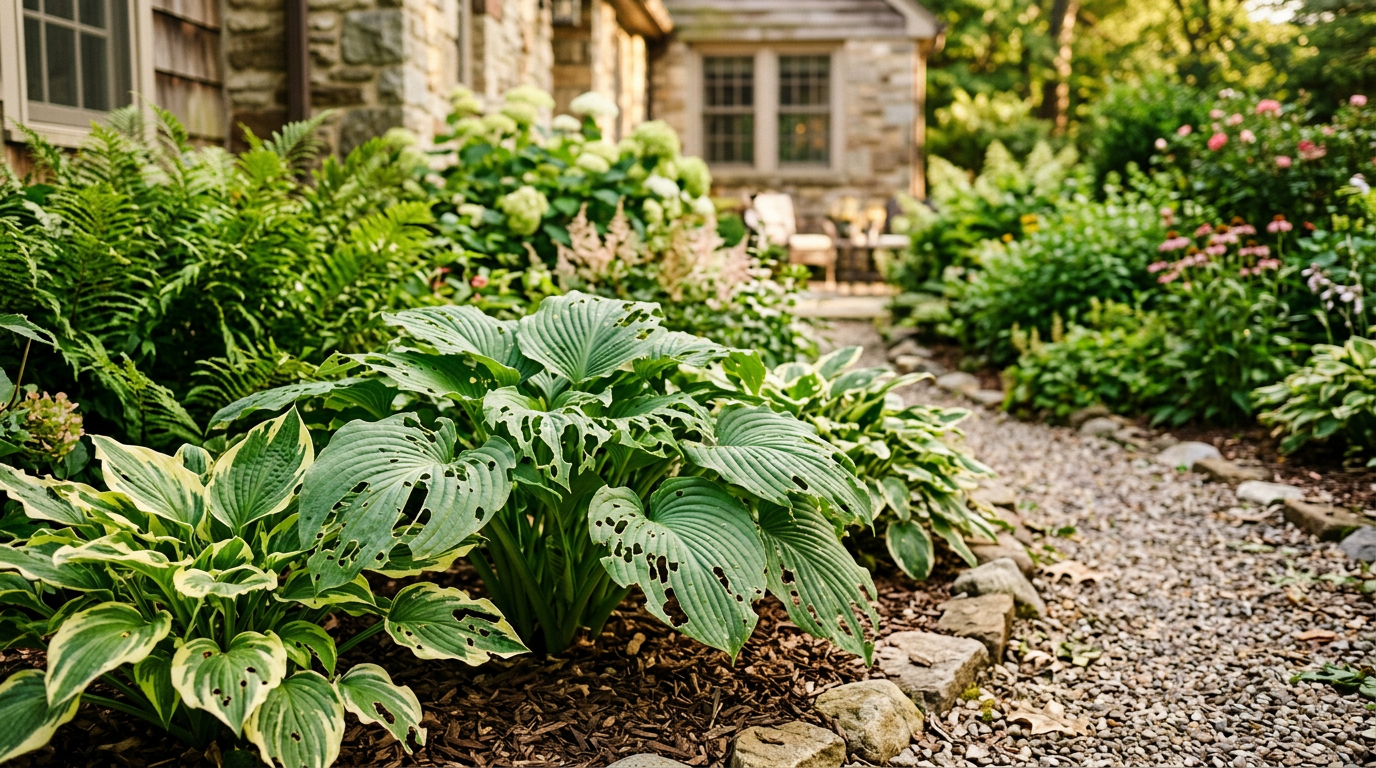
It’s a tale as old as time, or at least as old as hostas became a backyard staple: you plant those beautiful, shade-loving leaves, only to find them riddled with holes, tattered, or completely gone overnight. Your heart sinks. Your shade garden's centerpiece is under attack. We get it. There's nothing more frustrating than putting in the effort to cultivate a lush landscape only to have it decimated by unseen forces.
But here's the good news: we’re not here to tell you to give up. We’re here to arm you with the knowledge to identify the enemy and send them packing. Because when it comes to "what is eating my hostas," there are usually only a handful of common culprits, and all of them have a weakness we can exploit. Let’s get into the dirt.
The Usual Suspects: Who's Dining on Your Hostas?
Before you go full Rambo on your garden, you need to know who you’re fighting. Different pests leave different calling cards. Understanding these clues is your first step to an intact hosta patch. We’ll cover the main players, from the slimy to the furry.
Slugs and Snails: The Silent Shredders
These are arguably the most notorious hosta munchers. They're soft-bodied gastropods that love damp, cool conditions, which perfectly describes the ideal hosta environment. You'll often find them hiding under leaves, rocks, or mulch during the day, emerging at night or after rain to feast.
Damage: Irregular holes with smooth edges, often appearing randomly across the leaf. The tell-tale sign? Shiny, silvery slime trails on leaves or the surrounding soil. If you're seeing a lot of holes but no visible culprits during the day, you've almost certainly got slugs or snails.
Identification Tip: Grab a flashlight and head out to your garden about an hour after sunset. You’ll catch them in the act. They move slowly, so they’re easy to spot.
Deer: The Big Eaters
Ah, deer. Nature’s four-legged lawnmowers. If you live anywhere near a wooded area or an open field, deer are a constant threat to nearly all your garden plants, hostas included. They aren't picky when hungry.
Damage: Large, jagged tears or clean bites, often taking entire sections of leaves or even whole plants down to the ground. You won’t see small, intricate holes; you’ll see significant portions missing. They especially love tender new growth. You might also find deer tracks or droppings (small, dark pellets) nearby.
Identification Tip: Deer typically feed at dawn, dusk, or overnight. If large sections of your hostas vanish suddenly, and you have deer in the area, it's a safe bet. For more comprehensive strategies, check out our guide on how-to-keep-deer-out-of-garden.
Rabbits: The Nimble Nibblers
Like deer, rabbits are herbivores that find hostas quite tasty. They're smaller, so their impact might not be as widespread as a deer's, but they can still do significant damage to individual plants.
Damage: Clean, angled cuts on stems and leaves, usually closer to the ground than deer damage. They prefer young, tender shoots. Look for small, round droppings (like cocoa puffs) around the base of the plant. They don't have upper incisors, so their bites often leave a ragged edge on the plant stem.
Identification Tip: Rabbits are most active at dawn and dusk. You might catch them hopping away if you approach your garden at these times. Their droppings are a dead giveaway.
Voles: The Underground Agents
Voles are small rodents, often mistaken for mice, but with shorter tails and rounder faces. Unlike deer or rabbits that eat the foliage, voles typically go for the roots and crowns of your hostas, causing the plant to wilt and die from the bottom up.
Damage: Hostas that suddenly wilt, turn yellow, and pull easily out of the ground, often with chewed-off root systems. You might also see small, dime-sized burrows around the base of the plant or a network of surface runways in dense ground cover. They can be particularly devastating because the damage isn't immediately visible above ground.
Identification Tip: Look for those small tunnels or runs. If you gently tug on a wilting hosta and it comes up with no roots, you've likely got voles. For other small lawn invaders, see our guide on tiny-holes-in-lawn-at-night-causes-fixes.
Other Occasional Pests: Cutworms and Earwigs
While less common as primary hosta destroyers, these can contribute to leaf damage.
- Cutworms: Larvae of moths that feed at night, often cutting young plant stems at the soil line. They can also chew holes in leaves. You might find them curled into a C-shape in the soil near the damaged plant.
- Earwigs: These nocturnal insects can chew small, irregular holes in leaves, especially tender ones. They prefer dark, damp places and are often found under pots or mulch.
Battle Plans: How to Protect Your Hostas
Now that we know the enemy, let’s talk strategy. We’ve had success with a combination of approaches, often starting with the least invasive and escalating if needed. Remember, consistency is key.
1. Physical Barriers & Exclusion
This is often the most effective, albeit sometimes the most labor-intensive, approach.
- For Deer & Rabbits: A physical fence is king. A fence at least 7-8 feet high (for deer) or 2-3 feet high (for rabbits, buried a few inches into the ground to prevent tunneling) is the most reliable. If a full fence isn’t feasible, consider individual cages around young, vulnerable hostas using chicken wire or hardware cloth. For deer, we've had good luck with monofilament fishing line strung at varying heights (18", 36", 60") around a garden bed; the deer can't see it and get spooked when they bump into it.
- For Slugs & Snails: Copper tape (available at garden centers for around $10-$15 for a 15-foot roll) around raised beds or individual pots creates an electric-like shock that deters them. You can also create physical barriers using coarse materials like diatomaceous earth (DE), crushed eggshells, or coffee grounds around the base of plants. Reapply after rain.
2. Repellents & Baits
Sometimes, you can't fence everything off, and that's where repellents come in.
- For Deer & Rabbits: Scent-based repellents containing putrescent egg solids (like Liquid Fence, roughly $20 for a concentrate) or thiram can be sprayed on foliage. They need to be reapplied after rain or every few weeks. We've found that rotating different types of repellents can prevent animals from getting too accustomed to one smell. Some gardeners swear by bar soap (like Irish Spring) shavings scattered around plants, though its efficacy is mixed. For more on keeping these critters at bay, our how-to-keep-deer-out-of-garden article has a lot more detail.
- For Slugs & Snails: Beer traps (a shallow dish filled with beer, sunk into the soil so the rim is level with the ground) are a classic. The yeast attracts them, and they drown. Iron phosphate pellets (like Sluggo or Corry's Slug & Snail Killer, typically $12-$18 for a pound) are a safer, effective bait for pets and wildlife compared to older metaldehyde-based products. Sprinkle them lightly around affected plants; the slugs eat them and stop feeding within a day or two. A pound of Sluggo covers about 2,000 sq ft, so it lasts a while.
- For Voles: Castor oil-based repellents (like MoleMax or Bonide Repels-All, $15-$25 per bottle) can be applied to the lawn or garden to deter them. These don't kill the voles but make the area less appealing for feeding. For serious infestations, trapping (using snap traps or live traps) is often necessary. We cover more on eliminating similar burrowing pests in how-to-get-rid-of-moles-in-your-yard.
3. Habitat Modification & Garden Hygiene
Prevention is always easier than cure.
- Reduce Hiding Spots: Keep your garden beds tidy. Remove leaf litter, weeds, and excess mulch where slugs, snails, and earwigs love to hide. Trim back overgrown plants that create dense, damp conditions. An average garden with good hygiene can see a 30% reduction in slug populations, according to University of California IPM studies (https://ipm.ucanr.edu/PMG/PESTNOTES/pn7427.html).
- Water Smart: Water your hostas in the morning, not the evening. This allows the foliage and soil surface to dry out before nightfall, making it less appealing for nocturnal pests like slugs and snails.
- Encourage Predators: Attract natural predators to your garden. Birds, frogs, toads, garter snakes, and ground beetles all love to feast on slugs and snails. Creating a wildlife-friendly garden can help keep pest populations in check naturally.
4. Choosing Resistant Varieties
While no hosta is truly 'pest-proof,' some varieties are less appealing to slugs and snails due to thicker, textured leaves or a waxy coating.
- Thick-leaved Hostas: 'Sum and Substance,' 'Empress Wu,' 'Blue Angel,' 'Halcyon,' and 'June' are often cited as more resistant to slug damage. Their tougher leaves are simply harder for slugs to chew through.
- Blue Hostas: The waxy coating on many blue hostas (like 'Blue Mouse Ears' or 'Hadspen Blue') makes them less palatable. However, this wax can wear off in hot sun or with frequent watering, making them more vulnerable.
First-Person Experience: Our Go-To Method
When we see shredded hostas, our first move is always an evening reconnaissance mission with a flashlight to confirm the culprit. If it's slugs, we immediately deploy iron phosphate pellets around the affected plants. For the inevitable deer visits, we rotate between Liquid Fence and a homemade garlic-chili spray (which needs frequent reapplication, but it's cheap!). For voles, once confirmed, it's straight to trapping – often the quickest way to reduce their numbers before they wipe out a whole bed of plants. We’ve found that a multi-pronged approach, combined with vigilant observation, works best.
Don’t let your beautiful hostas become a buffet. With a little detective work and the right tools, you can keep them looking their best, season after season. Happy gardening!
Frequently asked
What animal makes holes in hosta leaves?+
The most common culprits for holes in hosta leaves are slugs and snails. They leave irregular holes with smooth edges and often a tell-tale slime trail. Less commonly, cutworms or earwigs can also chew holes in the foliage.
Do coffee grounds deter slugs from hostas?+
Yes, coffee grounds can act as a mild deterrent for slugs and snails. Their rough texture is uncomfortable for these soft-bodied pests, and the caffeine can also be toxic to them in higher concentrations. Sprinkle a ring around the base of your hostas.
What is eating my hostas at night?+
Pests active at night that eat hostas typically include slugs, snails, deer, rabbits, and sometimes earwigs. Slugs and snails are the most frequent nocturnal leaf-eaters, often leaving slime trails as evidence of their feasting.
Are there hostas that slugs don't like?+
While no hosta is entirely slug-proof, varieties with thick, textured, or waxy leaves tend to be more resistant. 'Sum and Substance,' 'Empress Wu,' 'Blue Angel,' and 'Halcyon' are good choices, as their tougher foliage is harder for slugs to chew.
Why do my hostas look like they're melting?+
If your hostas look like they're 'melting' or suddenly wilting and dying from the base, it's often a sign of root damage. This is a classic symptom of voles, which chew on the roots and crowns underground, cutting off the plant's water supply.