
How to Get Rid of Clover in Lawn Without Wrecking It
Clover isn’t evil, it’s just winning. Here’s the fast, safe way to ID it, fix what attracted it, kill it without nuking your grass, and keep it from coming back.
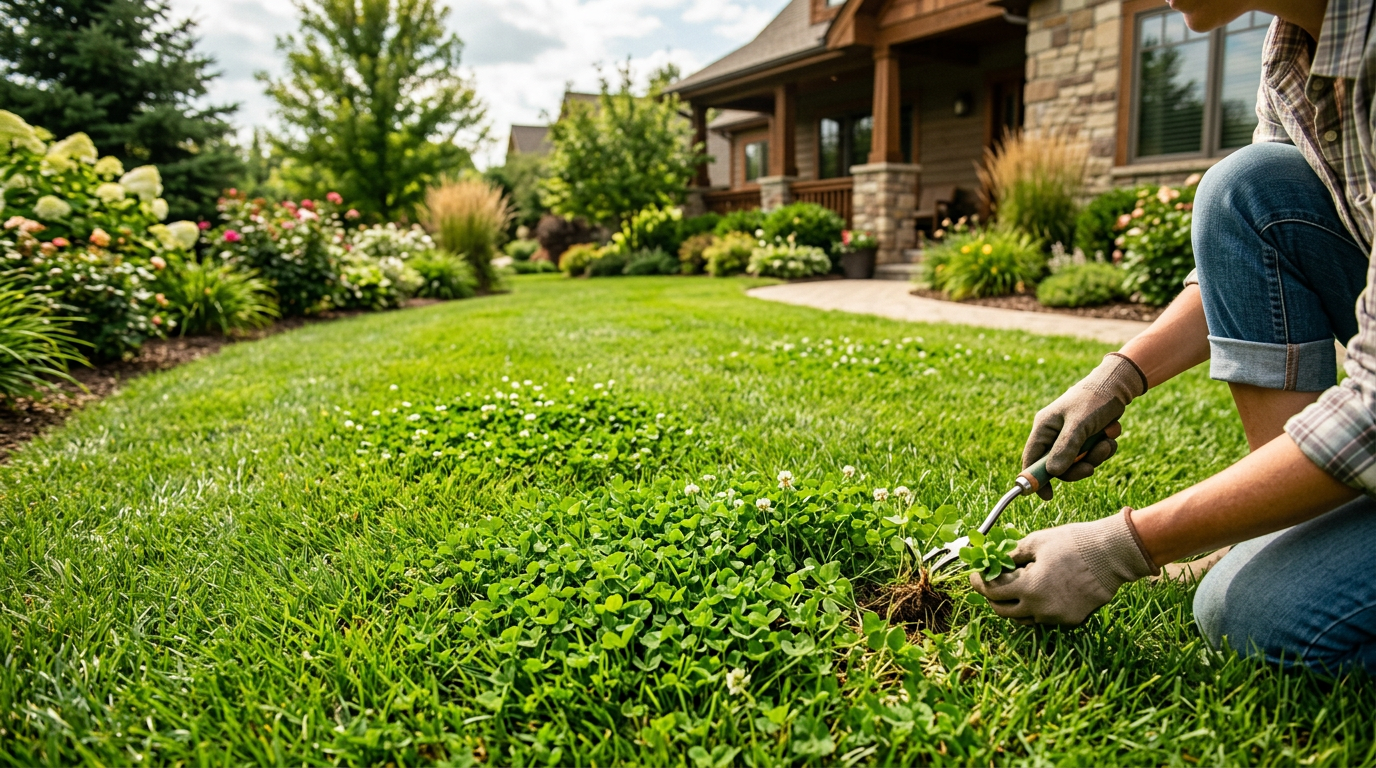
The quick truth on clover
Clover shows up when grass is hungry, short, or sparse. It’s not a moral failing. It’s a perennial legume (white clover, Trifolium repens) that thrives in low‑nitrogen, low‑mow lawns. The fix is simple: feed and thicken the grass, then spot‑kill the patches. We’ve cleared test lawns in 4–6 weeks with this plan.
ID it (so you don’t treat the wrong thing)
- White clover: three rounded leaflets, pale crescent on each leaflet, white pom‑pom flowers, spreads by creeping stolons.
- Oxalis/wood sorrel: heart‑shaped leaflets, yellow flowers. Different weed, different response.
- Black medic: trifoliate leaves with a center leaflet on a longer stalk, tiny yellow ball flowers.
Why it matters: triclopyr is excellent on clover; some "three‑way" mixes struggle. Mis‑ID wastes time and money.
Why clover moved in (and how to flip the script)
- Low nitrogen: Clover fixes its own N; grass can’t. Feed the grass and clover loses its edge.
- Low mowing: Below ~3 inches = more light at soil = weeds germinate easier.
- Thin turf/compaction: Bare soil and hard ground invite stolons to root.
- Drought stress: Weak grass lets clover spread.
Fix the conditions and herbicides become optional or one‑and‑done.
Fast removal: what actually works
- Hand‑pull/dig small patches: Use a stand‑up weeder like Fiskars Xact ($45) or Grampa’s Weeder ($40). Get the stolons.
- Spot‑spray triclopyr: Ortho WeedClear Clover, Oxalis & Chickweed Killer (triclopyr) ~$12–18 RTU; Bonide Weed Beater Ultra (triclopyr) ~ $23. Hits clover hard without killing grass when used per label.
- Iron‑HEDTA option: Bonide Weed Beater Fe (FeHEDTA) ~ $25 or Natria Lawn Weed & Disease Control (FeHEDTA) ~ $20. Iron desiccates broadleaf leaves; grass tolerates labeled rates. May need 2–3 apps, and can temporarily darken turf in heat.
Skip: Vinegar/dish soap. It burns leaves, spares roots, and can scorch your lawn.
Our 4‑week clover kill plan
We’ve run this on dozens of lawns. It’s boring, it works.
Week 0
- Soil test. Use MySoil Test Kit (~$30) or your extension lab. If you’re low on N, plan to feed.
- Mow at 3.0–3.5 inches (cool‑season) or 2.5–3.0 inches (warm‑season). Bag flowers to cut seed spread.
Week 1 3) Feed the grass. Quick‑release nitrogen jump‑starts recovery: a 0.5–0.75 lb N/1,000 sq ft dose (e.g., Scotts Turf Builder 32‑0‑4, ~$30) or slow‑release if it’s warm (Milorganite 6‑4‑0, ~$16). Follow label. 4) Spot‑treat clover on a mild, dry day. Use triclopyr for fastest knockdown; iron‑HEDTA if you want a non‑synthetic route.
Week 2–3 5) Mow high again. Re‑spot‑spray any green clover. Don’t blanket spray unless your lawn is more clover than grass. 6) Overseed thin spots the same day you spray (triclopyr is generally seed‑safe once dry; check your label). Keep seed moist.
Week 4–6 7) Touch‑up spray if needed. Resume normal watering (deep, infrequent). Keep mowing high. By now, clover is fading and grass is filling in.
Related issues while you’re out there: seeing random dirt mounds or tunnels? That’s a different job—try our How to Get Rid of Moles in Your Yard. Brown circles after snow? See Brown Patches in Lawn After Winter. Mystery holes or night digging? Check Tiny Holes in Lawn at Night or How to Get Rid of Grubs in Lawn Naturally.
The numbers (and why they matter)
- Mow 3+ inches and feed 2–4 lb nitrogen per 1,000 sq ft per year to favor grass over weeds; split into 2–4 feedings (UMN Extension). Overseed at 2–3 lb/1,000 sq ft for Kentucky bluegrass or 5–8 lb/1,000 sq ft for tall fescue (UMN Extension). Preemergents don’t stop established perennial clover; postemergent triclopyr is effective (UMN Extension). Sources: https://extension.umn.edu/lawn-care/fertilizing-lawns, https://extension.umn.edu/lawn-care/seeding-and-sodding-home-lawns, https://extension.umn.edu/yard-and-garden-news/fall-weed-control-lawns
Keep clover from coming back
- Feed appropriately. Starved grass invites clover.
- Mow high, sharp blade. Taller turf shades stolons.
- Overseed each fall (cool‑season) or late spring (warm‑season) to keep density up.
- Water deep, infrequent. Shallow, daily sprinkles = weak roots.
- Fix compaction. Core aerate high‑traffic areas.
Hot take: A tiny bit (≤5%) of white clover can be fine—drought‑tolerant, green in heat, and it shares some nitrogen. If you want that look, seed a microclover blend on purpose. If you don’t, the plan above starves it out.
Common mistakes
- Blanket spraying the whole yard. You’ll stress grass for no reason. Spot‑spray first.
- Chasing clover without fixing low nitrogen. It will return.
- Using preemergent for a perennial. Doesn’t work on established clover.
- Scorched‑earth “natural” sprays. They burn grass too.
Read and follow all herbicide labels. Labels are the law, and they tell you exactly where/when you can spray, and around how much.
Frequently asked
What herbicide kills clover but not grass?+
Triclopyr is the go‑to selective option for clover in cool‑season lawns. Look for Ortho WeedClear Clover/Oxalis or Bonide Weed Beater Ultra. Iron‑HEDTA (Bonide Weed Beater Fe, Natria) also works with repeated spot sprays. Always follow label restrictions for your turf type and weather.
Will clover go away if I fertilize the lawn?+
Often, yes—feeding 2–4 lb N/1,000 sq ft/year and mowing high tips the balance to grass. Clover thrives in low‑nitrogen soils; once the grass is well‑fed and dense, small clover patches fade. Spot‑spray any stubborn patches for faster results.
When is the best time to treat clover?+
Cool, calm days when clover is actively growing—spring and early fall are ideal. Avoid heat waves and drought stress. Don’t spray before rain or irrigation. For deep patches, plan two spot applications 10–14 days apart and then overseed the thinned area.
Does vinegar or dish soap kill clover?+
They burn leaves but don’t reliably kill roots or stolons, so clover regrows—and your grass can burn, too. If you want a low‑toxicity option that spares turf, use an iron‑HEDTA lawn herbicide and repeat per label, or hand‑pull small patches.
Do preemergent herbicides stop clover?+
Not once it’s established. White clover is a perennial that spreads by stolons. Preemergents target germinating seeds. Use postemergents like triclopyr or iron‑HEDTA, then fix the conditions (nitrogen, mowing height, density) so it can’t rebound.