
When to Overseed Your Lawn in Fall: A Guide
Timing is everything. Seeding too early means heat kills your sprouts; too late and frost gets them. Here's how to hit that perfect fall window for a lawn that'll make your neighbors jealous.
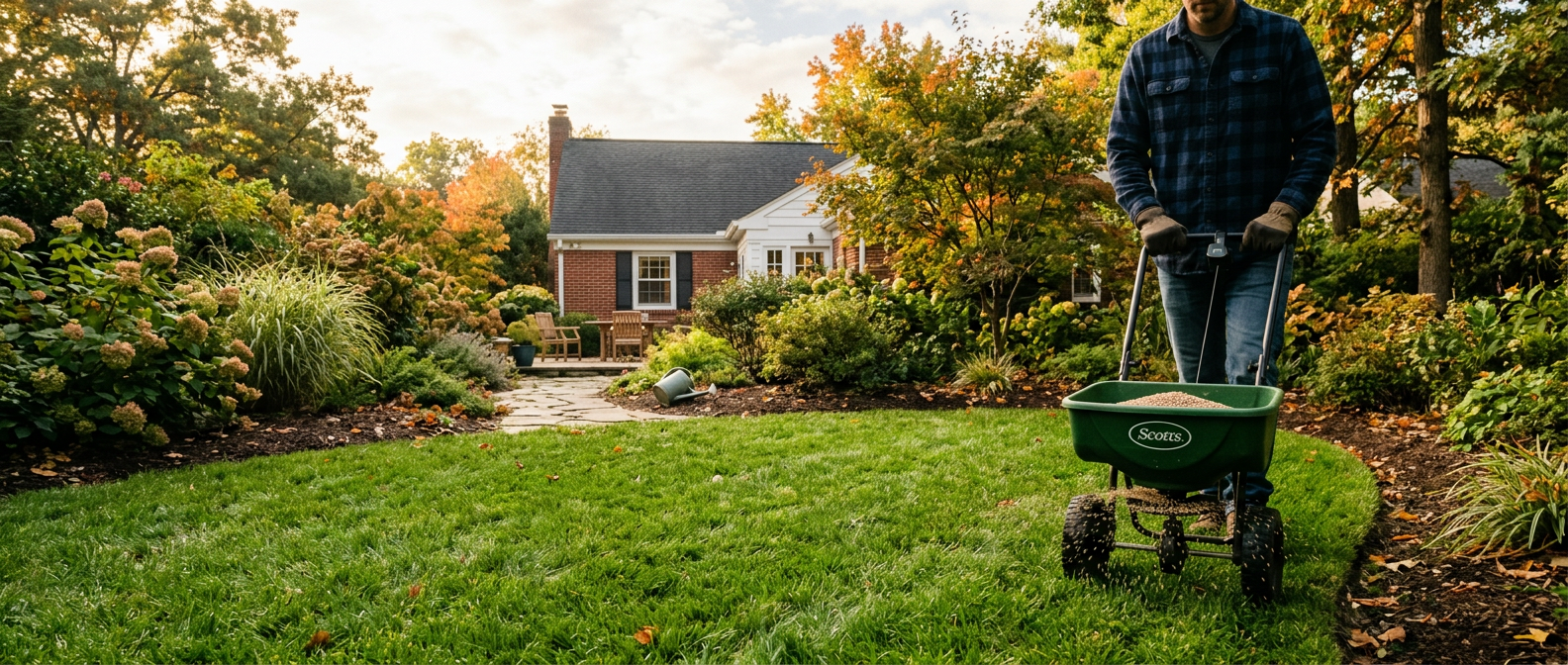
Summer is a bully. It beats down your lawn with scorching heat, drought stress, and heavy foot traffic, leaving it looking thin, tired, and full of sad, patchy spots. Come September, you might be tempted to just throw in the towel. But we're here to tell you that early fall is your secret weapon. This is the moment to strike back.
Fall overseeding is the single most effective thing you can do to guarantee a thick, green, weed-free lawn next spring. It’s the pro-level move that separates the golf-course-green yards from the dreary, brown ones. Forget a total renovation; this is your high-leverage play for lawn dominance. But timing is critical. Get it wrong, and you’re just throwing expensive seed away. Let's get it right.
Why Fall is the Goldilocks Season for Overseeding
You can technically throw seed down in the spring, and many people do. We think that’s a mistake. Spring is a battleground. Your tender new grass has to compete with an onslaught of aggressive weeds like crabgrass, which thrive in the same conditions. Then, just as your baby grass is getting established, summer heat arrives to try and cook it to death.
Fall, on the other hand, is perfect. It’s the “just right” season for a few key reasons:
- Warm Soil: The ground is still holding onto summer’s warmth, which is exactly what grass seed needs to germinate quickly.
- Cool Air: The cooler daytime and nighttime air temperatures are less stressful for young seedlings, allowing them to focus on root development instead of just surviving.
- Less Weed Competition: The annual grassy weeds that plague spring lawns are either finishing their life cycle or aren't even thinking about sprouting.
- Natural Moisture: Fall often brings more consistent rainfall (in some places, anyway), reducing your watering duties.
Seeding in fall gives your grass a massive head start. It has two cool growing seasons—fall and the following spring—to establish a deep, robust root system before it has to face the stress of next summer.
The Magic Number: Pinpointing Your Exact Seeding Window
Stop looking at the calendar. Start looking at the thermometer—specifically, a soil thermometer. The absolute sweet spot for germinating cool-season grass seed is when soil temperatures are consistently between 50°F and 65°F. This usually happens when daytime air temperatures are consistently in the 65°F to 75°F range.
Plant too early when it's still hot, and the seed may fail to germinate or the seedlings will bake. Plant too late, and the seedlings won't have enough time to mature before the first hard frost shuts them down for good. According to Purdue University's turfgrass science program, it can take 7 to 21 days for seed to germinate and another 4 to 6 weeks for seedlings to get established enough for winter. Planting just a couple of weeks late can doom your entire project. (Source: https://turf.purdue.edu/seeding-a-new-lawn/)
Here’s a general guide by region:
-
Northern Zone (Cool-Season Lawns): Think states like Massachusetts, Illinois, and the Pacific Northwest. Your window is typically late August to mid-September. You want to get the seed down about 6-8 weeks before you expect your first hard frost. A great lawn is a key part of beautiful New England front yard landscaping for Massachusetts homes, and proper seeding is the foundation. It's the same story for those looking for a lush lawn to complement their Midwest perennials for full sun in Illinois gardens.
-
Transition Zone (Cool-Season Lawns): Areas like North Carolina, Tennessee, and Kansas, where summers are hot but winters are cold. Your window is a bit later, usually early September through mid-October. You’re trying to dodge the last of the brutal summer heat. Choosing what's the best grass for North Carolina often means a tough Tall Fescue, and fall is the ideal time to thicken it up.
-
Southern Zone (Warm-Season Lawns): Pay attention, because this is different. If you have Bermuda, Zoysia, or St. Augustine grass, you don't overseed in fall to thicken it up (that's a spring/summer job). You overseed for temporary winter color. As your warm-season grass goes dormant and turns brown, you can overseed with Annual or Perennial Ryegrass to have a green lawn all winter. The timing here is mid-October to November, right as your main lawn is going to sleep. This is a common practice in places like Texas and Florida. Managing this is a core part of any good Florida lawn care schedule and a key task in our guide to lawn care in Texas.
The Pre-Game Prep That Guarantees Success (Don't Skip This!)
You can buy the best seed in the world, but if you just toss it onto your lawn, you're creating a five-star buffet for the local bird population. Seed needs to touch soil to grow. The goal of prep is to maximize that seed-to-soil contact.
- Mow Low: Cut your existing grass shorter than usual. We recommend dropping your mower deck to about 1.5-2 inches. This allows sunlight and water to reach the soil and the new seeds. Bag the clippings!
- Dethatch: Thatch is the layer of dead grass stems and roots that builds up between the green grass and the soil surface. A thin layer is fine, but more than ½ inch acts like a waterproof, seed-proof blanket. Rent a power rake or use a stiff, heavy-tined thatch rake to rip it out. You’ll be shocked how much gunk you pull up.
- Aerate: This is the game-changer. Renting a core aerator for an afternoon is the best money you’ll spend on your lawn all year. It pulls out plugs of soil, which reduces compaction, allows oxygen and water to reach the roots, and creates thousands of perfect little pockets for your new grass seed to fall into and germinate safely.
Choosing Your Seed: Not All Seeds Are Created Equal
Walk into any big-box store, and you'll see a wall of grass seed. Most of it is mediocre. Look at the analysis tag on the back of the bag. You want to see "0% Weed Seed" and "0% Other Crop." Pay for quality here; it matters.
We've had fantastic results with Jonathan Green Black Beauty Ultra Grass Seed (around $99 for a 25lb bag). It’s a mix of multiple cultivars of Tall Fescue, Kentucky Bluegrass, and Perennial Ryegrass, making it dark green, disease-resistant, and adaptable. It's not the cheapest, but you get what you pay for.
- Tall Fescue (TTTF): The workhorse for the transition zone. Very drought and heat-tolerant for a cool-season grass.
- Kentucky Bluegrass (KBG): The king of self-repair. It spreads via underground rhizomes to fill in bare spots. It's a bit slower to germinate.
- Perennial Ryegrass: Germinates lightning-fast, providing quick green cover while the other seeds take their time.
For those in the south overseeding for winter color, you'll choose between Annual Ryegrass (cheaper, coarser, dies off reliably in spring) and Perennial Ryegrass (prettier, finer, but can sometimes stick around too long and compete with your Bermuda in the spring).
The Main Event: Seeding and Feeding
Prep is done. Seed is chosen. It's go time.
- Spread the Seed: Use a broadcast spreader for even coverage. Don't just walk in one direction. Divide your seed in half and apply it in two perpendicular passes (like a checkerboard). This ensures you don't have ugly stripes or missed patches.
- Add Starter Fertilizer: Right after seeding, apply a starter fertilizer. This is NOT the same as your regular lawn food. You need something high in Phosphorus (the 'P' in N-P-K), which is critical for root development. A product like Scotts Turf Builder Starter Food for New Grass (about $25 for a 5,000 sq. ft. bag) is perfect. The N-P-K numbers will be something like 24-25-4.
- Top It Off (Optional but Recommended): We always finish by raking a very, very thin layer (less than ¼ inch) of peat moss or high-quality lawn soil over the seeded areas. It helps hold moisture against the seed, hides it from birds, and provides a great visual cue: when the peat moss looks light brown, it's time to water again.
The Watering Game: Your Most Important Job for 3 Weeks
This is where most people fail. You cannot let the seed dry out. Not even for an afternoon.
The rule is light and frequent. You need to keep the top half-inch of soil consistently moist, like a wrung-out sponge. This usually means watering 2-3 times per day for 5-10 minutes each time. The goal isn't a deep soaking; it's just to keep those seeds wet.
Maintain this schedule until you see widespread germination (usually 7-21 days). Once the new grass is about an inch tall, you can gradually reduce the frequency and increase the duration of your watering, pushing the roots to grow deeper. Wait until the new grass is 3-4 inches tall before you mow it for the first time, and use a sharp blade.
Frequently asked
Should I aerate before or after overseeding in the fall?+
Always aerate *before* you overseed. Core aeration pulls plugs of soil out, reducing compaction and creating perfect little holes for the seed to fall into. This dramatically improves seed-to-soil contact, which is essential for germination and strong root growth.
How long should I stay off the lawn after fall overseeding?+
Minimize traffic as much as possible for at least 3-4 weeks. The new grass seedlings are extremely delicate. Wait to mow until the new grass reaches 3-4 inches tall, and even then, be gentle and avoid sharp turns with the mower.
Can I just throw grass seed on my lawn in the fall?+
You can, but you'll be wasting your money. Without proper prep like mowing low, dethatching, and aerating, most of the seed won't contact the soil. It will sit on top of existing grass or thatch, fail to germinate, and become expensive bird food.
What temperature is too cold to overseed in the fall?+
The key isn't air temperature but soil temperature. Once your soil consistently drops below 50°F, grass seed germination slows dramatically or stops completely. Don't overseed if a hard frost (temps below 28°F) is expected within 3-4 weeks of planting.
Is it better to overseed in the fall or spring?+
Fall is almost always better for cool-season grasses. The soil is warm, the air is cool, and you have less competition from weeds like crabgrass. Spring seeding forces young grass to compete with aggressive weeds and then face the brutal summer heat.