
Pacific Northwest Landscaping Ideas for Washington Yards
Stop fighting the rain and start working with it. Here are our no-nonsense landscaping ideas for creating a beautiful, low-maintenance yard in Washington State.
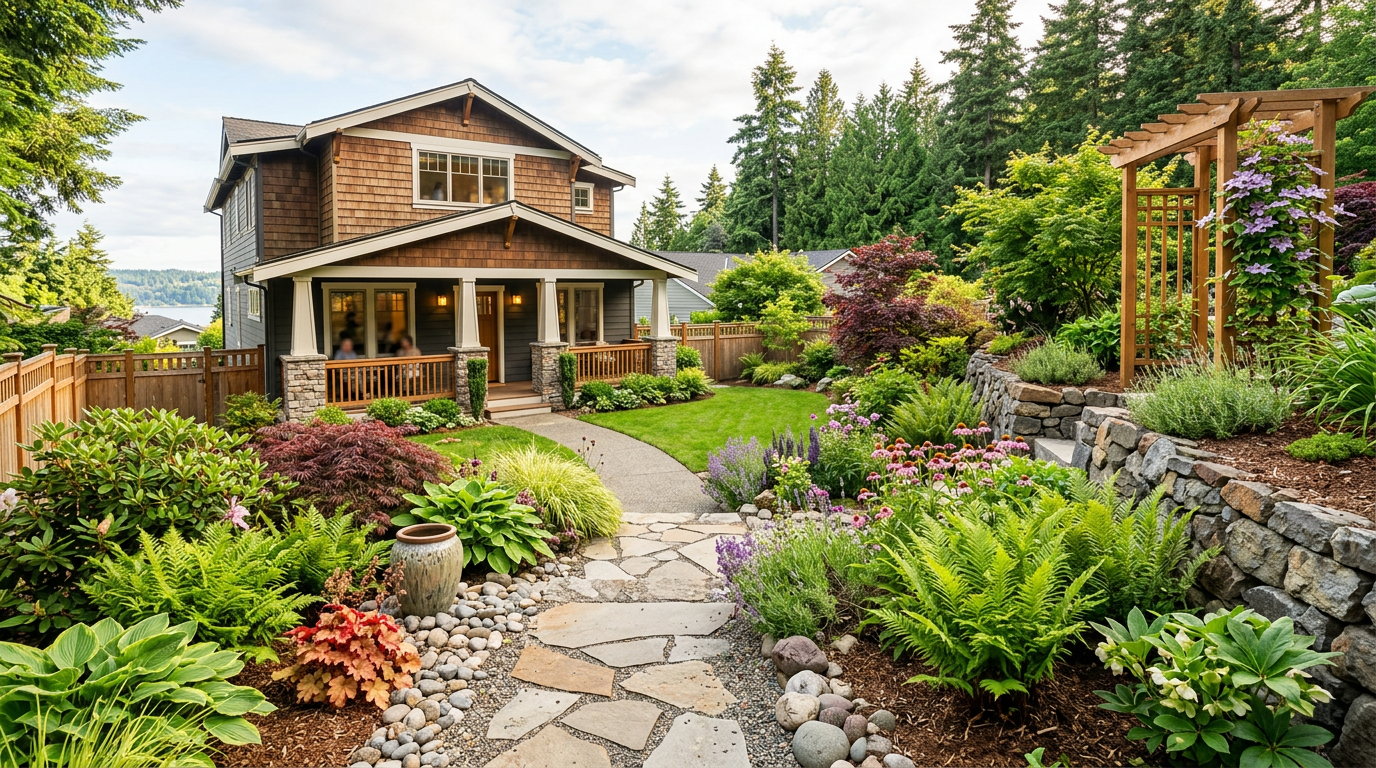
Look, landscaping in Washington is a unique beast. You're either getting rained on for eight months or dealing with a surprisingly dry summer, all while navigating shady corners and yards full of Douglas Firs. We've seen too many Washington homeowners try to force a sunny, water-hungry landscape onto a patch of land that just wants to be a lush, green temperate rainforest. The secret isn't to fight it; it's to lean in.
This isn't about creating a dark, gloomy bog. It's about smart design that thrives in our specific climate, from the Puget Sound lowlands to the foothills of the Cascades. We're talking about vibrant, four-season gardens that look incredible, require less work, and are perfectly suited for a Washington lifestyle (which usually involves more hiking and less fussing over finicky plants).
Master the Rain: Drainage for Washington Landscapes
If you live west of the Cascades, you know the drill: drizzle, rain, and more rain. Poor drainage leads to soggy lawns, moss infestations, and root rot. Instead of just installing a sump pump and calling it a day, let's turn that water into a feature.
- Rain Gardens: These are specially designed garden beds that collect, hold, and filter stormwater runoff from your roof or driveway. They're basically beautiful, functional basins. Plant them with water-loving natives like Slough Sedge and Red Flowering Currant. The City of Seattle and WSU Extension have fantastic resources on building them. A professionally installed rain garden can cost between $10-$25 per square foot, but a DIY version is much cheaper.
- Permeable Pavers: For patios and walkways, forget solid concrete. Permeable pavers from companies like Mutual Materials (a local WA company) allow water to seep into the ground between the stones, reducing runoff. They're more expensive upfront ($20-$40/sq ft installed) but solve a major environmental and practical problem.
- French Drains: For seriously swampy areas, a classic French drain is your best bet. It's a gravel-filled trench with a perforated pipe that redirects water away from your foundation or low spots. It's not glamorous, but it works.
Go Native: The Best Low-Maintenance Plants for Washington
Fighting with fussy, non-native plants is a waste of time and money. Native plants are adapted to our wet winters and dry summers, meaning less watering, no fertilizer, and happier plants. Our go-to combo for a classic PNW look is a layered planting of evergreen shrubs, ferns, and groundcovers.
Our Evergreen All-Stars:
- Sword Fern (Polystichum munitum): The quintessential PNW plant. It's tough, evergreen, and provides fantastic texture.
- Salal (Gaultheria shallon): A workhorse shrub that thrives in sun or shade, with edible berries to boot.
- Oregon Grape (Mahonia aquifolium): Offers bright yellow flowers in spring, edible berries in summer, and beautiful reddish leaves in fall. Great for year-round interest.
- Evergreen Huckleberry (Vaccinium ovatum): A beautiful shrub with delicious berries that provides food for you and local wildlife.
Head to a nursery specializing in natives, like Swansons Nursery in Seattle or the plant sales held by the Washington Native Plant Society (WNPS), to find the best selection. Expect to pay around $15 for a 1-gallon pot and up to $60+ for a larger, more established 5-gallon plant.
Designing for Four-Season Interest in Washington
The biggest complaint we hear about Washington yards is the winter grayness. Your garden doesn't have to look dead for five months. The key is planning for structure, color, and texture that shines even when it's 45 degrees and drizzling.
- Winter Color: Plant a Red Twig Dogwood (Cornus sericea) for its shocking red stems against a gray sky. Witch Hazel (Hamamelis) offers fragrant, spidery blooms in the dead of winter.
- Structure: Use dwarf conifers like Hinoki Cypress or Mugo Pine to provide evergreen shape and form. The strong architectural lines of a Japanese Maple, even without its leaves, provide sculptural interest.
- Berries & Bark: Plants like the aforementioned Evergreen Huckleberry and the peeling bark of a Paperbark Maple (Acer griseum) add subtle but critical detail to the winter landscape.
This approach ensures your yard is an asset year-round, not just from June to September. It's a design philosophy that works just as well in other four-season climates, like the ones detailed in our guide to New England Front Yard Landscaping for Massachusetts Homes.
Hardscaping That Lasts in the Pacific Northwest
Water is relentless. It rots wood, grows moss on stone, and makes surfaces slick. Choosing the right materials for your decks, patios, and paths is non-negotiable.
- Decks: Cedar is the classic PNW choice for a reason. It's naturally rot-resistant and beautiful. A cedar deck will typically cost $20-$40 per square foot, installed. Composite decking like Trex is a great, low-maintenance (but more expensive) alternative.
- Patios & Walkways: Local basalt or bluestone are king. They provide a natural, elegant look that fits the landscape. Check out a supplier like Marenakos Rock Center in Issaquah to see the options. Expect to pay $25-$45 per square foot for a professionally installed stone patio. For a more budget-friendly option, use concrete pavers or gravel.
According to data from the Washington State Department of Ecology, urban runoff is the leading source of pollution in Puget Sound. By implementing smart hardscaping like permeable pavers and minimizing impervious surfaces, your yard can be part of the solution, reducing the flow of contaminated stormwater into our local waterways. (Source: Washington State Department of Ecology, "Control of Toxic Chemicals in Puget Sound")
Smarter Lawns (or No Lawn at All) for Washington
A perfect, Augusta-style lawn is a pain in Western Washington. It gets choked with moss in the winter and goes dormant and brown in our dry summers unless you water it constantly. It's time for a new approach.
- Eco-Lawns: Mix your grass seed with microclover. It stays green all summer with minimal water and naturally fertilizes the soil by fixing nitrogen. Other great additions are yarrow and Roman chamomile.
- Right-Size Your Lawn: Do you really need a huge expanse of grass? Consider replacing some of it with a larger patio, a native plant bed, or a sprawling groundcover like Kinnikinnick (Arctostaphylos uva-ursi).
- Choose the Right Grass: If you must have a traditional lawn, use a seed mix designed for the Pacific Northwest. These are typically a blend of Perennial Ryegrass and various Fine Fescues that can handle our climate. And get your timing right; check out our guide on When to Overseed Your Lawn in Fall for the best results.
While our summers are dry, they're nothing like the challenges faced in other parts of the country. For perspective on true drought-tolerant design, see how homeowners are tackling it with Southern California Drought Landscaping That Doesn't Suck. It's all about picking the right plants and strategies for your specific climate.
Frequently asked
What is the best low-maintenance landscaping for the Pacific Northwest?+
The best low-maintenance option is a garden focused on Washington native plants like Sword Fern, Salal, and Oregon Grape. These plants are adapted to our wet winters and dry summers, requiring minimal watering, fertilizer, or fuss once established. Pair them with durable hardscaping like a basalt stone patio.
Should I get rid of moss in my Washington lawn?+
You can fight it, or you can embrace it. Moss thrives in our acidic, damp, shady conditions. Some people choose to cultivate a moss lawn, which is green, soft, and requires no mowing. If you want grass, you'll need to aerate, dethatch, and adjust your soil's pH.
What are the most common landscaping mistakes in Washington State?+
The biggest mistakes are poor water management, planting sun-loving plants in shady yards, and choosing plants not suited for our dry summers. Homeowners often create drainage problems with too much concrete and fight a constant battle with lawns that want to be moss.
What grows well in the shade in the Pacific Northwest?+
A huge variety of beautiful plants! Classic choices include Hostas, Sword Ferns, Bleeding Hearts, Salal, and Evergreen Huckleberry. For flowering shrubs, try Hydrangeas and Rhododendrons (our state flower!). Many native groundcovers also thrive in the shade, creating a lush forest-floor look.
How can I add color to my PNW garden in the winter?+
Focus on plants with colorful winter stems, bark, or flowers. Red Twig Dogwood provides brilliant red branches, while Witch Hazel and Hellebores bloom in late winter. The bright berries of a Winterberry holly or the peeling bark of a Paperbark Maple also add fantastic winter interest.