
Pacific Northwest Landscaping Ideas for Washington Homes
Stop fighting the rain and start working with it. Here are our expert-approved, no-gatekeeping landscaping ideas for a gorgeous, functional Washington yard all year long.
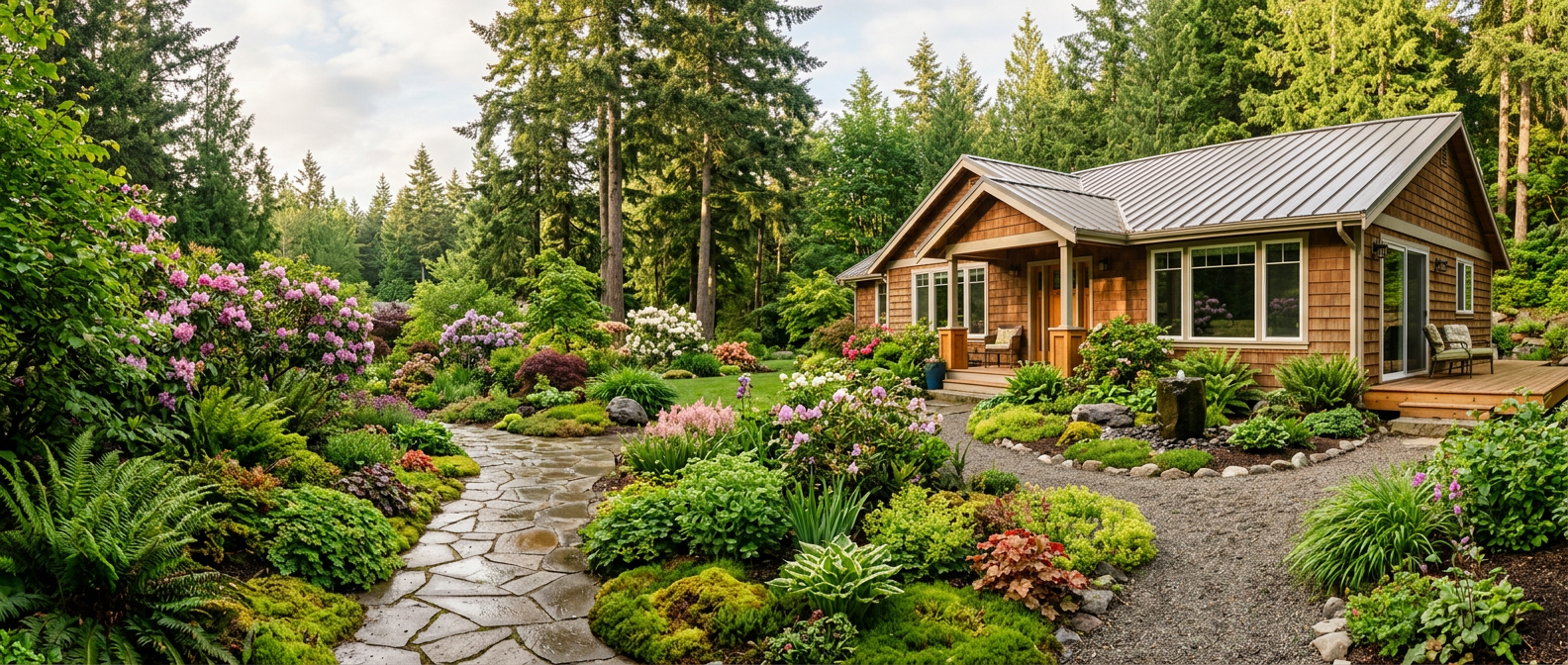
Washington Landscaping: It's More Than Just Rain and Evergreens
Let's get one thing straight: landscaping in Washington is a world away from the sun-scorched yards of Southern California or Arizona. We have a secret weapon: water. Lots of it. But that gift comes with its own set of challenges—moss, drainage issues, gloomy winters, and plants that can quickly get out of hand. Whether you're in soggy Seattle or sunnier Spokane, the key is to stop fighting our climate and start designing for it.
We're not about creating fussy, high-maintenance gardens that require a team of experts. We're about smart, durable, beautiful yards that look great and let you enjoy that rare sunny afternoon instead of constantly working in it. These are our best Pacific Northwest landscaping ideas for real Washington homes.
Embrace the Lush Life: Native Plants for Western Washington
West of the Cascades, you're in a temperate rainforest. Don't fight it. Trying to maintain a perfect, water-guzzling lawn here is a lesson in futility. Instead, lean into the lush, green aesthetic with plants that thrive in our damp, mild climate. Native plants are your best friends—they're adapted to the soil, the rainfall, and the local ecosystem.
Our go-to natives for a low-maintenance, high-impact look include:
- Sword Fern (Polystichum munitum): The undisputed king of PNW shade. It's evergreen, tough as nails, and provides incredible texture. Once established, it needs nothing from you.
- Salal (Gaultheria shallon): A fantastic evergreen groundcover with tough, leathery leaves. It fills in shady spots where grass won't grow and produces edible berries.
- Oregon Grape (Mahonia aquifolium): Offers year-round interest. Bright yellow flowers in spring, edible blue-black berries in summer, and leaves that turn a beautiful bronze-red in winter.
- Red Flowering Currant (Ribes sanguineum): A showstopper in early spring. Its pendulous pink-to-red flowers are a magnet for hummingbirds and a welcome sign that winter is over.
We installed a 'native corner' in a soggy part of our yard last year, and it's been a game-changer. Instead of a muddy patch, we have a thriving, textured garden that handles winter waterlogging with ease.
Hardscaping That Won't Get Gross in Washington Winters
Poorly planned hardscaping in Washington turns into a slimy, moss-covered hazard by February. The key is choosing the right materials and, more importantly, ensuring flawless drainage.
- Materials: Forget smooth, porous stone unless you enjoy pressure washing. We prefer textured concrete pavers or classic bluestone. The slightly rougher surface gives moss less of a foothold. For a more modern look, large format porcelain pavers are non-porous and easy to clean.
- Drainage is Everything: When installing a patio or walkway, a properly compacted gravel base is non-negotiable. It must be at least 4-6 inches deep and sloped slightly (a 1-2% grade) away from your house. This prevents water from pooling and turning your patio into a pond.
- Permeable Pavers: If your property has significant water runoff, consider permeable pavers. They allow water to drain through the joints directly into the ground, reducing puddles and helping recharge groundwater. Check with your local city (like Seattle Public Utilities) for potential credits or incentives for using them.
For a project, expect to pay around $20-$35 per square foot for a professionally installed paver patio. A yard of 5/8" minus crushed rock for a base from a local supplier like Pacific Topsoils will run about $60-$70, and it's the most important part of the job.
Landscaping for Eastern Washington: Sun, Wind, and Water-Wisdom
If you live in Spokane, the Tri-Cities, or Wenatchee, your challenges are completely different. You're in the rain shadow of the Cascades, dealing with hotter summers, colder winters, and a whole lot less rain. Your landscaping philosophy should look more like Colorado's than Seattle's.
The climate difference is stark. According to the Office of the Washington State Climatologist, Seattle receives an average of 38 inches of precipitation annually. Spokane? Just 17 inches. That means water conservation is your primary goal. (Source: climate.washington.edu)
Here's how to build a tough, beautiful yard east of the mountains:
- Drought-Tolerant Ornamentals: Swap thirsty hydrangeas for Russian Sage (Perovskia atriplicifolia), Yarrow (Achillea millefolium), and ornamental grasses like Blue Fescue (Festuca glauca). These plants provide color and texture without demanding constant watering.
- Strategic Mulching: A 3-inch layer of bark mulch or arborist chips is your best defense against moisture evaporation. It also keeps the soil cool and suppresses weeds. A coarse bark mulch is better here than the fine stuff, as it's less likely to be blown away by the wind.
- Smart Lawn Choices: If you must have a lawn, keep it small. Use drought-tolerant turfgrass blends that include fescues and ryegrass. For more on grass selection, see our guide on the best grass for North Carolina—the principles of choosing for climate apply everywhere.
Creating Four-Season Interest: Beating the Grey
One of the biggest complaints about Washington winters is the endless grey. A well-designed landscape can fight back. The goal is to have something interesting to look at every month of the year, not just in May.
- Winter Structure: Use plants with interesting shapes. Harry Lauder's Walking Stick (Corylus avellana 'Contorta') has fascinating, curly branches. Evergreen conifers in various shapes and sizes provide a solid backbone.
- Bark and Berries: Red Twig Dogwood (Cornus sericea) is a must-have. Its bare red stems are absolutely electric against a grey sky. For berries, look to Beautyberry (Callicarpa) for its vibrant purple clusters that last well into winter.
- Early Bloomers: Plant Hellebores (Lenten Rose) and Witch Hazel (Hamamelis). They bloom when nothing else will, providing a crucial pop of color and hope in late winter and early spring.
By layering these elements, you create a garden that has depth and character even when it's 45 degrees and drizzling for the tenth straight day.
Frequently asked
What is the best low-maintenance ground cover for Washington state?+
For shady, wet areas in Western Washington, native Salal (Gaultheria shallon) or Kinnikinnick (Arctostaphylos uva-ursi) are fantastic choices. In sunnier, drier Eastern Washington, consider Creeping Thyme or Ice Plant (Delosperma), which are much more drought-tolerant and handle the sun well.
How do I get rid of moss in my PNW lawn for good?+
Moss thrives in shady, compacted, and acidic soil. Killing the moss is a temporary fix. For a long-term solution, aerate your lawn annually, lime it in the fall to raise the soil pH, and overseed with a shade-tolerant grass blend. Improving drainage is also critical.
What are some good native flowers for a Washington garden?+
For sunny spots, consider Pacific Rhododendrons, Blue-eyed Grass (Sisyrinchium bellum), or the vibrant orange of a Western Wallflower (Erysimum capitatum). For shadier areas, Western Bleeding Heart (Dicentra formosa) and Pacific Trillium (Trillium ovatum) are beautiful and well-adapted choices that thrive in our climate.
What kind of mulch is best for wet Western Washington?+
Arborist wood chips are the best all-around choice. They are coarse, which allows water to penetrate easily to the soil below without becoming a soggy mat. They also break down slowly, improving soil structure over time. Avoid fine mulches, which can compact and repel water.