
Southern California Drought Landscaping: A Local's Guide
Stop wasting water on a dead lawn. We'll show you how to create a stunning, low-water landscape in Southern California that thrives in our unique climate.
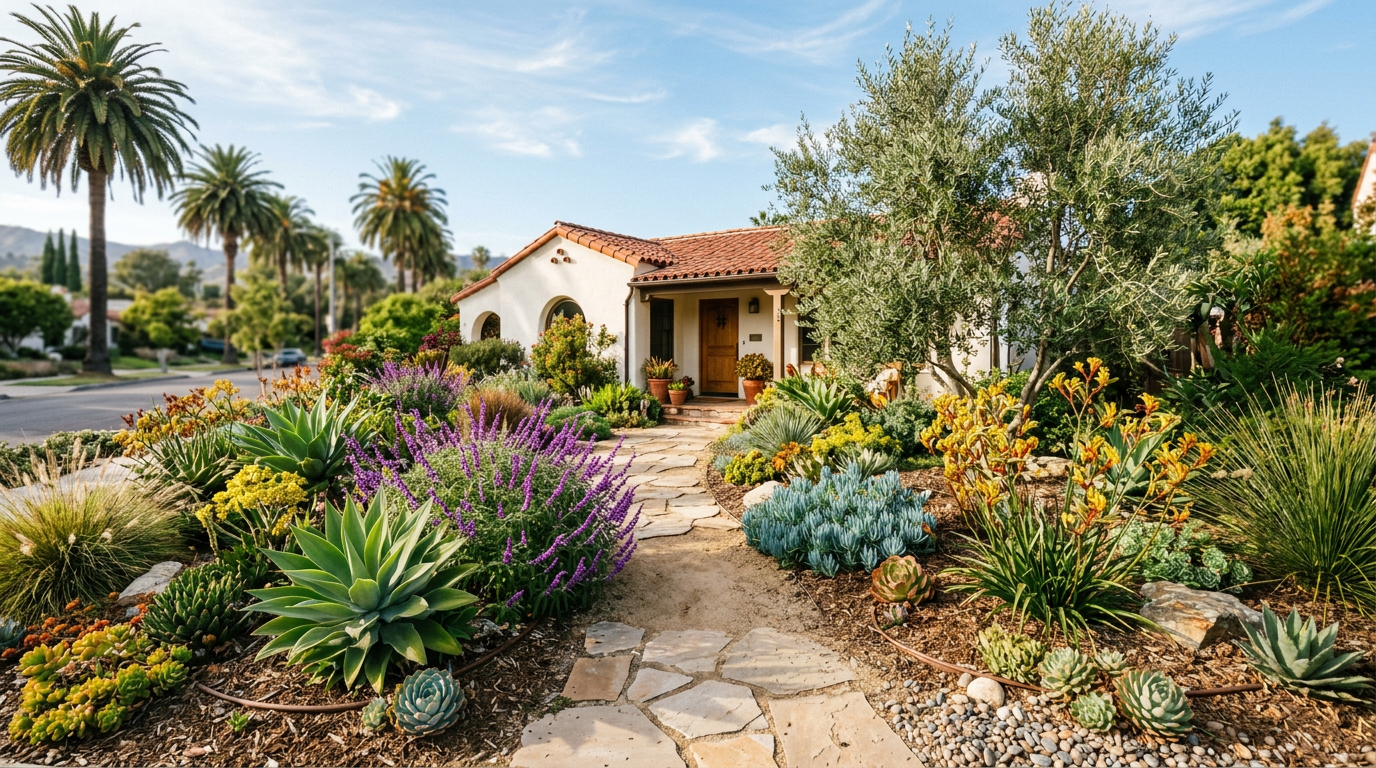
Let's be direct: maintaining a lush, green lawn in Southern California is a fool's errand. It's an expensive, water-guzzling battle against our natural climate. For years, we've been stuck in a cycle of drought, water restrictions, and sky-high bills. But here’s the good news: embracing drought-tolerant landscaping doesn't mean your yard has to look like a gravel pit. It's about working with our environment, not against it.
We’re going to walk you through the exact steps to transform your thirsty yard into a beautiful, low-maintenance, and genuinely Californian oasis. This isn't about gatekeeping secret horticultural knowledge; it's about practical advice that saves you water, money, and weekend headaches.
Understanding Southern California's Water Reality (and Rebates!)
Living in Southern California means living with a Mediterranean climate: long, hot, dry summers and mild, wetter winters. Our water is a finite, imported resource, and perpetual drought is the new normal. Outdoor irrigation is the single largest water user for most households. According to the California Department of Water Resources, traditional landscapes can account for up to 60% of a home's total water consumption. Converting just 1,000 square feet of turf to a water-wise garden can save more than 40,000 gallons of water per year. (Source: https://water.ca.gov/Water-Basics/Conservation-Tips)
Luckily, local water agencies are literally paying you to make a change. The Metropolitan Water District of Southern California (MWD) and its member agencies (like LADWP, San Diego County Water Authority, and OC Water) offer generous turf replacement rebates. As of late 2023, these rebates can be as high as $3 per square foot. For a 1,000 sq. ft. lawn, that's $3,000 in your pocket to help cover the cost of new plants, mulch, and irrigation. Check your local water district's website for current rates and program requirements before you start digging.
Step 1: Ditch the Thirsty Lawn in Southern California
The most impactful thing you can do is remove your lawn. It’s a monoculture that offers little ecological benefit and demands constant water, fertilizer, and mowing. Forget the sad, brown patches and embrace liberation.
There are two main ways to do this without chemicals:
- Solarization: Best for sunny areas during the hottest part of the year (June-August). Mow the grass short, water it well one last time, then cover it tightly with a clear plastic sheet (1-4 mil thickness). Use rocks or bricks to seal the edges. The sun will cook the grass and weed seeds underneath in about 6-8 weeks.
- Sheet Mulching (Our Favorite): This method builds healthy soil while it kills the grass. Mow the lawn short, then lay down a layer of cardboard right on top, overlapping the edges by 6-8 inches to block light. Water the cardboard to help it conform to the ground. Then, top it all with a 4-6 inch layer of coarse, organic mulch. The grass and cardboard will decompose over a few months, creating a rich planting medium. You can plant larger, potted plants immediately by cutting holes in the cardboard.
This process is the polar opposite of the constant feeding and overseeding required for lawns in other climates. While homeowners in the southeast might be planning their Florida Lawn Care Schedule, we in SoCal are planning our lawn's glorious retirement.
Plant Selection: Drought-Tolerant Stars for California Gardens
This is the fun part. The goal is to choose plants that thrive in our specific conditions. A purely succulent and cactus garden can feel more like a scene from a Clint Eastwood movie than a welcoming yard. For ideas on how to use them sparingly, you can check out our post on Arizona Desert Landscaping Ideas That Don't Suck, but for a lush SoCal look, we recommend a mix of natives and other Mediterranean-climate winners.
California Natives:
- Ceanothus (California Lilac): These range from groundcovers like 'Centennial' to large shrubs like 'Ray Hartman'. They explode with blue or purple flowers in the spring and need little to no summer water once established.
- Salvia (Sage): Hummingbird magnets. Cleveland Sage ('Winifred Gilman') offers incredible fragrance, while Mexican Bush Sage ('Purple') provides fall color. 'Hot Lips' Salvia is a bulletproof choice with fun red and white flowers.
- Eriogonum (Buckwheat): A keystone species for local pollinators. California Buckwheat (Eriogonum fasciculatum) is a workhorse with delicate white-pink summer flowers that fade to a rusty brown.
- Manzanita (Arctostaphylos): Prized for its smooth, mahogany-red bark and architectural form. 'Howard McMinn' is a reliable and adaptable variety.
Mediterranean All-Stars:
- Lavender: The scent of summer. 'Goodwin Creek Grey' and Spanish Lavender are excellent performers here.
- Rosemary: Can be used as a groundcover ('Prostratus') or an upright shrub. It's edible, fragrant, and ridiculously tough.
- Westringia (Coast Rosemary): A non-spiky alternative to rosemary, with a softer look and grey-green foliage. 'Morning Light' is a popular variegated choice.
- Olive Tree (Olea europaea): The quintessential Mediterranean tree. Choose a 'Wilsonii' or other non-fruiting variety to avoid the mess.
For the best selection of locally-adapted plants, we highly recommend visiting a specialty nursery like the Theodore Payne Foundation (Sun Valley) or Tree of Life Nursery (San Juan Capistrano).
Hardscaping & Mulch: The Unsung Heroes of a SoCal Yard
Hardscape and mulch are just as important as the plants. They create the 'bones' of the landscape, reduce your water footprint, and cut down on maintenance.
Permeable Hardscape: Instead of concrete, opt for materials that allow water to soak into the ground, replenishing groundwater. Decomposed granite (DG) is a fantastic, natural-looking material for patios and paths. It costs around $60-$85 per cubic yard, plus delivery. Flagstone or gravel set on sand are other great options.
Mulch, Mulch, Mulch: We can't say it enough. A thick, 3-4 inch layer of organic mulch is your best friend. It:
- Reduces water evaporation from the soil by up to 70%.
- Keeps soil temperatures cool.
- Suppresses weeds.
- Breaks down over time to enrich the soil.
Avoid inorganic mulches like rock or rubber, which can heat up the soil and bake your plants. We prefer shredded redwood bark ('gorilla hair') or cedar bark mulch, which knits together and stays put on slopes. You can find a 2 cu. ft. bag of something like Kellogg Garden Organics Gromulch for about $10 at your local big-box store.
Smart Irrigation for a Water-Wise Southern California Landscape
Rip out those inefficient spray sprinklers that water the sidewalk more than your plants. The gold standard for water-wise gardens is drip irrigation.
A drip system uses a network of tubing with small emitters that deliver water directly to the base of each plant, right where it's needed. There's almost no water lost to wind or evaporation. A comprehensive starter kit like the Rain Bird Drip Irrigation Starter Kit costs about $50 and can cover a significant area.
Pair your new drip system with a smart controller. Devices like the Rachio 3 ($229) or Hunter Hydra-wise use local weather data to automatically adjust watering schedules. They won't water if it just rained or if it's unseasonably cool, saving even more water. Many water districts offer rebates of $50 or more for these controllers, so check before you buy.
Our First-Hand Experience: A Pasadena Case Study
To show you this works, look at a recent project we consulted on in Pasadena. The homeowner had 1,200 square feet of tired St. Augustine grass. Their summer water bill was consistently over $200 per month. We helped them get a $3,600 turf rebate from their water district.
We sheet-mulched the entire area and designed a landscape around a decomposed granite patio. We used a mix of 'Yankee Point' Ceanothus for wide coverage, 'Hot Lips' Salvia for long-lasting color, and a few specimen 'Howard McMinn' Manzanitas for structure. The entire area was put on a Rachio-controlled drip system.
The result? The new landscape is beautiful year-round, buzzing with bees and hummingbirds. More importantly, their peak summer water bill is now under $50. The project paid for itself in water savings and rebate money in under two years. This is a far cry from the high-input lawn care common in places like Texas, detailed in our Texas Lawn Care seasonal guide, and highlights how region-specific landscaping should be. You wouldn't try to grow a SoCal garden in the Pacific Northwest, and vice-versa, which is why we have guides for distinct climates like our Pacific Northwest Landscaping Ideas for Washington Yards.
Creating a drought-tolerant landscape in Southern California is one of the smartest home improvement projects you can undertake. It's fiscally responsible, environmentally sound, and connects your garden to the beautiful, unique ecology of our home state.
Frequently asked
What is the best ground cover instead of grass in California?+
Excellent low-water ground covers for California include native Ceanothus 'Centennial', creeping Myoporum, or Dymondia margaretae (Silver Carpet). These options are tough, require little to no mowing, and use a fraction of the water that a traditional turf lawn needs to stay green.
Are there rebates for drought landscaping in California?+
Yes. Most water districts in Southern California, coordinated through the Metropolitan Water District, offer significant turf replacement rebates. These can be up to $3 per square foot to help you convert your lawn to a water-wise landscape. Always check your local water agency's website for current details.
How much does drought landscaping cost in Southern California?+
The cost varies widely. A DIY lawn removal and planting can cost $3-$7 per square foot. Professional installation can range from $10-$25+ per square foot. However, generous turf removal rebates can offset a significant portion of this initial cost, making it much more affordable.
Can I still have a green yard in a Southern California drought?+
Absolutely. The key is to redefine 'green.' Instead of a uniform turf lawn, aim for a tapestry of greens, silvers, and grays from plants like Westringia, Cleveland Sage, and various Manzanitas. These plants stay vibrant and healthy year-round with minimal water once established.
What is the best mulch for Southern California gardens?+
The best mulch is a thick (3-4 inch) layer of coarse, organic material. Shredded redwood or cedar bark are top choices as they knit together, stay on slopes, and break down slowly. Avoid using rock or gravel as a top-dressing mulch, as it heats the soil.