
Southern California Drought Landscaping That Doesn't Suck
Let's be real: maintaining a lush, green lawn in SoCal is a fool's errand. We'll show you how to embrace the climate with killer drought-tolerant landscaping that looks amazing and slashes your water bill.
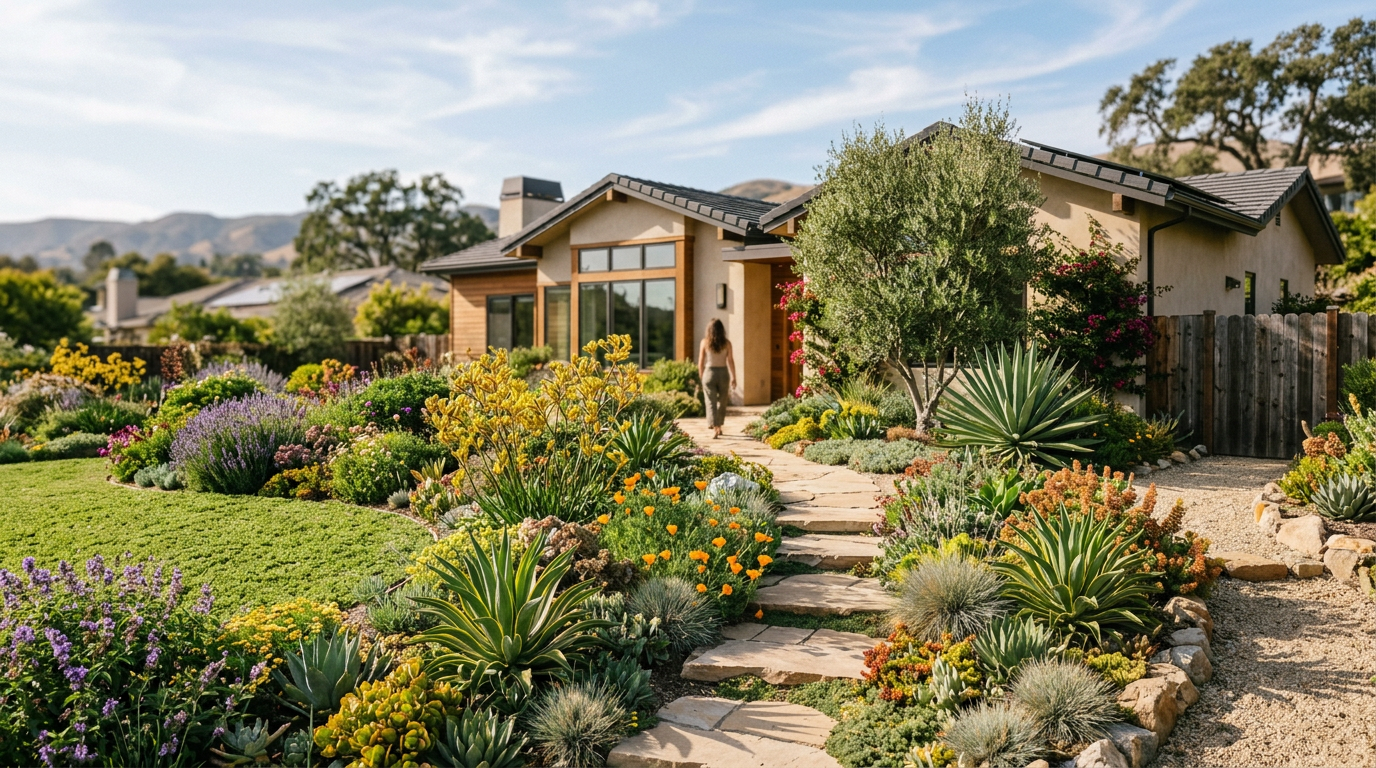
Let's get one thing straight: the battle for a perfect, emerald-green lawn in Southern California is over. We lost. The combination of scorching, dry summers, rising water costs, and perpetual drought cycles means that dumping thousands of gallons of precious water onto a thirsty grass monoculture isn't just expensive—it's irresponsible. But here's the good news: embracing Southern California drought landscaping doesn't mean your yard has to look like a vacant lot. It means creating a vibrant, beautiful, and interesting space that works with our climate, not against it.
We've ripped out more lawns in places like Pasadena and Irvine than we can count, and the number one thing we hear from clients afterwards is, 'Why didn't I do this sooner?' They have more money in their pocket, more time on their weekends, and a yard that actually looks like it belongs in California. This is the no-nonsense guide to getting it done right.
The Problem with Lawns in Southern California
Your standard turfgrass, like Fescue or Kentucky Bluegrass, is native to cool, wet European climates. It wants regular, deep watering year-round. Our Southern California climate, a classic Mediterranean pattern, provides the exact opposite: mild, sometimes-wet winters and bone-dry summers that can last for six months or more. You're trying to grow a thirsty plant in a desert. It's a losing proposition.
Keeping that lawn alive means fighting nature 24/7. You're constantly battling heat stress, brown spots, and pests that thrive on weakened turf. And you're paying for it. Water rates in Los Angeles, San Diego, and across the region are only going up. A conventional lawn is a money pit, and it's not even a very interesting one.
Get Paid to Go Green (By Getting Rid of It): SoCal's Turf Rebates
Before you touch a single shovel, your first stop should be your local water district's website. Seriously. Most of them will literally pay you to tear out your lawn. The Metropolitan Water District of Southern California (MWD), which serves a huge swath of the region, has a long-running turf replacement program. As of this writing, they offer rebates starting at $2 per square foot of lawn removed. Many local agencies, like the Los Angeles Department of Water and Power (LADWP), often supplement this, sometimes bringing the total to $3 or even $5 per square foot.
Do the math. If you have a 1,000-square-foot front lawn, that's a check for $2,000 to $5,000. That money can cover a significant portion, if not all, of your conversion costs for plants, mulch, and irrigation. These programs have specific requirements (e.g., number of plants per 100 sq. ft., no impermeable hardscape), so read the fine print before you start digging.
The A-List: Drought-Tolerant Plants That Thrive in Southern California
This is the fun part. A drought-tolerant garden is a chance to play with color, texture, and form you just can't get with a flat lawn. Focus on a mix of California natives and other climate-appropriate plants. Your goal is a layered look with year-round interest. For inspiration on creating a beautiful yard in an arid environment, check out these Arizona Desert Landscaping Ideas That Don't Suck.
Here are some of our go-to, bulletproof choices you can find at a great local nursery like Armstrong Garden Centers or the Theodore Payne Foundation:
-
Native Shrubs (The Backbone):
- Ceanothus (California Lilac): These are superstars. Most are evergreen with gorgeous blue or purple flowers in the spring that attract tons of pollinators. 'Concha' and 'Ray Hartman' are reliable, beautiful choices.
- Manzanita (Arctostaphylos): With stunning reddish-brown bark, gray-green leaves, and delicate winter flowers, Manzanitas provide year-round structure. 'Howard McMinn' is a popular and adaptable variety.
- Toyon (Heteromeles arbutifolia): Also known as California Holly, this large evergreen shrub has beautiful red berries in winter that feed birds. It's tough as nails.
-
Perennials & Sages (The Color):
- Salvia (Sage): From native heroes like Cleveland Sage (Salvia clevelandii) with its incredible fragrance to the magenta blooms of Mexican Bush Sage (Salvia leucantha), you can't go wrong. They are magnets for hummingbirds.
- Yarrow (Achillea millefolium): A classic that comes in colors from white and yellow to pink and red. It's tough, spreads nicely, and requires almost no care once established.
- California Fuchsia (Epilobium canum): Explodes with bright red-orange, trumpet-shaped flowers in late summer when everything else is looking tired.
-
Succulents & Groundcovers (The Fillers):
- Agave & Aloe: For dramatic architectural statements, nothing beats an agave. Agave attenuata (Foxtail Agave) is a popular, spineless choice. Aloes provide winter color with their fiery flower spikes.
- Dymondia margaretae (Silver Carpet): This is the ultimate lawn replacement for areas with light foot traffic. It forms a flat, silvery-green, super-tough mat that uses a tiny fraction of the water a lawn needs.
Hardscaping Hacks for the Southern California Climate
Your new landscape shouldn't be 100% plants. Hardscaping—the non-living elements—is key to creating functional, no-water zones. Think patios, paths, and seating areas. While the principles might be similar, our needs are different from a place that gets regular snow like you see in these Landscaping Ideas for Colorado That Actually Work.
- Decomposed Granite (DG): This is our top choice for creating informal patios and pathways. It's affordable (around $60-$80 per cubic yard delivered in most SoCal cities), looks natural, and packs down firmly. Use a stabilized DG for patios to keep it from getting muddy or tracked into the house.
- Pavers & Flagstone: Set pavers or flagstone with permeable joints (filled with DG or fine gravel) instead of solid mortar. This allows precious rainwater to soak into the ground instead of running off into the street, which helps recharge groundwater.
- Mulch: We'll cover this more below, but consider mulch a form of hardscape. A thick 3-4 inch layer of bark or wood chips is the single best thing you can do to retain soil moisture, suppress weeds, and keep soil temperatures down.
Water Smarter, Not Harder: Drip, Mulch, and Tech
Converting your yard is pointless if you keep watering it with inefficient sprinklers. Modern irrigation is the final piece of the puzzle.
According to the California Department of Water Resources, outdoor water use can account for over 50% of an average home's total consumption. Converting to a water-wise landscape and using efficient irrigation can reduce outdoor water use by 50-70%. That's a huge saving on your bill and a massive benefit for the state's water supply. (Source: https://water.ca.gov/water-basics/conservation)
- Install Drip Irrigation: Rip out those pop-up spray heads. Drip irrigation delivers water directly to the plant's root zone with over 90% efficiency. A basic system from Rain Bird or Hunter is a straightforward DIY project. You lay out tubing, punch in emitters, and connect it to your existing valve.
- Get a Smart Controller: A standard irrigation timer is dumb; it runs whether it's 105°F or it just rained. A smart controller, like a Rachio 3 (around $230) or a Hunter Hydrawise, connects to Wi-Fi. It checks local weather data and automatically adjusts watering schedules, skipping cycles when it rains and watering more during heatwaves. Many water districts even offer a rebate for these devices.
- The 3-Inch Mulch Rule: We can't say it enough. Cover every square inch of bare soil in your planted areas with a 3-inch layer of natural mulch (not rocks, which bake the soil). Shredded redwood or cedar bark works great. It's the cheapest, most effective way to conserve soil moisture.
Switching from a lawn-centric mindset is the biggest hurdle. You're not just planting different things; you're creating a completely different kind of ecosystem. It's a far cry from the high-maintenance water-guzzling yards you might see in other parts of the country, like in this Lawn Care in Texas guide. A Southern California drought-tolerant garden is lower maintenance, lower cost, and far more in tune with the place we call home.
Frequently asked
What is the best low-water ground cover for Southern California?+
Dymondia margaretae (Silver Carpet) is a top choice. It's extremely tough, handles light foot traffic, and uses a fraction of the water a lawn does. Creeping thyme and native woolly yarrow are also excellent, low-maintenance options that suppress weeds and require minimal irrigation once established.
Can I still have a green yard in Southern California without a lawn?+
Absolutely. A 'green' yard doesn't have to mean a monoculture lawn. Use a mix of evergreen shrubs like Ceanothus, gray-green sages, and vibrant succulents. A well-designed drought-tolerant garden has year-round color, texture, and life while using significantly less water than turfgrass.
How much does it cost to convert a lawn to drought-tolerant landscaping in SoCal?+
Costs vary widely. A DIY conversion using mulch and plants could be $5-$10 per square foot. Professional installation with hardscaping and irrigation can range from $15 to $30+ per square foot. Rebates from your local water district can offset a significant portion of this cost.
What are the easiest drought-tolerant plants for beginners in Southern California?+
For beginners, start with tough-as-nails plants like Rosemary, Lavender, Agave attenuata (Foxtail Agave), and native sages like Salvia leucophylla. These are widely available at nurseries, establish quickly, and are very forgiving if you forget to water them. They provide instant impact with minimal fuss.