
Southern California Drought Landscaping That Doesn't Suck
Stop fighting the climate. Here's our no-nonsense guide to creating a beautiful, low-water landscape that thrives in Southern California's drought conditions.
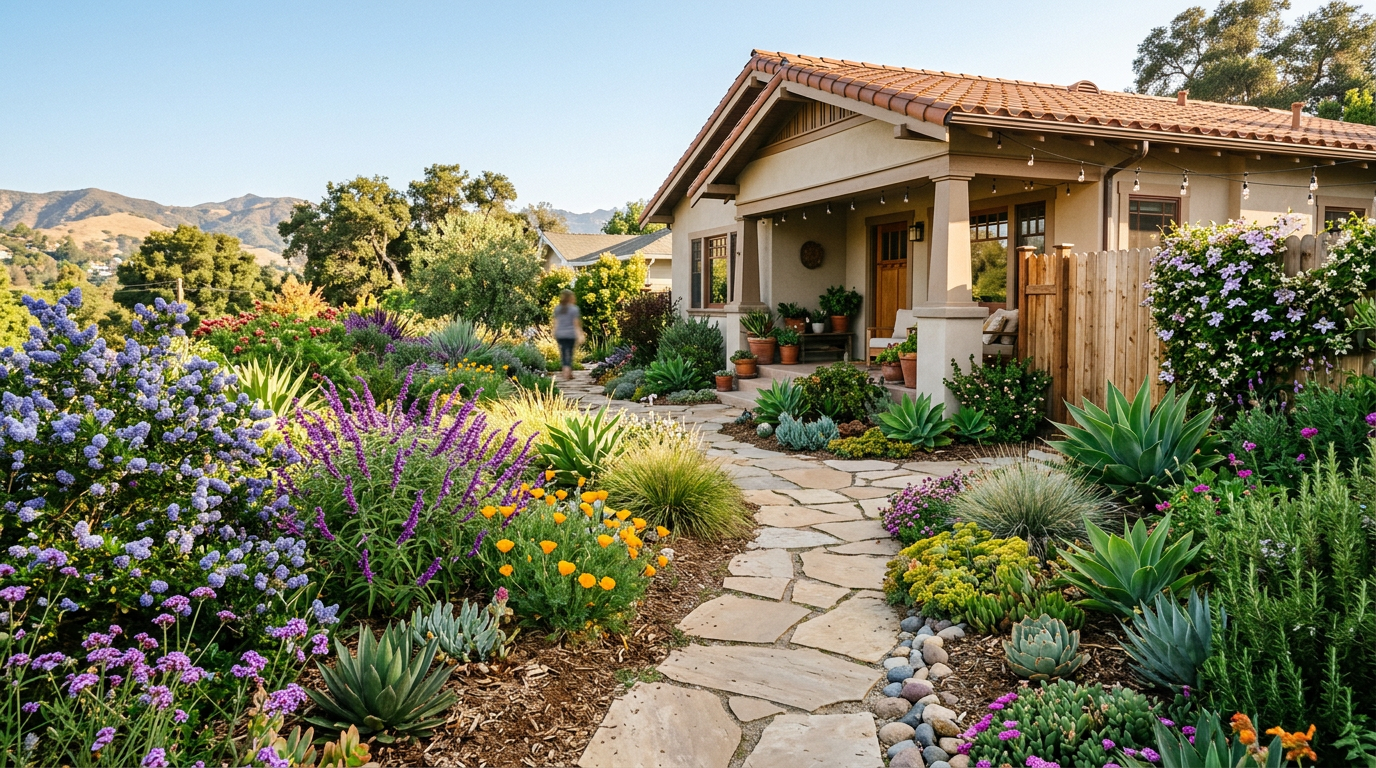
Let's be blunt: if you're trying to maintain a lush, green, Kentucky-style lawn in Los Angeles, San Diego, or anywhere in between, you're on a fool's errand. The era of endless water in Southern California is over. Your water bill is proof. But that doesn't mean your yard has to be a barren wasteland of cracked dirt. In fact, this is an opportunity.
We're here to show you how to create a stunning, low-maintenance yard that embraces ourMediterranean climate instead of fighting it. This guide is your roadmap to Southern California drought landscaping that saves water, money, and your sanity.
Why Your Old-School Lawn Is Obsolete in Southern California
That traditional grass lawn is the thirstiest part of your landscape. A typical lawn needs about 55 gallons of water per square foot per year. In the hot, dry climate of Southern California, it's even more. With water agencies like the LADWP and the Metropolitan Water District of Southern California (MWD) often implementing strict watering schedules (e.g., two days a week, 8 minutes per station), keeping that turf alive is nearly impossible.
It's a completely different ballgame than maintaining a yard in a wetter climate. While folks in other regions might be focused on seasonal feeding and aeration, our primary job is water management. Our colleagues writing about Lawn Care in Texas: A No-Nonsense Seasonal Guide deal with intense heat, but they also get summer rainfall we can only dream of. The challenges are unique here, and the solution isn't to just water more—it's to change the landscape itself.
Step 1: Ditch the Lawn (and Get Paid for It in California)
This is the single most impactful move you can make. And the best part? You can get paid to do it. Seriously.
Most local water agencies, funded by the MWD's SoCalWater$mart program, offer a turf replacement rebate. As of right now, the base rebate is $2 per square foot of turf you remove and replace with a qualifying water-wise landscape. Some individual cities and water districts offer even more on top of that. For a 1,000-square-foot lawn, that's $2,000 back in your pocket to spend on new plants and materials.
We've helped clients use this rebate to cover the entire cost of materials for their new yard. Check your local water agency’s website for the specific details and application process. It usually involves a pre-inspection, so don't start tearing anything out until you're approved!
The New SoCal Staples: Plants That Actually Thrive Here
Once the lawn is gone, the fun begins. We're not just throwing down rocks and calling it a day. A well-designed drought-tolerant yard is full of color, texture, and life. Many of these plants are so well-adapted they look their best when things are driest. For more inspiration, check out our guide to Arizona Desert Landscaping Ideas That Don't Suck, as many of the principles and plants overlap.
Here are our go-to choices for a beautiful Southern California garden:
- Native Sages (Salvia): Cleveland Sage ('Winifred Gilman') has incredible purple-blue flowers and an intoxicating scent. White Sage ('Salvia apiana') offers striking silver foliage. They're tough, beautiful, and attract hummingbirds.
- California Lilac (Ceanothus): These range from groundcovers to large shrubs and explode with blue or purple flowers in the spring. They are incredibly tough and require almost no summer water once established.
- Succulents: Go beyond the basic Hens-and-Chicks. A sculptural Agave 'Blue Glow' (around $50-$60 for a 5-gallon pot) can be a stunning focal point. Tree aeoniums ('Zwartkop') provide dramatic dark color, and Echeverias offer rosette shapes in dozens of hues.
- Kangaroo Paw (Anigozanthos): Not a California native (it's from Australia), but it's perfectly suited to our climate. The fuzzy, brightly colored flowers on long stalks add a whimsical touch and come in reds, yellows, and pinks.
- Native Grasses: Instead of a turf lawn, use grasses as accents. Deer Grass (Muhlenbergia rigens) forms a large, graceful fountain shape that looks good year-round. It's majestic and thrives on neglect.
For the best selection of native plants, we always recommend visiting a specialized nursery like the Theodore Payne Foundation in Sun Valley. Their staff can give you expert advice on plants that will thrive in your specific neighborhood.
Hardscaping: Your New Best Friend for a Dry California Yard
Hardscape is anything in your landscape that isn't a plant—patios, paths, and boulders. It's a critical tool for reducing water use because it reduces the amount of space that needs water.
Decomposed Granite (DG) is our material of choice. It creates a soft, natural-looking surface for patios and walkways that's permeable, allowing precious rainwater to soak into the ground instead of running off into the street. You can get it in various colors, from gold to grey. Expect to pay around $70-$100 per cubic yard from a local supplier like Bourget Bros. in Santa Monica. A cubic yard will cover about 100-150 square feet at a 2-inch depth.
Other great options include:
- Gravel or Pea Stone: Excellent for modern designs and filling gaps between pavers.
- Pavers: Concrete or stone pavers can create formal patios or stepping-stone paths.
- Boulders: Adding a few well-placed boulders provides natural seating, retains slopes, and adds dramatic structure.
Smart Watering Isn't an Oxymoron (Even in a Drought)
Even a drought-tolerant landscape needs some water, especially to get established. The key is to deliver it efficiently. Ditch the wasteful spray-head sprinklers that lose up to 50% of their water to wind and evaporation. The gold standard is drip irrigation.
Drip systems use tubing with built-in emitters that deliver water directly to the root zone of each plant. No waste. You can buy DIY kits from brands like Rain Bird or DripWorks online or at any home improvement store. Pairing a drip system with a smart controller like the Rachio 3 or Hunter Hydrawise is a game-changer.
These controllers use Wi-Fi to access local weather data, automatically skipping watering sessions when rain is forecast and adjusting run times based on the temperature. According to the EPA, replacing a standard clock timer with a WaterSense-labeled irrigation controller can save an average home nearly 7,600 gallons of water annually. (Source: EPA WaterSense). It's the brains of your new, efficient landscape. We saw one client's outdoor water usage drop by 60% the month after we installed a Rachio-controlled drip system.
Putting It All Together: A Sample Southern California Yard Plan
So what does this look like in practice? Imagine a typical 1,000 sq. ft. front yard.
- Sheet Mulch: After getting your rebate pre-approval, instead of digging up the lawn, smother it with cardboard and a thick 4-6 inch layer of wood chip mulch. This kills the lawn, suppresses weeds, and builds healthy soil as it decomposes.
- Define Paths: Carve out a winding 4-foot-wide path using decomposed granite. This immediately breaks up the space and creates a journey through the garden.
- Create Mounds: Build a few gentle mounds (berms) with a mix of topsoil and sand. Planting on mounds improves drainage, which is critical for succulents and many natives.
- Plant Strategically: Place a taller Cceanothus or a small Palo Verde tree towards the back for height. Group succulents and agaves on the mounds. Weave in drifts of Salvia and Kangaroo Paw for color. Unlike the dense, uniform plantings you might see in Pacific Northwest Landscaping Ideas for Washington Yards, we're creating layered vignettes with space in between.
- Run Drip Lines: Weave the drip irrigation tubing throughout the beds, running a line to each plant or group of plants.
- Mulch Again: Apply a final 2-3 inch layer of wood chip or bark mulch over all planted areas. This retains moisture, keeps soil cool, and prevents weeds.
We recently designed a front yard in Silver Lake using this exact method. The owners went from a patchy, sad-looking lawn they watered constantly to a vibrant, architectural garden that needs water maybe once every two weeks in the summer. They spend their weekends enjoying their coffee on the new DG patio instead of pushing a mower.
Frequently asked
How much does drought tolerant landscaping cost in Southern California?+
Costs vary widely. A DIY turf removal and replacement using rebates can cost $5-$10 per square foot. Professional installation can range from $15-$30+ per square foot, depending on the complexity of the hardscaping and irrigation. The turf rebate can significantly offset these costs.
What is the best ground cover for Southern California instead of grass?+
For a walkable surface, decomposed granite (DG) is a top choice. For a green look, native groundcovers like Creeping Thyme, Dymondia (Silver Carpet), or a low-growing Ceanothus require far less water than turf and offer seasonal interest with flowers and texture.
Do I have to water drought tolerant plants in California?+
Yes, but far less than a traditional lawn. New plants need regular water for the first year to establish their roots. Once established, most native and drought-tolerant plants may only need a deep soak every 2-4 weeks in the summer, and little to no supplemental water in the cooler months.
How can I find out about turf removal rebates in my area?+
Start with the SoCalWater$mart website, which is the regional program. Then, visit your specific city or local water district's website (e.g., LADWP, Irvine Ranch Water District). They will have the most current information on rebate amounts, requirements, and the application process for your address.