
Smart Landscaping Ideas for Colorado Homes
Tired of cookie-cutter yards that struggle in the Centennial State? We're breaking down real, practical landscaping ideas for Colorado that embrace our climate, not fight it.
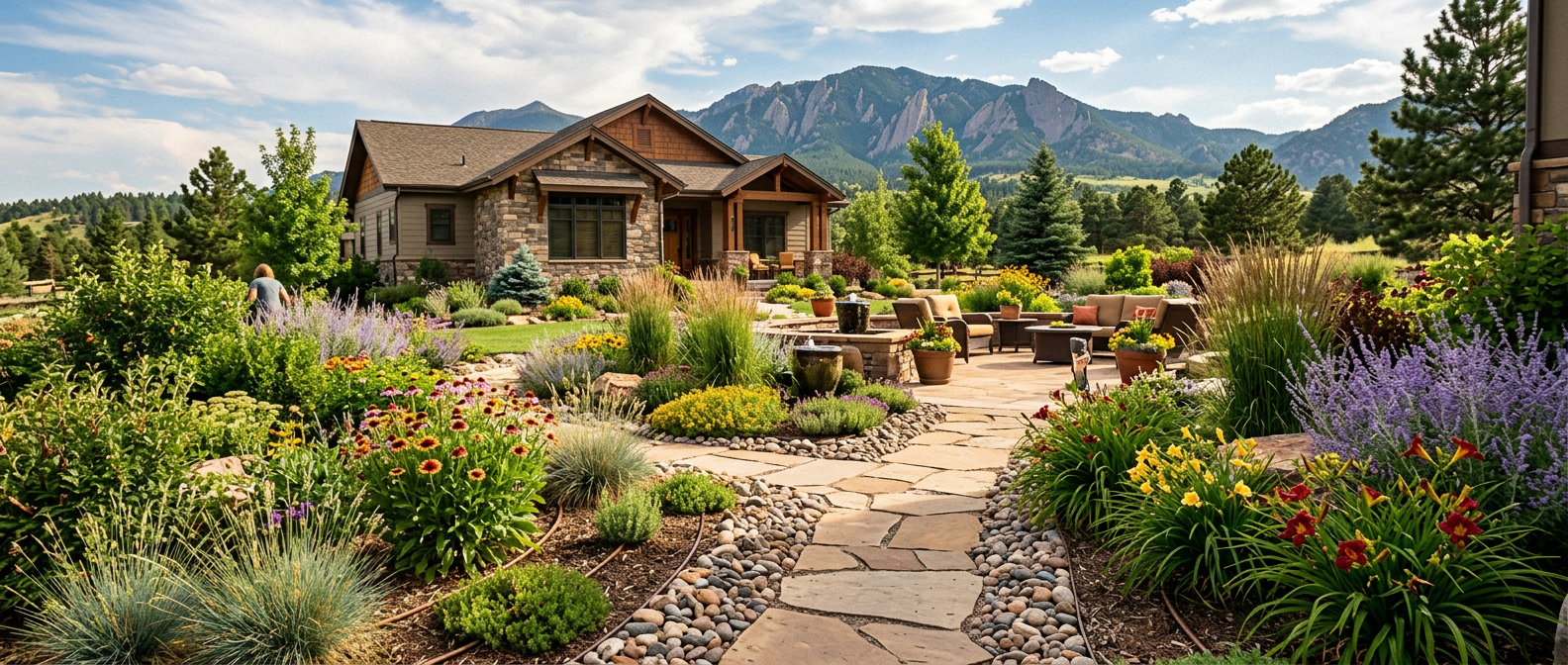
Let's get one thing straight: landscaping in Colorado is a high-stakes game. We're dealing with scorching-then-freezing temperatures, brutal high-altitude sun, surprise hail storms, heavy clay soil, and a water supply that's anything but guaranteed. Trying to force a lush, green Kentucky bluegrass lawn from a Midwest postcard onto a Denver, Colorado Springs, or Fort Collins yard is a recipe for frustration and a sky-high water bill.
We're here to help you stop fighting the climate and start creating a landscape that actually thrives in it. We've ripped out more thirsty bluegrass than we can count, and we've learned what works—and what doesn't—from the Front Range to the Western Slope. These are the landscaping ideas for Colorado that will give you a beautiful, functional, and resilient yard.
Forget the Bluegrass Fantasy: Ditch the Thirsty Lawn in Colorado
The biggest mistake we see homeowners make is dedicating 80% of their property to a water-guzzling lawn. It's expensive, time-consuming, and an ecological mismatch for our semi-arid state. Many municipalities are getting serious about this; Denver Water, for example, has strict watering schedules and promotes water-wise alternatives.
This is where xeriscaping comes in. And no, it doesn't mean your yard has to be a bleak expanse of rocks and a lonely cactus. A well-designed xeric landscape is lush, colorful, and full of life. It simply uses plants and techniques that require minimal irrigation once established.
Better yet, you can get paid to do it. Organizations like Resource Central run a Lawn Replacement Program that provides homeowners with water-saving garden kits and sometimes even offers rebates—often around $2 per square foot of turf removed. You save water, save money, and get a more interesting yard. It's a no-brainer. For more inspiration on ditching the lawn, check out how homeowners in other dry climates are handling it with these Southern California drought landscaping ideas.
The Colorado Plant All-Stars: Natives and Near-Natives
The secret to a low-effort, high-reward Colorado garden is using plants that actually want to be here. Native and climate-adapted plants have spent millennia evolving to handle our specific challenges. Here are some of our go-to choices you can find at excellent local nurseries like Harlequin's Gardens in Boulder or Tagawa Gardens in Centennial.
-
Tough Perennials: These are the backbone of a colorful, water-wise garden. We love planting masses of Rocky Mountain Penstemon (Penstemon strictus) for its vibrant purple-blue flower spikes. Ice Plant (Delosperma cooperi) is a bulletproof groundcover with shocking magenta flowers that thrives in heat and poor soil. For a softer look, Catmint (Nepeta x faassenii 'Walker's Low') creates a cloud of lavender-blue flowers all summer long and is utterly ignored by deer.
-
Ornamental Grasses: Grasses provide texture, movement, and four-season interest. Blue Grama Grass ('Blonde Ambition' is a fantastic cultivar) is a Colorado native with unique, eyelash-like seed heads. Little Bluestem (Schizachyrium scoparium) offers incredible fall color, turning from blue-green to a rich copper-orange.
-
Hard-Working Shrubs & Trees: For structure, you can't beat native woody plants. The Saskatoon Serviceberry (Amelanchier alnifolia) offers spring flowers, edible summer berries, and great fall color. Gamble Oak (Quercus gambelii) is a tough, drought-tolerant native oak that forms thickets and provides critical habitat. For evergreen structure, a Pinyon Pine (Pinus edulis) is a slow-growing, water-wise choice that gives a classic Rocky Mountain feel.
Remember to amend your soil! Most of us are digging in heavy clay. Working a few bags of a good quality compost or a product like EKO Clay Buster, which runs about $7 a bag, into your planting beds will dramatically improve drainage and help roots get established.
Hardscaping for High-Altitude Living
Because a lush lawn isn't always practical, hardscaping—the patios, pathways, walls, and decks—plays a huge role in Colorado landscaping. It defines spaces, tames slopes, and creates usable outdoor rooms.
-
Patios & Walkways: Instead of a sea of grass, invest in a generous-sized patio. Concrete pavers are a durable and cost-effective choice; a DIY installation might cost you $15-$25 per square foot in materials. For a more natural, upscale look, Colorado Buff Flagstone is a classic choice, but expect to pay a pro $30-$50+ per square foot for installation.
-
Retaining Walls: Is your yard on a classic Colorado slope? A retaining wall is your best friend. It can turn an unusable hill into tiered garden beds or a level play area. Segmental retaining wall blocks from manufacturers like Keystone are popular for DIY, while natural boulder walls offer a more rustic look that blends seamlessly into a mountain setting.
-
Fire Pits: With our cool summer evenings, a fire pit extends the usability of your backyard by months. Before you build, always check local regulations and current fire bans. A high-quality, low-smoke steel fire pit like the Breeo X Series 24 (around $599) is a fantastic, long-lasting investment that contains embers safely.
Designing Your Four-Season Colorado Landscape
A successful Colorado landscape delivers year-round visual interest, not just a burst of summer color. We're lucky to have four distinct (and dramatic) seasons, and your plant choices should reflect that.
-
Winter: This is where evergreens and structure shine. The iconic Colorado Blue Spruce and statuesque Ponderosa Pine provide essential green. Don't cut back your ornamental grasses in the fall; their dried stalks and seed heads look magnificent dusted with snow. Shrubs with interesting bark, like the Red Twig Dogwood, provide a shocking slash of color against a white backdrop.
-
Spring: Crocus and daffodils are great, but also consider native early bloomers like the fuzzy Pasque Flower (Pulsatilla nuttalliana).
-
Summer: This is showtime for your perennials like Coneflower, Salvia, and Yarrow.
-
Fall: Beyond the breathtaking gold of Aspen trees, many shrubs and grasses put on a second show. The leaves of a Three-Leaf Sumac (Rhus trilobata) turn brilliant shades of orange and red. The airy plumes of ornamental grasses catch the low autumn light perfectly. This is also the perfect time to thicken up any cool-season turf areas you've decided to keep; learn more about when to overseed your lawn in fall.
By the Numbers: Colorado's Thirst for Water
Let's talk stats. According to Colorado State University Extension, a traditional Kentucky bluegrass lawn can require up to 26 inches of supplemental irrigation per season in the Front Range. That's over 16,000 gallons of water for a typical 1,000-square-foot lawn each year. Switching just half of that lawn to water-wise plants can reduce your outdoor water use by 30% or more. The state's geography also means a wild range of planting zones, from a frigid Zone 3a in the high Rockies to a surprisingly mild Zone 7a near Grand Junction. The majority of the populated Front Range corridor falls into USDA Zones 5b and 6a, so always check the plant tag. (Source: https://extension.colostate.edu/topic-areas/yard-garden/xeriscaping-water-wise-landscaping-7-234/)
Not Just Rocks: A Lush Colorado Xeriscape
Let's debunk the biggest myth about xeriscaping one more time: it is NOT zero-scaping. It isn't a gravel wasteland. A thoughtful xeric garden uses layers, textures, and colors to create a landscape that feels lush and vibrant.
One of the keys is mulch. Covering bare soil with 3-4 inches of organic mulch like shredded cedar or bark (about $50-$60 per cubic yard from a local supplier like Pioneer Sand) helps retain precious soil moisture, suppress weeds, and regulate soil temperature. Gravel or rock mulch also works well, especially for true desert plants, and creates a clean, modern aesthetic.
Look for ideas from other water-conscious regions, but adapt them for our cold winters. These Arizona desert landscaping ideas are great for heat-tolerant plant palettes and hardscape designs, but just remember you'll need to sub in plants that can handle a Colorado freeze.
Ultimately, landscaping in Colorado is about creating an extension of your home that reflects the rugged beauty of the state itself. By choosing the right plants, embracing smart design, and working with the climate instead of against it, you can build a stunning, sustainable, and enjoyable outdoor space.
Frequently asked
What is the best low-maintenance landscaping for Colorado?+
The best low-maintenance option is xeriscaping with Colorado native plants. Once established, plants like Penstemon, Blue Grama grass, and hardy shrubs require minimal watering and care. Combining these with mulched beds and hardscaping like patios or gravel paths drastically reduces mowing and fertilizing chores.
How can I save water in my Colorado landscape?+
Reduce or eliminate your lawn—it's the thirstiest part of your yard. Replace it with drought-tolerant native plants. Water early in the morning, use a drip irrigation system for beds, amend soil with compost to improve water retention, and apply a thick layer of mulch (3-4 inches).
What is the cheapest way to landscape a yard in Colorado?+
The cheapest method is to do it yourself and start small. Begin by sheet-mulching to kill off a section of lawn. Plant small, inexpensive perennials and grasses that will grow to fill the space over a few years. Use locally sourced wood chip mulch, which is often free or very cheap from arborists.
When should I plant perennials and shrubs in Colorado?+
The best times to plant in Colorado are spring (after the last frost, typically May) and early fall (late August to September). Fall planting gives plants' roots time to establish before winter without the stress of summer heat. Avoid planting in the heat of July and August.