
Pacific Northwest Landscaping Ideas for Washington Yards
Tired of fighting your yard's natural tendencies? We're breaking down the best Pacific Northwest landscaping ideas that actually work in Washington's unique climate.
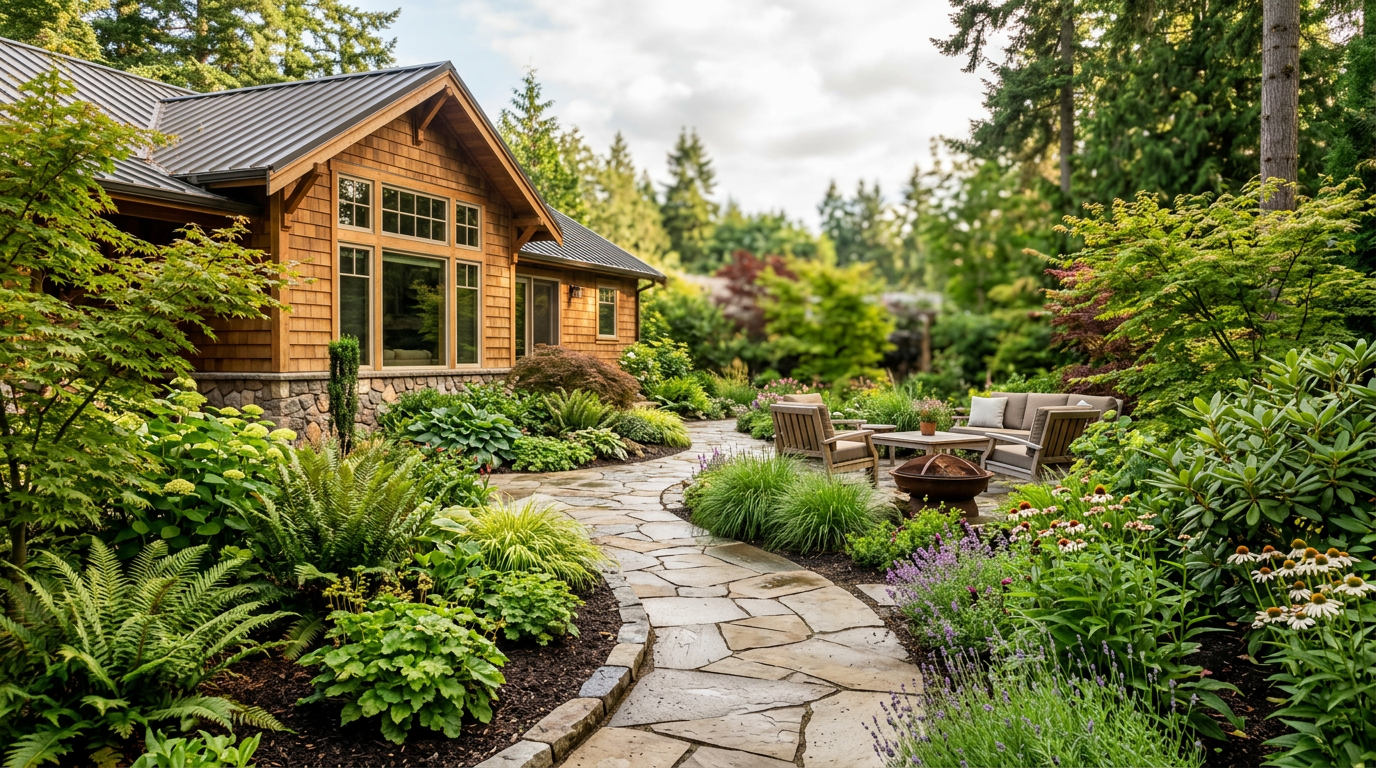
Let's be honest. Landscaping in Washington is a tale of two seasons: nine months of lush, green, and damp, followed by three months of 'Wait, why is my lawn crunchy and brown?' If you're tired of fighting this cycle, you've come to the right place. We're not about forcing a picture-perfect turf lawn where it doesn't want to grow. We're about embracing the incredible natural beauty of the Pacific Northwest and creating a yard that works with the climate, not against it. These Pacific Northwest landscaping ideas are designed for Washington yards, from the misty coast to the drier inland, to give you a landscape that's beautiful, sustainable, and way less work.
Understand Your Washington Microclimate (and Embrace It)
First thing's first: 'Washington' isn't one single climate. Landscaping in rainy Seattle is a world away from landscaping in snowy Spokane. The Cascade Mountains act as a massive dividing line.
- Western Washington (USDA Zones 7b-9a): This is the classic PNW you see in photos. Mild, wet winters and cool, dry summers. Here, the biggest challenges are poor drainage, acidic soil, and summer drought stress on non-native plants. The goal is to manage water in the winter and conserve it in the summer.
- Eastern Washington (USDA Zones 6a-7b): It's a different ballgame east of the mountains. You get hotter summers, colder winters with more snow, and way less annual rainfall. Here, drought tolerance is even more critical, as is choosing plants that can handle a proper winter freeze.
Before you buy a single plant, figure out your zone and watch how sun and water behave in your yard. Don't fight it. If a corner of your yard is always soggy, don't try to grow a sun-loving perennial there. That's a perfect spot for a rain garden.
The Foundation: Native Washington Plants That Just Work
The absolute easiest way to guarantee success is to use plants that evolved to be here. They're naturally resistant to local pests, adapted to our soil, and know exactly how to handle our wet winters and dry summers. Visiting a local nursery that specializes in natives, like Swanson's Nursery in Seattle or the Friends of the Manito plant sales in Spokane, is a game-changer.
Here are some of our go-to, no-fail native plants for Washington yards:
- Sword Fern (Polystichum munitum): The undisputed king of PNW shade plants. It's evergreen, provides incredible texture, and is tougher than a two-dollar steak. Plant it under trees, along the north side of your house, and watch it thrive.
- Oregon Grape (Mahonia aquifolium): This is a killer four-season shrub. It has spiky, holly-like evergreen leaves, bright yellow flowers in early spring that feed pollinators, and edible (though tart) berries in the fall. It's incredibly drought-tolerant once established.
- Red-Osier Dogwood (Cornus sericea): While it loses its leaves in the winter, it reveals stunning, bright red stems that look incredible against a grey Washington sky or a dusting of snow. It loves moist areas, making it a great choice for boggy spots.
- Kinnikinnick (Arctostaphylos uva-ursi): Need a lawn replacement for a sunny, dry spot? This is it. A tough, evergreen groundcover that spreads to form a dense mat, choking out weeds. It has small pink flowers in the spring and red berries in the fall.
- Western Red Cedar (Thuja plicata): If you have the space, planting a native cedar is a gift to the future. They are the quintessential tree of the PNW, providing habitat and structure. Just be sure to plant it far from your foundation!
Design Idea 1: The Ultimate Washington Rain Garden
Instead of seeing our nine months of rain as a problem, let's use it. A rain garden is a shallow, landscaped depression that captures stormwater runoff from your roof or driveway, filters it through plants and soil, and allows it to soak back into the ground. It's a mini wetland that's both beautiful and ridiculously practical for Western Washington.
Washington is no stranger to rain. According to the WA Department of Ecology, stormwater runoff is the leading source of pollution in Puget Sound. A single 1,000 sq ft roof can generate over 35,000 gallons of runoff per year. A properly designed rain garden can filter and absorb 99% of this water, protecting local waterways and recharging groundwater. (Source: https://ecology.wa.gov/Water-Shorelines/Water-quality/Runoff-pollution/Stormwater-e-learning/Modules/Intro-to-Stormwater-Runoff). Cities like Seattle even have programs like RainWise that may offer rebates for installing one.
To build one, direct a downspout into a dug-out area at least 10 feet from your foundation. Fill it with a mix of compost and sandy soil. Plant water-loving natives like Slough Sedge (Carex obnupta) in the bottom, and more drought-tolerant species like Camas (Camassia quamash) on the sloped sides.
Design Idea 2: The Low-Maintenance Moss Garden & Woodland Vibe
We've had clients who spent years and a small fortune trying to kill moss, only to realize a lush, green moss path was what their shady yard wanted all along. Stop fighting the moss and start embracing it! A woodland garden is the peak of PNW landscaping.
This isn't about letting your lawn get patchy; it's a deliberate design choice. In shady, damp areas, forget grass. Instead, cultivate a carpet of moss. Combine it with swathes of Sword Ferns, the delicate fronds of a Maidenhair Fern (Adiantum aleuticum), and broad-leafed Hostas for contrast. A few strategically placed basalt boulders or a flagstone path completes the look. You get a serene, green-on-green landscape that requires zero mowing and feels like a walk in the Hoh Rainforest.
This approach is a universe away from the high-input lawns of other regions. While our friends in New England are planning their New England Front Yard Landscaping for Massachusetts Homes around lilacs and hydrangeas, we get to build our own temperate jungle.
Hardscaping with Pacific Northwest Materials
Your material choices for patios, paths, and walls are just as important as your plants. Using materials quarried or sourced locally will make your landscape feel like it truly belongs in Washington.
- Stone: We have incredible local stone. Basalt is a fantastic choice, available as flagstone for patios or dramatic columns for vertical interest. Find a good local supplier like Marenakos Rock Center in Issaquah to see the possibilities. A medium-sized basalt column might set you back $300-$600, but it's an architectural feature that lasts forever.
- Wood: Western Red Cedar is the obvious choice for decks, fences, and raised beds. Its natural oils make it incredibly resistant to rot and insects, which is a must in our damp climate. It will weather to a beautiful silver-grey over time.
- Pavers & Gravel: For walkways and patios, consider permeable pavers. They have spaces between them that allow rainwater to soak through, reducing runoff. This is a much smarter choice than a giant, non-porous concrete slab. Decomposed granite or fine gravel paths also provide a natural look and excellent drainage.
Rethinking the Washington Lawn (Or Getting Rid of It)
Look, we get it. Sometimes you just want a patch of grass for the dog or kids. If you must have a lawn, choose a PNW-appropriate seed mix, usually a blend of fine fescues and perennial ryegrass. But you have to know when to work on it. Unlike folks in hotter climates, our key maintenance window is in the fall. If you're looking for general advice on timing, our guide on when to overseed your lawn in fall has the core principles, but for Washington, aim for September.
Better yet, shrink your lawn. A small, well-maintained patch of grass surrounded by generous beds of native plants is far more interesting and sustainable. The water you save on the lawn in July and August can be used for establishing your new natives. It's a common misconception that our 'drought-tolerant' plants are the same as those in arid climates. They're not built for the conditions in our Arizona Desert Landscaping Ideas That Don't Suck guide. Our natives are adapted to our specific dry period, not a year-round desert.
By combining these ideas—working with your microclimate, choosing native plants, managing water wisely, and using local materials—you can create a stunning Washington landscape that reflects the beauty of the Pacific Northwest and frees you from the endless cycle of weekend yard chores.
Frequently asked
What is the best low-maintenance landscaping for the Pacific Northwest?+
The best low-maintenance approach uses native plants like Sword Ferns and Oregon Grape, which are adapted to Washington's climate. Replacing lawn with groundcovers like Kinnikinnick or creating moss and stone gardens also drastically reduces mowing, watering, and fertilizing needs, especially during the dry summer months.
When should I start landscaping in Washington?+
Fall is the ideal time to start landscaping in Washington, particularly for planting. The mild, wet weather allows new trees, shrubs, and perennials to establish strong root systems before the summer dry season. Spring is the second-best option, but be prepared for more consistent watering.
What are some good drought-tolerant plants for a Washington summer?+
While our drought is different from the desert's, many PNW natives are adapted to dry summers. Consider Oregon Grape (Mahonia), Red Flowering Currant (Ribes sanguineum), and groundcovers like Kinnikinnick. Once established, these plants require minimal summer water, making them perfect for a sustainable Washington landscape.
How can I make my Washington backyard look good year-round?+
The key is layering. Combine a backbone of evergreens like Western Red Cedar and Sword Ferns with deciduous shrubs like Red-Osier Dogwood (which has beautiful winter stems) and flowering perennials. This ensures you have structure, color, and texture in your garden across all four distinct seasons.