
Pacific Northwest Landscaping Ideas for Washington Homes
Tired of fighting moss and summer drought? We've got the no-nonsense guide to creating a beautiful, low-maintenance landscape that thrives in Washington's unique climate.
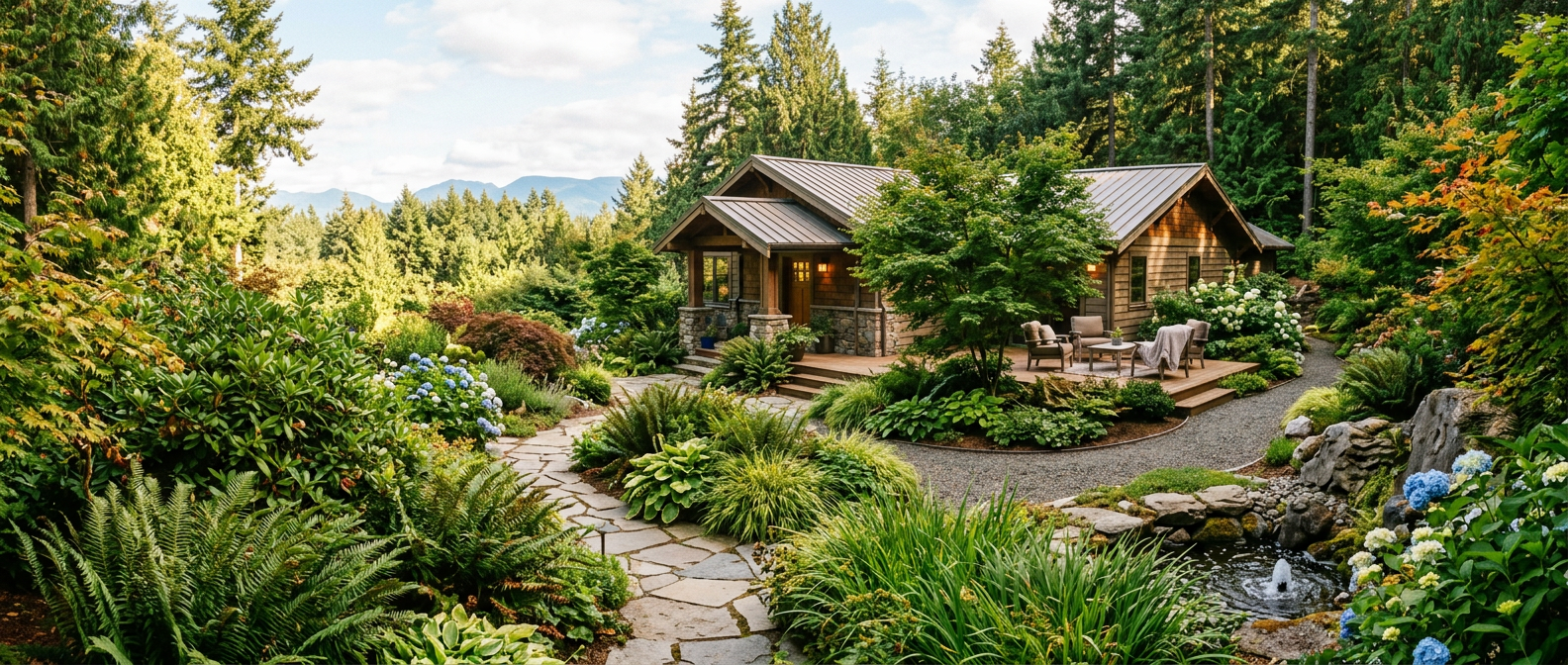
Let's get one thing straight: landscaping in Washington is an entirely different ballgame. Anyone who tells you to just copy what works in California or Arizona is setting you up for a yard full of dead plants and regret. Here in the Pacific Northwest, we live in a world of beautiful contradictions—drizzly, moss-filled winters followed by surprisingly dry, sun-drenched summers. Fighting this reality is a fool's errand. Winning means leaning into it.
We're not here to sell you on some fantasy garden that requires a full-time staff. This is Dirt Cheap Genius. We’re here to give you practical, effective Pacific Northwest landscaping ideas that will make your Washington yard look incredible, reduce your workload, and work with our climate, not against it. From Seattle to Spokane, we’ll show you how to build a landscape that thrives in both the rain and the shine.
Embrace a Four-Season Washington Landscape
Your yard shouldn't look great for only three months a year. The key to a stunning Washington landscape is planning for year-round interest. This means thinking in layers and textures that shine in every season, from the low, gray light of January to the golden hour of August. It's a similar four-season puzzle to what homeowners face in New England front yard landscaping, but with our own unique wet-and-dry twist.
Here’s a simple framework:
- Winter: This is where structure is king. Evergreens like cedar and fir provide the bones, while the interesting bark of trees like the Paperbark Maple (Acer griseum) or the contorted branches of a Harry Lauder's Walking Stick (Corylus avellana 'Contorta') add visual drama against a gray sky.
- Spring: The explosion. This is for the show-offs. Rhododendrons and azaleas are the state classics for a reason. But don't forget early bloomers like flowering currant and masses of daffodils and tulips that signal the end of the Big Dark.
- Summer: Lushness takes over. Your perennials are at their peak, grasses are full, and everything feels alive. This is the season for hostas, astilbe, and flowering hydrangeas. It’s also when you'll be glad you chose drought-tolerant plants for those dry spells.
- Fall: While our fall color might not be as famous as New England's, it can be spectacular. Native Vine Maples (Acer circinatum) offer fiery oranges and reds, even in shady spots. Japanese Maples are always a winner, and the brilliant yellow of a Ginkgo tree is a showstopper.
Understanding your specific microclimate is crucial. Western Washington, from Bellingham to Olympia, is mostly USDA Zone 8a/8b, with mild, wet winters. Head east of the Cascades to areas like Spokane or the Tri-Cities, and you're in a much colder and drier Zone 6b/7a, which requires hardier plant choices.
Go Native: Washington's Best Plant Choices
If you remember one thing, make it this: native plants are your secret weapon. They evolved here. They expect wet winters and dry summers. They provide food and shelter for local wildlife and, once established, require way less water and fuss than fussy imports. You’re not trying to create the xeriscapes from our Arizona desert landscaping guide; you’re building a resilient, local ecosystem.
Here are some of our non-negotiable native picks for a Washington yard:
-
Evergreen Backbone:
- Sword Fern (Polystichum munitum): The undisputed champion of PNW shade gardens. It’s lush, tough as nails, and looks good 365 days a year.
- Oregon Grape (Mahonia aquifolium): Not a grape at all. This shrub has holly-like leaves, cheerful yellow flowers in early spring, and purplish berries. It's tough, drought-tolerant, and architectural.
- Salal (Gaultheria shallon): A fantastic evergreen shrub that forms a dense, leafy groundcover. It’s happy in sun or shade and provides edible berries.
-
Deciduous Stars:
- Red Flowering Currant (Ribes sanguineum): Before almost anything else is blooming, this shrub erupts in pinkish-red flowers, providing a critical first meal for hummingbirds. In our own test beds just east of Lake Washington, we've found it's the single best plant for bringing in early-season pollinators.
- Vine Maple (Acer circinatum): A multi-stemmed small tree or large shrub that thrives in the understory of larger trees. It's graceful in summer and provides that killer fall color.
-
Tough Groundcovers:
- Kinnikinnick (Arctostaphylos uva-ursi): For hot, sunny, dry spots where nothing else will grow. This low-growing evergreen forms a dense mat with small pink flowers and red berries.
- Wild Ginger (Asarum caudatum): A great choice for deep shade, this plant forms a carpet of unique heart-shaped leaves.
You can find an excellent selection of natives at local nurseries that specialize in them, like Swansons Nursery in Seattle or The Plant Farm in Spokane. They'll have the right species and cultivars that are proven to work in your specific area.
The Truth About Lawns in Washington State
A perfect, green, Kentucky Bluegrass lawn is a constant, expensive battle in Washington. In the winter, our acidic soil, low light, and constant moisture create a paradise for moss. In the summer, that same lawn turns brown and crispy without tons of water. The answer isn't to give up, but to be smarter.
- Choose the Right Seed: Forget the generic stuff. You need a mix designed for the PNW. Look for blends heavy on perennial ryegrass and fine fescues. These varieties are more tolerant of shade, acidic soil, and summer drought. A great off-the-shelf option is the Scotts Turf Builder Pacific Northwest Mix, which runs about $30 for a 7 lb. bag that covers 2,000 sq ft.
- Fight Moss with Chemistry & Culture: Moss thrives in acidic, compacted, shady soil. You can kill it with a product like Lilly Miller Moss Out! (around $25 for a 20 lb. bag). But for long-term control, you need to change the conditions. Aerate your lawn in the spring and apply lime in the fall to raise the soil pH. The best defense is a thick, healthy lawn. Bolster it by overseeding every autumn; we show you exactly how in our guide on when to overseed your lawn in fall.
- Water Deeply, Not Daily: During the dry months of July and August, water your lawn just 1-2 times per week, but for a long duration. This encourages deep root growth, making the grass more resilient. A good sprinkler running for 30-45 minutes in each spot is far better than a 10-minute sprinkle every day.
Hardscaping for Washington's Rain
In Washington, hardscaping—patios, paths, walls—isn't just for looks. It's a critical tool for managing water. Our intense winter rains can cause erosion, flooding, and overwhelm city storm drains. Smart hardscaping can solve these problems beautifully.
It's a huge deal. According to the Washington State Department of Ecology, summer outdoor watering can spike a household's water usage by 30-60%. A smart landscape that properly manages winter water and requires less in summer can slash that number. (Source: https://ecology.wa.gov/waters-shorelines/water-supply/water-conservation)
Consider these options:
- Rain Gardens: This is the ultimate PNW landscape feature. It’s a shallow, excavated garden bed filled with water-loving plants, designed to collect runoff from your roof or driveway. It allows rainwater to soak slowly into the ground, filtering pollutants and recharging groundwater. It's a functional feature that becomes a lush, beautiful focal point.
- Permeable Pavers: Instead of a solid concrete patio that sheds water into the nearest drain, use permeable pavers. These pavers have gaps between them filled with fine gravel, allowing water to pass right through. Brands like Belgard or Mutual Materials offer a wide range of styles. Expect to pay $15-$30 per square foot installed, but it’s an investment that solves a problem instead of creating one.
- Dry Creek Beds: A trench lined with river rock and boulders can be a stunning design feature that also serves to channel excess water away from your foundation during a downpour.
- Decks: A classic cedar deck screams PNW. It's beautiful, but requires yearly sealing to prevent rot, costing you time and money. For a lower-maintenance option, consider composite decking like Trex or TimberTech. It costs more upfront (a cedar deck might run $30-$40/sq ft vs. $50-$60/sq ft for composite), but it will never rot, warp, or need staining.
While folks doing Southern California drought landscaping are experts in saving every drop, our main challenge is dealing with too much water for half the year and not enough for the other half. These hardscaping solutions address the 'too much' part head-on.
By building a landscape that embraces Washington's seasons, uses resilient native plants, and intelligently manages our famous rainfall, you create a yard that's not only beautiful but sustainable and, dare we say, genius.
Frequently asked
What is the best low-maintenance ground cover for Washington?+
For shady, moist areas, Sword Fern (Polystichum munitum) is unbeatable. For sunny, dry spots, Kinnikinnick (Arctostaphylos uva-ursi) is a fantastic, tough-as-nails evergreen. Both are native and require very little care once established, making them ideal for a low-maintenance PNW yard.
How do I get rid of moss in my PNW lawn for good?+
Kill existing moss with a product like Lilly Miller Moss Out!. For long-term prevention, you must change the soil conditions. Aerate annually, overseed with a PNW grass blend in the fall, and apply lime to raise the soil's pH, as moss prefers acidic soil.
Are succulents a good choice for Washington landscaping?+
Yes, but with caveats. Hardy succulents like Sempervivum (Hens and Chicks) and some Sedums can thrive, especially east of the Cascades. In Western Washington, they must have perfect drainage to survive the wet winters. Plant them in rockeries or pots with gritty soil.
When is the best time to plant in Washington state?+
Fall is the absolute best time for planting trees, shrubs, and perennials in Washington. The soil is still warm, and the coming winter rains help establish strong root systems without supplemental watering. Spring is the second-best time, but requires more watering through the dry summer.
What are some good small trees for a yard in Seattle?+
Vine Maple (Acer circinatum) is a fantastic native choice for graceful structure and fall color. For stunning visuals, consider a Japanese Maple (Acer palmatum) or a Paperbark Maple (Acer griseum) for its exfoliating bark that provides winter interest. All stay a manageable size.